
If you regularly store dry foods, pantry staples, leftovers, or ingredients in mason jars, I think the Mason Genie Vacuum Sealer is worth considering.
I like the idea of creating a tighter seal without relying on bulky food-storage equipment, especially when I want to organize my kitchen and protect ingredients from air exposure.
In this Mason Genie vacuum sealer review, I’ll explain how it worked for me, where it impressed me, where it fell short, and what you should know before buying one.
My First Experience With The Mason Genie Vacuum Sealer
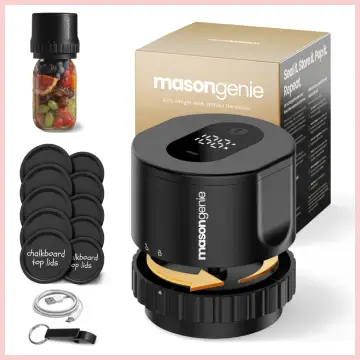
When I first used the Mason Genie Vacuum Sealer, I was mainly interested in one thing: could it make mason jar storage more practical?
I already liked using glass jars because they are reusable, easy to clean, and convenient for organizing dry ingredients.
My frustration was that simply putting a lid on a jar doesn’t create the same type of airtight environment I wanted for longer storage. That’s where a vacuum sealer designed for mason jars seemed useful.
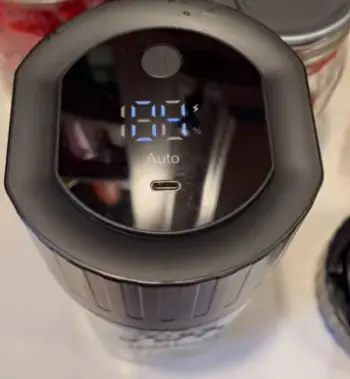
The first thing I noticed was the compact design. Instead of having another large appliance taking up valuable counter space, I could keep this type of vacuum-sealing tool in a drawer or cabinet and bring it out when needed.
I started with relatively simple items such as dry snacks, grains, nuts, and pantry ingredients.
The process was straightforward. I placed the appropriate lid and sealing components on the jar, positioned the vacuum attachment, and activated the sealing process.
What I liked most was the convenience. I didn’t have to transfer everything into disposable vacuum bags just to reduce air exposure. For foods I normally store in glass jars anyway, that felt like a more practical approach.
I also appreciated being able to see the contents clearly. With an ordinary storage container, I sometimes forget what’s inside until I open it. Transparent mason jars solve that problem immediately.
However, I quickly realized that a mason jar vacuum sealer isn’t a magical food-preservation machine. The seal itself is only one part of storage. The food needs to be suitable for the container, the jar needs to be clean and undamaged, and I still have to store everything under appropriate conditions.
For me, the biggest benefit was organization combined with a tighter seal. If you’re already a mason jar user, the concept makes a lot of sense. If you rarely use jars, though, the benefit may not be as noticeable.
Overall, my experience made me see the Mason Genie more as a specialized kitchen tool than an all-purpose vacuum sealer.
Pros Of Mason Genie Vacuum Sealer
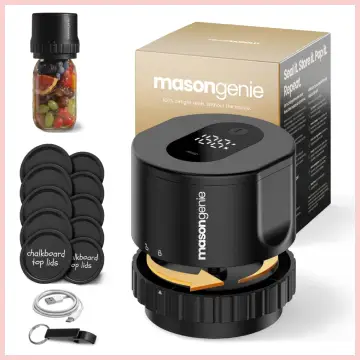
- Simple Mason Jar Storage
The biggest advantage I noticed is simplicity.
If you already own compatible mason jars, the vacuum sealer can fit naturally into your existing storage routine. Instead of purchasing an entirely different storage system, you can build around containers you may already have.
I particularly like this for pantry organization. Once everything is stored in similar glass jars, it becomes much easier to see what I have.
- Reusable Glass Containers
This is another major advantage for me.
Mason jars can be washed and reused over and over. That makes them attractive for people who want to reduce their dependence on disposable food-storage bags.
I also appreciate the durability of glass. It doesn’t absorb food odors in the same way some plastic containers can, and it provides a clear view of the contents.
For ingredients such as rice, beans, oats, nuts, and dry snacks, glass storage can be extremely convenient.
- Better Air Reduction
The whole purpose of the system is to remove air from the jar.
That can be useful because oxygen exposure can affect the quality of certain foods over time. Reducing the amount of air around suitable dry foods can help create a more controlled storage environment.
I wouldn’t treat this as a guarantee of extended freshness, but I do see the practical value.
- Compact Kitchen Design
I don’t want another enormous appliance sitting permanently on my kitchen counter.
One thing I appreciate about this type of device is its relatively compact nature. I can store it away when I don’t need it and pull it out when I’m preparing pantry items.
That makes it particularly appealing if your kitchen has limited counter space.
- Easy Pantry Organization
This benefit isn’t talked about enough.
Once I started thinking about vacuum sealing as part of pantry organization rather than simply food preservation, the product made more sense.
I can group similar foods together, label the jars, and quickly check quantities without opening every container.
If you enjoy an organized pantry, that alone can make a jar-based system worthwhile.
- No Need for Specialized Vacuum Bags
Traditional vacuum sealers are useful, but bags can become an ongoing expense.
With mason jar storage, the container itself can be reused. That means I’m not constantly measuring, cutting, sealing, and disposing of plastic bags.
For someone who stores lots of dry ingredients, this can make the overall routine feel more economical.
- Useful for Small Portions
I also find jars convenient when I don’t want to store a large quantity of something.
Instead of putting everything into one giant container, I can divide ingredients into several smaller jars. That helps with portion control and makes it easier to access only what I need.
- Good Visibility
I prefer containers where I can immediately see what’s inside.
With mason jars, there is no guessing. I can see whether I’m running low on rice, oats, nuts, coffee, or another pantry item.
That sounds like a small advantage, but once you organize your kitchen this way, it’s surprisingly convenient.
Cons Of Mason Genie Vacuum Sealer
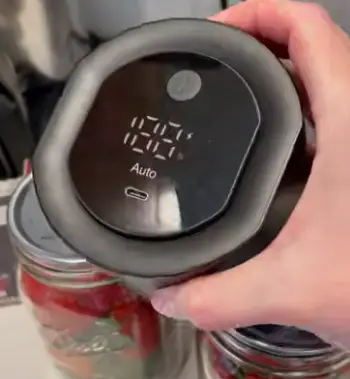
- It Is Not an All-Purpose Vacuum Sealer
This is probably the biggest limitation.
If you’re expecting the Mason Genie to replace a conventional countertop vacuum sealer, you may be disappointed.
Its main appeal is mason jar storage. It isn’t designed to handle every type of food-storage situation.
If you frequently vacuum-seal meat, fish, vegetables, or large portions for freezing, you may need a different type of appliance.
- Jar Compatibility Matters
Not every jar or lid combination will necessarily work the same way.
Before purchasing, I would pay close attention to compatibility. The entire system depends on the jar, lid, sealing attachment, and other components working together correctly.
That’s not necessarily a flaw, but it’s something buyers should understand.
- Sealing Requires Proper Preparation
A vacuum seal isn’t simply a matter of placing everything together and pressing a button.
The jar rim needs to be clean. The lid needs to be positioned correctly. The sealing components need to sit properly.
Even a small problem around the sealing area can affect the result.
- Not Suitable for Every Food
I wouldn’t use vacuum sealing as an excuse to store foods improperly.
Moist foods, perishable foods, and foods requiring refrigeration still need appropriate temperature-controlled storage.
Removing air doesn’t eliminate microorganisms or make unsafe storage conditions safe.
That’s an important limitation to keep in mind.
- Extra Step in Your Routine
If you’re already happy with ordinary containers, adding vacuum sealing creates another step.
You need to fill the jar, position the sealing components, vacuum the jar, check the seal, and eventually release the seal when you want access.
For some people, that’s completely worthwhile. For others, a regular airtight container may be enough.
Maintenance For Mason Genie Vacuum Sealer
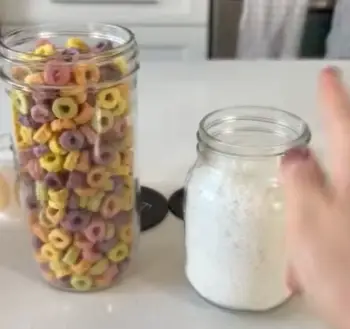
- Keep the Sealing Area Clean
This is the first maintenance habit I would recommend.
Food particles, dust, crumbs, or moisture around the sealing area can interfere with the connection between the jar and the sealing components.
After using the system, I check the contact areas and wipe away anything that shouldn’t be there.
A few seconds of cleaning can prevent unnecessary sealing problems later.
- Inspect Your Mason Jars
Don’t assume every jar is automatically suitable.
I always recommend checking jars for cracks, chips, or damaged rims. A damaged jar can compromise the seal and may also create a safety issue.
If the rim is chipped or cracked, I wouldn’t try to save it just because it still looks usable.
A clean, undamaged jar provides a much better foundation for vacuum sealing.
- Check the Lids and Sealing Components
The sealing components deserve regular attention too.
If a lid becomes warped, damaged, excessively worn, or unable to maintain a seal, replace it rather than repeatedly trying to make it work.
I also inspect the sealing interface for food residue.
A clean and properly fitted sealing component is essential for reliable results.
- Avoid Overfilling Jars
I don’t fill jars all the way to the top.
Leaving appropriate space makes handling easier and helps prevent food particles from interfering with the sealing area.
Overfilling can also make a mess when you’re trying to create the vacuum.
A little extra room is usually worth it.
- Store the Sealer Properly
After cleaning, I keep the device somewhere dry and protected.
I wouldn’t leave it beside the sink where it can constantly encounter water or humidity.
If the appliance includes removable components, I make sure they’re clean and dry before putting everything away.
- Don’t Force the Equipment
If something doesn’t fit correctly, I don’t force it.
A vacuum attachment should sit properly on the jar and sealing components. If it doesn’t, I check the setup rather than applying excessive pressure.
This simple habit can help protect both the equipment and the jar.
- Check the Seal Before Storage
This is an important final step.
After sealing, I check whether the lid is properly secured and whether the vacuum appears to have been established.
If something seems loose or unusual, I correct it before placing the jar in long-term storage.
There’s little point in going through the sealing process if I don’t verify the result.
- Label Your Jars
I strongly recommend labeling everything.
Even when the contents are visible, I like knowing exactly what I stored and when I stored it.
A simple label can include the food name and storage date.
This turns vacuum-sealed jars into a much more organized pantry system.
Comparison Of Mason Genie Vacuum Sealer With Other Brands
- Mason Genie vs Traditional Countertop Vacuum Sealers
A traditional countertop vacuum sealer is more versatile when the goal is sealing bags.
If you routinely prepare meat, freezer meals, or large portions, that format may suit you better.
Mason Genie makes more sense to me when the focus is reusable mason jars and pantry organization.
The difference isn’t simply about which appliance is more powerful. It’s about which storage format matches your habits.
- Mason Genie vs Handheld Vacuum Systems
Handheld systems can be convenient because they are generally compact and easy to store.
However, compatibility varies depending on the containers and accessories involved.
A mason jar-focused system has an obvious advantage if your kitchen already revolves around standard jars.
For me, the decision would come down to whether I want broad container compatibility or specifically want a mason jar setup.
- Mason Genie vs Ordinary Airtight Containers
This is perhaps the most practical comparison.
A normal airtight container is quick and convenient. I can put food inside, close the lid, and move on.
A vacuum-sealed jar takes an additional step but aims to reduce the air inside the container.
If I’m storing something for a short period, I may not care about that extra step. For pantry organization and certain longer-storage situations, I can see why someone would prefer the vacuum-sealed approach.
- Mason Genie vs Disposable Vacuum Bags
Disposable vacuum bags are convenient for certain foods and can work particularly well for freezer storage.
The downside is that they’re single-use in many situations.
Mason jars offer a reusable alternative, particularly for dry ingredients.
I prefer jars when I want visibility and repeat use, while bags can be more practical when space efficiency is the priority.
Frequently Asked Questions (FAQ)
Yes. They can remove air from compatible mason jars and create a vacuum seal when used correctly.
It can be worthwhile for people who regularly use mason jars for suitable food storage and pantry organization.
There isn’t one universally applicable top-rated model because the right choice depends on sealing method, food type, container compatibility, and intended use.
Consumer Reports ratings and reviews should be checked directly for the specific product; a general claim of being a Consumer Reports-rated product shouldn’t be assumed without verification.
Wrapping Up
After using the Mason Genie concept for mason jar storage, I see its biggest value in convenience, reusable containers, and better pantry organization.
I would recommend considering it if you already rely on mason jars and want an additional way to reduce air exposure for appropriate foods.
However, I wouldn’t buy it expecting a replacement for every type of vacuum sealer. For the right kitchen routine, it can be a practical little tool that makes glass-jar storage more functional.
Recent Posts
I spent months comparing budget options against established names after my last set of tires wore out sooner than expected.My goal here is to share what I learned from putting Dextero and...
AquaTru Carafe Vs. Classic: Which Is Actually Fits Your Kitchen?
I decided to write this comparison after months of testing both the AquaTru Carafe and the Classic in my own kitchen. Tracking covered daily use.Taste stayed consistent. Refill frequency...