
I spent weeks testing both the Miko and Renpho foot massagers after long days on my feet left me with aching arches and tight calves.
My goal here is simple: give you a clear, honest side-by-side look at how these two machines perform in real life so you can pick the one that actually matches your pain points, foot size, and daily routine.
| Feature | Miko Foot Massager | Renpho Foot Massager |
| Massage Techniques | Deep kneading, shiatsu rollers, air compression, vibration, heat | Shiatsu kneading rollers, air compression, heat |
| Intensity Levels | 5 air pressure settings, 3 massage modes | 3 kneading levels, 3 air pressure levels |
| Heat | Yes, mild to moderate | Yes, mild, sometimes slow to warm |
| Foot Size Fit | Up to men’s size 12–15 (model dependent) | Up to men’s size 12–13 |
| Calf/Ankle Coverage | Yes on select models with adjustable bar | Limited or none on most models |
| Controls | Usually 1–2 wireless remotes | Remote on many models, some touch panel only |
| Timer | 15 minutes auto shut-off (some longer) | 15 or 30 minutes |
| Washable Liners | Yes | Yes |
| Weight / Size | Around 11–12 lbs, moderately bulky | Around 8–14 lbs, bulky |
| Price Range | Higher ($150–$280) | Lower to mid ($100–$150) |
| Best For | Deep, customizable relief including calves | Strong foot-focused recovery on a budget |
My First Experience With Both Brands
I unboxed the Miko first on a Friday night after a full week of standing shifts. The machine felt solid and the dual remotes clicked into place easily.
I slipped my feet in, started on the lowest pressure, and felt the rollers begin their slow knead along the arches while the air bags gently wrapped the sides.
The heat warmed up within a couple of minutes and the whole session felt controlled and thorough. After fifteen minutes my feet felt lighter, the usual end-of-day throb noticeably quieter.
The next evening I tried the Renpho. It sat a bit bulkier on the floor, but the controls were straightforward. I chose medium kneading and low compression.
The rollers pressed more firmly right away, digging into the ball of each foot with a steady rhythm.
The heat took longer to register, yet once it did the combination of squeeze and roll worked the soles in a satisfying way. I finished the session surprised at how much tension had released from the arches alone.
Both machines delivered real relief on first use, yet they felt different. The Miko offered smoother customization and a more complete wrap. The Renpho hit harder on the soles with less fuss. Neither left me disappointed, and both made me look forward to the next evening’s session.
Key Differences Between Miko And Renpho
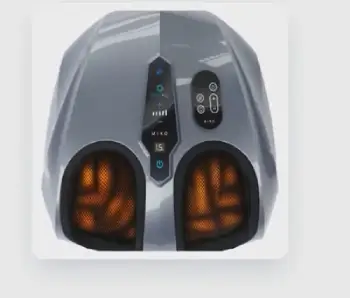
- Massage depth and coverage: Miko often reaches deeper into the arch and can extend to calves and ankles on models with a rotating bar.
Renpho stays more focused on the sole, heel, and instep with firm roller action.
- Customization range: Miko typically offers five pressure levels and multiple modes you can mix.
Renpho keeps it simpler with three kneading and three compression settings.
- Heat performance: Both deliver gentle warmth, but Miko’s heat feels more consistent once it kicks in.
Renpho’s heat can take longer to build and stays milder.
- Build and portability: Miko feels a bit more premium in materials and remote quality. Renpho is solid but can feel bulkier relative to its feature set.
- Value positioning: Renpho usually costs less while still packing strong kneading power.
Miko asks for more money in exchange for extra modes and sometimes calf reach.
I noticed these differences the first week I switched between the two. After a 10-hour shift, the Miko’s extra pressure options let me ease in gently then ramp up.
The Renpho hit harder right away on medium, which felt great once my feet adjusted but required more careful starting settings.
Key Features Of The Miko Foot Massager
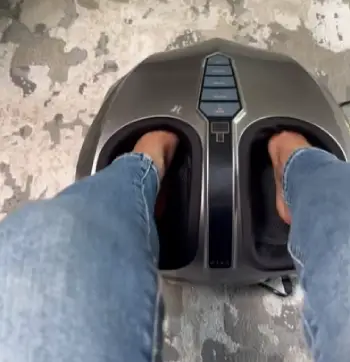
- Deep kneading and shiatsu rollers: These nodes dig into the ball of the foot and arch with a rhythmic press-and-roll motion that mimics thumbs working out knots.
- Air compression chambers: Inflatable pads wrap the sides and top of the foot, creating a squeezing sensation that boosts circulation and holds the foot steady for the rollers.
- Adjustable pressure levels: Five settings mean you can start light and build intensity without jumping straight to “too much.”
- Heat therapy: Gentle warmth runs through the footbed, loosening tight tissue and making the kneading feel smoother.
- Wireless remotes: Most versions include one or two remotes so you stay seated and change modes without bending over.
- Timer and auto shut-off: Sessions usually run about 15 minutes, long enough for relief without overdoing it.
- Washable liners: Removable fabric inserts keep things hygienic if more than one person uses the machine.
- Calf and ankle options: Select models add a rotating bar that lets you shift position for lower-leg work.
In daily use the combination of rollers plus compression stood out.
My plantar fascia felt less tight after consistent sessions, and the remote made it easy to keep the machine running while I watched a show.
Pros Of The Miko Foot Massager
- Highly customizable intensity: Five pressure levels and multiple modes let you fine-tune every session. I could start low on tired days and push higher when I needed deeper work.
- Effective multi-area coverage: Models that reach calves and ankles deliver more complete lower-leg relief than pure foot-only units.
- Strong circulation and pain-relief results: Consistent use eased my daily arch pain and reduced that end-of-day throbbing.
- Convenient remote control: Changing settings without standing up keeps the relaxation going.
- Solid build and washable parts: The machine feels durable, and cleaning the liners is quick.
- Quiet enough for evening use: Noise stays low so it doesn’t interrupt conversation or television.
The customization alone made the Miko feel like a tool I could grow into rather than a one-setting device.
Cons Of The Miko Foot Massager
- Higher price point: You pay more for the extra features and build quality.
- Can feel intense on high settings: First-time users may need a few sessions to get used to the strongest pressure.
- Heat is mild: It warms but never gets as hot as some dedicated heating pads.
- Bulky footprint: It takes dedicated floor space and is not something you casually move every day.
- Heel focus can be lighter: Some users, including me on certain models, noticed the rollers worked the forefoot and arch more than the very back of the heel.
- Occasional durability reports: A minority of long-term users mention mechanical noise or wear after heavy use.
These drawbacks did not stop me from using it regularly, but they are worth knowing before you buy.
Key Features Of The Renpho Foot Massager
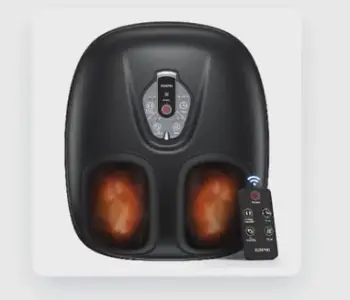
- Shiatsu kneading rollers: Firm rotating nodes target the arch, heel, and ball with a steady, mechanical pressure that feels purposeful rather than soft.
- Independent air compression: Three squeeze levels let you dial the wrapping pressure separately from the kneading.
- Heat function: Warmth focuses on the bottom of the foot and helps muscles relax during the session.
- Simple intensity controls: Three kneading and three compression levels keep choices straightforward.
- Timer options: Choose 15 or 30 minutes depending on how much time you have.
- Washable fabric liners: Zip-out covers make cleaning simple and keep the interior fresh.
- Remote or panel controls: Many units include a remote; others rely on a top-mounted touch panel.
- Foot capacity: Designed for most adult feet up to around size 12 or 13.
The Renpho’s rollers gave me a satisfying deep press that worked well after runs.
I appreciated being able to turn compression and kneading on or off independently so the session matched exactly how sore my feet felt that day.
Pros Of The Renpho Foot Massager
- Strong, focused kneading power: The rollers deliver real pressure that works out tightness without feeling weak.
- Excellent value: You get solid performance at a lower price than many comparable machines.
- Easy independent controls: Separate kneading and compression settings make quick adjustments simple.
- Washable liners and practical design: Hygiene stays easy, and the machine feels ready for daily use.
- Good heat for relaxation: The warmth pairs nicely with the mechanical massage once it builds.
- Reliable timer options: 15- or 30-minute sessions fit different schedules.
I found the Renpho especially useful on days when I wanted straightforward, no-fuss relief after standing all day.
Cons Of The Renpho Foot Massager
- Limited calf and ankle reach: Most versions stay strictly on the feet, so lower-leg tension needs other tools.
- Intensity can surprise new users: Higher settings feel firm and may require a short adjustment period.
- Heat builds slowly: Patience is needed before the warmth becomes noticeable.
- Bulky size: Like the Miko, it claims permanent floor real estate rather than easy storage.
- Fewer intensity steps: Only three levels mean less fine-tuning than machines with five or more options.
- Remote not always included: Some current models rely on the top panel, forcing you to lean forward to change settings.
These limitations kept the Renpho from being my everyday pick when I also needed calf work, but they did not reduce its effectiveness on the feet themselves.
Real-World Performance: How They Feel After Long Days?
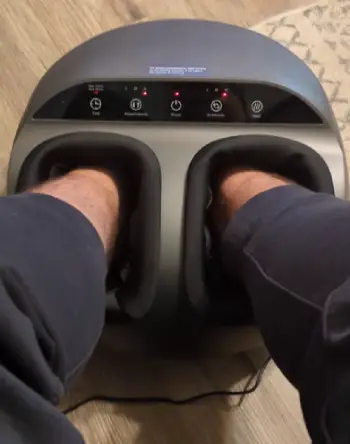
I rotated both machines for several weeks, using each after work, after workouts, and on rest days.
The Miko’s ability to shift from feet to calves gave it an edge when my entire lower legs felt tight.
The combination of rolling nodes and air squeeze created a full, enveloping sensation that left my feet feeling lighter.
On pure foot-focused days the Renpho held its own. Its rollers pressed firmly into the arch and the compression wrapped the sides in a way that mimicked a strong hand massage.
Both machines improved circulation enough that my feet felt warmer and less swollen by the end of a session.
For plantar fasciitis discomfort, the consistent pressure on the arch helped more than intermittent hand massaging ever did.
Neither replaced professional care, yet both reduced the daily ache enough that I looked forward to the 15-minute break.
Noise levels stayed reasonable on both. I could watch television without raising the volume.
The washable liners proved useful in a household where more than one person wanted a turn. I simply zipped them out, tossed them in the laundry, and had clean inserts ready the next day.
Who Should Choose The Miko?
If you want maximum customization, the option to work calves and ankles, and you are willing to spend more for those extras, the Miko makes sense.
People with larger feet or those who already know they prefer deeper, adjustable pressure will appreciate the extra settings.
The dual remotes on many versions also suit anyone who hates leaning forward mid-session.
Who Should Choose the Renpho?
If your main issue is tired soles, arches, and heels and you prefer a lower price with strong mechanical action, the Renpho delivers.
It suits runners, retail workers, and anyone who wants effective daily relief without paying for features they may not use.
The simpler control scheme also appeals if you dislike scrolling through many modes.
Maintenance And Longevity Tips From Daily Use
Both machines last longer when you follow a few simple habits. Always start on the lowest setting for the first few sessions so your feet adapt.
Keep the liners clean to prevent odor and wear. Unplug the unit when not in use and store it in a dry spot away from direct heat.
Avoid standing in either machine; they are designed for seated use only. If you notice unusual noise or reduced power, stop using it and check the warranty terms.
I found that 15 minutes once or twice a day worked better than longer sessions. Overdoing it can leave the feet temporarily sore, especially in the beginning. Socks are optional but helpful if your feet sweat easily.
Also Read: Is Rejuvacare Foot Massager Worth It?
Frequently Asked Questions (FAQ)
Which brand of foot massager is the best?
It depends on your needs. Miko offers more customization and calf options; Renpho delivers strong foot-focused performance at a lower price.
Is the Miko foot massager worth it?
Yes if you want deeper settings, possible calf coverage, and are comfortable with the higher cost.
Is Renpho a good foot massager?
Yes. It provides firm kneading, useful compression, and solid daily relief for most users.
Is Renpho massager a good brand?
Yes. Renpho consistently earns positive feedback for reliable performance and value in home recovery tools.
Wrapping up
After living with both machines, I see clear strengths in each. The Miko gives you more ways to customize and often reaches higher on the leg.
The Renpho focuses its power on the feet and does so at a friendlier price. Your decision comes down to whether you need that extra range and fine control or prefer solid, no-frills performance that still delivers real relief.
Whichever you pick, consistency matters more than the brand name. Using either machine regularly after long days on your feet will leave you feeling better than skipping the session entirely.
Listen to your body, start gently, and adjust until the pressure feels productive rather than punishing. Your feet carry you every day; giving them this kind of attention pays off in comfort and mobility.
Recent Posts
I tried Meltoway Hair Dissolving Cream because I wanted a quick way to deal with unwanted body hair without reaching for a razor every few days. If you are looking for a convenient at-home...
If you’re considering a saffron-based supplement to support mood, appetite control, and everyday wellness, Happy Saffron Plus is worth considering.I like that it takes a familiar botanical...