
I’ve replaced my share of water heaters over the years, from old tanks that finally gave out to these modern tankless systems that promise endless hot water.
When it comes to choosing between Navien and Rheem tankless water heaters, I get why you’re comparing them—you want something reliable that saves energy and fits your home without constant headaches.
In this article, I break down the real differences from an analytical perspective, sharing what I’ve seen in practice so you can decide which one suits your needs better.
Whether you’re upgrading for a busy family or just tired of running out of hot water mid-shower, we’ll cover it all.
| Feature | Navien | Rheem |
| Max Efficiency | Up to 98% (0.96 UEF) | Up to 96% |
| Heat Exchanger | Stainless steel (dual in many) | Copper |
| Built-in Recirc | Yes (ComfortFlow system) | Available but often add-on |
| Flow Rate (typical) | High, great for large homes | Strong, up to 11 GPM in top models |
| Warranty (Heat Exchanger) | 15 years | 12-15 years varying by model |
| Price Range | $1,200–$2,300+ | More budget-friendly, wider range |
| Common Strengths | Efficiency, longevity features | Ease of service, affordability |
| Potential Drawbacks | Higher cost, occasional complexity | Slightly lower efficiency |
Key Differences Between Navien And Rheem Tankless Water Heaters

- Efficiency and Energy Savings: Navien edges ahead with higher efficiency ratings thanks to advanced condensing tech and dual heat exchangers.
You notice it in lower gas bills over time, especially if your household uses a lot of hot water.
Rheem performs well too but usually tops out a bit lower, which still beats traditional tanks by a mile.
- Build Quality and Materials: Navien uses stainless steel heat exchangers that resist corrosion better than Rheem’s copper ones in many setups.
This translates to potentially longer real-world durability in hard water areas.
- Hot Water Delivery and Recirculation: Navien’s ComfortFlow system with a built-in buffer tank and pump minimizes that annoying cold water sandwich effect.
Rheem offers good flow but often needs extra parts for similar performance.
- Installation and Serviceability: Rheem units tend to be straightforward for plumbers to work on, with parts that are widely available.
Navien can feel more advanced, which is great for features but sometimes means specialized service.
- Upfront Cost vs Long-Term Value: Rheem wins on initial price for many models, making it accessible.
Navien costs more but pays back through efficiency and fewer maintenance calls in some experiences.
Key Features Of Navien Tankless Water Heaters
- Advanced Condensing Technology: This captures heat from exhaust gases, boosting efficiency close to 98%. It feels like the unit works smarter, not harder.
- Built-in Recirculation Pump and Buffer Tank: No more waiting for hot water at distant faucets. I appreciate how it keeps things consistent without extra pumps.
- Stainless Steel Heat Exchanger: More resistant to scale and corrosion, which means it holds up better over years of use.
- Smart Controls and Diagnostics: Easy-to-read displays and error codes help troubleshoot quickly. Some models connect to apps for monitoring.
- High Flow Rates: Models like the NPE series handle multiple showers and appliances at once without dropping temperature.
These features make Navien a strong pick if you value top-tier performance and are willing to invest for the long haul. In my view, the recirculation setup alone changes how you experience daily hot water.
Pros Of Navien Tankless Water Heaters

- Superior Efficiency Saves Money: Navien’s condensing technology and high UEF ratings mean you reclaim more heat that would normally get wasted out the vent.
In my experience with a large household, this translated to noticeably lower monthly gas bills—sometimes 20-30% better than older systems and even edging out comparable competitors.
Over five to ten years, that adds up to real savings that help offset the higher purchase price.
- Consistent Hot Water Experience: The built-in ComfortFlow recirculation system keeps a small buffer of warm water ready, so you get hot water almost instantly at every tap.
No more standing around in the shower waiting for it to warm up, and no temperature drops when someone else flushes a toilet or runs the dishwasher.
This has been a game-changer for morning routines in my home.
- Durable Materials: Stainless steel heat exchangers resist corrosion and scale buildup far better than many alternatives.
In areas with moderately hard water, I’ve seen these units maintain peak performance longer without needing aggressive descaling schedules, giving you confidence that the investment will last 15-20 years or more with proper care.
- Longer Warranty Coverage: Many models come with 15-year coverage on the heat exchanger, plus solid labor and parts warranties.
This provides genuine peace of mind compared to shorter options, knowing the manufacturer stands behind the core components that matter most.
- Quiet Operation in Many Models: The units run smoothly with minimal noise, even during high-demand periods.
You can install one closer to living areas without it becoming a distraction, which is a nice touch for homeowners who hate mechanical hums in the background.
Overall, these pros shine for larger households or those prioritizing efficiency and convenience.
Cons Of Navien Tankless Water Heaters
- Higher Initial Investment: The premium pricing—often hundreds more than comparable Rheem models—can feel steep right out of the gate.
For budget-conscious buyers or those replacing a simple tank on a tight timeline, this upfront cost requires careful calculation of payback period before it starts feeling worth it.
- Potential for Specific Error Codes: Some installations see recurring issues with flow sensors, fan motor codes, or ignition failures, especially if venting or gas pressure isn’t perfectly dialed in.
While most get resolved with a service call, they can be frustrating if you’re not prepared for occasional troubleshooting.
- Service Might Require Specialists: Because of the advanced electronics and proprietary parts, not every local plumber carries Navien-specific experience or inventory.
This sometimes leads to longer wait times or higher service rates compared to more common brands.
- Slightly Louder in Some Cases: The built-in recirculation pump can produce a noticeable hum, particularly if the unit is mounted near bedrooms or thin walls.
Sound dampening or strategic placement helps, but it’s something to consider during planning.
- Sensitivity to Water Quality: Like all tankless units, hard water causes scale that impacts performance, but Navien’s high-efficiency design can sometimes show effects a bit sooner if you skip annual maintenance.
A good whole-house softener or regular flushing becomes almost essential for best results.
These aren’t deal-breakers for most, but they’re worth planning around with proper maintenance.
Key Features Of Rheem Tankless Water Heaters
- Hot Start Programming: Reduces cold water bursts by keeping the unit ready after use—super handy for back-to-back showers.
- High Flow Rates: Top models deliver up to 11 gallons per minute, supporting busy homes effectively.
- Compact and Flexible Installation: Fits in tight spaces, with options for indoor and outdoor setups.
- ENERGY STAR Certification: Many models qualify, helping with rebates and efficiency.
- WiFi-Enabled Models: App control for temperature adjustments and diagnostics from your phone.
Rheem focuses on practical, user-friendly design that integrates well into most homes without overcomplicating things.
Pros Of Rheem Tankless Water Heaters
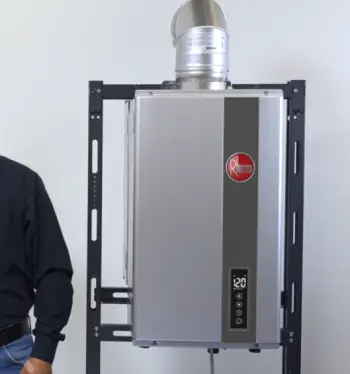
- Better Affordability: Rheem models generally come in at a lower purchase price, making tankless technology reachable for more families without needing to stretch the budget.
This accessibility means you can upgrade sooner and start enjoying endless hot water faster, especially if you’re working with a mid-range renovation budget.
- Reliable Performance: In everyday use, these units deliver steady hot water for multiple fixtures without drama.
I’ve watched them handle family mornings with showers, laundry, and kitchen sink running simultaneously on properly sized models, building trust through consistent results year after year.
- Easy Maintenance and Parts Availability: Because Rheem is so widely used, most plumbers stock common parts and know the systems inside out.
Repairs tend to be quicker and cheaper, which reduces long-term ownership stress and keeps everything running smoothly with standard service visits.
- Strong Flow for Everyday Needs: The high gallon-per-minute ratings mean you rarely experience temperature drops during normal household activity.
This practical performance matches what most families actually need without paying for features you might not fully use.
- Variety of Models: From compact point-of-use electric units to whole-house gas models, Rheem offers options for almost any home setup—indoor, outdoor, or even hybrid situations.
This flexibility makes it easier to find the exact match for your space and usage patterns.
I like how Rheem balances cost and capability, making it a solid everyday choice.
Cons Of Rheem Tankless Water Heaters
- Slightly Lower Efficiency: While still excellent compared to tank heaters, the peak ratings sit a notch below Navien’s best.
Over many years in a high-usage home, you might notice modestly higher energy bills, though the difference is often small enough that other factors like installation quality matter more.
- Copper Heat Exchanger: Copper works well but can be more vulnerable to corrosion over very long periods, especially in aggressive water conditions.
Some users in hard water regions report needing more frequent attention to maintain optimal heat transfer compared to stainless alternatives.
- Recirculation Often Add-On: Achieving the same instant-hot convenience usually requires purchasing and installing extra pumps or valves.
This adds to the total project cost and complexity, potentially closing the initial price gap with Navien models that include it standard.
- Warranty Variations: Coverage can differ significantly between models and retailers, sometimes resulting in shorter protection on key parts.
You have to read the fine print carefully and possibly buy extended coverage to feel fully protected.
- Occasional Condensation Issues: In certain gas venting configurations, users report minor condensation or drainage quirks that need addressing during installation or early use.
Proper setup by an experienced technician usually prevents problems, but it’s one more thing to verify.
These points highlight areas where Rheem trades a bit of premium performance for value and simplicity.
Efficiency And Performance Comparison

When I analyze efficiency, Navien consistently pulls ahead in lab ratings and real-world energy savings.
Their condensing technology reuses heat that would otherwise escape, which matters if you’re conscious about bills and the environment.
Rheem isn’t far behind and performs admirably in most homes—especially if your usage isn’t extreme.
In practice, both deliver endless hot water compared to tank models.
The difference shows during peak times: Navien might maintain steadier temperatures across more fixtures thanks to its design.
I’ve seen Rheem handle three showers plus dishes without issue in well-sized units, but Navien feels more future-proof for growing families.
Flow rate depends on incoming water temperature and model size.
Always size properly with a pro—undersizing either leads to disappointment.
Installation, Maintenance, And Longevity
Installation costs vary by home, but both require proper venting, gas lines (for gas models), and water connections.
Rheem often goes in smoother for standard jobs. Navien’s advanced features might add a bit to labor but pay dividends later.
Maintenance is key for any tankless unit. Flush annually with vinegar to combat scale. Navien’s stainless components might need this less urgently, but don’t skip it.
Rheem’s straightforward design makes DIY-friendly checks easier for handy folks.
Longevity-wise, expect 15-20+ years from both with good care. Navien’s materials give it an edge in some plumber feedback, while Rheem’s track record speaks for itself in widespread use.
Which One Should You Choose?
If your priority is maximum efficiency, built-in convenience, and durable components, I’d lean toward Navien.
It feels like the premium choice that anticipates your needs. For solid performance at a friendlier price with easier servicing, Rheem makes a lot of sense. Consider your water hardness, household size, and budget.
Talk to a local plumber for a site-specific recommendation— that’s what tipped the scale for me in past projects.
Ultimately, both beat old tank heaters hands down. You can’t go too wrong, but matching the unit to your lifestyle makes all the difference.
Also Read: Comparison Of Bradford White And State Water Heaters
Frequently Asked Questions (FAQ)
It depends on what you value. Navien often wins on efficiency and features like built-in recirculation, while Rheem excels in affordability and service ease. Neither is universally superior.
Navien and Rheem are both top contenders alongside others like Rinnai. The “best” fits your home’s needs, budget, and local water conditions best.
Issues like error codes for flow sensors, ignition, or ventilation can pop up, often tied to installation, hard water scale, or maintenance skips. Professional service usually resolves them quickly.
Yes, it’s well-regarded for innovation, efficiency, and reliability when properly installed and maintained. Many users and pros praise its long-term performance.
In Wrapping Up
I recommend weighing your specific needs carefully. If efficiency and instant comfort matter most to you, go with Navien.
If value and simplicity are key, Rheem is a smart pick. Either way, you’ll enjoy better hot water than ever before.
Recent Posts
Davidoff Cool Water is a classic men’s fragrance known for its fresh aquatic scent, clean character, and everyday versatility.I can see why it remains a popular choice for men who want to smell...
LifeWave X49 Reviews: Does This Anti-Aging Patch Live Up To The Hype?
LifeWave X49 patches are marketed as a wearable wellness product designed to support the body's natural regenerative processes without injections or medication.However, bold claims deserve...