
If you want an SUV or crossover tire that balances everyday comfort, dependable road manners, wet-weather confidence, and reasonable pricing, I think the Nexen Roadian GTX is worth considering.
I like it because it aims at the needs of regular drivers rather than focusing only on extreme performance.
After looking closely at its ride quality, handling, tread design, road noise, braking behavior, and long-term practicality, I can see why it attracts budget-conscious SUV owners. If those qualities match what you need, I would consider buying the Nexen Roadian GTX.
My Personal Experience With The Nexen Roadian GTX
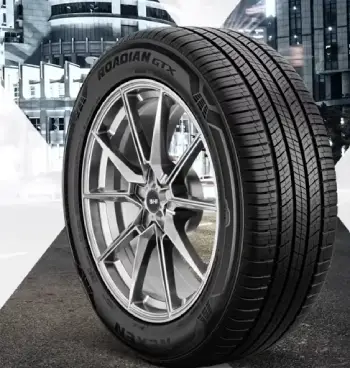
My first impression of the Nexen Roadian GTX was that it felt more refined than I expected from a tire positioned around value.
I wasn’t looking for a racing tire or something designed specifically for aggressive off-road driving.
I wanted something that could handle commuting, highway trips, wet roads, grocery runs, family travel, and the occasional rough patch without making the vehicle feel uncomfortable.
That is where the Roadian GTX makes sense.
On normal city streets, I found the ride relatively composed. Small bumps and imperfections didn’t completely disappear, but the tire didn’t make every crack in the pavement feel dramatic either.
When I drove over rougher sections, I appreciated the way the tire seemed to take some of the sharpness out of the impact.
Highway driving was another area where I paid attention. I generally notice tire noise more at higher speeds, especially when the pavement changes. The Roadian GTX was reasonably quiet for this type of tire. I could still hear normal road sounds, but I didn’t find the tread noise distracting during longer drives.
Cornering also felt predictable. I’m not talking about sports-car handling here, but I could steer through normal curves without feeling like the tires were constantly searching for grip.
That predictable behavior is important to me because I would rather have a tire that communicates consistently than one that feels impressive for a few minutes but becomes tiring during everyday driving.
Wet pavement was another important test. Rain can quickly expose a tire’s weaknesses, particularly during braking and turning. The Roadian GTX gave me a reassuring feeling during ordinary wet-weather driving.
I still drive more cautiously when roads are soaked, but I didn’t feel that the tires suddenly became unpredictable.
Overall, my experience left me with the impression that the Roadian GTX is designed around balance. It isn’t trying to be the absolute best tire in every category. Instead, it tries to give drivers a comfortable, practical, reasonably capable package without pushing the price too high.
Pros Of The Nexen Roadian GTX

- Comfortable Everyday Ride
Comfort is one of the strongest reasons I would consider the Roadian GTX.
If you spend most of your time driving around town, commuting to work, taking children to school, shopping, or traveling on highways, you probably don’t need an ultra-aggressive tire.
What you need is something that doesn’t make ordinary roads feel unnecessarily harsh.
I found the Roadian GTX appealing because its road manners are relatively relaxed. The tire absorbs a fair amount of everyday road texture, which can make a noticeable difference when you’re behind the wheel for several hours.
I particularly appreciate this on SUVs and crossovers because these vehicles are often used as family transportation. A tire that combines decent handling with a comfortable ride makes sense for that role.
- Good Balance Between Price and Performance
For me, value is one of the biggest attractions.
Premium tires can offer excellent performance, but not everyone wants to spend premium money every time a vehicle needs a new set. The Roadian GTX gives me another option: spend less while still getting a tire that feels competent for everyday driving.
That doesn’t mean I would automatically choose it over every premium tire. Instead, I would look at what I actually need.
If you frequently drive at high speeds, demand maximum wet braking, or expect the sharpest possible steering response, paying more for a premium tire may make sense. But if your driving is mostly ordinary commuting and family travel, the Roadian GTX can be a sensible middle-ground choice.
- Stable Highway Behavior
I like tires that feel settled on highways.
When I’m traveling at highway speeds, I don’t want constant steering corrections. The Roadian GTX generally provides a stable feel that suits long-distance driving.
That stability becomes particularly useful when the vehicle is loaded with passengers or luggage. A tire that feels planted can make long trips less tiring because I’m not constantly thinking about how the vehicle is reacting to the road.
- Decent Wet-Road Confidence
Rain is one of the areas where tire selection really matters to me.
The Roadian GTX is designed with tread features intended to move water away from the contact area, helping maintain traction on wet pavement. In everyday rain, I found its behavior reassuring.
Of course, no tire can eliminate hydroplaning or compensate for reckless driving. If water is standing across the road, I slow down regardless of what tires I’m using.
Still, having a tire that remains predictable when the pavement gets wet gives me extra confidence.
- Predictable Cornering
I wouldn’t call the Roadian GTX a performance tire, but I like its predictable steering response.
When I turn into a normal corner, the tire doesn’t feel excessively soft or vague. It provides enough response for everyday driving without trying to imitate a sporty summer tire.
That balance works well for an SUV or crossover that spends most of its life on public roads.
- Suitable for Family Vehicles
This is another advantage that stands out to me.
Many SUV drivers don’t need specialized tires. They need something comfortable, quiet enough, stable, and dependable.
The Roadian GTX fits that use case nicely. If your vehicle is primarily a commuter, family hauler, or road-trip machine, its overall character makes sense.
Cons Of The Nexen Roadian GTX
- Not a High-Performance Tire
The biggest limitation is fairly straightforward: I wouldn’t buy the Roadian GTX expecting sports-car handling.
If you enjoy aggressive cornering or want extremely sharp steering feedback, you may find it less exciting than a performance-focused tire.
For everyday drivers, however, this isn’t necessarily a serious weakness. It’s simply important to match the tire with the way you drive.
- Off-Road Capability Is Limited
Despite being intended for SUVs and crossovers, the Roadian GTX isn’t something I would choose for serious off-road use.
It can handle ordinary gravel roads and occasional rough surfaces, but that’s different from crawling over rocks, dealing with deep mud, or spending weekends on challenging trails.
If your SUV regularly leaves paved roads, I would look at a more suitable all-terrain design.
- Road Feel May Not Suit Everyone
The comfortable nature of the tire can also be a drawback for drivers who prefer a firm, sporty response.
I personally prefer a balanced ride for daily driving, but someone who wants immediate steering feedback might find the Roadian GTX less engaging.
- Performance Depends on Driving Conditions
Like any tire, the Roadian GTX has limits.
Cold weather, standing water, ice, snow, worn pavement, improper inflation, and excessive speed can all affect how it performs. I wouldn’t treat its wet-weather capabilities as permission to drive aggressively during storms.
The tire is only one part of the equation. Vehicle condition and driving habits matter too.
Maintenance For Nexen Roadian GTX
- Check Tire Pressure Regularly
This is probably the simplest maintenance habit, yet it is one of the easiest to ignore.
I recommend checking tire pressure regularly rather than waiting until something feels wrong. Tire pressure can change with temperature, and an underinflated tire can affect handling, fuel economy, tread wear, and overall comfort.
I always prefer following the vehicle manufacturer’s recommended pressure rather than guessing based on the maximum pressure printed on the tire.
If you haven’t checked your pressure recently, take a few minutes to do it. That small habit can save you from unnecessary tire wear.
- Rotate the Tires
Tire rotation helps distribute wear more evenly.
Depending on your vehicle, drivetrain, tire type, and manufacturer’s recommendations, the appropriate rotation pattern can vary. I would follow the schedule recommended for your specific vehicle.
If you notice one pair wearing significantly faster than another, don’t simply keep replacing tires. Ask why the wear is happening.
Uneven wear can point toward alignment, suspension, inflation, or driving issues.
- Inspect the Tread
I like giving my tires a quick visual inspection.
Look for cuts, cracks, bulges, exposed cords, embedded objects, or unusual tread wear. You don’t need to be a tire technician to notice something obviously wrong.
If one section looks dramatically different from the others, that’s worth investigating.
A nail or screw doesn’t always cause an immediate flat tire, either. Sometimes a slow leak develops gradually, which is why regular inspection is useful.
- Pay Attention to Alignment
If your vehicle pulls to one side or the steering wheel isn’t centered while driving straight, I wouldn’t ignore it.
Poor alignment can cause irregular tread wear and reduce the usable life of a tire. You may end up blaming the tire when the real problem is the vehicle’s suspension or alignment.
After hitting a major pothole or curb, I pay closer attention to steering behavior and tire condition.
- Balance the Tires When Necessary
If you feel vibration through the steering wheel or vehicle at certain speeds, the tires may need balancing or there could be another mechanical issue.
I wouldn’t simply assume that vibration is normal.
A properly balanced wheel and tire assembly can improve ride quality and reduce unnecessary stress on components.
- Don’t Ignore Rotation and Alignment Together
One thing I have learned about tire maintenance is that these services work together.
Rotating a tire won’t fix an alignment problem. Balancing won’t correct improper inflation. Replacing a tire won’t automatically solve suspension issues.
If you want your Roadian GTX tires to last, I recommend treating the tires and vehicle as one system.
Comparison Of Nexen Roadian GTX vs Other Tire Brands

- Nexen Roadian GTX vs Michelin
Michelin generally occupies a stronger premium position, and I would expect many Michelin models to offer more refined overall performance, especially in areas such as braking, handling, and long-term development.
However, that doesn’t automatically make Michelin the right choice for everyone.
If you’re trying to control the cost of a complete set of tires while still getting comfortable everyday performance, the Roadian GTX can be attractive.
For me, the decision comes down to priorities. If maximum refinement and premium performance are worth paying extra for, Michelin deserves consideration. If value is a major factor, Nexen becomes more interesting.
- Nexen Roadian GTX vs Hankook
Hankook is another strong competitor in the replacement-tire market.
I see Hankook as particularly appealing to drivers who want a combination of value and solid everyday performance. Depending on the exact models being compared, Hankook may offer advantages in certain handling, comfort, or mileage categories.
The Roadian GTX remains competitive because its overall package is well suited to SUVs and crossovers.
I wouldn’t choose based solely on brand reputation. I would compare the specific tire sizes, warranties, expected driving conditions, price, and performance characteristics for your vehicle.
- Nexen Roadian GTX vs Goodyear
Goodyear has a broad range of tires covering everything from everyday commuting to demanding performance and specialized conditions.
That wider range means Goodyear has several models that can outperform a value-focused tire in particular categories.
However, the Roadian GTX can make sense when you want a balanced SUV tire without moving into a higher price range.
For my needs, I would choose based on the actual tire model rather than assuming one brand automatically wins.
- Nexen Roadian GTX vs Bridgestone
Bridgestone is another major name with a strong selection of passenger and SUV tires.
A comparable Bridgestone model may offer a different balance of comfort, braking, steering response, tread life, and price.
The Roadian GTX becomes attractive when its price is noticeably lower while still meeting your driving requirements.
If you’re comparing the two, I would pay particular attention to wet traction, expected mileage, road noise, and the kind of driving you do most frequently.
- Nexen Roadian GTX vs Continental
Continental tires are often appealing to drivers who prioritize handling and road refinement.
Compared with a premium Continental option, the Roadian GTX may feel less sophisticated in certain performance situations.
But again, not every driver needs the most advanced tire available.
If your typical week consists of commuting, errands, highway travel, and family driving, you may appreciate the Roadian GTX’s balance more than you would appreciate paying extra for performance you rarely use.
Also Read: Comparison Of Pirelli Night Dragon And Michelin Commande
Frequently Asked Questions (FAQ)
Michelin generally has an edge in premium performance and refinement, but Nexen can offer excellent value for everyday driving.
Both offer strong value. The better choice depends on the specific models, vehicle, driving conditions, and price.
Goodyear offers a broader premium range, while Nexen can be more appealing when value and everyday performance are priorities.
Potential complaints can include uneven wear, road noise, reduced performance as tread wears, or premature wear when inflation, alignment, or rotation is neglected.
Final Verdict
After considering comfort, handling, wet-road behavior, highway stability, price, and maintenance requirements, I see the Nexen Roadian GTX as a sensible choice for everyday SUV and crossover drivers.
I wouldn’t buy it expecting extreme off-road or high-performance ability, but if you want a comfortable and balanced tire without spending at the highest end of the market, I think the Roadian GTX is worth buying.
If its specifications match your vehicle and driving needs, I’d be comfortable putting it on my shortlist.
Recent Posts
I tried Meltoway Hair Dissolving Cream because I wanted a quick way to deal with unwanted body hair without reaching for a razor every few days. If you are looking for a convenient at-home...
If you’re considering a saffron-based supplement to support mood, appetite control, and everyday wellness, Happy Saffron Plus is worth considering.I like that it takes a familiar botanical...