
If you want an affordable sanding belt set for woodworking, metal preparation, furniture restoration, or everyday workshop jobs, the Nortin 3X sanding belts are worth considering.
I like the idea of getting multiple belts in a practical assortment without immediately spending heavily on premium abrasives.
In this Nortin 3X sanding belt review, I’ll look at cutting performance, durability, material compatibility, belt fit, heat buildup, finish quality, and overall value so you can decide whether these belts deserve a place in your workshop.
My Personal Experience With The Nortin 3X Sanding Belts
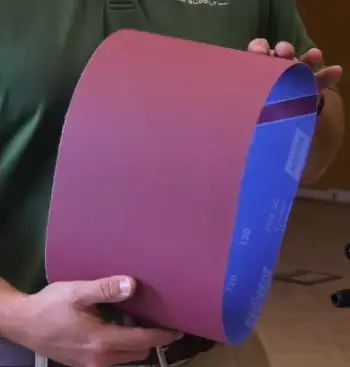
The first thing I noticed when working with sanding belts is that the abrasive material itself can make a bigger difference than people expect.
A belt sander can be powerful, but if the belt loses its bite quickly, the machine suddenly feels much less effective.
That was one of the main things I wanted to assess with the Nortin 3X sanding belts.
I started by treating the belts as general-purpose workshop abrasives rather than expecting them to perform like a specialized industrial product.
That distinction matters. When I use sanding belts, I usually want something that removes material efficiently, stays reasonably consistent, fits securely, and doesn’t become useless after a small amount of work.
The Nortin belts gave me a practical starting point for those tasks.
On wood, the initial cutting action felt useful for stock removal and surface preparation. I could see the belt making noticeable progress without needing to push excessively hard.
That’s important to me because pressing a belt sander aggressively can create unnecessary heat, slow the machine down, and make it harder to maintain control.
I also paid attention to how the abrasive behaved after continued use. Like virtually every sanding belt, the cutting ability wasn’t identical from the first few minutes to later stages.
The abrasive gradually became less aggressive, especially when I worked on surfaces that produced considerable dust or heat.
For rough woodworking, though, that wasn’t necessarily a problem.
I found the belts most useful when I thought of them as working abrasives rather than finishing tools.
If I needed to remove old material, flatten a surface, smooth rough timber, or prepare a piece for finer sanding, the belt format made the job considerably faster than using a handheld sanding sheet.
Another thing I watched was tracking.
A sanding belt that constantly walks toward one side can become frustrating very quickly. Proper machine adjustment is obviously important, but the belt itself still needs to run predictably.
With the Nortin belts, I would recommend spending a little time setting the belt correctly before putting serious pressure on the machine.
I also learned not to judge a sanding belt purely by how aggressively it cuts during the first few minutes.
For me, consistency mattered more.
A belt that removes material rapidly but wears out almost immediately may not actually save money.
Conversely, a belt that lasts a long time but removes material painfully slowly can waste working time. The sweet spot is a belt that provides a reasonable combination of cutting speed, useful life, and predictable performance.
That’s where I see the Nortin 3X belts fitting best.
They make the most sense for people who want practical sanding performance without automatically choosing the most expensive belt available.
Pros Of Nortin 3X Sanding Belts
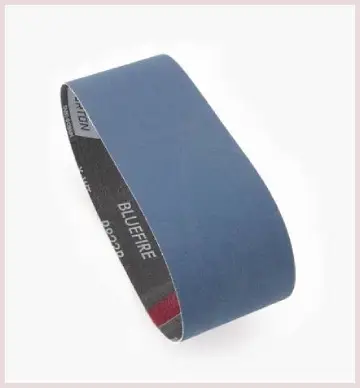
- Practical Material Removal
One of the strongest advantages I look for in a sanding belt is straightforward material removal.
The Nortin 3X belts can make large sanding jobs much faster than manual sanding. If I’m flattening rough timber or preparing a broad surface, the belt format gives me the mechanical assistance I need.
That alone can save a substantial amount of time.
- Convenient for Workshop Projects
I also appreciate the convenience of having replacement belts available for different stages of a project.
Sanding is rarely a one-grit operation.
I might start with a coarse abrasive, move to a medium grit, and then finish with a finer abrasive. Having a practical belt assortment makes that process easier.
- Useful for DIY Users
For a homeowner or DIY enthusiast, spending heavily on premium industrial abrasives isn’t always necessary.
If I’m restoring furniture occasionally, building shelves, preparing timber, or doing weekend workshop projects, I want reasonable performance without turning every sanding job into a major expense.
That’s where the Nortin belts can make sense.
- Good Balance Between Speed and Control
I don’t want a belt that barely removes anything, but I also don’t want one that becomes difficult to control.
A good belt should let me maintain a steady sanding motion while still making noticeable progress.
The Nortin 3X format can provide that balance when used with the correct grit and machine settings.
- Multiple Uses
Another advantage is versatility.
The belts can be useful for different woodworking and workshop tasks rather than being limited to one narrow application.
That makes them practical for people who have a belt sander but don’t use it every day.
- Potential Cost Savings
Replacing sanding belts is an unavoidable part of using a belt sander.
A product that provides useful performance without an excessive price can be attractive, particularly for hobbyists.
The real value isn’t simply the purchase price, though.
I always consider how much usable sanding time I get from each belt.
Cons Of Nortin 3X Sanding Belts
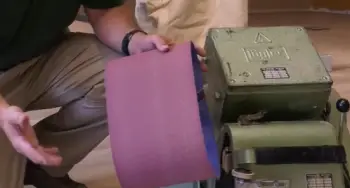
- Not Every Belt Is Ideal for Heavy Industrial Work
My biggest caution is expectations.
If I’m running a belt sander for hours every day in a demanding production environment, I would investigate industrial-grade abrasives specifically designed for continuous use.
A general-purpose belt can be perfectly useful without being the best choice for extreme workloads.
- Performance Depends on Grit Selection
Choosing the wrong grit can make a good belt seem bad.
If I use an excessively fine belt for aggressive stock removal, the job takes too long. If I use an extremely coarse belt for finishing, I create unnecessary scratches.
The belt isn’t necessarily the problem.
The selection is.
- Heat Can Reduce Performance
Like other sanding belts, the Nortin belts can lose effectiveness more quickly when subjected to excessive heat.
That’s why I avoid pushing down hard.
- Not a Replacement for Detail Sanding
A belt sander is excellent for broad surfaces but isn’t designed to replace every other sanding tool.
For corners, tight areas, profiles, and delicate surfaces, I prefer an orbital sander, detail sander, sanding sponge, or hand sanding.
Maintenance Tips For Nortin 3X Sanding Belts
- Keep the Belts Dry
Moisture isn’t something I want around abrasive belts.
I store unused belts in a clean, dry environment and avoid leaving them exposed to damp workshop conditions.
Humidity can affect materials over time, and there’s little reason to shorten the life of unused abrasives through poor storage.
- Avoid Excessive Pressure
This is probably the most important technique I use.
When a belt stops cutting efficiently, my first instinct might be to push harder.
That’s usually the wrong response.
Excessive pressure creates more friction and heat. It can also make the machine harder to control.
Instead, I check whether the belt is worn, whether I’m using the correct grit, and whether the workpiece is appropriate for the abrasive.
- Clean the Work Area
Dust buildup can interfere with efficient sanding.
I keep the workpiece and surrounding area reasonably clean and make sure the machine’s dust collection system is functioning properly.
A cleaner environment also makes it easier to see the actual surface I’m sanding.
- Inspect the Belt Before Use
Before installing a belt, I inspect it for obvious damage.
I look at the seam and abrasive surface and check for cracks, tears, separation, or other visible defects.
If something looks questionable, I don’t want to put it on a fast-moving machine.
- Use Correct Belt Tracking
Correct tracking is essential.
I follow the belt sander manufacturer’s instructions for alignment and adjustment.
If the belt repeatedly moves sideways, I stop and correct the problem instead of continuing to work.
- Rotate Grits Properly
I don’t expect one abrasive to perform every task.
For heavy removal, I use a coarse grit.
For refining, I move toward medium grit.
For final preparation, I use a finer abrasive.
This approach improves the finish and prevents me from wearing out a fine belt unnecessarily.
- Let the Abrasive Work
I constantly remind myself that more pressure doesn’t automatically mean faster sanding.
A belt sander is designed to work through controlled contact.
I maintain a steady movement and let the abrasive do the cutting.
Comparison Of Nortin 3X With Other Sanding Belt Brands
- Nortin 3X vs 3M Sanding Belts
3M has a strong reputation in abrasives, particularly among professionals who need predictable performance.
If I’m doing intensive professional work and consistency is my top priority, I’d seriously consider a premium 3M abrasive.
The Nortin 3X belts appeal more to me when cost and general workshop usefulness are major factors.
For occasional DIY work, the extra expense of premium abrasives may not always provide enough practical benefit to justify the difference.
- Nortin 3X vs DEWALT Sanding Belts
DEWALT is a familiar name among power-tool users, and its sanding products are naturally attractive to people who already use DEWALT equipment.
I see DEWALT as a strong option for users who want an established tool brand’s accessory ecosystem.
Nortin can be more appealing if the goal is simply obtaining usable replacement belts without focusing heavily on brand loyalty.
- Nortin 3X vs Makita Sanding Belts
Makita sanding accessories make sense for people already invested in Makita equipment.
I generally associate Makita with dependable workshop tools, and its abrasives can be a sensible professional or enthusiast choice.
The Nortin 3X belts are more interesting to me from a value-oriented perspective.
- Nortin 3X vs Bosch Sanding Belts
Bosch offers a broad range of accessories and has a long-standing presence in power tools.
If I want an accessory from a highly established manufacturer and don’t mind paying somewhat more, Bosch is worth considering.
Nortin becomes interesting when I want practical sanding capability while keeping the accessory cost under control.
Is Nortin 3X Worth Buying?
For the right user, I think it can be.
If you are a DIY woodworker, furniture restorer, homeowner, hobbyist, or occasional workshop user, the Nortin 3X sanding belts offer a practical way to keep your belt sander ready for work.
I wouldn’t choose them solely because they’re inexpensive.
I’d choose them because the overall proposition makes sense when your workload isn’t extremely demanding.
The important question is how you plan to use them.
If you sand occasionally, maintain reasonable technique, select the correct grit, and store the belts properly, you can get meaningful value from a general-purpose abrasive.
If you operate a belt sander commercially for many hours each day, your priorities may be different.
You may care more about maximum abrasive life, extremely consistent cutting, specialized materials, and predictable production performance.
That’s when premium professional abrasives become more compelling.
Frequently Asked Questions (FAQ)
There isn’t one universal winner, but 3M, Norton, Bosch, DEWALT, and other established abrasive manufacturers offer strong options.
For belt sanders, established brands such as Makita, Bosch, DEWALT, and Metabo offer well-regarded options across different price ranges.
It depends heavily on the material, grit, pressure, machine speed, and workload. Heavy sanding can wear a belt much faster than light surface preparation.
For many DIY users, a reliable mid-range belt sander from an established power-tool brand can offer the best balance of price, performance, and durability.
Wrapping Up
I think the Nortin 3X sanding belts are worth buying if you want practical abrasives for woodworking, furniture restoration, DIY projects, and occasional workshop use.
I wouldn’t position them as the ultimate choice for demanding industrial sanding, but their value-oriented approach makes sense for everyday users.
If your goal is to keep your belt sander supplied without spending excessively on every replacement belt, Nortin 3X is a product I’d consider.
Recent Posts
NESCO VS-12 Deluxe Review: Is This Vacuum Sealer Worth Buying?
After using and comparing different food preservation methods, I found the NESCO VS-12 Deluxe particularly interesting because it combines strong vacuum performance, multiple sealing options, and a...
Schick Hydro Silk Sensitive Care Review: Is It Worth Buying?
If you have sensitive skin and want a razor that focuses on comfort rather than simply getting the closest possible shave, I think the Schick Hydro Silk Sensitive Care is worth considering.I like...