
If you love stir-frying vegetables, searing meat, and preparing quick Asian-inspired meals at home, the Nuwave induction wok is worth considering.
I appreciate the idea of combining responsive induction heating with the convenience of countertop cooking, especially when you want more control over temperature without relying on a traditional gas stove.
Before buying, however, you should consider the cooktop’s compatibility, wok design, heating performance, and overall value. For home cooks who want efficient cooking and easy temperature adjustments, the Nuwave induction wok setup could be a worthwhile investment.
My First Experience With The Nuwave Induction Wok
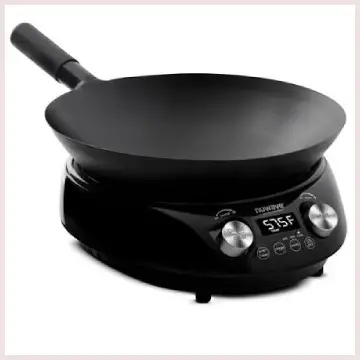
When I think about cooking with a wok, I immediately picture sizzling vegetables, browned meat, fragrant garlic, and meals prepared in just a few minutes.
A wok is designed for quick cooking at relatively high temperatures, but achieving that result depends on more than the shape of the pan. Heat delivery, surface contact, and temperature control matter just as much.
What interests me about the Nuwave induction wok setup is its potential to make wok-style cooking more convenient without requiring a dedicated gas burner.
Induction cooktops heat compatible cookware through electromagnetic energy rather than heating a flame or electric coil first. This can make temperature adjustments more responsive and keep the surrounding cooking area cooler than some conventional methods.
My first consideration would be compatibility. Not every wok works on an induction cooktop. A traditional round-bottom carbon-steel wok, for example, may not sit securely on a flat induction surface.
A flat-bottom wok with a magnetic base is generally a more practical option unless the specific Nuwave appliance is designed to accommodate a different shape.
I would also pay attention to temperature settings. When preparing fried rice, I want enough heat to cook the ingredients quickly without turning them soggy.
When making a delicate sauce, I need lower temperatures that prevent scorching. Adjustable induction settings can make switching between these tasks easier.
Another factor is cooking capacity. A compact countertop unit can be useful in a small kitchen, apartment, or occasional outdoor cooking area with an appropriate power supply.
However, anyone preparing large family meals should check the usable cooking surface and recommended cookware dimensions before purchasing.
I would not judge the product solely by its advertised power or number of temperature settings. The real question is whether the cooktop and compatible wok work together to deliver consistent results.
Since Nuwave offers different induction appliances and configurations, the exact model matters. I would verify the model number, included accessories, and manufacturer specifications before assuming every Nuwave induction unit provides a dedicated wok function.
Overall, the appeal is straightforward: convenient countertop cooking, precise adjustments, and the opportunity to prepare flavorful stir-fries without installing a specialized stove.
Pros Of The Nuwave Induction Wok
- Responsive Temperature Control
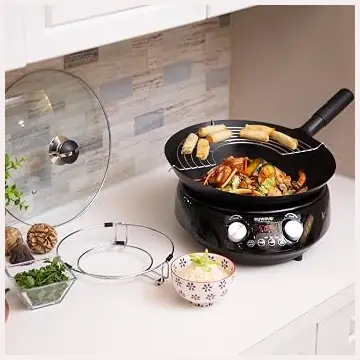
One of the biggest advantages of induction cooking is the ability to adjust the heat without waiting for a traditional burner to warm up or cool down.
When I prepare stir-fried vegetables, I want enough heat to cook them quickly while keeping their texture crisp.
When I add a sauce, I may need to reduce the temperature before the liquid evaporates too quickly.
Responsive controls can help with both situations. Instead of relying entirely on instinct, you can use the cooktop’s settings to establish a repeatable starting point for your favorite recipes.
Still, the actual responsiveness depends on the specific model, cookware, food quantity, and selected power setting. I would test the lowest and highest settings before relying on the cooktop for temperature-sensitive recipes.
- Convenient Countertop Cooking
A countertop induction cooktop can be especially useful when your kitchen has limited space or you do not want to purchase a dedicated wok range.
You can place the appliance on a suitable, stable surface, connect it to an appropriate electrical outlet, and prepare a meal without installing a permanent burner.
I find this type of flexibility appealing for smaller households, renters, and people who want an additional cooking surface during busy meal preparation.
It can also help when your regular stovetop is occupied by soup, rice, or other dishes. You can use the induction unit for the main stir-fry while preparing the rest of the meal elsewhere.
You should always follow the manufacturer’s clearance, ventilation, electrical, and countertop requirements.
- Efficient Heating
Induction cooking transfers energy directly into compatible cookware rather than heating a separate burner before the pan receives that heat.
This can reduce wasted heat and make the cooking process efficient. It may also mean less residual heat around the cooking surface than you would experience with certain conventional burners.
For quick meals, that efficiency is useful. You can prepare vegetables, tofu, chicken, or thinly sliced beef without spending as much time waiting for the cooking surface to respond.
However, efficient heating does not automatically guarantee restaurant-style wok hei, the distinctive smoky flavor associated with high-heat wok cooking. That flavor depends on very high temperatures, ingredient moisture, burner design, and cooking technique. A countertop induction setup may not reproduce the results of a powerful commercial wok burner.
- Easier Temperature Management for Different Recipes
A good wok can handle much more than fried rice. You can use it for sautéed greens, noodle dishes, stir-fried seafood, scrambled eggs, and quick vegetable sides.
With suitable induction-compatible cookware, you can move between these recipes using the available power or temperature settings.
For example, I would start with a higher setting to brown thinly sliced chicken, then reduce the heat before adding a sauce. For leafy greens, I would use a relatively high setting and cook them in small batches to avoid excess moisture.
This flexibility makes an induction wok setup useful beyond traditional Asian recipes.
- A Potentially Easier Cleanup Routine
Induction cooktops generally have a smooth cooking surface, which can make cleaning simpler than cleaning around exposed gas burners or intricate stovetop components.
Once the surface has cooled sufficiently, spills can often be wiped away with a soft cloth and an appropriate cleaner.
There is an important distinction, though: induction cookware can still become extremely hot, and spills may bake onto the surface if you leave them unattended. I would clean up splashes promptly after the appliance is safe to handle.
The wok itself requires separate care. Carbon steel, for example, benefits from drying and seasoning, while stainless steel usually tolerates more conventional washing methods.
Cons Of The Nuwave Induction Wok
- Cookware Compatibility Can Be Confusing
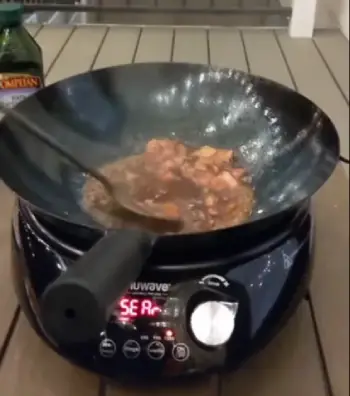
The first drawback is that you cannot assume every wok will work with every induction cooktop.
Traditional round-bottom woks are often designed for gas flames, where the curved base can sit above the burner.
A flat induction surface typically requires a stable, compatible base that makes appropriate contact with the cooking area.
Before purchasing, check the cooktop’s instructions and the wok’s magnetic compatibility.
A simple magnet test can help identify magnetic cookware, although it does not guarantee that the pan will perform properly on every induction model.
- It May Not Deliver Commercial Wok Results
Professional wok cooking often relies on burners that generate intense heat and allow cooks to toss ingredients rapidly over an open flame.
A countertop induction unit may cook quickly, but its power limits, pan contact, and temperature behavior can produce a different result.
If you expect the intense smoky flavor of restaurant-style fried rice, you may need to adjust your expectations and cooking method.
I would focus on small batches, thoroughly dried ingredients, and proper preheating rather than expecting the appliance alone to create that distinctive flavor.
- Price Depends on the Exact Configuration
The cost can vary considerably depending on whether you are buying a cooktop alone, a compatible wok, or a package with additional accessories.
A premium induction appliance may also cost more than a basic electric burner. That difference might be worthwhile if you value temperature control and energy efficiency, but it is less compelling if you only prepare stir-fry once or twice a month.
Compare the complete setup cost, including cookware and any necessary accessories, rather than judging the appliance by its advertised price alone.
- Electrical Requirements Limit Placement
A countertop induction cooktop needs an appropriate power source. You should check the model’s voltage, wattage, outlet requirements, and any restrictions on extension cords before use.
This matters when you want to use the appliance in a small kitchen, recreational vehicle, or outdoor setting. An electrical setup that works for a low-power appliance may not be appropriate for a more powerful induction cooktop.
- Some Cooking Techniques Need Adjustment
If you are accustomed to a gas stove, you may need to change how you move the wok and control the heat.
On a flat induction surface, lifting the pan away from the cooking zone can interrupt heating or cause the appliance to pause. Some cooktops may also respond differently to rapid pan movement.
For that reason, I would focus on stirring, tossing within the pan’s stable position, and cooking in manageable portions.
Maintenance For The Nuwave Induction Wok
- Clean the Induction Surface After Use
Allow the cooktop to cool according to its instructions before cleaning. Even though induction surfaces often produce less residual heat than conventional burners, heat from the cookware can make the glass surface hot.
Use a soft cloth or nonabrasive sponge to remove grease and food residue. For stubborn marks, choose a cleaner approved for the cooktop’s surface.
Avoid steel wool, harsh scouring pads, and abrasive cleaners that could scratch the glass. I would also avoid dragging heavy cookware across the surface, as this can cause scratches or other damage.
If food spills during cooking, wait until it is safe to clean and remove the residue rather than letting it accumulate over several meals.
- Choose the Right Wok Material
The wok material determines how you should clean and maintain it.
Carbon steel is popular because it can heat quickly and develop a seasoned cooking surface. However, it needs protection against rust. After washing, dry it thoroughly and apply a very thin layer of cooking oil if appropriate for its seasoning routine.
Stainless steel is generally easier to maintain and does not require seasoning. You can wash it with warm water and dish soap, following the manufacturer’s recommendations.
Some woks have nonstick coatings. For these, avoid metal utensils and abrasive cleaning tools that could damage the coating.
Before buying a wok, I would consider both its cooking performance and the amount of maintenance I am willing to perform.
- Season Carbon-Steel Cookware Correctly
If your compatible wok is made from carbon steel, seasoning helps create a protective surface and improves cooking performance over time.
First, follow the manufacturer’s instructions for preparing the wok. Some products arrive with a protective coating that must be removed before the cookware is used.
After cleaning and drying, apply a very thin layer of suitable cooking oil and heat the wok according to the manufacturer’s seasoning guidance. Avoid using excessive oil, which can leave a sticky finish instead of a smooth, seasoned surface.
Repeat the process as needed, especially if food begins sticking or the surface develops signs of rust.
Do not assume every wok needs the same seasoning procedure. Coated cookware and stainless-steel woks require different care.
- Avoid Overloading the Wok
One of the most useful maintenance habits is also a cooking technique: do not overload the pan.
Adding too much food at once can lower the cooking temperature and release more moisture than the wok can evaporate quickly. Instead of browning, your ingredients may steam.
I would divide larger meals into several batches, particularly when cooking meat, mushrooms, or frozen vegetables.
This approach can improve the finished meal while making it easier to control splattering and prevent food residue from building up around the cooking zone.
- Keep the Air Vents Clear
Induction cooktops may use internal fans or ventilation openings to manage heat. Blocking these vents can interfere with cooling.
Keep the appliance on a stable, appropriate surface and leave the clearances specified in the instructions. Avoid placing towels, packaging, or other objects over ventilation openings.
After cooking, allow the unit to complete its cooling cycle before storing it. Never immerse the cooktop in water or attempt to clean internal electrical components yourself.
- Inspect the Wok Base Regularly
A wok’s base needs to remain suitable for the cooktop. Check for warping, damage, excessive residue, or rough edges that could interfere with stable contact.
A badly warped pan may heat unevenly or sit insecurely on a flat cooking surface. That can make the cooking experience frustrating and potentially unsafe.
I would also check the handles and fasteners periodically. A loose handle can be dangerous when you are moving a hot pan full of food.
Comparison Of Nuwave Induction Wok With Other Brands
- Nuwave vs. Traditional Gas Wok Burners
A traditional gas wok burner is attractive if you want intense heat and the freedom to use many round-bottom woks.
The flame can climb around the curved pan, which suits tossing and high-heat cooking.
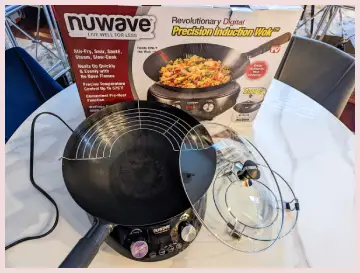
Nuwave-style countertop induction cooking offers a different advantage: convenient indoor use, adjustable settings, and a cooking surface that is often easier to wipe clean.
I would favor a powerful gas wok burner if authentic high-heat wok cooking is my priority and I have suitable ventilation and installation options.
I would consider Nuwave if I want a more compact setup for everyday meals.
- Nuwave vs. Breville Induction Cooktops
Breville induction appliances are another option for home cooks who prioritize temperature control and polished countertop design.
The comparison depends on the exact products. Some appliances focus on general-purpose induction cooking, while others provide more specialized controls or cooking functions.
I would compare the available power settings, temperature range, cookware compatibility, safety features, dimensions, and warranty before choosing between them.
If both appliances meet your cooking needs, ease of use and total price may matter more than the brand name.
- Nuwave vs. Duxtop Induction Cooktops
Duxtop is known for portable induction cooktops that appeal to people looking for an additional cooking surface.
A Duxtop unit paired with an appropriate wok can provide a similar general approach to countertop induction cooking. The important differences will depend on each model’s power, control layout, temperature options, and cookware requirements.
I would choose based on the specifications and practical fit rather than assuming one brand always heats faster or produces better stir-fries.
- Nuwave vs. Dedicated Electric Woks
A dedicated electric wok combines the heating element and wok-shaped cooking vessel into one appliance. This can be convenient if you want a single unit without separately selecting compatible cookware.
An induction cooktop offers greater flexibility because you may be able to use other compatible pots and pans on the same appliance.
However, a dedicated electric wok may feel more natural if you regularly toss ingredients in a purpose-built vessel. Before choosing either option, I would check the cooking capacity, temperature controls, cleaning requirements, and storage footprint.
- Nuwave vs. Conventional Electric Stoves
A conventional electric stove is versatile and already familiar to many home cooks. It can accommodate different pots and pans, although its heating response depends on the type of element and cookware used.
A portable Nuwave induction cooktop may offer faster adjustments and the convenience of an additional cooking station, but it also requires compatible magnetic cookware.
If you already own a good electric range, I would buy a separate induction unit only if its portability, responsiveness, or additional cooking capacity solves a real problem in your kitchen.
Is The Nuwave Induction Wok Worth Buying?
I would consider the Nuwave induction wok setup a sensible option for people who want convenient stir-frying, responsive temperature control, and a compact cooking arrangement.
Its strongest appeal is practicality. You can prepare quick meals without installing a dedicated gas wok burner, and you may find induction cooking easier to manage once you understand your cookware and settings.
However, I would not purchase it without confirming the exact model, included accessories, compatible wok dimensions, and electrical requirements. Those details determine whether you are getting a complete cooking solution or simply a cooktop that requires additional equipment.
For occasional stir-fries, a less expensive setup may be enough. For regular home cooking, the extra convenience of induction could make the investment worthwhile.
Also Read: Is Smithey Dutch Oven Worth It?
Frequently Asked Questions (FAQ)
A flat-bottom carbon-steel wok with a magnetic base is a strong choice for many home cooks. The best option depends on cooktop compatibility, size, and cooking preferences.
The price depends on the exact model, package, and current availability. Check Costco’s current listings or local warehouse pricing for an accurate figure.
Recommendations can vary by test and cookware category. Check the specific review and confirm that the recommended wok is compatible with your induction cooktop.
Yes, you need cookware with a compatible magnetic base. Check the manufacturer’s instructions to confirm the pan’s material, base dimensions, and shape.
Wrapping Up
I would recommend considering the Nuwave induction wok setup if you want a convenient way to prepare stir-fries and everyday meals without a dedicated gas burner.
Its potential advantages include responsive heating, countertop flexibility, and straightforward cooktop maintenance.
Before buying, confirm the exact model and choose an induction-compatible wok that fits securely. If those details match your needs, it can be a practical addition to your kitchen.
Recent Posts
It’s a 10 Miracle Leave-In Conditioner Reviews: Is It Worth Buying?
If your hair feels dry, frizzy, tangled, or difficult to manage, It’s a 10 Miracle Leave-In Conditioner might be the multitasking product you need.I like the idea of a leave-in treatment that...
If you want cookware that combines traditional craftsmanship with dependable cooking performance, the Smithey Dutch oven deserves a closer look.I appreciate the appeal of heavy-duty cast iron...