
I recently switched between Oral-B CrossAction and FlossAction brush heads on my oscillating-rotating electric toothbrush to figure out which one actually delivers better results for everyday plaque control and interdental cleaning.
My main goal with this piece is to break down the real differences in design, performance, and feel so you can pick the head that matches your mouth’s needs without guessing.
| Feature | Oral-B CrossAction | Oral-B FlossAction |
| Primary focus | Overall plaque removal on surfaces and gumline | Interdental cleaning and plaque loosening between teeth |
| Bristle design | 16-degree angled CrissCross bristles | Micropulse bristles (larger paddle-style) |
| Head shape | Round | Slightly more oval |
| Cleaning sensation | Invigorating and thorough | Vigorous with floss-like penetration |
| Indicator bristles | Fade to signal replacement | Fade to signal replacement |
| Compatibility | Most Pro, Smart, Genius handles (not iO) | Most Pro, Smart, Genius handles (not iO) |
| Best for | Heavy plaque buildup, general deep clean | Food traps between teeth, gumline focus |
Key Differences Between Oral-B CrossAction And FlossAction
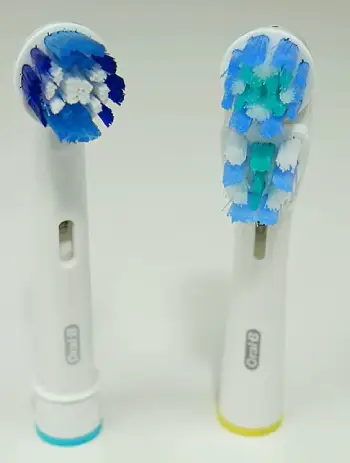
- Bristle angle and arrangement: CrossAction uses clusters of bristles set at a precise 16-degree angle that cross each other.
The filaments sweep across tooth surfaces and dig into the gumline more aggressively.
FlossAction relies on larger micropulse bristles that flex and pulse to push into the spaces between teeth.
This creates a different contact pattern right from the first second of brushing.
- Cleaning specialization: CrossAction targets plaque on the broad surfaces of the teeth and along the margin where gums meet enamel.
It often claims up to 100 percent more plaque removal than a manual brush in those zones.
FlossAction prioritizes the interdental areas using the stiffer micropulse filaments to loosen debris that regular bristles might miss.
Neither head replaces actual flossing.
- Head size and shape: CrossAction stays closer to a classic round profile that sits neatly over one tooth at a time.
This makes control simple. FlossAction stretches into a mildly oval outline which some users notice gives a broader reach across two teeth when the head is positioned carefully.
It can feel slightly bulkier in smaller mouths.
- Sensation during brushing: CrossAction delivers a firm sweeping motion that many people describe as invigorating.
The angled filaments create continuous contact. FlossAction adds a pulsing quality from the larger filaments that can feel more intense at first.
It is almost like a miniature car-wash brush working between the teeth until sensitivity levels adjust.
- Longevity and wear indicators: Both heads include blue indicator bristles that gradually fade to signal the three-month replacement window.
The CrossAction filaments tend to splay a bit sooner if you press hard.
The micropulse elements on FlossAction hold their shape longer but can feel less effective once they soften over time.
Key Features Of The Oral-B CrossAction
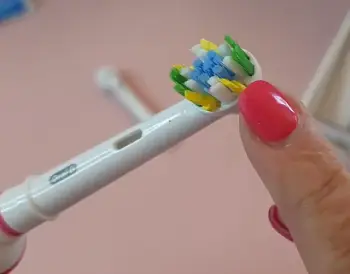
- Angled CrissCross bristles: The 16-degree tilt is the signature feature that lets those bristles reach under the gumline and across the curved sides of molars more effectively than straight filaments.
When the oscillating-rotating motor spins the angle creates a continuous sweeping path that lifts plaque rather than just polishing the surface.
- Multi-height filament clusters: Shorter and longer bristles work together so some filaments stay in contact with the tooth face while others probe the margins.
This layered contact is why the head often leaves teeth feeling smoother after a full two-minute session.
- Round head profile: The compact circle fits the contour of individual teeth making it easy to pause over each surface for the recommended few seconds.
The design also works well with the pressure sensor found on most Oral-B handles for safer daily use.
- Indicator bristles: A ring of blue filaments fades with use so you know when cleaning power drops.
This simple visual cue removes the guesswork of tracking calendar months across repeated replacements.
- Broad compatibility: The head snaps onto nearly every non-iO Oral-B handle from basic Pro models to higher-end Smart and Genius series.
This means you can keep the same handle and simply swap heads without buying new equipment.
Pros Of The Oral-B CrossAction
- Superior surface plaque removal: The angled bristles consistently rank high in independent tests for whole-mouth plaque scores. Users who struggle with visible film or tartar buildup often notice a cleaner feel after the first week of regular use.
- Invigorating brushing experience: Many people prefer the firm sweep because it creates the sensation of a thorough clean. That feedback encourages longer more consistent sessions every morning and night.
- Reliable gumline coverage: The 16-degree angle targets the critical margin where gingivitis often starts. Regular use can reduce bleeding sites over several weeks of steady brushing.
- Easy to control: The round head sits predictably on each tooth reducing the chance of missing spots when you follow the quadrant timer built into most Oral-B handles.
- Widely available and often bundled: CrossAction heads ship with many Oral-B handles. Replacement packs are easy to find and frequently discounted at major retailers.
Cons Of The Oral-B CrossAction
- Can feel aggressive for sensitive gums: The firmer angled filaments may cause temporary discomfort or mild bleeding if your tissue is already inflamed. Switching to a softer mode on the handle helps even though the head itself stays medium-firm.
- Less specialized for large interdental gaps: While the bristles reach between teeth they do not match the targeted penetration of the micropulse design. People with widely spaced teeth or heavy food packing may still need traditional floss.
- Filaments splay under heavy pressure: Over-brushing shortens the effective life of the head. The pressure sensor on higher-end handles mitigates this yet basic models leave the responsibility with the user to stay light.
- Slightly higher average cost per head: Multi-packs sometimes price out above FlossAction equivalents. Bulk deals can even the field for frequent buyers.
Key Features Of The Oral-B FlossAction
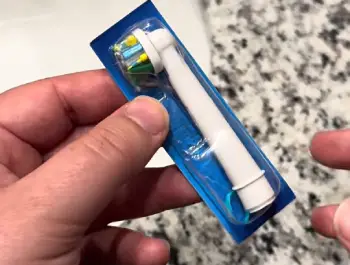
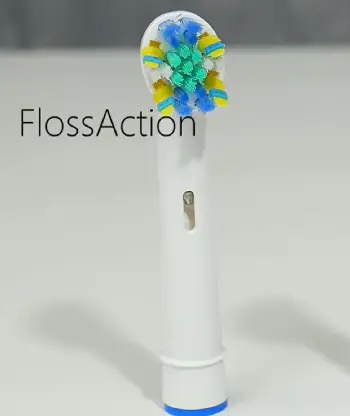
- Micropulse bristles: Four larger paddle-like filaments sit among the regular nylon bristles.
These micropulse elements flex and rebound with each oscillation pushing into interdental spaces the way floss might.
The motion loosens plaque and food particles that ordinary bristles often leave behind.
- Slightly oval head shape: The elongated outline covers a bit more surface area in one placement which can speed up cleaning for people who move the brush quickly.
The oval profile also helps the micropulse filaments stay aligned with the gaps between teeth during the full cycle.
- Focused interdental reach: Oral-B designed the head to improve cleaning between teeth without requiring a change in brushing technique.
The larger filaments do the extra work while the surrounding bristles handle the exposed surfaces at the same time.
- Indicator bristles: The same fade-to-yellow system as CrossAction keeps replacement timing consistent across the Oral-B ecosystem.
You never have to guess when the head has lost effectiveness.
- Same handle compatibility: The head works with the identical range of Pro Smart and Genius handles.
This lets you experiment freely without buying a new motor unit or changing your existing routine.
Pros Of The Oral-B FlossAction
- Enhanced interdental cleaning: The micropulse bristles loosen debris in spaces that standard heads leave untouched. Users who dislike daily flossing often report fewer trapped particles after meals once the head becomes part of the routine.
- Distinctive pulsing sensation: The larger filaments create a unique massage-like action along the gumline that some people find more satisfying than a pure sweeping motion after a short adjustment period.
- Effective plaque disruption between teeth: Clinical data supporting the head shows meaningful reductions in interproximal plaque scores compared with manual brushing. The benefit compounds when combined with proper two-minute technique.
- Competitive pricing in multi-packs: Five-packs frequently land at a lower per-head cost than CrossAction. This stretches the budget further for people who replace heads on the recommended schedule.
- Still delivers solid overall cleaning: Surrounding nylon bristles handle surface plaque well enough that the head never feels like a one-trick specialist even on days when interdental focus is secondary.
Cons Of The Oral-B FlossAction
- Sensation can be intense at first: The micropulse action feels stronger than expected for many new users. A short adjustment period is common and sensitive mouths may prefer a gentler alternative during the first week.
- Not a substitute for real floss: Oral-B itself states the head does not replace string floss or interdental brushes. Relying solely on FlossAction leaves deeper pockets unclean over time.
- Oval shape may feel bulky: In smaller mouths the elongated head can bump into cheeks or the opposite arch more often than a round profile. This requires a slight change in wrist angle.
- Limited advantage for tightly spaced teeth: If your teeth sit close together with minimal gaps the micropulse benefit shrinks. CrossAction may perform equally well for overall plaque control.
- Indicator bristles fade at the same rate: There is no unique longevity edge. Replacement frequency stays identical to other Oral-B heads and you still need to watch the color change carefully.
Real-World Performance And User Experience
I started with CrossAction because it came with my first Oral-B handle.
After two weeks my teeth felt smoother and the faint film I used to notice after coffee disappeared faster.
The angled bristles seemed to reach the back of my lower molars without extra wrist contortions.
When I switched to FlossAction I immediately felt the difference between the teeth. Food particles that once required a toothpick after lunch cleared more easily during the morning brush.
The micropulse filaments created a subtle vibration that made the gumline tingle in a pleasant way though the first few sessions left my gums a little tender until I lightened my pressure.
Over a full month of alternating heads I tracked two simple metrics: how clean my teeth felt at the end of the day and whether I needed string floss as often. CrossAction won on overall smoothness.
FlossAction reduced the number of times I reached for floss by roughly a third. Neither head eliminated the need for traditional interdental cleaning yet both raised the baseline cleanliness above what my old manual brush ever achieved.
Battery life and handle features stayed identical because the heads share the same motor interface.
The two-minute timer and thirty-second quadrant pacer worked the same way. Pressure-sensor lights behaved consistently. The only variable that changed was the mechanical interaction between bristles and enamel.
Who Should Choose CrossAction?
If plaque on the broad surfaces of your teeth is the bigger problem CrossAction makes the clearer choice.
People who notice a fuzzy feeling by midday or who see white film near the gumline benefit most from the angled sweep.
Those with relatively tight tooth contacts and no history of large interdental gaps also lean toward this head.
The invigorating feel keeps motivation high for users who otherwise rush through brushing.
Who Should Choose FlossAction?
Choose FlossAction when food regularly packs between your teeth or when your dentist flags interproximal plaque as a concern.
The micropulse design shines for people who already floss but want extra help or for those who skip floss more often than they should.
Mild sensitivity is usually manageable once you adjust pressure and the lower multi-pack price helps if you replace heads on schedule.
Combining Both Heads In A Rotation
Some users keep both styles on hand and alternate every few days. CrossAction handles the heavy surface work early in the week.
FlossAction focuses on the gaps later. The strategy prevents either head from wearing unevenly and gives the gums a slight change in stimulus.
Because both snap onto the same handle the switch takes seconds.
Maintenance Tips That Extend Head Life
Rinse the head thoroughly after every use and store it upright so water drains away.
Avoid pressing hard enough to trigger the pressure sensor repeatedly because excess force flattens filaments faster.
Replace the head as soon as the indicator bristles lose most of their color usually around the three-month mark with twice-daily brushing.
Sharing handles is fine. Simply swap the head so each person uses a dedicated set of bristles.
Broader Context Within The Oral-B Lineup
CrossAction and FlossAction sit in the middle of Oral-B’s non-iO head range. Precision Clean offers a softer smaller round option for sensitive mouths.
3D White adds polishing cups for surface stains. Sensitive or Pro Gum Care heads use ultra-soft filaments for inflamed tissue.
CrossAction and FlossAction remain the workhorses for people who want strong everyday cleaning without specialty features.
The iO series uses entirely different magnetic heads so these two styles stay limited to the older oscillating-rotating platforms.
Analytical Take On Clinical Claims
Manufacturer data and independent reviews both show that oscillating-rotating technology already outperforms most manual brushes.
The incremental gains between CrossAction and FlossAction are smaller and more situation-specific. CrossAction edges ahead on whole-mouth plaque scores in several studies. FlossAction posts stronger numbers on interproximal sites.
For the average user the practical difference appears in daily feel rather than dramatic clinical leaps.
Consistency of technique and replacement timing matter more than the precise head geometry once you leave the manual-brush baseline behind.
Also Read: Comparison Of Oral B Water Flosser And Waterpik
Frequently Asked Questions (FAQ)
Yes the micropulse bristles loosen plaque between teeth more effectively than standard heads though they do not replace string floss.
They excel at overall surface and gumline plaque removal making them better for general cleaning needs.
Heads vary mainly by bristle design and focus. CrossAction for angled plaque sweeping. FlossAction for interdental reach and others for sensitivity or whitening.
Yes its 16-degree angled bristles deliver strong plaque removal and a thorough clean for most users.
Wrapping Up
I set out to settle the CrossAction versus FlossAction debate through direct daily use and the answer depends on where your mouth needs the most help.
CrossAction gives you the broader more aggressive surface clean that leaves teeth feeling polished.
FlossAction steps in when the spaces between teeth are the weak point. You now have the design details performance notes and practical trade-offs to match a head to your own habits.
Pick the one that solves your biggest cleaning frustration stay consistent with the two-minute timer and replace the head on schedule.
Your gums and enamel will show the difference within a few weeks.
Recent Posts
● Interactive 5-Zone Interior & Exterior Paint Blueprint Paint Coverage Calculator: Gallons, Primer, Square Footage & Cost Tap any architectural surface zone on the blueprint...
If you want smooth, shiny hair without spending a fortune on a premium styling tool, the Ella Bella hair dryer may be worth considering.In these Ella Bella hair dryer reviews, I’ll look...