
I wrote this article to help you decide between the Osprey Farpoint 40 and Farpoint 55 after years of testing both on trips ranging from weekend city hops to multi-week backpacking routes.
My goal is to break down the real differences in size, features, comfort, and practicality so you can pick the one that matches how you actually travel without wasting money or ending up with the wrong pack.
| Feature | Farpoint 40 | Farpoint 55 |
| Total Volume | 40 liters | 55 liters (40L main + 15L daypack) |
| Weight (approx.) | 3.3 lbs / 1.5 kg | 4.1 lbs / 1.9 kg |
| Dimensions (main pack) | 22 x 14 x 9 in (approx.) | 22 x 14 x 9 in (main, daypack removed) |
| Carry-on Compliant | Yes for most airlines | Yes when daypack used as personal item |
| Detachable Daypack | No (compatible separately) | Yes, 15L included |
| Laptop Sleeve | Yes, up to 16″ in main pack | Yes, in the daypack |
| Harness & Hipbelt | Stowable, adjustable torso | Stowable, adjustable torso |
| Main Access | Full panel zip (suitcase style) | Full panel zip (suitcase style) |
| Best For | Strict one-bag carry-on travel | Longer trips needing a day bag |
Key Differences Between The Farpoint 40 And 55

- Capacity and overall bulk: The 40 keeps everything in one streamlined 40-liter shell that feels compact once you cinch the compression straps.
The 55 adds a full 15-liter daypack that snaps onto the front and gives you extra room for a jacket or camera without forcing you to dig through the main bag.
- Daypack inclusion: With the 40 you either travel without a secondary bag or buy the matching daypack later.
The 55 hands you the daypack right out of the box so you can leave the main pack behind and explore with only the essentials.
- Laptop and organization placement: The 40 places a padded sleeve for a 16-inch laptop right against the back panel so the weight sits close to your spine.
The 55 moves that sleeve into the daypack which works well if you plan to carry the smaller bag most of the time.
- Weight and carry feel: The 40 is noticeably lighter on empty scales and stays easier to hoist into overhead bins. The 55’s added daypack pushes the total closer to four pounds yet the load still transfers cleanly to the hips once the harness is adjusted.
- Airline flexibility: The 40 slides under most domestic and many international size limits without argument.
The 55 meets the same limits only after you detach the daypack and treat it as your personal item.
Key Features Of The Osprey Farpoint 40
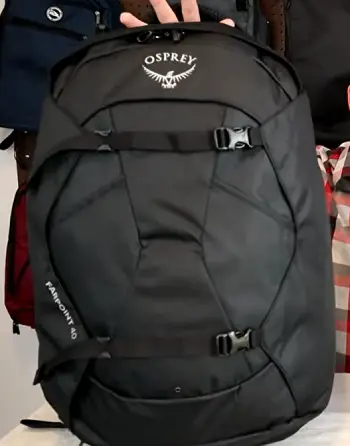
- Clamshell main compartment: The front panel zips open almost flat like a suitcase so I can lay the pack on a bed and see every item at once.
Two internal compression straps keep clothes from shifting once the bag is closed.
- Stowaway harness and hipbelt: A zippered panel covers the shoulder straps and hipbelt when you check the bag or place it in an overhead bin.
The straps never snag on conveyor belts which has saved me more than once during rough airport handling.
- Adjustable torso length: Sliding the harness up or down lets the pack fit torsos roughly 18 to 22 inches.
Combined with the LightWire frame and breathable back panel the weight settles on the hips rather than the shoulders even when the pack is fully loaded.
- External toiletry pocket and laptop sleeve: A quick-zip pocket on the exterior holds liquids for security lines.
The rear laptop sleeve accepts most 16-inch machines and stays accessible without opening the main compartment.
- Durable recycled fabric and lockable zippers: The recycled nylon with PFAS-free DWR shrugs off rain and abrasion.
Lockable main zippers add peace of mind in hostels or busy bus stations.
Compression and grab handles: Side and top straps pull the load tight for a cleaner profile.
Padded handles on top and side let you carry the pack like a duffel when the straps are stowed away.
Pros Of The Osprey Farpoint 40
- True one-bag simplicity: Everything lives in a single pack that meets carry-on rules for the majority of airlines. I never worry about checking bags or hunting for a second bag at the gate.
- Lighter empty weight: At roughly 3.3 pounds the pack itself eats less of my airline weight allowance. That extra margin lets me pack a few more layers or a heavier pair of shoes without stress.
- Laptop always close and protected: The sleeve sits against the back panel so the computer’s weight helps balance the load. Security checks go faster because I can pull the laptop without unpacking the whole bag.
- Excellent long-walk comfort: The adjustable harness and hipbelt make multi-hour city walks or train-station dashes far less tiring than a soft duffel. Load transfer to the hips is genuine and noticeable after the first mile.
- Easier to store and handle: Without a dangling daypack the 40 fits better under hostel beds in train luggage racks and in shared taxis. Compression straps keep the silhouette tight even when the pack is completely full.
- Lower price point: You pay less up front and still get Osprey’s lifetime All Mighty Guarantee. For travelers who already own a small day bag the savings make clear sense.
Cons Of The Osprey Farpoint 40
- No built-in daypack: If you want a separate bag for daily exploring you must buy one later or use a simple tote. That extra purchase adds both cost and another decision before the trip starts.
- Limited internal pockets: The main compartment is mostly open space. Packing cubes become almost mandatory if you want to keep socks separate from chargers and cables.
- No external water-bottle pocket on some versions: A stretch shove-it pocket exists but a dedicated bottle sleeve would be more convenient on hot walking days in the city.
- Slightly less volume for longer trips: Forty liters works well for a week or ten days of careful packing. Beyond that length you start leaving items behind or wearing bulkier layers on the plane.
- Hipbelt not fully removable: It stows neatly behind the panel but you cannot take it off entirely if you prefer a pure shoulder-carry look in more formal settings.
Key Features Of The Osprey Farpoint 55

- Integrated 15-liter daypack: The daypack attaches with compression straps and can be worn on the front or carried separately.
It includes its own lockable main compartment mesh side pockets and a padded laptop or tablet sleeve.
- Matching clamshell main pack: Once the daypack is off the remaining 40-liter body opens the same way as the standalone 40.
Internal compression straps and a mesh pocket keep contents organized during long travel days.
- Stowable suspension system: The LightWire frame adjustable torso and reverse spacer-mesh hipbelt zip away behind a protective panel.
Comfort remains high whether you are walking through airports or taking a short hike to a viewpoint.
- External attachment points: Gear loops and optional sleeping-pad straps let you lash a jacket or mat to the outside.
The daypack itself has stretch mesh pockets that hold a water bottle securely.
- Carry-on strategy built in: Osprey designed the system so the main pack goes overhead and the daypack rides under the seat.
Dimensions of the main body align with most domestic limits once the daypack is separated.
- Same tough materials and lockable hardware: Recycled nylon PFAS-free finish and lockable zippers match the 40 exactly.
The overall build feels ready for years of rough travel across different climates.
Pros Of The Osprey Farpoint 55
- Two packs in one system: The daypack gives you instant flexibility on arrival. I leave the main bag locked in a room and wander with only the essentials which feels lighter and safer in crowded markets.
- Extra capacity without permanent bulk: Fifty-five liters total handles longer itineraries or colder climates that need more clothing. When the daypack is off the main pack shrinks back to a clean carry-on friendly size.
- Laptop moves with the day bag: Carrying a computer in the smaller pack keeps it with me during day trips and security lines. The main pack can stay checked or overhead without electronics inside.
- Same excellent suspension: Comfort matches the 40 even with the added weight of the daypack. The frame still shifts load to the hips and the breathable panel keeps my back cooler than many other travel packs.
- Great for mixed travel styles: City sightseeing one day and a short hike the next work smoothly because the daypack is always ready. Gear loops let me attach a jacket or tripod without opening the main compartment.
- Still protected by lifetime warranty: Osprey stands behind both packs equally. I have seen older Farpoints still performing well after a decade of heavy use across continents.
Cons Of The Osprey Farpoint 55
- Heavier overall package: The combined weight sits closer to four pounds. On long airport walks that difference becomes noticeable before the hipbelt takes over the load.
- Daypack attachment learning curve: Clipping the smaller bag on and off takes a little practice at first. When both packs are fully loaded the straps can feel slightly fiddly until you develop a routine.
- Main pack lacks some features of the 40: There is no dedicated laptop sleeve or external toiletry pocket in the main body because the design assumes you will use the daypack for those items. If you ever travel without the daypack you miss those small conveniences.
- Bulkier when fully assembled: Walking through narrow train aisles or crowded hostels with both pieces attached requires more awareness. The daypack sticks out and can bump people if you are not careful in tight spaces.
- Higher purchase price: You pay for the second bag whether you need it every day or not. Travelers who already own a good daypack may feel they have overpaid for the extra piece.
Real-World Use And Packing Experience
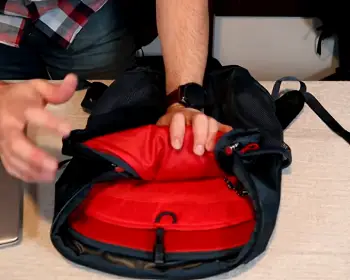
I have carried the Farpoint 40 on short European city breaks and the 55 on a three-week Southeast Asia loop.
With the 40 I pack packing cubes for clothes a toiletry bag in the external pocket and the laptop against my back.
Compression straps keep the profile tight enough for overhead bins on most full-service carriers. The stowaway harness means the pack looks tidy when I check it on rare occasions.
With the 55 I treat the daypack as my personal item from the start. Camera water bottle snacks and a light jacket go in the small bag. The main pack holds bulkier items and stays overhead.
On arrival the daypack becomes my daily companion while the larger bag rests in the room.
Both packs open fully so packing and unpacking feel more like dealing with a soft suitcase than a traditional backpack. The fabrics resist light rain well enough that I rarely need a cover for city use though I still pack one for heavier downpours.
Fit matters. Measure your torso and try both sizes if possible. The adjustable harness covers a useful range but an S/M feels better on shorter frames and an M/L on taller ones.
Women often prefer the Fairview versions of the same packs for a narrower shoulder and hip fit yet the Farpoint works for many body types once the torso length is set.
Durability has been solid in my experience. Zippers still glide after years of use and the fabric shows only minor scuffs.
Osprey’s repair program means a broken buckle or torn seam usually gets fixed rather than forcing a full replacement.
Who Should Choose Which Pack?
If your trips stay under ten days you fly airlines with strict size rules or you already own a small day bag the Farpoint 40 keeps life simple.
It forces smarter packing and rewards you with lighter weight and fewer moving parts.
If you regularly take longer journeys need a dedicated day bag or want the option to expand capacity without buying a second pack later the Farpoint 55 delivers more flexibility.
The extra weight and cost are real yet the two-in-one design solves problems that appear once you leave the airport.
Both packs share the same core DNA of comfortable suspension suitcase-style access and travel-focused details.
The choice comes down to whether you value pure minimalism or built-in versatility more.
Also Read: Is Veto Pro Pac Tech Worth It?
Frequently Asked Questions (FAQ)
No. The 40 is a single 40-liter pack. The 55 is a 40-liter main pack plus a 15-liter detachable daypack.
Choose the 40 for strict carry-on one-bag travel. Choose the 55 if you want extra space and a ready-to-use daypack for longer or more varied trips.
The main pack meets most domestic carry-on limits when the daypack is removed and used as a personal item. Always verify with your airline.
Yes. Its dimensions fit the majority of airline carry-on rules for domestic and many international flights.
Wrapping Up
I set out to compare the Farpoint 40 and 55 so you could see exactly how each performs in real travel situations.
After living with both I know the 40 wins for pure simplicity and guaranteed carry-on ease while the 55 shines when you need that extra day bag and a bit more total volume.
Whichever you pick you get a durable comfortable pack backed by a lifetime guarantee. Measure your torso think about your typical trip length and choose the one that matches how you actually move through the world.
You will not regret putting either on your back.
Recent Posts
I tried Meltoway Hair Dissolving Cream because I wanted a quick way to deal with unwanted body hair without reaching for a razor every few days. If you are looking for a convenient at-home...
If you’re considering a saffron-based supplement to support mood, appetite control, and everyday wellness, Happy Saffron Plus is worth considering.I like that it takes a familiar botanical...