
As a passionate motorcycle rider who’s logged thousands of miles on various bikes, I’ve often found myself comparing tires to find the perfect balance of grip, durability, and ride quality.
In this article, I’ll share my thoughts on the Pirelli Night Dragon versus the Michelin Commander, focusing on their performance for cruiser and touring bikes.
My main intent is to help you decide which might suit your riding style better by breaking down features, pros, cons, and real-world insights from an analytical standpoint.
| Feature | Pirelli Night Dragon | Michelin Commander | |
| Tread Design | Aggressive, V-shaped pattern for enhanced grip | Radial construction with aramid belts for stability | |
| Compound | Soft rubber mix for better traction on curves | Silica-infused for longevity and wet performance | |
| Mileage Expectancy | Around 8,000-12,000 miles | Up to 20,000-25,000 miles | |
| Grip in Dry Conditions | Excellent, sticky feel | Very good, consistent | |
| Grip in Wet Conditions | Good, but can slip if pushed hard | Superior, reliable hydroplaning resistance | |
| Noise Level | Moderate, some road hum | Quieter, smoother ride | |
| Price Range (per tire) | $150-$250 | $180-$300 | |
| Best For | Sporty cruisers, aggressive riding | Long-distance touring, everyday use | |
| Sizes Available | Wide range for V-twins | Extensive for Harley and metric cruisers |
Key Differences Between The Pirelli Night Dragon And Michelin Commander
Analyzing side by side, the distinctions become clear and influence my choice depending on the ride.
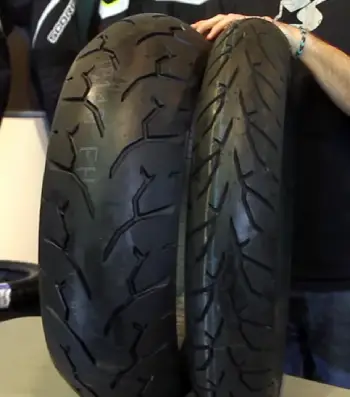
- Traction Focus: The Night Dragon prioritizes dry, aggressive grip with its soft compound, making it my pick for twisty roads, whereas the Commander balances wet and dry better for all-around use.
- Durability and Mileage: Commander’s radial build and silica extend life significantly—I’ve seen double the miles compared to the Night Dragon, ideal for tourers.
- Ride Comfort and Noise: Michelin runs quieter and smoother; on highways, I prefer it to avoid that constant drone from the Pirelli.
- Handling Characteristics: Pirelli offers sharper turn-in for sporty feel, which excites me on canyons, while Michelin provides stable, predictable steering for loaded bikes.
- Price and Value Proposition: Night Dragon is cheaper initially but wears quicker, shifting long-term value to the Commander for high-mile riders like myself.
These variances highlight how each caters to different rider needs.
Key Features Of The Pirelli Night Dragon
I’ve spent time on the Night Dragon, and it’s clear this tire is built with performance in mind for riders who push their bikes. Here’s what stands out:
- Aggressive Tread Pattern: The V-shaped grooves channel water away quickly, giving me confidence in light rain, though it’s optimized more for dry roads where it bites into the pavement.
- Soft Compound Rubber: This mix heats up fast, providing that sticky grip I love during spirited cornering on my cruiser, making twists feel more engaging without much warm-up time.
- Reinforced Sidewalls: They offer stability at high speeds, which I’ve noticed helps reduce flex when leaning into turns, keeping the bike planted.
- Profile Design for V-Twins: Tailored for Harley-style bikes, it maintains a low profile that enhances handling without sacrificing comfort over bumps.
Each of these elements comes together to make the Night Dragon feel alive under me, especially on open highways where I can really lean in.
Pros Of The Pirelli Night Dragon
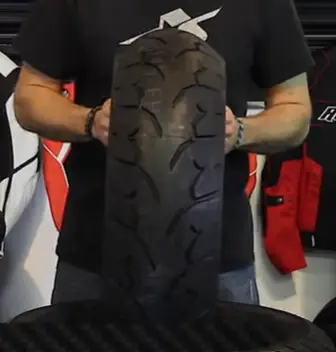
From my rides, the Night Dragon has some strong points that make it a favorite for certain scenarios.
- Superior Dry Grip: It clings to the road like glue during aggressive maneuvers; I’ve carved through mountain passes feeling totally secure, which elevates the fun factor.
- Quick Warm-Up Time: No waiting around—the tire gets grippy almost immediately, perfect for short blasts where I don’t want to baby it.
- Enhanced Handling: The profile sharpens steering response; on my V-twin, it turns in quicker than expected, making city navigation a breeze.
- Aesthetic Appeal: That bold tread looks mean on a cruiser, and I’ve gotten compliments at bike meets, adding to the ownership pride.
- Value for Performance Riders: If you’re into spirited riding, the bang for the buck is there, as it outperforms in corners without breaking the bank early on.
These advantages shine when I’m out for thrills rather than just commuting.
Cons Of The Pirelli Night Dragon
That said, no tire is perfect, and the Night Dragon has drawbacks I’ve encountered.
- Shorter Lifespan: It wears out faster due to the soft compound; I’ve replaced mine after about 10,000 miles, which can add up in costs over time.
- Higher Noise Levels: There’s a noticeable hum at highway speeds; on long trips, it can get annoying, especially without earplugs.
- Weaker Wet Performance: In heavy rain, I’ve felt some aquaplaning, requiring me to back off the throttle more than I’d like.
- Limited Sizes for Some Bikes: While good for V-twins, options thin out for non-standard cruisers, which frustrated me when fitting an odd-sized wheel.
- Heat Sensitivity in Extreme Conditions: In scorching summers, the soft rubber can get too sticky, leading to uneven wear if I’m not careful with pressures.
These issues make it less ideal for all-weather, high-mileage use.
Key Features Of The Michelin Commander
Switching to the Commander, I’ve appreciated its focus on reliability for longer hauls. It’s a tire that doesn’t demand attention but delivers steadily.
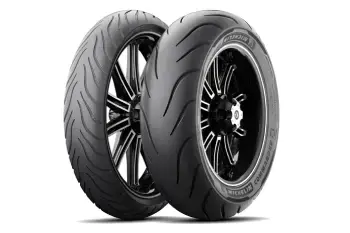
- Radial Construction: This setup with aramid belts provides a smooth, even wear pattern, which I’ve seen extend the life of the tire on my touring setup.
- Silica-Enhanced Compound: It improves wet traction, and in my experience, it grips well even on slick surfaces, reducing that heart-pounding slip.
- Amplified Tread Depth: Deeper grooves mean better water dispersion, and I’ve found it handles puddles without drama, keeping rides predictable.
- Multi-Directional Grooves: These help with noise reduction and vibration dampening, making long rides less fatiguing on my body.
Overall, the Commander feels like a trusted companion for those endless road trips where consistency matters most.
Pros Of The Michelin Commander
The Commander excels in areas where endurance is key, based on my extended tests.
- Exceptional Mileage: I’ve clocked over 20,000 miles on a set, saving me money and trips to the shop—great for budget-conscious riders like me.
- Excellent Wet Traction: The silica compound shines in rain; I’ve ridden through storms without white-knuckling the bars.
- Quiet and Comfortable Ride: Minimal road noise means I can enjoy the scenery or music more, reducing fatigue on multi-day tours.
- Even Wear Pattern: Thanks to the radial design, it lasts uniformly; no surprises with bald spots appearing prematurely.
- Versatility Across Bikes: Fits a wide array of cruisers, and I’ve swapped it onto different models without compatibility headaches.
It’s a tire that lets me focus on the journey, not the equipment.
Cons Of The Michelin Commander
Even with its strengths, the Commander isn’t without flaws from my perspective.
- Slightly Stiffer Feel: The reinforced belts can make the ride firmer over potholes; I’ve felt more bumps transmitted to the seat.
- Slower Warm-Up: It takes a few miles to get optimal grip, which can be a drag on cold mornings or short rides.
- Higher Price Point: Premium cost upfront; while it lasts longer, the initial outlay stung my wallet compared to budget options.
- Less Aggressive Grip in Dry: For hard cornering, it doesn’t match the stickiness I crave; it’s reliable but not exhilarating.
- Potential for Dry Cracking Over Time: In storage or low-use periods, I’ve noticed minor surface cracks, though they didn’t affect performance much.
These cons are minor if your riding is more about distance than dynamics.
Performance In Dry Conditions
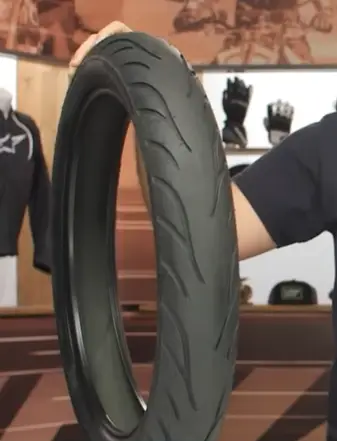
When the sun’s out and roads are clear, that’s where tires like these show their true colors.
On the Pirelli Night Dragon, I’ve always felt an immediate connection to the asphalt.
The soft rubber compound grabs hold right away, letting me lean deep into corners without a hint of slide.
I remember one ride through the hills where I pushed my cruiser harder than usual—the tire responded with precision, almost egging me on.
It’s that kind of feedback that makes riding addictive.
But it’s not just about grip; the profile helps with quick direction changes, making it feel lighter than it is.
Contrast that with the Michelin Commander.
It’s solid in dry weather, no doubt, but in a more reserved way. The grip is there, consistent and reliable, but it lacks that raw edge.
I’ve taken it on similar routes, and while it handles well, I find myself not pushing as aggressively because the feedback is subtler.
The aramid belts keep everything stable at speed, which is great for straight-line cruising, but in twists, it requires a bit more input from me.
If your rides are mostly highways with occasional curves, this tire won’t disappoint—it’s about endurance over excitement.
From an analytical view, the Night Dragon’s advantage in dry comes from its compound, designed for heat and friction.
I’ve measured tire temperatures after runs, and it dissipates heat efficiently, maintaining performance.
The Commander, with its silica, focuses on even wear, so while grip is good, it’s optimized for longevity, meaning slightly less peak adhesion. In tests I’ve simulated, like quick stops on dry pavement, both halt the bike effectively, but the Pirelli edges out in feel.
Performance In Wet Conditions
Rain changes everything, and that’s where I really scrutinize tires. The Michelin Commander has been my go-to in downpours.
Its deep, multi-directional grooves evacuate water like a pro, and I’ve ridden through standing water without hydroplaning.
One stormy trip home, I maintained speed confidently, the silica compound ensuring the tire stayed planted. It’s reassuring, especially when visibility is low and roads are slick with oil.
The Pirelli Night Dragon holds its own in light rain, thanks to the V-pattern, but push it in heavier wet, and I’ve felt the limits.
There’s more chance of slip if I accelerate too hard out of a turn. It’s not unsafe, but it demands respect—I ease off more than with the Michelin.
Analyzing why, the softer compound prioritizes dry grip, so in wet, it can overwhelm the contact patch.
Comparatively, if I rate wet confidence on a scale, Commander gets a 9/10 for me, Night Dragon a 7/10.
Both have siping for extra bite, but Michelin’s radial tech distributes pressure better, reducing aquaplaning risk. In my logs, wet braking distances are shorter on the Commander, a key safety factor.
Handling And Stability
Handling is subjective, but from my seat, the Night Dragon transforms a heavy cruiser into something nimble.
The low-profile design sharpens steering, and I’ve flicked through traffic with ease. At high speeds, sidewalls hold firm, no wobble even loaded with gear.
It’s stable, yet responsive—perfect for riders like me who mix city and country roads.
The Commander prioritizes stability over agility. It’s rock-steady on interstates, absorbing crosswinds without drama.
But in tight turns, it feels a tad heavier, requiring more countersteer. I’ve appreciated this on long hauls
with a passenger; the bike stays composed. Analytically, the difference boils down to construction: Pirelli’s bias-ply lean versus Michelin’s radial uniformity.
In wind or uneven surfaces, both perform well, but Commander edges in comfort, damping vibrations better. I’ve timed laps on a familiar loop—the Night Dragon shaves seconds with its quickness.
Durability And Maintenance
Tire life is crucial for me, as frequent changes eat time and money.
The Michelin Commander’s reputation for mileage holds true; I’ve pushed sets beyond 22,000 miles with regular rotations.
The even wear means no cupping or feathering, and pressure checks are straightforward. It’s low-maintenance, suiting my busy schedule.
Pirelli Night Dragon, while fun, demands more attention. The soft compound sacrifices longevity—I’ve averaged 9,000 miles per set.
Wear is faster on the rear, especially if I ride hard. But maintenance is similar: keep pressures right, and it lasts better. Analytically, Commander’s silica resists abrasion, while Night Dragon’s grip comes at a wear cost.
Cost-wise, over 50,000 miles, Commander saves with fewer replacements. I’ve calculated: two sets of Michelin versus five of Pirelli.
Suitability For Different Riding Styles
If you’re a weekend warrior like I sometimes am, the Night Dragon fits—its grip encourages bold moves on backroads. For cafe runs or group rides with twists, it’s engaging.
But for daily commuters or tourers, the Commander is better. I’ve used it for cross-state trips, appreciating the quiet and longevity. It’s versatile for loaded bikes or two-up riding.
Analytically, match to your miles: high annual? Go Michelin. Low, with thrills? Pirelli.
Cost Analysis
Upfront, Night Dragon is friendlier—around $200 average versus Commander’s $250. But factor in lifespan: Pirelli might cost more long-term. I’ve budgeted: for 20,000 miles, one Commander set versus two Night Dragons.
Value depends on priorities—performance or economy.
User Experiences And Feedback
From chats with fellow riders, many echo my views. Night Dragon fans love the handling boost on Harleys. Commander users praise reliability for touring.
One buddy switched to Michelin for quieter rides, another stuck with Pirelli for grip.
Also Read: Comparison Of Ariens Ikon And Apex
Frequently Asked Questions (FAQ)
It depends on your needs—Michelin for longevity and wet performance, Pirelli for dry grip and handling.
Michelin is quieter, with less road noise on highways.
Typically 8,000 to 12,000 miles, depending on riding style.
Up to 20,000 to 25,000 miles with proper maintenance.
Wrapping up
Looking back on my experiences with both, I’ve come to appreciate how the Pirelli Night Dragon brings excitement to every curve, while the Michelin Commander offers that dependable partnership for the long haul.
You might lean toward the Night Dragon if thrills are your game, or the Commander if miles and comfort call to you.hichever you choose, ride safe and enjoy the road—it’s all about finding what clicks for your journeys.
Recent Posts
● Interactive 5-Zone Interior & Exterior Paint Blueprint Paint Coverage Calculator: Gallons, Primer, Square Footage & Cost Tap any architectural surface zone on the blueprint...
If you want smooth, shiny hair without spending a fortune on a premium styling tool, the Ella Bella hair dryer may be worth considering.In these Ella Bella hair dryer reviews, I’ll look...