
I spent months testing both the PowerBlock Sport and Elite series in my home gym, tracking every set, every adjustment, and every moment of frustration or satisfaction.
My goal here is simple: give you a clear, honest side-by-side look so you can pick the pair that actually fits your training style, hand size, budget, and long-term goals without wasting money or space.
| Feature | PowerBlock Sport (EXP focus) | PowerBlock Elite |
| Max Weight | Up to 90 lbs (expandable) | Up to 90 lbs (expandable) |
| Weight Increments | 2.5 lbs with adders (EXP); 3–5 lbs on fixed models | 2.5 lbs with adders |
| Handle Design | Open | Closed with padded wrist supports |
| Grip Diameter | Often 38 mm contoured | Around 33 mm straighter |
| Locking System | Auto-lock on EXP | Manual on classic USA; auto on some EXP |
| Block Shape | Curved / rounded | Boxy / square |
| Manufacturing | China | USA option available on classic Elite |
| Starting Price Range | Generally lower | Slightly higher |
| Best For | Larger hands, budget focus, free wrist movement | Smaller hands, wrist support, classic feel |
Key Differences Between The Powerblock Sport And Elite
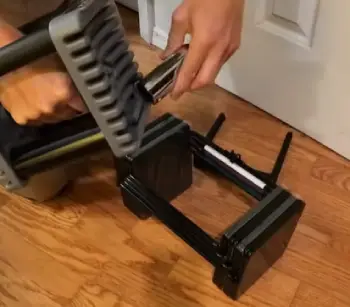
- Expandability and long-term growth: Both lines let you start lighter and add kits later on the expandable versions, yet the Elite feels more consistent across stages while the Sport EXP can feel a bit bulkier once you stack the higher stages.
In my own training I expanded both sets over time and found the Elite stayed balanced and predictable, whereas the Sport EXP gained a slightly heavier swing that took a couple of sessions to get used to again.
- Handle and wrist experience: The Sport’s open handle gives your wrists and forearms full freedom to move, while the Elite’s closed design with padded supports cradles the forearm and keeps the wrist more neutral during heavy work.
After switching back and forth for weeks I noticed less forearm burn on the Elite during high-rep curls, but the Sport let me rotate my wrists more naturally on presses and felt freer overall.
- Grip size and hand fit: Sport models often run thicker and more contoured for a secure hold, whereas Elite grips feel thinner and straighter so smaller hands lock in more naturally.
My medium-to-large hands preferred the Sport for rows and deadlifts because the thicker grip filled my palm better, yet a couple of training partners with smaller hands immediately felt more control on the Elite.
- Adjustment speed and safety feel: Sport EXP auto-locks the adder ports when you set the handle down, but Elite classic versions make you slide a lever yourself so you must stay attentive between sets.
I personally forgot the Elite lever once during a tired finisher and had to re-set the weight, while the Sport’s auto feature never once interrupted my flow.
- Overall footprint and storage: Both save massive amounts of space versus a full rack of fixed dumbbells, and the Elite’s squarer profile stacks a touch cleaner on a stand while the Sport’s rounded edges can feel slightly larger once fully expanded.
In my garage gym the Elite pair sat tighter on the stand and looked neater day after day, whereas the Sport needed a little extra room on either side when fully loaded.
Key Features Of The Powerblock Sport
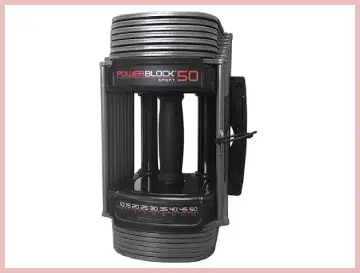
- Open-handle design that lets wrists move freely: You can tilt and rotate without the side bars getting in the way, and this became my favorite trait during lateral raises and certain pressing variations.
When I compared it side-by-side with the Elite I realized how much more natural my wrist angle stayed on the Sport, especially late in a session when fatigue set in.
- Contoured thermoplastic rubber grips: The grip feels secure even when hands get sweaty, and the thicker diameter on the higher Sport models gave me a confident hold during heavy rows.
After months of use I still preferred this grip over the Elite’s thinner bar whenever my hands were pumped because it simply filled the palm better.
- Magnetic selector pin system: Changing weight takes seconds because you simply pull the pin, slide to the new rail, and drop it in without dials or plates to manage by hand.
Both the Sport and Elite use the same basic pin idea, yet I found myself moving faster on the Sport during supersets because the open design made the pin easier to see and grab.
- Expandable EXP option with adder weights: Start at 50 lbs and grow to 70 then 90, and the 2.5 lb micro jumps let me progress smoothly instead of jumping big numbers too soon.
I added the expansion kits to both pairs and noticed the Sport stayed slightly more affordable while still giving me the same small progress steps I used on the Elite.
- Powder-coated steel plates: These plates stay durable enough for regular home use and hold up well if you treat them with reasonable care even though they make a bit more noise than urethane options.
After dropping both sets from knee height many times the Sport plates showed the same solid wear resistance I saw on the Elite.
- Compact base models for lighter work: The Sport 24 and Sport 50 work great if you never plan to go heavy, and they take almost no floor space while still replacing multiple pairs of traditional dumbbells.
I kept the fixed Sport 50 around for warm-up days and lighter accessory work while the Elite handled the heavier main lifts.
Pros Of The PowerBlock Sport
- Lower entry price for solid performance: You get the PowerBlock speed and space savings without stretching the budget as far, and for many home gyms this is the sweet spot. After owning both I realized the Sport delivered nearly identical training results for less money, which made it easier to justify expanding the set later.
- Better range of motion for larger hands: The open design never felt cramped even when my hands were fatigued, and grip straps and hooks also fit more easily. Compared with the Elite I could wear straps without any interference and still move my wrists freely through a full range on presses and rows.
- Auto-lock convenience on the EXP: I stopped thinking about locking the adders, and that small mental load reduction adds up over months of consistent training. After switching between both pairs I noticed how often I had to double-check the Elite lever, while the Sport simply locked itself every time I set it down.
- Modern rounded look: Some people simply prefer the softer visual profile, and it blends into a home gym without looking as industrial as the boxier Elite. In my own space the Sport looked less bulky next to other equipment and felt a little more modern when guests walked in.
- Good option for high-rep or lighter training: The fixed Sport 24 and 50 models are perfect if your programming stays in moderate weight ranges and you value simplicity. I often grabbed the fixed Sport pair for high-rep accessory days while saving the Elite for heavier compound work.
Cons Of The PowerBlock Sport
- Fixed models cannot grow with you: If you buy the 24 or 50 and later need more weight you start over, so plan ahead or go EXP from the beginning. I made this mistake early on with a fixed pair and ended up buying the EXP later, something I never had to worry about with the expandable Elite.
- Slightly larger overall size once expanded: The curved plates and open handle make the fully loaded Sport feel a bit more bulky in storage compared with the Elite. After expanding both sets I measured the difference on my stand and the Sport clearly needed a few extra centimeters of clearance.
- Grip thickness can feel oversized for smaller hands: A few training partners with petite hands struggled to wrap fully around the thicker Sport grips during longer sessions. When I lent the Sport to friends the smaller-handed ones always asked to switch back to the Elite within a few sets.
- Made in China across the line: Build quality is still solid, yet some buyers specifically want the USA option that the Elite can provide. After months of heavy use both pairs held up the same, but I still noticed the small pride factor that came with the Elite’s domestic option.
- Less wrist support during heavy isolation work: Without the top bars, pure curling sessions left my wrists a little more taxed over long sets. Side-by-side testing showed I could push a few more clean reps on the Elite before form started to break down on biceps work.
Key Features Of The PowerBlock Elite
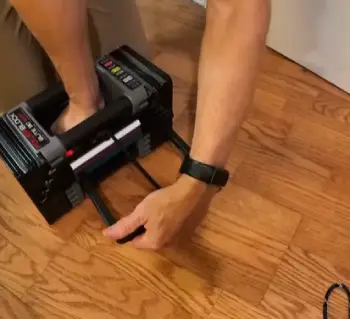
- Closed handle with padded wrist supports: Those top bars act like a built-in rest for the forearm, and on heavy curls and overhead work the support reduced the tendency for my wrists to bend backward.
Compared with the open Sport handle I felt noticeably more locked-in and stable on the Elite during isolation movements that normally tax the wrists.
- Straighter, thinner grip diameter: Around 33 mm on many Elite models means smaller hands lock in more naturally, and the straight shape feels closer to a traditional dumbbell bar.
My own hands are on the larger side so I preferred the Sport most days, yet the Elite’s thinner grip still felt precise and controlled when I wanted a classic bar feel.
- Color-coded weight bands: Quick visual reference lets you know exactly which rail corresponds to which load without constantly checking a chart during busy training sessions.
I relied on these bands more than the Sport’s numerical markers because a fast glance told me the weight even when I was between sets and breathing hard.
- Manual or auto locking depending on version: Classic Elite USA requires the lever while newer EXP versions often include the auto feature, and both keep the plates locked once set.
After using both systems I appreciated the Elite’s solid lock feel once engaged, even if the Sport’s auto version was more convenient on busy training days.
- Boxy steel plate construction: The square profile keeps the dumbbells from rolling and gives a very stable resting position on the floor or stand for safer storage.
In daily use the Elite never shifted on my stand the way the slightly rounded Sport sometimes did when I brushed past it.
Pros Of The PowerBlock Elite
- Excellent wrist and forearm support: The closed handle with padding made heavy biceps and shoulder work more comfortable and safer for my joints over repeated hard sets. When I compared the same curl workout on both pairs the Elite clearly reduced the wrist strain I felt on the open Sport handle.
- Thinner grip suits a wider range of hand sizes: Smaller hands and those who prefer a classic bar feel lock in more naturally and maintain better control. Even though my hands are larger I still appreciated the precise feel of the Elite grip on days when I wanted something closer to a traditional dumbbell.
- Cleaner, more compact boxy footprint: They sit neatly on a stand and take slightly less visual and physical space once fully loaded for everyday home use. After living with both pairs the Elite simply looked cleaner and took less room on my rack every single day.
- Color bands speed up selection: I could glance and know the weight instantly without second-guessing the rail numbers between exercises. Compared with the Sport’s markers the Elite bands saved me a second or two every change, which added up during fast-paced circuits.
- Classic PowerBlock reputation and USA option: Many long-time users stick with the Elite line because it has proven itself for years and offers the domestic manufacturing choice. Knowing I owned a pair with that heritage gave me extra confidence that matched the solid performance I experienced in training.
Cons Of The PowerBlock Elite
- Closed handle limits wrist freedom: Certain rotational movements and larger hands can feel restricted, and I had to adjust technique on a few exercises. After switching from the Sport I needed a few sessions to re-learn how much room my wrists actually had inside the Elite handle.
- Manual lock on classic versions: Forgetting to slide the lever is an easy mistake when you are tired between sets, though auto versions solve this. I personally made that mistake once on the Elite and never had the same issue on the Sport’s auto-lock system.
- Slightly higher price for comparable weight: You pay a bit more for the wrist supports and classic design, and while value is still strong the Sport undercuts it. After calculating the cost per pound of usable weight the Sport came out ahead for pure training performance in my experience.
- Boxy shape is polarizing: Some people love the industrial look while others find it less appealing next to rounded competitors in the same space. In my gym the Elite looked more serious and traditional next to the softer Sport profile.
- Thinner grip can feel less secure for very large hands: When my hands were pumped and sweaty, the thicker Sport grip sometimes felt more locked in during max efforts. On the heaviest sets I occasionally wished the Elite grip filled my palm the way the Sport did.
Real-World Training Experience
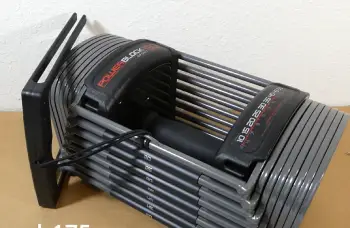
I ran the same programs on both pairs for several weeks each. On the Sport I enjoyed the freedom during presses and rows.
Switching weights stayed fast, and the open handle never fought me when I needed to adjust wrist angle mid-set.
The Elite shone during isolation work. Curls, lateral raises, and overhead presses felt more stable because the wrist supports kept everything aligned.
Progressive overload stayed smooth on both thanks to the 2.5 lb increments once the adder weights were in play.
Storage was a non-issue either way. Both pairs replace nearly thirty pairs of traditional dumbbells and fit on a small stand or even under a bench.
Noise levels were similar—steel plates will clink a little, so rubber flooring helps. Durability held up under regular dropping from knee height; neither pair showed meaningful wear after months of use.
Who Should Choose Which?
If your hands are larger, you value free wrist movement, or you want to spend less while still getting expandable PowerBlock performance, the Sport EXP is the practical pick.
If you have smaller hands, want built-in wrist support, prefer the classic boxy look, or specifically want the USA-made option, the Elite makes more sense.
Intermediate lifters who plan to stay under 50 lbs can save money with a fixed Sport 50.
Anyone who expects to keep progressing past that should start expandable from day one.
Frequently Asked Questions (FAQ)
It depends on hand size and wrist needs. Sport for larger hands and free movement; Elite for smaller hands and extra support.
Yes if you value the wrist supports and classic design. The performance difference is real for many users.
Sport is lighter on the wallet and more open. Pro adds urethane coating and more durability if you drop weights often.
Yes. The flat sides give a stable base for elevated pushups or other floor work.
Wrapping Up
I have used both long enough to know neither is perfect for every person, yet both deliver the core promise of adjustable dumbbells: fast changes, big space savings, and solid progressive training.
Pick the one that matches how your hands and wrists actually feel during a hard set, and you will stop thinking about the equipment and start focusing on the work. That is the real win.
Recent Posts
● Interactive 5-Zone Interior & Exterior Paint Blueprint Paint Coverage Calculator: Gallons, Primer, Square Footage & Cost Tap any architectural surface zone on the blueprint...
If you want smooth, shiny hair without spending a fortune on a premium styling tool, the Ella Bella hair dryer may be worth considering.In these Ella Bella hair dryer reviews, I’ll look...