
I have spent years testing yeast brands in my own kitchen, from everyday sandwich loaves to enriched doughs and pizza crusts, and my goal here is to give you a clear, practical comparison of Red Star versus Fleischmann yeast so you can pick the one that fits your baking style, schedule, and results expectations without guesswork.
| Aspect | Red Star Yeast | Fleischmann Yeast |
| Main Types Available | Active Dry, Quick-Rise (Instant), Platinum Instant, All-Natural Active Dry | Active Dry, RapidRise Instant, Bread Machine Yeast, RapidRise Plus |
| Rise Speed | Steady and moderate with Active Dry; faster with Quick-Rise | Classic steady with Active Dry; notably quick with RapidRise |
| Flavor Contribution | Clean, often described as slightly more complex with longer ferments | Reliable, classic bready flavor; clean and consistent |
| Ease of Use | Simple; Instant versions mix straight into dry ingredients | Very approachable; RapidRise skips traditional proofing steps |
| Availability | Widely stocked in stores and online; strong bulk options | Extremely common in nearly every supermarket |
| Best Suited For | Consistent everyday baking, heavier doughs, flavor-focused loaves | Quick projects, beginners, traditional family recipes |
| Packaging Options | Packets, jars, vacuum-sealed bulk bags | Packets, jars, larger containers |
| Parent Company Insight | Linked to Lesaffre (same family as SAF) | Long-standing American brand with broad retail reach |
Understanding The Two Brands From A Baker’s Perspective
When I first started baking seriously, the yeast aisle felt overwhelming.
Red Star and Fleischmann sat side by side on the shelf, both promising reliable rises, and I bought both out of curiosity.
Over dozens of batches I noticed patterns that go beyond marketing claims. Both brands use Saccharomyces cerevisiae, the standard baker’s yeast, yet their processing, granule size, and product lines create subtle differences in how they behave in dough.
Red Star leans toward consistency and professional-grade reliability. Its connection to the same company that produces SAF Instant means many bakers treat the retail Red Star products as a more accessible version of that pro-level yeast.
Fleischmann, on the other hand, has been a household name for generations. Its RapidRise line is engineered for speed, which makes it a favorite when time is short.
Neither is objectively superior across every recipe; the better choice depends on whether you value a measured rise that builds flavor or a faster timeline that gets bread on the table sooner.
I approach every new bag the same way. I check the date, store it properly once opened, and run a quick proof test if the package has been sitting a while.
That simple habit has saved more than one loaf. Temperature control remains more important than brand for both.
Liquids around 100 to 110 degrees Fahrenheit work well for active dry versions, while instant types tolerate slightly warmer liquid. Too hot kills the cells. Too cold slows them dramatically.
I keep a small thermometer near the mixing area and treat it as essential equipment.
Storage habits matter equally. Once a jar or bag is opened I move the yeast into a tightly sealed container and refrigerate or freeze it.
Labeling the container with the open date helps me track freshness. Both brands stay usable far longer than the printed dates when treated this way.
Humidity, flour protein, and kitchen temperature all influence speed more than the brand itself.
I have learned to watch volume rather than the clock. Dough that has doubled is ready even if the timer says otherwise.
Key Differences Between Red Star And Fleischmann Yeast
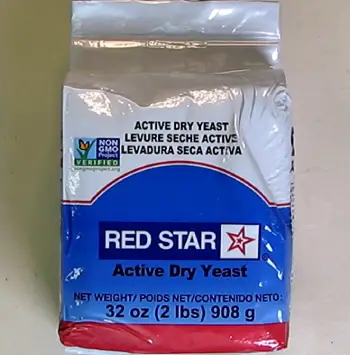
- Granule size and activation method: Red Star Active Dry often has coarser granules that respond well to a short warm-water step while its Quick-Rise versions mix in easily.
Fleischmann RapidRise uses finer particles that start working almost right away in the dough.
- Rise profile and staying power: Fleischmann RapidRise tends to push dough upward faster in the first stage which suits same-day baking.
Red Star Instant or Quick-Rise matches early energy yet often holds strength better through longer or cold ferments.
- Flavor development during fermentation: Red Star Active Dry supports slower rises that build more aromatic compounds and a richer finished aroma.
Fleischmann delivers a clean classic yeast taste that stays consistent even when the schedule is tight.
- Product line specialization: Red Star includes an All-Natural Active Dry and a Platinum line with dough conditioners for stronger structure.
Fleischmann offers RapidRise Plus with enhancers and a dedicated Bread Machine Yeast for automated cycles.
- Packaging and storage practicality: Both come in packets and jars yet Red Star vacuum-sealed bulk bags stay potent for months in the freezer.
Fleischmann jars are easy to find and reseal which works well for occasional bakers.
Key Features Of Red Star Yeast
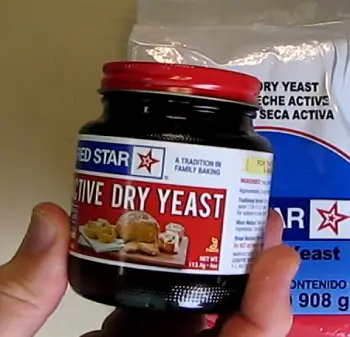
- Consistent batch-to-batch performance: The yeast behaves the same way across different kitchen temperatures.
Liquids must stay in the right range. This builds steady confidence in weekly baking.
- Versatile product range: Active Dry rewards patience. Quick-Rise covers faster projects. Platinum handles enriched doughs.
Platinum also works with whole-grain doughs. One brand meets most home needs.
- Strong performance in heavier doughs: Whole wheat mixes rise reliably. Rye mixes rise reliably. High-hydration mixes rise reliably.
The yeast handles denser structures. It does not lose power.
- Good shelf life when stored correctly: Unopened packages last well past the printed date in cool dry conditions.
Opened yeast stays active for months in an airtight container in the fridge. It also stays active in the freezer.
- Clean flavor profile that supports longer fermentation: Extra time with this yeast produces pleasant complex aroma.
The finished bread has no harsh aftertaste.
Pros Of Red Star Yeast
- Reliability that builds confidence: Predictable rises let the baker focus on technique and timing instead of fixing failed batches which is valuable for frequent baking.
- Flexibility across recipe styles: Lean sweet and whole-grain doughs all respond well and the Platinum version adds extra strength for high-sugar or high-fat formulas.
- Excellent value in bulk formats: Larger vacuum-sealed bags lower the cost per loaf for anyone who bakes often without dropping quality.
- Support for flavor-focused baking: Moderate activity encourages longer rises that improve taste and texture in artisan-style and hybrid loaves.
- Availability of specialty options: All-Natural and Platinum lines match specific goals without forcing a search for less common brands.
Cons Of Red Star Yeast
- Slightly less aggressive initial rise in some cases: Standard Active Dry can feel slower at the start than Fleischmann RapidRise so bakers who need bread ready in under two hours may prefer a faster option.
- Packaging that sometimes requires extra handling: Bulk bags are economical but not resealable which means transferring yeast to jars becomes necessary for occasional users.
- Regional stock variations: Specialty lines like Platinum or All-Natural are not always on every supermarket shelf though online ordering fills the gap.
- Learning curve for first-time users of Instant versions: The yeast can work quickly once mixed so new bakers need to watch volume rather than the clock to avoid over-proofing.
Key Features Of Fleischmann Yeast
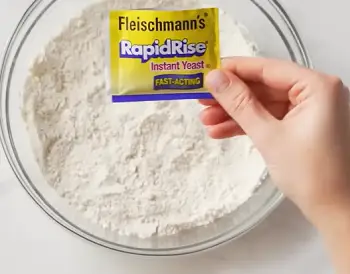
- Widespread supermarket presence: Packets and jars appear in nearly every grocery store.
This makes last-minute shopping simple and reliable.
- RapidRise technology designed for speed: Finer granules and the formula allow dough to double faster.
Often only one rise is needed. This fits weeknight projects.
- Straightforward instructions that suit beginners: Clear labeling and familiar packaging reduce confusion for people new to yeast baking.
- Reliable classic flavor: The taste stays familiar and pleasant without unexpected notes.
This helps when following traditional family recipes.
- Multiple formats including bread-machine specific yeast: Dedicated products remove guesswork for machine users.
They also help bakers who want built-in dough enhancers.
Pros Of Fleischmann Yeast
- Convenience for time-sensitive baking: RapidRise consistently produces usable dough in about an hour which works well for same-evening pizza or rolls.
- Beginner-friendly design: Clear directions and long-standing brand recognition lower the barrier for first-time yeast users.
- Strong retail distribution: Finding the product is almost never a problem so a sudden recipe need can be met without waiting for delivery.
- Solid performance in standard recipes: Everyday white bread dinner rolls and basic enriched doughs turn out reliably with this yeast.
- Options that include dough enhancers: RapidRise Plus and similar products help create higher volume and better texture without extra ingredients.
Cons Of Fleischmann Yeast
- Faster strains can limit long fermentation benefits: RapidRise is less ideal for cold overnight proofs or recipes that rely on extended flavor development because the yeast can tire sooner.
- Occasional batch variability reported by some bakers: Most packages work fine yet a few users notice differences in vigor between lots so date checks and proof tests remain useful.
- Less emphasis on specialty natural or high-performance lines: The range focuses more on mainstream convenience than on niche upgrades like fully natural or extra-strength formulas.
- Potential for over-rising if timing is ignored: Strong early activity means dough can climb past the ideal point if left unattended so visual cues matter more than strict clock times.
How I Choose Between Them In Real Baking Situations?
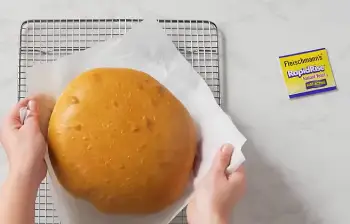
For a simple sandwich loaf on a weekend morning I reach for Red Star Active Dry. I proof it briefly, mix the dough, and let it take its time.
The resulting flavor and texture reward the patience. When friends drop by and I want pizza the same evening, Fleischmann RapidRise goes into the bowl.
The dough is ready to stretch in about an hour, and the crust still turns out crisp and tasty.
Whole-grain or seeded breads lean toward Red Star because the yeast seems to handle the denser structure more steadily.
Sweet doughs such as cinnamon rolls work with either brand, though I sometimes prefer Fleischmann’s enhanced versions for extra lift. Bread-machine cycles almost always get Fleischmann’s dedicated yeast or RapidRise because the shorter timelines match the machine’s program.
I keep notes after every bake. After a few batches you will develop a feel for how each yeast behaves in your specific kitchen conditions.
That personal data becomes more useful than any general comparison. High-sugar doughs such as brioche or Hawaiian rolls sometimes need a bit more yeast or a specialty formula designed for osmotic tolerance.
Both brands handle these recipes, yet the enhanced versions reduce the risk of a weak rise.
Substituting one brand for the other is usually straightforward. Start with equal amounts. If the dough seems sluggish, give it extra minutes.
If it rises too fast, chill it briefly or reduce the yeast slightly next time. Instant and active dry can generally replace each other one-to-one, though rise times will shift.
I have mixed leftover packets from both brands in the same dough with no problem when I was low on one. Age of the yeast matters more than the label in those moments.
Frequently Asked Questions (FAQ)
Yes. It is reliable, consistent, and widely trusted by home bakers for everyday and specialty doughs.
It depends on your needs. Many serious bakers favor Red Star or related professional lines for consistency, while others prefer Fleischmann for convenience and speed.
Yes. It is a dependable classic that performs well in most home recipes and is especially useful when time is limited.
Red Star Quick-Rise or Platinum and Fleischmann RapidRise are both strong choices. Preference often comes down to availability and whether you prioritize staying power or pure speed.
Final Thoughts
After years of baking with both Red Star and Fleischmann yeast, I have stopped looking for a single winner.
Each has strengths that shine in different situations. Red Star rewards patience and delivers steady, flavorful results across a wide range of doughs.
Fleischmann offers speed and everyday convenience that fit busy schedules without disappointing the final loaf. You can trust either brand when the package is fresh and the technique is sound.
Try both in the same recipe side by side if you are curious; the small differences become clear quickly. Once you know how each responds in your kitchen, you will reach for the right packet with confidence every time you bake.
The real success comes from understanding your own process more than from any label on the shelf.
Pick the one that matches the time you have and the flavor you want, then focus on temperature, freshness, and visual cues. Your bread will thank you.
Recent Posts
● Interactive 5-Zone Interior & Exterior Paint Blueprint Paint Coverage Calculator: Gallons, Primer, Square Footage & Cost Tap any architectural surface zone on the blueprint...
If you want smooth, shiny hair without spending a fortune on a premium styling tool, the Ella Bella hair dryer may be worth considering.In these Ella Bella hair dryer reviews, I’ll look...