
I decided to compare Sentinel Spectrum and Simparica Trio after weighing options for my own dog’s monthly parasite protection.
My goal here is to break down their coverage, strengths, limitations, and real-world fit so you can see which aligns better with your dog’s lifestyle, risk factors, and health needs.
| Feature | Sentinel Spectrum | Simparica Trio |
| Active Ingredients | Milbemycin oxime, Lufenuron, Praziquantel | Sarolaner, Moxidectin, Pyrantel |
| Heartworm Prevention | Yes | Yes |
| Adult Fleas | No (stops eggs and larvae) | Yes (kills adults) |
| Ticks | No | Yes (multiple species, including Lyme vector) |
| Roundworms | Yes | Yes |
| Hookworms | Yes | Yes |
| Whipworms | Yes | No |
| Tapeworms | Yes | Indirect (via flea control) |
| Minimum Age | 6 weeks | 8 weeks |
| Minimum Weight | 2 pounds | 2.8 pounds |
| Form | Monthly beef-flavored chew | Monthly flavored chew |
| Breeding/Pregnant/Lactating | Evaluated as safe | Not evaluated |
| Manufacturer | Merck Animal Health | Zoetis |
Understanding The Two Products From A Real User Standpoint
I started looking at these two because both promise broad monthly coverage in a single chewable tablet.
Sentinel Spectrum has been around longer in the broad internal parasite space. Simparica Trio arrived as a more recent all-in-one that adds strong external parasite kill.
Both require a veterinary prescription and a current negative heartworm test before starting.
Both come in weight-based sizes and taste appealing enough that most dogs take them willingly.
From my experience talking with other owners and reviewing product labels, the choice often comes down to whether ticks and adult fleas dominate your concerns or whether intestinal worms including whipworms and tapeworms matter more.
Lifestyle plays a huge role. A dog that hikes in wooded areas faces different risks than one that mostly stays in a fenced yard or apartment.
Key Differences Between The Sentinel Spectrum And Simparica Trio

- Parasite spectrum coverage: Sentinel Spectrum targets heartworm. It also controls roundworms.
It controls hookworms. It controls whipworms. It controls tapeworms. It stops flea eggs. Simparica Trio covers heartworm.
It kills adult fleas. It controls multiple tick species. It treats roundworms. It treats hookworms. It only reduces tapeworm risk indirectly.
- Speed and type of flea action: Sentinel Spectrum breaks the flea life cycle. It stops eggs from hatching over time.
Simparica Trio kills adult fleas within hours. It prevents new eggs from being laid once the adults are eliminated.
- Tick protection presence or absence: Sentinel Spectrum provides no tick control at all.
Simparica Trio kills several common tick species for a full month. It carries a claim for reducing Lyme disease risk by targeting the black-legged tick.
- Age and weight starting points: Sentinel Spectrum can begin at six weeks of age. It can begin at two pounds of body weight.
Simparica Trio requires a minimum of eight weeks. It requires a minimum of 2.8 pounds before the first dose.
- Safety data in breeding animals: Sentinel Spectrum has been evaluated for use in breeding dogs.
It has been evaluated for pregnant dogs. It has been evaluated for lactating dogs. Simparica Trio has not been studied in those groups.
It is generally avoided during reproductive periods.
- Neurological caution level: Simparica Trio carries an isoxazoline class warning.
This warning covers rare neurologic events such as tremors.
It covers seizures. Sentinel Spectrum does not share that same class-related caution.
Key Features Of Sentinel Spectrum
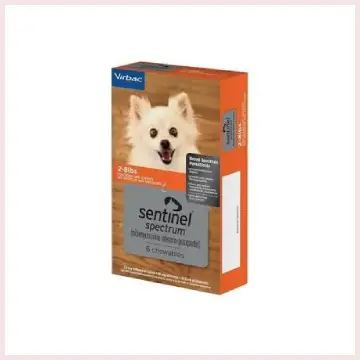
- Three-ingredient internal focus: Milbemycin oxime prevents heartworm. It controls roundworms.
It controls hookworms. It controls whipworms. Praziquantel treats adult tapeworms. Lufenuron stops flea eggs from developing.
This keeps flea populations from expanding.
- Soft chew format dogs accept readily: Most dogs take the tablet willingly from the hand.
They also take it mixed with a small amount of food.
Giving it with a meal helps the body absorb the lufenuron component more effectively.
- Broad intestinal worm list: The product covers whipworms. It covers multiple tapeworm species.
It also covers roundworms. It covers hookworms.
This benefits dogs that hunt. It benefits dogs that scavenge. It benefits dogs in multi-pet homes.
- Established safety profile for reproductive animals: Owners of breeding dogs can rely on the available safety data.
Owners who need continuous coverage through pregnancy can rely on it.
Owners who need coverage during lactation can rely on it.
- Year-round monthly schedule: Consistent once-a-month dosing maintains steady protection against heartworm.
This remains important even in cooler seasons. Residual mosquito activity continues. Travel can also increase risk.
Pros Of Sentinel Spectrum
- Excellent intestinal parasite range: Whipworm and tapeworm coverage fill gaps left by many other monthly preventives and give extra protection to dogs with outdoor exposure or multi-pet living situations.
- Flea population suppression without adulticide pressure: By preventing eggs from hatching, the product steadily lowers environmental flea numbers over successive months and can be sufficient in low-pressure homes when paired with good cleaning habits.
- Suitable for younger and smaller puppies: The six-week and two-pound starting point allows protection to begin earlier than many competing products during the vulnerable early months of life.
- Documented safety in breeding stock: Breeders and owners of intact females can continue monthly coverage without switching products around heat cycles or during pregnancy and lactation.
- No isoxazoline class neurologic warning: Dogs with seizure histories or owners who prefer to avoid that drug class can use this product without the same class-related neurologic caution.
Cons Of Sentinel Spectrum
- No adult flea kill: Existing fleas continue to bite and feed until they die naturally or until a separate adulticide is added, so active infestations need an extra product for faster relief.
- Complete lack of tick protection: In regions with high tick pressure or for dogs that roam wooded areas, this gap usually requires layering on another preventive and increases both cost and complexity.
- Slightly slower environmental flea control: Because adult fleas are not killed, the visible flea burden drops more gradually compared with products that eliminate adults quickly.
- Cost relative to basic heartworm preventives: The price sits higher than simple heartworm-only options, especially when a separate flea-tick product becomes necessary to fill the external parasite gap.
Key Features Of Simparica Trio

- Triple-action external and internal mix: Sarolaner kills fleas. It kills ticks by disrupting their nervous systems.
Moxidectin prevents heartworm. It supports intestinal worm control. Pyrantel targets roundworms. It targets hookworms. All of this happens in a single monthly chew.
- Rapid adult flea kill: Adult fleas begin dying within a few hours after the dose.
This quickly reduces the chance of new eggs being deposited.
It helps limit flea-allergy problems.
- Multi-species tick control: The product controls several tick species. These include lone star ticks. These include Gulf Coast ticks.
These include American dog ticks. These include black-legged ticks. These include brown dog ticks.
These include Asian longhorned ticks. Protection lasts a full month.
- Palatable monthly chew: Most dogs accept the flavored tablet readily. It can be given with food.
It can be given without food. This adds flexibility for picky eaters.
It adds flexibility for busy household schedules.
- Convenient single-product compliance: Many owners previously used separate heartworm products.
They also used separate flea-tick products. They now find it easier to stay consistent.
Only one monthly tablet is required.
Pros Of Simparica Trio
- Comprehensive flea and tick kill in one dose: Adult fleas die rapidly and multiple tick species are controlled for a full month, which gives strong practical protection to outdoor dogs and those living in high-tick zones.
- Heartworm prevention plus common intestinal worms: The combination covers the parasites most owners worry about in a single tablet and improves the chance that protection actually happens every month.
- Lyme disease prevention claim: By killing the black-legged tick vector, the product reduces the chance of Borrelia transmission, which is a meaningful advantage in areas where Lyme disease is common.
- Flexible administration: The chew can be given with or without food and is highly accepted by most dogs, which reduces the monthly struggle some owners face with less palatable tablets.
- Replaces multiple products for many households: Owners who previously bought separate heartworm and flea-tick preventives often experience simpler logistics and sometimes lower overall monthly spending.
Cons Of Simparica Trio
- Missing whipworm and direct tapeworm coverage: Dogs that need reliable whipworm control or that pick up tapeworms from sources other than fleas may still require an additional dewormer at certain times.
- Isoxazoline neurologic caution: Rare reports of tremors, ataxia, or seizures exist, so dogs with prior seizure history usually receive alternative recommendations and even dogs without history carry a small residual risk.
- Not evaluated in breeding, pregnant, or lactating dogs: Breeders and owners of intact females typically avoid this product during reproductive periods because safety data are lacking.
- Higher starting age and weight: Puppies under eight weeks or under 2.8 pounds cannot use it, so very young or tiny dogs need another option for the first weeks of life.
Potential cost for large dogs: Pricing scales with body weight and can exceed simpler preventives, especially when multi-month discounts are not available.
Analytical Perspective On Choosing Between Them

I weighed these products by mapping real risk rather than chasing the longest ingredient list.
Heartworm risk exists almost everywhere mosquitoes fly, so both products satisfy that non-negotiable need.
The next question is external versus internal emphasis. If your dog walks city sidewalks and rarely encounters ticks, Sentinel Spectrum’s broader worm list and flea-egg control may deliver everything required.
If your dog hikes, camps, or lives where ticks are common, Simparica Trio’s tick kill and rapid flea action become hard to ignore.
Cost analysis also matters. Sentinel Spectrum can look less expensive on its own, yet the moment you add a separate flea-tick product the total rises.
Simparica Trio often costs more per dose but consolidates spending.
Compliance rates improve when owners only remember one tablet on the same day each month.
Both products work only when given consistently; missed doses open windows for heartworm infection that can become life-threatening and expensive to treat.
Side-effect profiles differ mainly in the neurologic caution attached to isoxazolines. Most dogs tolerate Simparica Trio without issue, yet the label language exists for a reason.
Sentinel Spectrum’s adverse events center more on gastrointestinal signs such as vomiting or diarrhea, which also appear with Simparica Trio but without the same class-wide neurologic note.
Age of the dog influences the early months. Starting protection as soon as the label allows reduces the unprotected window when puppies explore and potentially ingest parasite eggs. Sentinel Spectrum’s earlier start helps there.
Once the dog reaches eight weeks and sufficient weight, both become available and the decision shifts to coverage needs.
Geographic and seasonal factors remain practical. In regions with year-round mosquito and flea pressure, continuous monthly use of either product makes sense.
In areas with heavy tick seasons, the months of peak tick activity favor Simparica Trio or a layered approach.
Travel plans also factor in: a dog that visits family in a high-tick state benefits from the broader external coverage even if its home area is quieter.
I also considered multi-pet households. Cats cannot take either product. Dogs sharing environments with cats that receive different preventives still need consistent protection because fleas and some worms move between species.
Environmental control measures such as vacuuming and washing bedding amplify the effect of either product.
Real-World Use Considerations
Giving the tablet becomes routine once you pick a consistent day. Many owners choose the first of the month or pair it with another monthly reminder.
Watching the dog swallow the entire dose matters; partial doses reduce effectiveness. Storing the chews in a cool dry place preserves potency.
If a dose is missed, give it as soon as remembered and resume the regular schedule, then consult the veterinarian about any extra testing that might be warranted.
Both products require annual or semi-annual heartworm testing depending on local guidelines.
A positive test changes management completely because neither product kills adult heartworms. Early detection remains the safest path.
Owners of dogs with MDR1 mutations (common in some herding breeds) generally tolerate the moxidectin dose in Simparica Trio because it is a low preventive amount, yet veterinarians still exercise care.
Sentinel Spectrum’s milbemycin oxime also requires attention in highly sensitive individuals, though the doses used for prevention are typically well tolerated.
Frequently Asked Questions (FAQ)
Safety depends on the individual dog. Sentinel Spectrum lacks the isoxazoline neurologic caution and has data supporting use in breeding animals, while Simparica Trio carries the class warning and lacks reproductive safety data.
No. It remains available through veterinary channels and online pharmacies that require a prescription.
Many recommend it for its convenient combination of heartworm prevention, adult flea kill, and multi-species tick control in one monthly chew, especially for dogs with outdoor exposure.
Dogs under eight weeks, under 2.8 pounds, those with a history of seizures or neurologic disorders (use with caution), and breeding, pregnant, or lactating dogs (safety not evaluated) are typically excluded or require careful veterinary judgment.
Wrapping Up
I compared these two products so you and I both gain a clear picture of what each actually delivers.
Sentinel Spectrum shines when intestinal worms and flea population control matter most and when breeding animals need coverage.
Simparica Trio stands out when ticks and rapid adult flea kill top the priority list. Your dog’s age, lifestyle, geographic risks, and health history should drive the final call.
Talk with your veterinarian, map the real parasites your dog is likely to meet, and choose the product that closes those gaps most effectively. Consistent monthly use of whichever you select will protect your dog far better than the most complete product left in the bottle.
Recent Posts
● Interactive 5-Zone Interior & Exterior Paint Blueprint Paint Coverage Calculator: Gallons, Primer, Square Footage & Cost Tap any architectural surface zone on the blueprint...
If you want smooth, shiny hair without spending a fortune on a premium styling tool, the Ella Bella hair dryer may be worth considering.In these Ella Bella hair dryer reviews, I’ll look...