
I spent weeks testing both SharkBite ProLock and SharkBite Max on actual repair and remodel jobs in my own home and on a couple of side projects for friends.
My goal here is to give you a clear, side-by-side look at how these two push-to-connect systems perform so you can decide which one fits your next plumbing task without second-guessing the choice.
| Feature | SharkBite ProLock | SharkBite Max |
| Material | Engineered polymer with stainless-steel teeth | Lead-free DZR brass with stainless-steel retainer |
| Connection Method | Push then twist-to-lock | Straight push-to-connect |
| Pipe Compatibility | PEX and PE-RT | PEX, copper, CPVC, PE-RT, polybutylene, HDPE SDR-9 |
| Pressure Rating | Approximately 160 psi | Up to 400 psi |
| Temperature Rating | Up to about 180°F | Up to 200°F |
| Installation Tools | Pipe cutter only | Pipe cutter and deburring tool |
| Visual Confirmation | Arrow alignment and audible click | Insertion depth mark |
| Best For | Full PEX or PE-RT repipes and remodels | Repairs, transitions between pipe types, mixed systems |
| Warranty | 25 years (proper install) | 25 years (proper install on approved pipes) |
Understanding The Two Systems From A Real User Perspective
When I first picked up a SharkBite Max fitting, it felt familiar. It looked like the brass push fittings I had used for years, only stronger.
The ProLock felt different the moment I held it. The polymer body is lighter, and the twist collar sits right there ready for that extra locking motion.
Both claim to make connections in seconds. Both deliver on that promise when you follow the steps. The difference shows up in where and how you use them.
SharkBite Max belongs to the classic brass push-to-connect family. It works on multiple pipe materials in the same system.
ProLock focuses tightly on polyethylene tubing. That single fact shapes almost every other difference between them.
Key Differences Between SharkBite ProLock And SharkBite Max
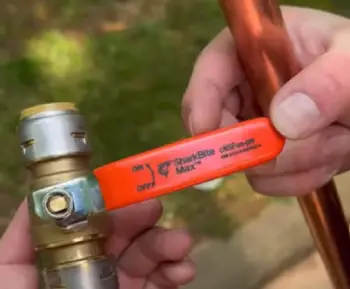
- Material construction and long-term feel: ProLock uses a high-performance polymer body. It resists certain chemicals well.
The fitting stays lighter in the hand. Max uses brass with a stainless-steel collar.
This adds clear strength. The brass feels more solid after months of use.
- Connection security method: ProLock needs the twist-to-lock step. You push the pipe in first. Then you rotate the collar until the arrows line up.
You also hear a clear click. Max relies on the stainless-steel teeth and O-ring alone.
Both create a reliable seal when installed right.
- Pipe type flexibility: Max works with copper, CPVC, PEX, PE-RT, and a few other materials. ProLock works only with PEX and PE-RT.
Max removes the need for many transition fittings on mixed jobs.
- Pressure and temperature capacity: Max reaches 400 psi and 200°F on many sizes.
ProLock sits lower at about 160 psi and 180°F.
Most homes stay well under both limits. Max still gives a larger safety margin.
- Removal and adjustment options: Both can be removed with the right tool. ProLock lets you rotate the fitting after the first connection.
This helps with final alignment in tight spots. The feature saved time on several vanity installs.
- Weight during long installs: ProLock feels lighter when you hang many fittings overhead. Max adds noticeable weight after a full day of work.
The difference shows up on large repipe projects.
Key Features Of SharkBite ProLock
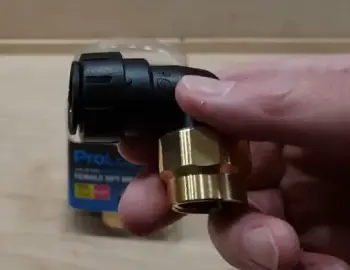
- Twist-to-lock collar with clear indicators: The arrows must line up fully. The collar also clicks when locked.
This design cuts the chance of an incomplete push. It helps on large jobs with many joints.
- Polymer body and stainless-steel teeth: The plastic resists common household chemicals. It weighs less than brass.
The teeth grip the pipe exterior firmly. The seal holds under normal home pressure.
- Focus on PEX and PE-RT systems: No internal stiffener is needed on most sizes.
The fitting shape matches the flex of these two pipe types. Installation stays simple and consistent.
- Tool-free steps beyond cutting: Cut the pipe square. Push it fully into the fitting.
Twist the collar until it locks. The whole process takes only a few seconds once practiced.
- Post-connection rotation ability: You can turn the fitting after it locks.
This helps aim the outlet exactly where needed. It works well inside walls or under sinks.
- Clean look next to plastic pipe: The polymer finish blends with PEX tubing.
Many homeowners like the uniform appearance in open areas.
Pros Of SharkBite ProLock
- Extra confirmation of a full seal: The click and arrow alignment remove most doubt. You feel more sure on hard-to-see joints. This reduces rechecks on large repipes.
- Lighter weight for extended work: The polymer body is easier to handle overhead. Fatigue drops when you install dozens of fittings. Crawlspace work also feels less tiring.
- Uniform look with plastic pipe: The finish matches PEX tubing well. Exposed runs look cleaner to many homeowners. The visual result feels more modern.
- Fast rhythm on pure PEX jobs: The push-and-twist motion becomes automatic quickly. Production speed stays high on whole-house projects. Learning time stays short.
- Often lower cost on volume: Polymer fittings usually cost less per piece than brass. The savings add up on projects with hundreds of joints. Budget control becomes easier.
- Good chemical resistance: The body handles common water treatments well. Long-term exposure causes fewer issues in normal home conditions.
Cons Of SharkBite ProLock
- Limited pipe type range: It works only with PEX and PE-RT. Any copper or CPVC still needs transition pieces. Mixed systems become less convenient.
- Lower pressure and temperature limits: Ratings sit around 160 psi and 180°F. Most homes never reach these levels. Some commercial or multi-story jobs may need higher numbers.
- Less substantial feel for some users: Traditional plumbers often prefer the weight of brass. The polymer can feel lighter than expected. Preference remains personal.
- One extra motion per joint: The twist step adds a small amount of time. Pure push fittings win in pure speed contests. The difference stays minor on most jobs.
- Fewer size and style options in some lines: Availability can lag behind the brass family. Certain specialty fittings may require a different product.
Key Features Of SharkBite Max
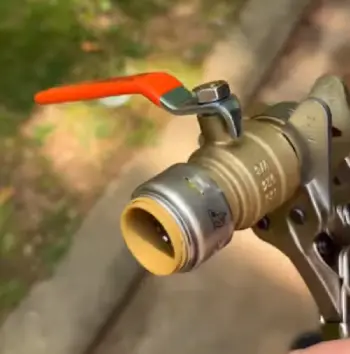
- Reinforced stainless-steel collar on brass: The collar boosts overall burst strength. It gives the fitting a rigid and solid feel.
Many users link this design to long-term durability.
- Reduced insertion force: You need about half the push effort of older brass fittings. This change helps on larger sizes.
It also helps with stiff copper pipe.
- Wide pipe compatibility: One fitting can join copper to PEX. It can also join CPVC to PE-RT in many cases.
This cuts the number of extra adapters needed.
- Higher pressure rating: Standard configurations reach 400 psi. This exceeds typical home supply pressure by a wide margin.
It doubles the rating of the earlier generation.
- Wet-line installation support: You can connect the fitting while water is still in the pipe.
This turns many emergency repairs into quick jobs. No full system drain is required.
- Immediate pressure test readiness: You can turn the water back on right after the last joint. There is no wait for glue or solder to set.
Pros Of SharkBite Max
- Highest versatility across materials: One product line covers almost every common home pipe. Inventory stays simpler. Decision time drops on mixed systems.
- Strongest pressure rating in the family: The 400 psi capacity and steel collar add clear confidence. Main lines and taller homes benefit most. Safety margin stays wide.
- Familiar push-only motion: Anyone who used older SharkBite fittings already knows the steps. Training time stays near zero. Crews adapt immediately.
- Approved for concealed use: Codes allow installation behind walls and underground with proper wrapping. The brass body has a long service history in these spots.
- Ready for instant pressure testing: Water can flow right after the final connection. Project timelines shorten. Emergency work finishes faster.
- Solid long-term track record: The design builds on years of field use. Many professionals trust the brass construction for permanent work.
Cons Of SharkBite Max
- Higher cost per fitting: Brass costs more than polymer. Full-house PEX jobs show the price difference clearly. Budgets need extra room.
- Need for accurate depth marks: The insertion depth differs from older versions. Skipping the mark risks an incomplete seat. Careful measuring remains essential.
- Heavier feel during long days: Overhead work shows the extra weight. Fatigue rises after many hours. Large projects feel more demanding.
- No built-in click indicator: You rely on the depth mark and the feel of the stop. Some users prefer the audible confirmation of ProLock. Visual checks become more important.
- Slightly more preparation on copper: Deburring must be thorough. Leftover edges can affect the seal. Extra care adds a small step.
Real-World Performance Observations
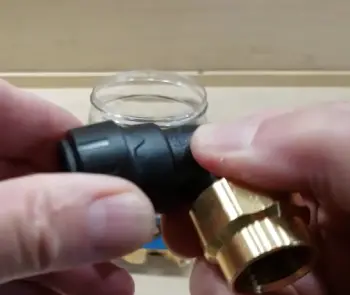
I installed both systems side by side on a bathroom remodel. The Max fittings handled the transition from existing copper supply lines to new PEX runs without any extra adapters.
The ProLock joints went in cleanly once the copper was out of the way. Leak tests at 80 psi held overnight with zero drops on either system.
On a full basement repipe using only PE-RT, the ProLock system felt faster once the rhythm of push-and-twist settled in.
The visual confirmation made me less likely to second-guess joints that were hard to see.
On a mixed-material emergency repair under a kitchen sink, Max won because I could join the old copper stub to the new PEX without hunting for a transition fitting at 10 p.m.
Both systems survived freeze-thaw cycles in an unheated garage test setup. Neither leaked after repeated expansion and contraction.
The polymer on ProLock showed no cracking. The brass on Max showed no corrosion after six months of exposure to local water chemistry.
Installation Tips That Matter More Than The Marketing
Cut the pipe as square as possible. A slight angle reduces the contact surface for the O-ring and the teeth. Deburr copper thoroughly; leftover burrs can nick the seal.
Mark the insertion depth every time with Max. With ProLock, push until you feel the stop, then twist until the arrows meet and the collar clicks. Do not force the twist if the pipe is not fully seated. Pull back and reseat.
Support the pipe near the fitting. Push fittings hold pressure well, yet they do not like continuous side load or vibration. A simple hanger a few inches away keeps the joint happy for decades.
Frequently Asked Questions (FAQ)
Some traditional plumbers prefer soldered or crimped connections because that is what they trained on and trust. Others dislike how easy the fittings make DIY work. Codes and the manufacturer warranty both support proper permanent installation.
SharkBite Max is the improved version of the original brass push fitting. It offers higher pressure rating, less insertion force, and the same broad compatibility, so Max is the stronger choice when you need brass push fittings.
Yes. Many use them for repairs, transitions, and tight spaces where speed and reliability matter. Some still reserve them for temporary or accessible locations based on personal preference.
It is a polymer push-to-connect fitting with a twist-to-lock collar designed specifically for PEX and PE-RT pipe. The twist provides visual and tactile confirmation that the joint is fully secured.
Wrapping Up
If your job stays inside a pure PEX or PE-RT system and you want the extra confirmation of a twist lock, ProLock makes strong sense.
If you need to join different pipe materials, work at higher pressures, or prefer the familiar brass push motion, Max is the clearer pick.
Both carry the same 25-year warranty when installed according to the instructions. Both meet the major plumbing codes for permanent use.
I keep both on the shelf now. The decision comes down to the pipe already in the wall and the conditions of the specific joint.
Match the fitting to the job instead of forcing one system to do everything. That approach has kept every connection I made with either product dry and trouble-free.
You now have the practical differences, the real strengths, and the honest limitations of each system. Use that information on your next project and you will finish faster with fewer second thoughts.
Recent Posts
I spent months comparing budget options against established names after my last set of tires wore out sooner than expected.My goal here is to share what I learned from putting Dextero and...
AquaTru Carafe Vs. Classic: Which Is Actually Fits Your Kitchen?
I decided to write this comparison after months of testing both the AquaTru Carafe and the Classic in my own kitchen. Tracking covered daily use.Taste stayed consistent. Refill frequency...