
Silver mesh dishcloths have become an interesting alternative to traditional kitchen sponges and microfiber cloths because they promise effective scrubbing without holding onto food particles as easily.
I like the idea of having a reusable cleaning cloth that can handle stubborn residue while remaining easy to rinse.
If you want a durable dishwashing tool that tackles stuck-on food, cleans cookware, and reduces your reliance on disposable scrubbers, a silver mesh dishcloth may be worth considering.
However, choosing the right mesh and using it correctly matters if you want reliable cleaning without scratching delicate surfaces.
My Personal Experiance With Silver Mesh Dishcloths
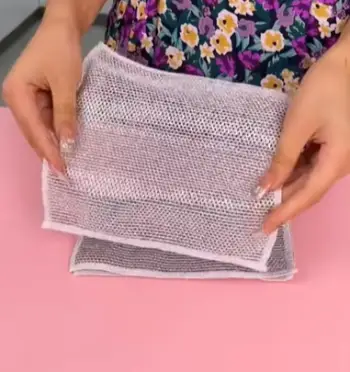
When I first started looking into silver mesh dishcloths, what caught my attention was their unusual construction.
Instead of soft fibers, foam, or abrasive pads, these cloths use a woven metallic mesh designed to create friction against food residue and grease.
At first, I wondered whether a metal-based cleaning cloth would feel too harsh for everyday dishwashing.
I am used to using microfiber cloths for glasses, soft sponges for plates, and scrub pads for cookware.
Having something that combines the flexibility of a cloth with the scrubbing ability of a metal cleaner seemed like a practical alternative.
The biggest appeal is that silver mesh dishcloths are designed to clean without relying on thick layers of sponge material.
Traditional sponges often absorb water, soap, grease, and food particles. After a few days of regular use, they can develop unpleasant smells and become difficult to clean thoroughly.
Mesh cloths have a more open structure, which makes rinsing easier and helps food debris wash away.
I would approach these cloths as a specialized cleaning tool rather than a replacement for every item in my kitchen.
For stainless steel cookware, baking trays, sink surfaces, and dishes with stubborn residue, their scrubbing texture can be useful.
For delicate glassware, nonstick coatings, polished silver, or surfaces that scratch easily, I would still choose a softer cleaning material.
Another thing I appreciate about the concept is its reusable design. Instead of throwing away a worn sponge every few weeks, you can rinse the mesh thoroughly, wash it, and continue using it as long as its structure remains intact.
The cleaning experience depends heavily on the mesh construction. Some silver mesh dishcloths are soft and flexible, while others feel more rigid and abrasive. I would pay attention to the texture before using one on an expensive pan or delicate kitchen item.
Overall, my impression is that silver mesh dishcloths offer an interesting balance between convenience, durability, and scrubbing power. They may not replace every kitchen cleaning tool, but they can be a useful addition for people who frequently deal with stuck-on food and want something that rinses clean more easily.
Pros Of Silver Mesh Dishcloths
- Effective for Everyday Food Residue
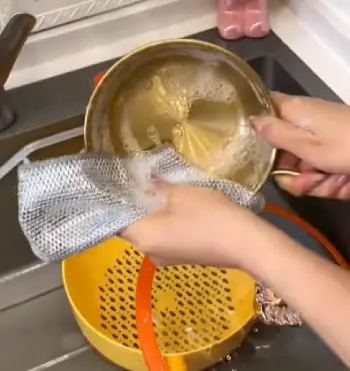
The mesh texture provides more friction than many ordinary dishcloths. This can help remove food residue from plates, utensils, and cookware without requiring excessive pressure.
When I am cleaning a plate with dried sauce or a pan with leftover cooked food, the texture can make the process easier. Instead of repeatedly rubbing with a smooth cloth, I can use the mesh to loosen the residue more efficiently.
For everyday kitchen messes, that added scrubbing ability is a practical benefit.
- Easy to Rinse After Cleaning
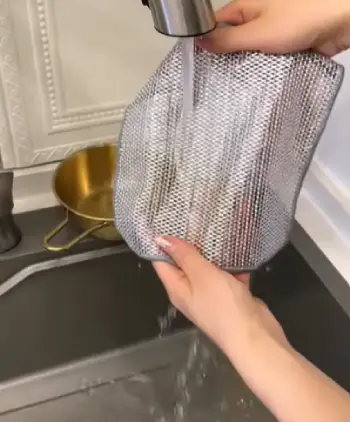
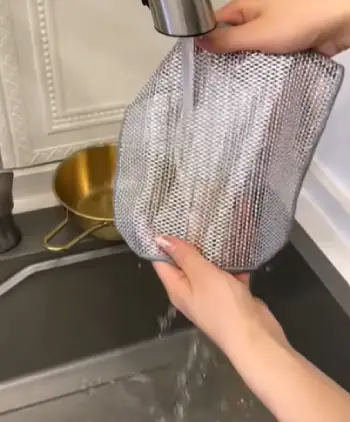
The open construction allows water to flow through the cloth. This helps remove food particles and detergent more easily than some thick sponges.
I particularly appreciate this feature when cleaning several dishes in succession. A quick rinse can remove much of the visible debris, allowing me to continue using the cloth without constantly feeling that it is clogged.
This convenience is one of the main reasons mesh cleaning products appeal to people who dislike the maintenance associated with traditional sponges.
- Potentially Longer-Lasting Than Disposable Scrubbers
A quality mesh dishcloth may last considerably longer than a disposable sponge or low-quality scrub pad, provided it is used and maintained properly.
Its durability depends on the weave, material quality, stitching, and resistance to corrosion if metallic components are present.
If I can use one cleaning cloth repeatedly without it falling apart, I can reduce the number of cleaning products I need to replace. That is both convenient and potentially economical.
However, longevity should not be assumed. A poorly made mesh cloth may unravel, lose its texture, or become uncomfortable to handle after repeated washing.
- Less Bulky Than Traditional Sponges
Mesh cloths generally have a thinner profile than conventional sponge scrubbers.
That makes them easier to store near the sink, hang up for drying, or place inside a kitchen drawer. They do not require much space, which is useful when the kitchen has limited storage.
Their lightweight design also makes them convenient for cleaning larger surfaces, including sink areas and stainless steel cookware.
- Useful for Multiple Kitchen Tasks
Depending on the product’s abrasiveness, a mesh dishcloth may be suitable for cleaning plates, stainless steel utensils, sink surfaces, and some cookware.
I like cleaning tools that can handle several tasks because I do not always want to switch between a sponge, scrubber, and cloth.
Still, I would separate cleaning tasks when hygiene matters. A cloth used for greasy cookware should not automatically become the cloth I use to wipe food preparation surfaces.
- Less Likely to Hold Large Food Particles
The open weave can reduce the amount of debris trapped inside the cloth compared with dense sponge material.
This is not a guarantee that bacteria cannot accumulate. Organic residue, moisture, and grease can still remain on mesh surfaces, particularly around folds and edges.
The benefit is that visible food particles are often easier to remove during rinsing, making routine maintenance more manageable.
- Can Reduce Dependence on Heavy Scrubbing Pads
For some cleaning tasks, a mesh dishcloth may provide enough friction to avoid reaching for a heavier-duty scrub pad.
This can be helpful when cleaning everyday residue from surfaces that tolerate moderate abrasion.
I would still choose a nonabrasive sponge for delicate items. The goal is to match the cleaning tool to the surface rather than use the same cloth everywhere.
Cons Of Silver Mesh Dishcloths
- Not Suitable for Every Surface
This is the biggest drawback I would consider before purchasing.
Mesh materials can be abrasive, especially if they contain metal strands or have a rough texture. They may scratch nonstick coatings, polished finishes, acrylic, soft plastics, and delicate glassware.
I would always test a cloth on an inconspicuous area before using it extensively.
- Product Quality Can Vary
Not all mesh cloths are made equally.
Some have smooth, flexible edges, while others may have rough seams or loose strands. Poorly finished edges can make a cloth uncomfortable to handle or potentially damage surfaces.
I would prioritize a product with secure stitching, a consistent weave, and clear material information.
- May Not Remove Heavy Burnt Residue Alone
A mesh cloth is not necessarily a substitute for soaking, scraping, or specialized cleaning products.
If food is burned onto a pan, the cloth may struggle to remove it without considerable effort. Applying too much pressure can also increase the risk of scratching.
For difficult residue, soaking the cookware in warm water and dish soap first is usually a more sensible approach.
- Requires Regular Washing
Although mesh cloths are easy to rinse, they still need proper cleaning.
Grease, food particles, detergent residue, and moisture can accumulate with repeated use. If the cloth is not washed and dried adequately, it may develop unpleasant odors or become a source of contamination.
I would never treat a quick rinse as a complete substitute for washing.
- May Feel Uncomfortable for Sensitive Hands
Depending on the material, the mesh may feel rough against the fingers.
Some users may find it uncomfortable when squeezing, folding, or scrubbing for extended periods. If the cloth contains rigid metallic strands, gloves may be useful for people with sensitive skin.
A softer mesh design may be more comfortable for everyday use.
- Not Necessarily an Effective Silver Polishing Cloth
Despite the word “silver” in its name, a silver mesh dishcloth is not automatically appropriate for polishing silver jewelry, flatware, or decorative items.
Silver surfaces can be scratched by abrasive mesh. For actual silver polishing, I would use a dedicated silver polishing cloth designed to remove tarnish gently.
The distinction between a mesh dishwashing cloth and a silver polishing cloth is important.
Maintenance For Silver Mesh Dishcloths
- Rinse Thoroughly After Every Use
After finishing the dishes, I would rinse the cloth under running water until visible food particles, grease, and soap residue are removed.
Pay attention to folds, edges, and areas where debris may collect. A quick rinse is particularly important after cleaning greasy cookware.
Do not leave the cloth sitting in a sink filled with dirty dishwater.
- Wash Regularly With Dish Soap
Rinsing is useful, but regular washing is necessary to remove accumulated oils and residue.
I would wash the cloth with mild dishwashing detergent, gently work the soap through the mesh, and rinse it thoroughly.
If the manufacturer allows machine washing, I would follow the recommended temperature and laundry instructions.
Avoid harsh chemicals unless the product specifically supports their use.
- Allow It to Dry Completely
Moisture can encourage unpleasant odors and microbial growth.
After washing, I would squeeze out excess water without twisting the cloth aggressively and hang it somewhere with good airflow.
Avoid storing it folded inside a damp drawer or leaving it crumpled at the bottom of the sink.
A mesh design may dry faster than a thick sponge, but proper drying still matters.
- Avoid Using It on Delicate Surfaces
Before using the cloth on cookware, check the manufacturer’s surface compatibility instructions.
I would avoid using an abrasive mesh cloth on nonstick coatings, polished aluminum, delicate glass, acrylic, soft plastics, and easily scratched finishes.
For expensive cookware, a soft sponge is a safer starting point.
- Inspect the Mesh Periodically
Repeated use can cause strands to loosen or edges to fray.
I would inspect the cloth regularly for sharp areas, damaged stitching, corrosion, or broken fibers. If it begins to deteriorate, I would replace it rather than continue using a damaged cleaning tool.
A cloth that is falling apart may scratch surfaces or leave fragments behind.
- Keep Cleaning Tasks Separate
I prefer to use different cleaning cloths for different jobs.
A cloth used for greasy pans should not be used to wipe food preparation areas without washing it first. Similarly, a cloth used to clean a sink should not automatically be used for drinking glasses.
This simple habit helps maintain better kitchen hygiene.
- Use the Right Amount of Detergent
A mesh cloth does not need excessive soap to work effectively.
Too much detergent can leave residue and make rinsing unnecessarily difficult. A small amount of ordinary dish soap, combined with warm water and gentle scrubbing, is generally sufficient for routine cleaning.
For stubborn food residue, soaking the dish first is often more effective than adding more detergent or applying excessive pressure.
Comparison Of Silver Mesh Dishcloth With Other Brands
- Silver Mesh Dishcloth vs. Microfiber Cloth
Microfiber cloths are excellent for wiping, absorbing moisture, and removing fine dust or fingerprints. Their soft fibers make them useful for glassware, polished surfaces, and delicate kitchen items.
Silver mesh dishcloths offer more mechanical scrubbing action. They are better suited to loosening food residue that may resist a smooth microfiber cloth.
If I am drying glasses or wiping a clean countertop, microfiber is my preferred option. If I am removing dried food from a durable plate or stainless steel utensil, mesh may be more useful.
These products serve different purposes, so I would keep both rather than expect one to replace the other.
- Silver Mesh Dishcloth vs. Traditional Sponge
Sponges are popular because they absorb water and detergent, making them comfortable and convenient for washing dishes.
Their downside is that the porous structure can retain food particles and moisture. They also tend to wear down over time, particularly when used on rough cookware.
A mesh cloth is easier to rinse and may dry faster because it contains less absorbent material. It can also provide more scrubbing texture than a soft sponge.
However, sponges are often more comfortable on delicate dishes and may be less abrasive. If I am cleaning coated cookware, I would choose a soft sponge rather than a mesh cloth unless the manufacturer specifically confirms that the mesh is safe.
- Silver Mesh Dishcloth vs. Stainless Steel Scrubber
Stainless steel scrubbers are designed for aggressive cleaning, especially on durable cookware with heavy residue.
They can remove stubborn grime, but they may be too abrasive for many kitchen surfaces. Their rigid structure can also make them uncomfortable to use for extended periods.
A silver mesh dishcloth may offer a more flexible and controlled cleaning experience. Depending on its construction, it may provide moderate scrubbing power without the aggressive feel of steel wool.
For burnt food on compatible cookware, a stainless steel scrubber may be more effective. For everyday dishwashing, a softer mesh cloth is generally the more versatile choice.
- Silver Mesh Dishcloth vs. Nylon Scrub Pad
Nylon scrub pads are widely used because they offer different levels of abrasiveness and are often suitable for general cookware cleaning.
They are usually easier to understand in terms of surface compatibility because manufacturers frequently specify whether they are intended for delicate, nonstick, or heavy-duty surfaces.
Silver mesh cloths offer flexibility and easy rinsing, but their actual abrasiveness may be less obvious.
If I were cleaning a nonstick pan, I would choose a pad specifically labeled safe for nonstick surfaces. For stainless steel plates and everyday utensils, I might prefer the flexibility of mesh.
Frequently Asked Questions (FAQ)
Yes. Their textured mesh can help remove grease and food residue from dishes and cookware. Results depend on the material and surface being cleaned.
A dedicated silver polishing cloth is best because it is designed to remove tarnish while minimizing scratches.
Microfiber, cotton, soft sponges, and mesh dishcloths are all useful. The best choice depends on the surface and cleaning task.
Follow the manufacturer’s instructions. Many silver polishing cloths should not be washed because washing may remove their polishing treatment.
Final Verdict
Silver mesh dishcloths can be a practical addition to your kitchen if you want a reusable cleaning tool with better scrubbing ability than an ordinary dishcloth.
I like their flexible design, easy rinsing, and potential durability for everyday cleaning. They are particularly useful for durable cookware and stubborn food residue, although they are not suitable for every surface.
If you choose a well-made mesh cloth, maintain it properly, and use it where its texture is appropriate, I think it is a worthwhile purchase for a more convenient dishwashing routine.
Recent Posts
Intertrigo Relief Cream Reviews: Does It Really Soothe Skin Irritation?
Intertrigo can make everyday activities uncomfortable, especially when redness, itching, burning, and moisture build up in skin folds. I believe Healora Intertrigo Relief Cream may be worth...
The WonderQuest Microscope promises an entertaining way to explore microscopic details, especially for children and curious beginners. However, attractive specifications and promotional...