
If you are shopping for a smoke detector, I understand why Siterwell may catch your attention. Its compact designs, long-life battery options, photoelectric sensing, and relatively affordable pricing look appealing.
However, after looking at the product features alongside customer feedback, I would not recommend making Siterwell my first choice for a critical home-safety device.
Some users report satisfactory performance, but there are also concerning complaints about false alarms, malfunctioning units, and support experiences. For something responsible for warning you about a fire, I would personally choose a detector with a stronger and more consistent reliability record.
My Personal Experience With The Siterwell Smoke Detector
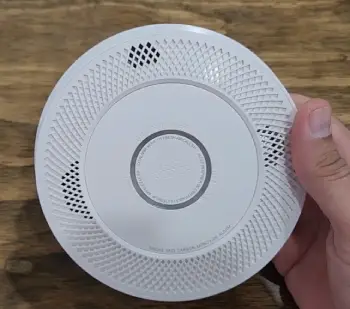
When I evaluate something as important as a smoke detector, I don’t judge it the same way I would judge a kitchen gadget or an inexpensive electronic accessory.
With a smoke alarm, the question is simple: will I be able to trust it when I am asleep, distracted, or nowhere near the room where a fire begins?
That is where my Siterwell smoke detector review becomes more cautious.
On paper, Siterwell has several features that immediately make its alarms interesting. The company produces different smoke, carbon monoxide, combination, heat, and gas detection products.
Some of its battery-powered smoke detectors use photoelectric sensing and built-in long-life batteries. Other models support interconnection, which means multiple alarms can sound together when one detects a dangerous condition. Siterwell also states that its products are developed around major safety standards and certification systems.
The basic installation experience can also be convenient. Several Siterwell models are designed with screws or magnetic mounting options, and some include adhesive mounting accessories. For someone replacing several alarms around a house, that can save time.
But convenience isn’t the feature I care about most.
I care about consistency.
I found a mixture of customer experiences. Some buyers say the detectors are loud, compact, inexpensive, and easy to install. One recent customer reported that the detector was loud enough to respond to cooking smoke from a distance, while other buyers praised the simple mounting system.
At the same time, negative experiences are difficult for me to ignore. Some customers have reported nuisance alarms, defective units, or problems with units sounding unexpectedly. One particularly concerning customer report described multiple detectors malfunctioning and another set allegedly failing to respond to smoke from burned food.
Another buyer reported receiving defective units and experiencing difficulty obtaining replacements.
These are individual customer reports rather than proof that every Siterwell detector behaves this way, but they are still relevant when I am evaluating a life-safety product.
There are also complaints involving particular combination models. On Siterwell’s own product page for one hardwired smoke-and-CO model, a customer reported that a unit stopped functioning properly after about a year and described difficulties with a warranty claim.
Another reviewer mentioned differences in connectors and mounting hardware between Siterwell models. Again, those experiences don’t establish that every Siterwell product will fail, but they reinforce my reason for being cautious.
I also think there is an important distinction between a smoke detector looking good on paper and actually being dependable over many years. A 10-year battery sounds excellent because you don’t want to climb a ladder every few months. But a long battery life is only valuable if the sensing system, alarm electronics, and overall unit remain dependable.
That’s why I wouldn’t buy Siterwell simply because it offers a long-life battery or attractive price.
I would first check the exact model, certification, sensor type, interconnection capability, installation requirements, manufacture date, warranty conditions, and recent owner feedback. I would also make sure the alarm is appropriate for the location where I intend to install it.
Interestingly, the picture isn’t completely negative. Consumer Reports’ 2026 testing includes the Siterwell GS886F-H02 among its recommended combination smoke-and-carbon-monoxide detectors, with a reported overall score of 91. That tells me the Siterwell brand cannot simply be dismissed across every product.
Still, my decision for a home safety purchase would be more conservative. I would rather choose a detector with a strong record for the specific type of alarm I need than rely on one favorable test result or an inexpensive multi-pack.
So, if you’re asking me whether I would personally put Siterwell at the top of my shopping list, my answer is no. I would investigate alternatives first.
Pros Of Siterwell Smoke Detectors

- Easy Installation
One of the strongest practical advantages is installation convenience.
Several models offer mounting options involving screws, magnets, or adhesive accessories. If I’m replacing multiple alarms, I appreciate anything that reduces installation time.
Some customers specifically praise the magnetic mounting system and simple installation process.
Still, I would follow the manufacturer’s instructions rather than simply sticking an alarm wherever it looks convenient.
- Long Battery Life
The long-life battery is another strong point.
If I install an alarm with a sealed 10-year battery, I don’t have to remember monthly battery replacement or deal with the familiar middle-of-the-night chirp caused by an exhausted battery.
That convenience is particularly useful in rental properties, bedrooms with high ceilings, and homes where reaching the detector is difficult.
- Photoelectric Detection
Photoelectric sensing can be useful for identifying smoke from smoldering fires. That gives Siterwell an important technical feature rather than merely making it a basic sound-producing alarm.
However, I would still consider dual-sensor protection where appropriate because different fires can produce different smoke characteristics.
- Affordable Multi-Pack Options
Siterwell is also positioned as a relatively affordable option in several markets.
If I need several detectors for one house, the total cost matters. Buying a multi-pack can make it easier to equip every required area instead of buying only one or two alarms because of price.
But I wouldn’t let a lower upfront price become the deciding factor for fire protection.
- Good User Experiences Exist
It’s important to keep the review balanced.
Not every Siterwell customer is unhappy. Some owners report loud alarms, easy installation, compact dimensions, and satisfactory operation. Current retail review pages also show many positive ratings alongside the negative experiences.
That means I wouldn’t describe every Siterwell detector as defective.
My concern is that the negative experiences are significant enough that I would personally compare alternatives carefully before purchasing.
Cons Of Siterwell Smoke Detectors
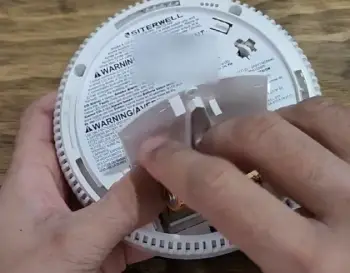
- Concerning Reports of False or Unexpected Alarms
This is the biggest concern for me.
A nuisance alarm can be frustrating. But repeated unexplained alarms can become more than annoying because people may eventually become less responsive to the sound.
Some Siterwell customers have reported alarms sounding without an obvious smoke source.
One retail listing includes a particularly negative report involving multiple units allegedly malfunctioning and inconsistent responses to smoke.
These are individual reports, so I wouldn’t treat them as proof of a universal defect. Still, when I am buying a life-safety device, I take such complaints seriously.
- Mixed Long-Term Reliability Feedback
The second concern is longevity.
A detector marketed with a long service life needs to remain dependable for years, not just work during the first few weeks.
Some owners report satisfactory operation, while others describe defective units or premature problems. That inconsistency makes me hesitant to rely on the brand without carefully checking the exact model.
- Customer Support Concerns
I also pay attention to what happens after a product fails.
One customer reviewing a Siterwell combination detector reported difficulty getting warranty support after the unit developed problems. The customer said proof of purchase was required before the claim could be addressed.
A warranty requirement isn’t automatically unreasonable. But for a critical safety product, I want the replacement process to be straightforward if the detector develops a serious fault.
- Model-to-Model Differences
Another issue is that “Siterwell smoke detector” doesn’t describe one single product.
There are battery-powered smoke alarms, hardwired alarms, combination smoke/CO detectors, interconnected products, and different sensor configurations.
That means I wouldn’t generalize the performance of one Siterwell model to every other model.
Before buying, I would check the exact model number and certification rather than relying on the brand name alone.
- Installation Details Matter
Some users praise the magnetic or adhesive mounting options, but I wouldn’t install a smoke alarm solely because the mounting process is easy.
Placement matters enormously. A beautifully installed detector in the wrong location isn’t doing me much good.
Maintenance For Siterwell Smoke Detectors
- Test Every Alarm Monthly
This is the first maintenance habit I would establish.
Use the test button according to the manufacturer’s instructions and make sure the alarm produces a clear audible signal.
The U.S. Fire Administration recommends testing smoke alarms monthly.
I wouldn’t assume that silence means everything is fine.
- Keep the Sensor Clean
Dust, insects, humidity, and other environmental factors can interfere with smoke alarms and contribute to nuisance alarms.
Consumer Reports notes that dust, humidity, electrical issues, and even spiders can contribute to unwanted alarm behavior.
I would therefore keep the outside of the detector clean and follow the manufacturer’s cleaning instructions.
- Don’t Remove the Battery Because of Cooking Alarms
This is one mistake I would never make.
If an alarm sounds while cooking, don’t simply remove the battery and leave the detector disabled.
Instead, use the hush function if available, ventilate the area, and investigate why the alarm activated. The USFA specifically warns against disabling smoke alarms or removing their batteries.
- Check the Manufacture Date
I would write the installation date and manufacture date somewhere easy to find.
Smoke alarms aren’t designed to remain in service forever. The USFA recommends replacing smoke alarms 10 years from the manufacture date.
That means I wouldn’t wait for an old detector to fail before replacing it.
- Keep Alarms Away From Problem Locations
Placement is critical.
Smoke alarms should generally be installed inside bedrooms, outside sleeping areas, and on every level of the home. The USFA also recommends placing them on the ceiling or high on a wall according to manufacturer instructions.
I would avoid putting a detector immediately beside a cooking appliance or directly where steam regularly reaches it.
- Check Interconnection
If I use interconnected detectors, I would periodically test the system to make sure the alarms communicate correctly.
One alarm sounding while the rest of the house remains silent defeats much of the benefit of an interconnected arrangement.
- Replace Damaged Units
If a detector falls, cracks, becomes physically damaged, repeatedly malfunctions, or behaves strangely, I wouldn’t gamble on it.
For a normal household device, I might troubleshoot for days.
For a smoke detector, I’d rather replace a questionable unit.
Comparison Of Siterwell Smoke Detector With Other Brands
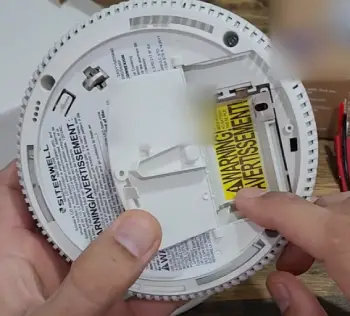
- Siterwell vs. Kidde
Kidde is a long-established name in residential fire-safety products, and current independent testing provides a useful point of comparison.
Consumer Reports currently lists several Kidde smoke alarms among its recommended models. Its current ratings include the Kidde 20SA10, 20SD10-V, 20SD10, and i12040 among recommended smoke detectors.
That gives me more confidence when I’m comparing mainstream alternatives because there is substantial independent testing information available.
Siterwell still has attractive features, particularly on certain combination models, but I wouldn’t choose it simply because it is less expensive.
- Siterwell vs. First Alert
First Alert is another major name worth considering.
Consumer Reports currently lists the First Alert SMI100 among its recommended smoke detectors and identifies it as a Smart Buy.
For me, the comparison comes down to the exact model rather than the logo on the alarm. I would look at sensor configuration, power source, interconnection, certification, warranty, and independent test performance.
- Siterwell vs. Dual-Sensor Alternatives
If I’m particularly concerned about different fire types, I would consider a dual-sensor detector.
The USFA explains that ionization and photoelectric sensors have different response characteristics and recommends either both types or dual-sensor alarms for homes.
That makes sensor configuration an important part of my decision.
- Siterwell vs. Combination Smoke and CO Detectors
A combination detector can make sense if I want smoke and carbon-monoxide monitoring in one device.
Interestingly, this is where Siterwell has some strong independent-test evidence. Consumer Reports’ 2026 testing lists the Siterwell GS886F-H02 among recommended combination smoke-and-CO detectors with an overall score of 91.
So I wouldn’t claim Siterwell is universally poor.
My concern is specifically whether I want to take the risk of choosing a particular Siterwell model when other established alternatives also have strong independent testing records.
Frequently Asked Questions (FAQ)
Siterwell smoke detectors are made by Siterwell Electronics Co., Ltd., a manufacturer of home safety products including smoke, carbon monoxide, and gas detectors.
Fire-safety professionals generally emphasize properly certified smoke alarms with suitable sensor technology, correct placement, regular testing, and interconnection rather than recommending one specific brand.
Reliability depends on the specific model and independent test results. Kidde and First Alert are two established brands with several independently tested models worth comparing.
Consumer Reports’ current ratings include several highly rated Kidde models and a First Alert model, while some Siterwell combination smoke-and-CO detectors also receive strong ratings.
Final Verdict
After considering the features, independent testing, and customer experiences, I wouldn’t personally recommend Siterwell as my first choice for a smoke detector.
The brand has legitimate strengths, and some models have performed well in independent testing, but reports of false alarms, malfunctioning units, and customer-support frustrations make me uncomfortable relying on it for such an important job.
If you’re buying a smoke detector, I would compare exact models from established alternatives, prioritize independent testing and proper certification, and make sure the detector matches your home’s placement and fire-safety requirements.
For me, saving money isn’t worth compromising confidence in an alarm that may need to wake my family during an emergency.
Recent Posts
I spent months comparing budget options against established names after my last set of tires wore out sooner than expected.My goal here is to share what I learned from putting Dextero and...
AquaTru Carafe Vs. Classic: Which Is Actually Fits Your Kitchen?
I decided to write this comparison after months of testing both the AquaTru Carafe and the Classic in my own kitchen. Tracking covered daily use.Taste stayed consistent. Refill frequency...