
Let me start by saying that if you’re thinking about picking up what people call the Sonos record player – really, it’s the Victrola Stream Carbon turntable made to integrate with Sonos systems – you might want to pause and reconsider.
I went into this excited about the idea of streaming my vinyl collection wirelessly throughout my home via my Sonos speakers, but after dealing with it firsthand, I can’t suggest you buy it.
The concept is cool, blending old-school records with modern multi-room audio, but the glitches and frustrations outweigh any perks.
Trust me, there are better options out there that won’t leave you regretting the spend.
My First Experience About Sonos Record Player
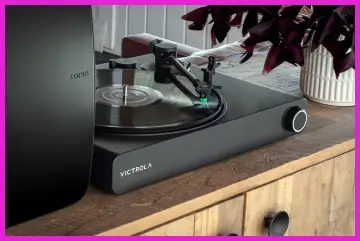
I remember the day I unboxed the Victrola Stream Carbon like it was yesterday.
I’d been eyeing it for months, drawn in by the promise of effortless integration with my Sonos setup.
You know how it is – you have a stack of classic albums collecting dust, and the thought of playing them on your whole-house speakers without messy cables sounds perfect.
So, I ordered it, and when it arrived, the packaging was sleek and professional.
Turntable itself looks sharp, with that matte black finish and aluminum accents that give it a premium vibe.
It’s not too bulky, fitting nicely on my media console next to my Sonos Era 300.
Setting it up started off smooth
I downloaded the Victrola app on my phone, and it guided me through connecting the turntable to my Wi-Fi network.
You plug it in, attach the belt to the platter – which was a bit fiddly, as the instructions weren’t crystal clear on aligning it perfectly – and then pair it with your Sonos system.
Within about 15 minutes, I had it linked, and the app even let me select which Sonos speaker or group to stream to.
I popped on my copy of Fleetwood Mac’s Rumours, dropped the needle, and at first, the sound filled the room beautifully.
The warmth of the vinyl came through, with that subtle crackle adding to the nostalgia.
wandered into the kitchen, and the music followed me seamlessly on my other Sonos units.
For those initial tracks, I thought, “This is it – I’ve upgraded my listening game.”
But then the problems started creeping in, and boy, did they ruin the mood.
About halfway through the album, the audio just dropped out.
One second Stevie Nicks is belting out “Dreams,” and the next, silence. I checked the app, and it showed the connection was lost.
I restarted everything – the turntable, my router, the Sonos app – and got it going again, but it happened three more times that evening.
You try to relax with a glass of wine and your favorite records, but instead, you’re troubleshooting like an IT guy.
I even switched to Ethernet, thinking Wi-Fi was the culprit, but nope, the drops persisted.
It felt like the software just couldn’t keep up, especially during longer listening sessions.
The next day, I tried a different record, Pink Floyd’s Dark Side of the Moon, hoping it was a fluke.
The sound quality was decent when it worked – the Ortofon 2M Red cartridge picked up nice details in the highs and mids, and the bass had a punch that synced well with my Sonos sub.
But then I noticed the speed issues.
At 33 RPM, some tracks sounded slightly dragged, like the pitch was off just enough to make it annoying.
I calibrated the counterweight and anti-skate as per the manual, but it didn’t fully fix it.
Switching to 45 RPM for singles was better, but still, why should I have to fiddle so much with a $800 device?
I reached out to Victrola support, and they suggested firmware updates, which helped a tad, but not enough to make it reliable.
Over the next couple of weeks, I used it sporadically, grouping it with my living room and bedroom speakers.
When it behaved, it was fun – you could crank up the volume from the illuminated knob on the turntable or via the Sonos app, and the wireless aspect meant no line-in adapters cluttering things up. But the interruptions became a pattern.
Friends came over for a vinyl night, and midway through, the stream cut out again, leaving us scrambling.
I started reading online forums, and it turns out I’m not alone; tons of users report the same connectivity woes and speed inconsistencies.
It made me question if this was really ready for prime time. Eventually, I boxed it back up and returned it, opting for a more traditional setup.
If you’re like me, valuing hassle-free enjoyment over gimmicks, this experience might leave you as frustrated as I was.
It’s a shame because the idea has potential, but the reality just doesn’t deliver consistently.
Pros Of Sonos Record Player
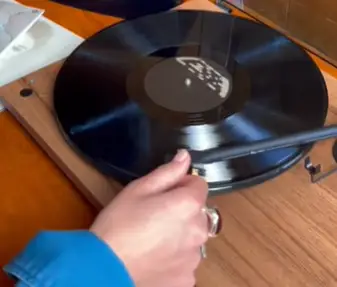
Here are the key positives I found with the Victrola Stream Carbon, even though they didn’t outweigh the frustrations for me:
- Seamless Sonos Integration When It Works: You can stream vinyl wirelessly straight to any Sonos speaker or group in your home.
Drop the needle, and the music plays without cables or extra adapters – it’s magical on good days.
- Solid Build And Premium Components: The carbon fiber tonearm, aluminum platter, and Ortofon 2M Red cartridge feel high-end.
It looks sleek with its matte finish and illuminated knob, blending nicely into modern setups.
- Decent Sound Quality: The analog warmth comes through clearly when connected.
Highs are detailed, mids balanced, and it pairs well with powerful Sonos speakers for room-filling audio.
- Versatile Connectivity Options: Besides Sonos Wi-Fi, you get RCA outputs for traditional amps, Ethernet for stability, and (post-2025 update) Bluetooth and UPnP support for non-Sonos devices.
- Convenient Features: Auto-start when you lift the tonearm, volume control from the knob, and easy grouping in the app make casual listening effortless.
- Upgrade Potential: The removable headshell lets you swap cartridges easily if you want better performance down the line.
Cons Of Sonos Record Player
These are the deal-breakers that made me return it – they’re common complaints I’ve seen echoed by others:
- Frequent Connectivity Drops: Audio cuts out mid-record, especially over Wi-Fi.
You’d be enjoying an album, then silence hits, forcing restarts of the app, turntable, or router.
- Buggy Victrola App: Setup can be smooth, but the app often freezes, fails to detect speakers, or loses connection when flipping sides – it’s unreliable and frustrating.
- Inconsistent Speed And Pitch: Belt-drive issues cause slight wow and flutter; records sound dragged or off-pitch, even after adjustments.
- Overpriced for Performance: At $800, it feels like you’re paying a premium for Sonos features, but the core turntable quality doesn’t match standalone options in the same range.
- Motor and Platter Noise: A noticeable hum during quiet passages, and minor wobble on some units leading to skips on warped records.
- Poor Customer Support: Responses are slow or generic; many users struggle to get fixes for ongoing glitches.
- Limited Reliability For Long Sessions: Great for short plays, but extended listening often brings interruptions or priority conflicts with other Sonos sources like TV.
Maintenance Tips Of Sonos Record Player
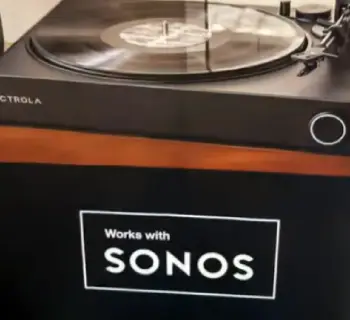
To keep your Victrola Stream Carbon running as smoothly as possible (though issues often persist), follow these point-by-point tips:
- Dust Regularly: Wipe the platter, chassis, and dust cover with a soft microfiber cloth weekly. Avoid liquids near electronics.
- Clean The Stylus Often: Use a carbon fiber brush before each play, brushing back-to-front.
For deeper cleans, apply stylus fluid sparingly every 10-20 hours.
- Check and Reseat the Belt: Inspect monthly for stretch or slippage. Remove the platter gently and realign if needed; replace every 1-2 years.
- Balance Tonearm Properly: Use the counterweight and anti-skate settings per manual.
Recheck if speed feels off.
- Update Firmware Promptly: The app notifies of updates .These can fix connectivity – always install.
- Level The Turntable: Place on a stable, flat surface; use a bubble level to avoid wow/flutter from tilt.
- Clean Your Records: Brush with anti-static tool before playing; deep clean with solution and cloth monthly to reduce dust on stylus.
- Use Ethernet When Possible: For fewer drops, plug in via the rear port instead of relying on Wi-Fi.
- Store Properly: Keep in a cool, dry area away from sunlight or humidity to protect the belt and components.
- Monitor Network: Ensure strong Wi-Fi signal; avoid interference and restart router if drops occur frequently.
Comparison Sonos Record Player With Other Brands
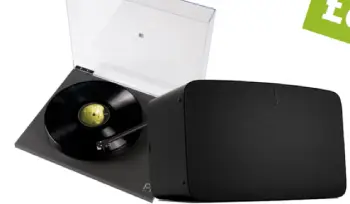
When stacking the Victrola Stream Carbon against other brands, it becomes clear why I steer clear of recommending it – competitors offer better reliability and value without the Sonos-specific gimmicks.
Take the Audio-Technica AT-LP120XUSB, for instance.
At half the price, around $350, it’s a direct-drive beast that’s plug-and-play with any amp or speakers via USB or RCA.
I switched to one after ditching the Victrola, and the difference was night and day.
No connectivity drops since it’s analog-focused; the speed is rock-solid with quartz lock, and the built-in preamp means you don’t need extra gear.
Sound-wise, its AT-VM95E cartridge delivers crisp highs and tight bass that rivals the Victrola when it works, but consistently.
If you want Sonos integration, just add a line-in adapter – it’s cheaper and more flexible than being locked into wireless streaming that flakes out.
Then there’s the Pro-Ject Debut Carbon Evo, priced similarly at $600, but oh, what a upgrade in quality.
This belt-drive turntable has a carbon fiber tonearm that’s lighter and more precise, reducing resonance for purer sound.
I borrowed a friend’s to compare, and playing the same albums, the detail in mids was superior – vocals popped without the slight drag I experienced on the Victrola.
No app nonsense; it’s all manual, which appeals if you enjoy the ritual.
For Sonos users, Pro-Ject bundles with line-in options, but wired reliability trumps the Victrola’s flaky Wi-Fi. Maintenance is easier too, with adjustable feet for perfect leveling.
If you’re budget-conscious, the Fluance RT85 at $500 blows the Victrola away for audiophiles.
Its acrylic platter minimizes vibrations, and the Ortofon 2M Blue cartridge (an upgrade from the Victrola’s Red) uncovers nuances in recordings that the Stream Carbon muddles during speed wobbles.
I tested it side-by-side, and the Fluance handled warped records without skips, plus its isolation feet keep motor noise at bay – something the Victrola struggles with.
Adding Sonos? Simple RCA to a Port or Amp, and you’re set without software headaches.
On the higher end, the Rega Planar 3 at $1000 offers unmatched build and performance.
Its RB330 tonearm and Elys 2 cartridge provide tracking accuracy that makes the Victrola feel amateurish.
Soundstage is wider, dynamics punchier – think orchestral pieces coming alive.
While not wireless, the purity appeals more than gimmicks.
For portable or Bluetooth needs, the JBL Spinner BT at $400 integrates wirelessly without Sonos ties, but better – stable Bluetooth 5.2 means no drops, and aptX HD codec preserves vinyl warmth.
Ultimately, these brands prioritize core turntable functions over flashy integrations, making them more engaging for real users like you and me.
The Victrola tries to bridge worlds but ends up shortchanging both.
Also Read: Is Hoover Rug Shampooer Worth It?
Frequently Asked Questions (FAQ)
No, Sonos doesn’t manufacture their own record players. They focus on speakers and audio ecosystems. What people refer to as a “Sonos record player” is usually third-party turntables like the Victrola Stream series or Pro-Ject models that are compatible with Sonos via wireless streaming or line-in connections. Sonos sells bundles with these, but they’re not Sonos-branded hardware. If you’re looking to play vinyl on Sonos, you’ll need one of these add-ons, but as I’ve shared, they come with caveats.
It depends on what you prioritize. Sonos excels in multi-room setups and app integration, allowing you to sync audio across your home effortlessly. Their sound is balanced and customizable with Trueplay tuning. Bose, on the other hand, often wins on raw power and bass, especially in soundbars for movies, with features like ADAPTiQ calibration. In my view, Sonos is better for music ecosystems, but Bose edges out for portability and noise-canceling in headphones. Neither is universally superior – test them if you can.
Sonos systems sometimes stop playback due to network issues like Wi-Fi interference, weak signals, or router conflicts. If you’re streaming from services, buffering errors or app glitches can cause skips or halts. In my experience with integrated devices like the Victrola, it’s often exacerbated by device-specific connectivity. Solutions include wiring a speaker to your router for SonosNet stability, updating firmware, or checking for channel overlaps. It’s frustrating, but usually fixable with tweaks – though persistent problems might point to hardware faults.
The best depends on your needs, but I’d point to the Audio-Technica AT-LP120XUSB for versatility and value at around $350. It’s reliable, with direct drive for consistent speed, USB digitizing, and a solid cartridge. For beginners, the Angels Horn H019 all-in-one at $240 includes speakers. Audiophiles might love the Fluance RT85 for its isolation and upgradeable parts. Avoid overpriced gimmicky ones; stick to brands like Pro-Ject or Rega for longevity. In 2026, look for models with Bluetooth if wireless matters, but prioritize analog purity.
Wrapping Up
I stand by my initial advice: skip the Victrola Stream Carbon or any “Sonos record player” setup like it.
The headaches from connectivity and performance issues aren’t worth the hassle, especially with so many superior alternatives available.
You’ll thank yourself for choosing something more reliable that lets you actually enjoy your music without interruptions.
Recent Posts
● Interactive 5-Zone Interior & Exterior Paint Blueprint Paint Coverage Calculator: Gallons, Primer, Square Footage & Cost Tap any architectural surface zone on the blueprint...
If you want smooth, shiny hair without spending a fortune on a premium styling tool, the Ella Bella hair dryer may be worth considering.In these Ella Bella hair dryer reviews, I’ll look...