
I’ve spent more than a decade under the bar, switching between free-weight setups and guided machines depending on the gym, the day, and the goal.
The constant question that keeps coming up is simple: should you train on a squat rack or a Smith machine? My intent here is to give you a clear, practical breakdown of how these two pieces of equipment actually feel, what they demand from your body, and which one lines up with the results you want.
| Aspect | Squat Rack (Power Rack / Cage) | Smith Machine |
| Bar path | Completely free in three dimensions | Fixed on vertical or slightly angled rails |
| Stabilizer demand | High – core, hips, ankles all work hard | Low – machine guides the bar |
| Safety for solo lifting | Good with safety pins set correctly | Excellent – catches built into the rails |
| Learning curve | Steeper – form and balance matter | Gentler – easier to focus on the target muscles |
| Muscle activation | Greater overall, especially stabilizers | More isolation on prime movers |
| Space & cost | Needs more floor space; often cheaper long-term | Compact footprint; can be pricier for quality units |
| Best for | Strength, athleticism, progressive overload | Beginners, rehab, high-volume isolation work |
Key Differences Between The Squat Rack And Smith Machine
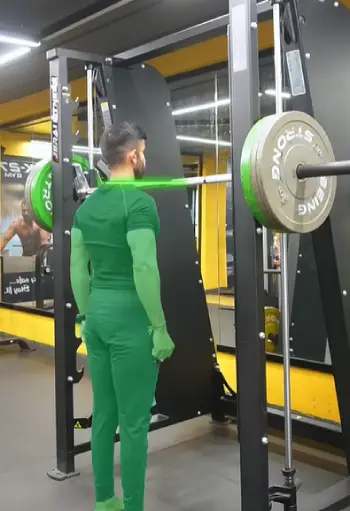
- Freedom of movement: On a squat rack the bar follows your natural path through space while the Smith machine forces every rep along fixed rails.
This single change alters joint stacking and how much smaller muscles must fire to keep you stable.
- Stabilizer recruitment: Free-bar work lights up the entire kinetic chain from feet to shoulders.
The Smith version lets you push harder on the quads or glutes while the rails handle lateral stability for you.
- Safety profile: Both can be safe when used correctly yet the mechanisms differ.
Racks rely on properly set pins under the bar while Smith machines catch the load automatically if you fail a rep.
- Transfer to real life and sport: Strength built on a squat rack usually carries over better to athletic movements and daily tasks.
Smith strength remains more specific to the machine itself and often needs extra free-weight work to transfer fully.
- Setup time and learning curve: Racks demand precise rack height and pin placement before every session.
Smith machines are quicker to start and more forgiving of imperfect form which can help newer lifters stay consistent.
These differences show up clearly once you track both tools for several months.
My free-bar squat numbers always lagged behind Smith numbers by a noticeable margin simply because the stabilizers were no longer getting a free ride on the guided machine.
What Exactly Is A Squat Rack?
A squat rack, often called a power rack or cage, is a four-post steel frame with adjustable J-hooks and safety pins or straps.
You set the bar on the hooks at the height you need, step under it, and move freely. The bar is a standard Olympic bar that weighs 45 lbs and travels wherever your body takes it.
I treat the squat rack as the purest form of barbell training because nothing steers the weight for you.
Every rep forces your nervous system to organize balance, timing, and force production at the same time.
The open design lets me add pull-up bars, band pegs, or even a landmine attachment later without buying an entirely new station.
That flexibility has saved me money and floor space over the years.
Key Features Of A Squat Rack
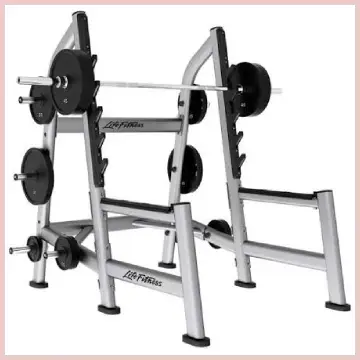
- Adjustable J-hooks and safety pins: These let you set exact heights for squats, bench presses, overhead work, or pulls so the equipment matches your body instead of forcing you to adapt to a fixed station.
- Full Olympic bar compatibility: You can use any plates or specialty bars you already own which keeps long-term costs lower and lets you progress without buying proprietary equipment.
- Open design for spotters or walk-outs: The frame allows a training partner to stand close or lets you walk the bar out if that feels more natural for your setup.
- Wide exercise variety inside one footprint: Adding a pull-up bar or band pegs turns the same frame into a complete strength station without needing extra machines.
- No counterbalance system: Every plate you add is true weight so progressive overload stays honest and measurable over time.
The rack’s simplicity is its real strength. I can walk into any decent gym, set the pins two holes below my lowest squat depth, and know the bar will stop there if I miss. That confidence lets me push heavier sets without needing a spotter every session.
Pros of the Squat Rack
- Builds true functional strength: Every muscle that stabilizes the spine, hips, and ankles has to work hard on every rep. After consistent rack training my single-leg balance and athletic movements improved in ways the Smith never matched.
- Greater carry-over to sport and daily life: The balance challenge translates to better force production when the ground or an opponent is unpredictable. That transfer is the main reason I keep the rack as my primary tool.
- Unlimited exercise variety: You can squat, bench, press, row, pull-up, and even perform inverted rows or band work inside the same frame without changing stations.
- Honest progressive overload: Adding five or ten pounds means your entire system has to adapt rather than just the prime movers. The numbers you build feel earned and reliable.
- Better long-term joint health with good form: Because the bar path is free your body can find its strongest groove instead of fighting a machine’s fixed geometry on every set.
I still remember the first time I hit a clean double at a weight that used to feel shaky on the Smith. The confidence came from knowing every part of my body had earned that lift through real balance and control.
Cons of the Squat Rack
- Higher technical demand: Beginners often struggle with bar path, depth, and bracing which can slow early progress or raise injury risk if ego takes over before skill catches up.
- More mental focus and setup time required: You have to set pins, check heights, and sometimes fight for space in a busy gym before the first working set even begins.
- Spotting is less automatic: Even with pins a true failure can still feel messy if the safety height is set too low or too high for that day’s mobility.
- Larger floor space and higher intimidation factor: Newer lifters sometimes avoid the rack because it looks more serious and they worry about looking awkward while learning the movements.
- Extra fatigue from plate changes and walk-outs: Loading and unloading plus walking the bar out adds systemic work that the Smith simply removes from the equation.
These drawbacks are real. Early on I wasted sessions because I set the safety pins too high and could not reach full depth. That mistake cost training time even though the equipment itself was not at fault.
What Exactly Is A Smith Machine?
A Smith machine locks the barbell onto a pair of vertical or slightly angled steel rails.
The bar slides up and down a fixed path and usually has hooks or rotating sleeves that let you rack it at multiple points along the travel.
Many commercial versions counterbalance the bar so the starting weight feels lighter than 45 lbs. The machine removes the need to balance the load side-to-side or front-to-back.
When I first used one years ago, the guided path felt almost too easy after free weights, yet that same guidance is exactly why many people prefer it.
The built-in safety catches engage the moment you rotate the bar, which gives a different kind of confidence on heavy sets.
Key Features Of A Smith Machine
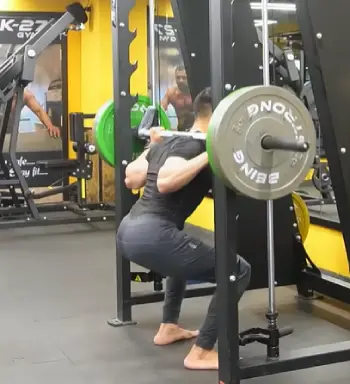
- Fixed vertical or slightly angled rails: These keep the bar traveling in one consistent plane so you never have to fight side-to-side drift during a set.
- Multiple catch points along the path: You can rack the bar at many heights without walking it forward or back which speeds up rest periods between heavy efforts.
- Often a counterbalanced bar system: This reduces the empty bar weight to a lighter starting load and makes the first plates feel more manageable for beginners.
- Built-in safety stops that engage quickly: The moment you rotate the bar or release the handles the catches lock which gives a strong sense of security when training alone.
- Compact footprint for smaller spaces: The machine fits tighter home gyms or crowded commercial floors better than a full four-post rack in many layouts.
The guided path is the feature people either love or hate.
For me it shines on high-rep leg days when my stabilizers are already fatigued from earlier free-weight work and I still want to drive quality volume into the main muscles.
Pros Of The Smith Machine
- Excellent for true solo training: The catch system lets you push close to failure without needing a human spotter standing behind you on every heavy set.
- Lower barrier to entry for new lifters: Beginners can focus on feeling the target muscles instead of worrying about tipping sideways or losing the bar path mid-rep.
- Easier to overload the prime movers: You can often handle more weight on the quads or glutes because the stabilizers are taken out of the equation and fatigue less quickly.
- Useful for rehab or working around injuries: The fixed path reduces unwanted joint stress when a specific range of motion needs protection during recovery phases.
- Consistent bar path from set to set: Some people find the predictability mentally comforting when they are chasing high volume or trying to dial in mind-muscle connection.
On days when my lower back is cranky I still roll the Smith into the mix for controlled leg work or Bulgarian split squats. The machine keeps me training instead of sitting out completely.
Cons Of The Smith Machine
- Reduced stabilizer development over time: Over-reliance can leave weak links that show up the moment you return to free weights or try athletic movements outside the gym.
- Fixed path can create unnatural joint angles: Tall lifters or those with longer femurs often feel the bar wants to travel in a different arc than the rails allow which can stress knees or hips.
- Less carry-over to real-world strength: You may look strong on the machine yet struggle with the same load on a free bar because the balance component was never trained.
- Counterbalanced systems can inflate numbers: The lighter starting weight creates false confidence that disappears when you switch back to a true 45-pound Olympic bar.
- Limited exercise variety compared with a full rack: Many pressing and pulling variations feel restricted or awkward once the bar is locked into the rails.
I learned this the hard way after a long stretch of only Smith work. My free-bar squat dropped and my core felt soft under heavy loads.
The machine had done its job for the quads but it had not prepared the rest of the system for real demands.
How The Two Affect Muscle Activation And Strength Gains?
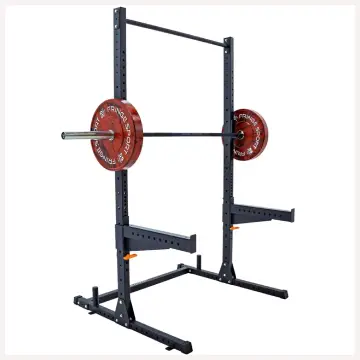
When I track my training logs the pattern stays consistent across years. Free-bar squats light up the entire posterior chain and core far more than the Smith version of the same movement.
The stabilizers fire harder, the nervous system works harder, and the strength that results feels more transferable to sport and life.
The Smith machine by contrast lets me drive more volume into the quads or glutes with less systemic fatigue.
That makes it a useful tool for hypertrophy blocks or when recovery is limited after hard free-weight sessions.
Neither tool is automatically superior for every goal. If you want pure muscle size and already own solid free-weight strength the Smith can help you accumulate more quality reps without beating up the smaller muscles.
If you want athletic power, injury resilience, or simply to be strong in unpredictable situations the squat rack wins most of the time.
I rotate both depending on the training block and the feedback my body gives me each week.
Safety Considerations From Real Training
Safety is the point where people get emotional about these tools. The Smith machine feels safer because the bar cannot tip or drift sideways.
In practice both pieces of equipment are only as safe as the person using them. On a rack I always set the pins just below the lowest point of my squat or bench. That single habit has saved me more times than I can count over the years. On the Smith I still treat every set with respect because the rails do not protect against poor bracing or loading more weight than my form can handle.
If you train alone most of the time the Smith gives you a larger automatic safety net.
If you have a training partner or stay disciplined about pin height the rack is equally safe and usually more productive for long-term strength.
I have failed lifts on both and walked away fine each time because I respected the setup process before the first rep.
Space, Cost, And Home-Gym Reality
For a home gym the decision often comes down to square footage and budget more than pure performance.
A solid power rack can be found at a reasonable price and will last decades with basic care. It needs clearance on all sides and enough ceiling height for overhead work.
A Smith machine is usually more expensive for comparable build quality and still needs a dedicated footprint yet the guided nature means you can sometimes place it closer to a wall.
I have trained in both environments across different houses and apartments. The rack feels more versatile once you own it because new attachments keep expanding what you can do.
The Smith feels more approachable if you are just starting and want to avoid the intimidation factor that free weights sometimes create for newer lifters. Measure your space twice and choose the tool you will actually use consistently rather than the one that looks most impressive online.
Who Should Choose Which Tool?
If you are a beginner who wants to learn movement patterns with less fear of the bar start on the Smith and gradually introduce free-bar work as confidence grows.
If you already have decent form and want to get stronger in the most transferable way prioritize the squat rack from the beginning. Intermediate and advanced lifters usually benefit from owning both or at least having regular access to both.
Use the rack for heavy compound strength work and the Smith for higher-rep accessory work or days when stabilizers need a lighter load.
Your goals decide the tool more than any universal ranking. Strength and athleticism lean toward the rack almost every time. Hypertrophy, rehab, or solo high-volume sessions lean toward the Smith on many training days. Most people who train seriously for years end up needing exposure to both so the body stays adaptable and the mind stays engaged.
Also Read: Is Lhanel Rock Stepper Worth It?
Frequently Asked Questions (FAQ)
No. The fixed path and possible counterbalance mean the Smith version is usually easier so the numbers do not transfer directly to a free bar.
Not really. The fixed rails prevent the free bar path and natural walk-out that define true rack training.
Often no. Many commercial Smith machines are counterbalanced so the empty bar feels noticeably lighter than a standard Olympic bar.
If your goal is long-term strength and athletic transfer yes. If you only want muscle size and train alone a Smith can cover a lot of ground for years.
Final Thoughts
After years of using both I land on a simple rule that still holds up. The squat rack builds the kind of strength that shows up outside the gym while the Smith machine lets you train hard when conditions are less than perfect.
You do not have to pick one forever. Learn the free-bar movements on the rack so your body understands true balance and force production.
Use the Smith when you need extra volume, built-in safety, or a change of stimulus that keeps joints happier.
The best program is the one that keeps you progressing without unnecessary risk. Choose the tool that matches the work you need to do today then keep showing up consistently.
That approach has served me well across different gyms and life stages and it will serve you too if you stay honest about your goals and your recovery.
Recent Posts
I tried Meltoway Hair Dissolving Cream because I wanted a quick way to deal with unwanted body hair without reaching for a razor every few days. If you are looking for a convenient at-home...
If you’re considering a saffron-based supplement to support mood, appetite control, and everyday wellness, Happy Saffron Plus is worth considering.I like that it takes a familiar botanical...