
If you want a lunch box that feels sturdy, practical, and built for years of regular use, I think the Stanley Classic Lunch Box is worth considering.
I like its rugged construction, recognizable design, generous interior, and old-school durability. It is especially appealing if you carry lunch to work, school, outdoor jobs, or weekend activities and want something tougher than a typical soft lunch bag.
If durability and a classic design matter more to you than having the lightest possible lunch carrier, I’d recommend giving the Stanley Classic Lunch Box a serious look.
My First Experience With The Stanley Classic Lunch Box
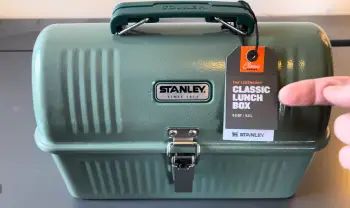
My first impression of the Stanley Classic Lunch Box was that it felt completely different from the lightweight lunch bags I had used before.
Instead of feeling like something I needed to handle carefully, it felt like a piece of equipment I could toss into my routine without constantly worrying about it.
The rigid construction immediately stood out to me. When I picked it up, I could tell that this wasn’t designed around being ultra-light or flexible. The solid exterior gave me confidence that my food containers, snacks, and smaller items would have some protection inside.
I also appreciated the classic appearance. The design has that unmistakable rugged Stanley character without looking overly complicated.
If you prefer simple products that don’t try to add unnecessary features, you’ll probably appreciate this approach.
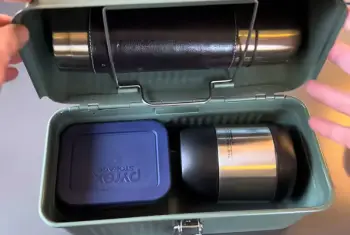
Inside, I found enough usable room for a normal workday lunch. I could fit a meal container, fruit, snacks, and a drink depending on the setup.
The rectangular shape also made organizing food easier than with some oddly shaped insulated bags.
One thing I noticed quickly, though, is that the rigid design works both ways. It protects your food, but it doesn’t compress when you don’t have much inside.
With a soft lunch bag, I can squeeze it into a crowded backpack or cabinet. The Stanley Classic Lunch Box doesn’t really work that way.
I also liked how easy it was to access the contents. There’s no complicated zipper system or multiple compartments that I have to figure out. I open it, put my food inside, close it, and carry it.
For me, that simplicity is one of its biggest strengths.
The Stanley Classic Lunch Box also feels particularly suitable for people who spend time in environments where their lunch carrier may get bumped around. If you’re working outdoors, commuting, traveling, or carrying equipment alongside your lunch, the hard-shell structure makes sense.
However, I wouldn’t choose it simply because I wanted maximum insulation. That’s an important distinction. A rigid lunch box and a highly insulated cooler aren’t necessarily designed for exactly the same job.
After using this style of lunch box, I understand why the classic design has remained popular. It doesn’t try to be everything at once. Instead, it focuses on durability, straightforward storage, and a recognizable rugged design.
Pros Of Stanley Classic Lunch Box

- Rugged and Durable Construction
The biggest advantage I noticed is durability.
If you’ve ever owned a thin lunch bag that developed stains, loose stitching, or a broken zipper, you’ll understand why a sturdy lunch box can be appealing. The Stanley Classic is designed with a hard exterior, so it doesn’t collapse under pressure.
I can put it on the floor, place it beside other gear, or carry it around without treating it like something delicate.
For someone who takes lunch to a job site, workshop, office, school, or outdoor location, this toughness can be a major advantage.
- Classic Design That Doesn’t Feel Trendy
I like products that don’t look outdated after a few months, and the Stanley Classic Lunch Box has a timeless appearance.
The design is simple and recognizable. It doesn’t rely on excessive pockets, flashy patterns, or complicated mechanisms.
You get a straightforward container that looks rugged without trying too hard.
That’s particularly useful if you want something that can work for both everyday lunches and outdoor activities.
- Generous Interior Space
The interior provides useful room for a substantial meal.
I don’t have to limit myself to a tiny sandwich and a snack. Depending on the food containers I’m using, I can pack a complete lunch and several extras.
The rectangular shape is also helpful because I can stack containers more logically.
For people who eat larger meals during the workday, this can be more practical than compact lunch bags designed mainly for small portions.
- Easy to Pack
There’s something refreshing about a product that doesn’t require much thought.
I simply open the lid and arrange my food.
You can use reusable containers, snack bags, fruit containers, or drinks without fighting against a strange interior shape.
If you’re packing lunch early in the morning when you’re barely awake, that simplicity matters.
- Protective Exterior
A hard-sided lunch box offers a level of protection that a soft fabric bag doesn’t.
If I put something fragile inside, such as a food container with a delicate lid, the rigid exterior provides an extra layer of protection from outside pressure.
I wouldn’t treat it as indestructible, but I definitely feel more comfortable placing it alongside other belongings.
- Good for Work and Outdoor Use
The Stanley Classic Lunch Box has a particularly strong personality for practical everyday use.
I can easily imagine carrying it to a construction site, warehouse, workshop, factory, office, school, camping trip, or road trip.
Its rugged appearance doesn’t feel out of place in those environments.
If your lunch routine involves more than walking from your kitchen to a desk, that toughness becomes more meaningful.
- Straightforward Cleaning
Compared with complicated lunch carriers featuring several fabric compartments, a rigid lunch box can be easier to wipe down.
If something spills, I don’t have to worry about liquid soaking deeply into layers of fabric.
I still clean it regularly because food residue can create unpleasant odors, but the straightforward interior makes routine care easier.
- Long-Term Value
The value of a durable lunch box isn’t necessarily about paying the least upfront.
I look at it differently.
If I buy something inexpensive and replace it repeatedly because it wears out, the low initial price doesn’t necessarily make it the better long-term choice.
A sturdy lunch box can make more sense if you’re planning to use it for years.
Cons Of Stanley Classic Lunch Box

- It Is Heavier Than a Soft Lunch Bag
The first drawback I’d point out is weight.
If your priority is carrying as little weight as possible, a rigid lunch box may not be your favorite option.
A soft insulated bag can be considerably easier to carry, especially when you’re already hauling a laptop, backpack, tools, or other equipment.
- It Doesn’t Collapse
This is another practical limitation.
When I finish lunch, the Stanley Classic doesn’t shrink down.
That’s fine if I have storage space, but it can be inconvenient when I’m commuting with limited room.
A collapsible lunch bag can be tucked away much more easily.
- Limited Organizational Features
If you love pockets and compartments, you may find the design too simple.
The Classic Lunch Box focuses on the main storage compartment rather than giving you a dozen separate places for utensils, napkins, snacks, bottles, and accessories.
Personally, I don’t consider this a major problem, but it depends heavily on how you pack.
- Not Primarily a High-Performance Cooler
Another important consideration is temperature control.
A traditional lunch box isn’t automatically equivalent to a dedicated insulated cooler.
If you need food to remain cold for many hours, especially in hot weather, you should pay close attention to insulation and use appropriate ice packs or chilled containers.
The Stanley Classic makes more sense when durability and practical food storage are high priorities.
- Takes Up Fixed Storage Space
Because the shape is rigid, I need a dedicated place to store it.
A soft lunch bag can be folded and shoved into a cabinet. The Stanley-style design wants its own space.
That isn’t a dealbreaker, but it’s something I’d consider before buying.
Maintenance For The Stanley Classic Lunch Box
- Clean It After Every Use
My first rule is simple: don’t leave yesterday’s lunch sitting inside today’s lunch box.
Even if everything looks clean, crumbs, moisture, sauces, and food particles can remain in corners.
I prefer wiping the interior after each use and giving it a more thorough cleaning whenever necessary.
- Don’t Let Moisture Sit Inside
After cleaning, I make sure the interior is completely dry before closing it.
This is especially important if you’ve washed the inside or wiped it with a damp cloth.
Leaving moisture trapped inside a closed container isn’t a good habit.
- Use Leak-Resistant Food Containers
The lunch box may provide sturdy outer protection, but that doesn’t mean every food container inside it is leakproof.
I recommend using containers with secure lids for soups, sauces, dressings, and other liquid-heavy foods.
That simple step can prevent a messy cleanup.
- Don’t Overpack It
I know the temptation.
You see available space and start adding another snack, another container, and another drink.
But overpacking can put unnecessary pressure on the lid and make everything harder to remove.
I prefer leaving enough room to access my food comfortably.
- Keep It Away From Extreme Heat
A lunch box shouldn’t be treated like a cooking container.
If you’re leaving it in a hot vehicle, direct sunlight, or another extremely hot environment, remember that the container itself cannot magically keep food at a safe temperature.
For perishable foods, use proper cold packs and sensible food-storage practices.
- Check the Lid and Hardware
Every few weeks, I would inspect the lid, hinges, latch, and other moving components.
If something becomes loose or doesn’t close properly, it’s better to address it early than ignore it until the problem gets worse.
- Don’t Use Harsh Cleaning Methods
I prefer gentle cleaning methods rather than aggressive chemicals or abrasive tools.
A soft cloth or sponge and appropriate dish soap are usually sufficient for routine cleaning.
The goal is to keep the lunch box clean without unnecessarily wearing down its surfaces.
- Store It Open When Possible
If I’m putting the lunch box away for an extended period, I prefer leaving it open and completely dry.
That gives any remaining moisture a chance to escape and helps prevent stale odors.
- Clean Spills Immediately
This is particularly important with sauces, dairy-based foods, and strongly flavored meals.
If something spills, I don’t wait until the next day.
Cleaning it immediately is much easier than trying to remove dried food residue later.
Comparison Of Stanley Classic Lunch Box With Other Brands
- Stanley Classic Lunch Box vs. YETI
When I compare the Stanley Classic Lunch Box with YETI’s lunch-carrying options, I see two somewhat different approaches.
YETI generally appeals to people who prioritize serious insulation and cooler-style performance.
Stanley’s classic lunch box focuses more strongly on its rugged hard-sided construction and traditional lunch-box design.
If you want something that feels like a durable everyday lunch container, Stanley has a distinct appeal. If temperature retention is the central concern, a dedicated insulated cooler design may make more sense.
- Stanley Classic Lunch Box vs. Hydro Flask
Hydro Flask’s lunch products tend to emphasize modern insulated food storage and temperature management.
The Stanley Classic feels more traditional to me.
I would choose based on what matters most in your routine. If you want a classic hard lunch box with a rugged character, Stanley stands out. If you prefer a modern insulated format, Hydro Flask may be more aligned with your expectations.
- Stanley Classic Lunch Box vs. Soft Insulated Lunch Bags
This is where the difference becomes especially obvious.
Soft lunch bags are lighter, easier to store, and often offer more pockets. They’re convenient for commuters and people who carry several other items.
The Stanley Classic gives me more physical protection and a much sturdier feel.
Neither design is automatically right for everyone. I would choose according to whether portability or durability matters more in your daily routine.
- Stanley Classic Lunch Box vs. Generic Hard Lunch Boxes
There are plenty of basic hard lunch boxes available at lower prices.
The difference I notice is in the overall construction, design identity, and long-term-use appeal.
If you simply need a container to hold food, a generic model may accomplish that job.
But if you’re specifically looking for a rugged lunch box that feels like a long-term piece of everyday gear, the Stanley Classic is more appealing.
Who Should Buy The Stanley Classic Lunch Box?
I think this lunch box makes the most sense for someone who values durability above minimal weight.
If you’re taking lunch to work every day, especially in a demanding environment, the sturdy construction can be useful.
It’s also a good match if you prefer traditional designs and don’t need a pile of organizational pockets.
Parents may also appreciate the durable exterior for school lunches, although its weight and fixed shape should be considered for younger children.
For outdoor workers, campers, travelers, and anyone who tends to be rough on everyday gear, the rugged design is particularly attractive.
On the other hand, if you’re looking for a feather-light lunch carrier that collapses after use, I would look at soft insulated alternatives instead.
Also Read: Comparison Of PlanetBox And Bentgo
Frequently Asked Questions (FAQ)
Yes, especially if you value durability, classic styling, and a sturdy hard-sided design.
It depends on your priorities. Stanley emphasizes rugged lunch-box construction, while YETI offers options focused strongly on insulation and cooler performance.
There isn’t one best choice for everyone. The right option depends on insulation, capacity, weight, durability, and your daily routine.
Popular choices vary, but durable insulated and rugged lunch boxes remain highly sought after for work, school, travel, and outdoor use.
Wrapping Up
After looking at the Stanley Classic Lunch Box from a practical everyday perspective, I can see why it remains appealing.
I like its sturdy construction, simple organization, generous space, and rugged appearance. It isn’t the lightest or most compact option, and it isn’t designed primarily as a high-performance cooler.
But if you want a dependable hard lunch box that can become part of your daily routine for years, I’d recommend buying it. For me, its durability and straightforward design are the biggest reasons to choose it.
Recent Posts
I spent months comparing budget options against established names after my last set of tires wore out sooner than expected.My goal here is to share what I learned from putting Dextero and...
AquaTru Carafe Vs. Classic: Which Is Actually Fits Your Kitchen?
I decided to write this comparison after months of testing both the AquaTru Carafe and the Classic in my own kitchen. Tracking covered daily use.Taste stayed consistent. Refill frequency...