
If you’re tired of guessing where studs are hidden behind your walls, I genuinely think the StudBuddy Magnetic Stud Finder deserves a place in your toolbox.
I like tools that solve problems without unnecessary complexity, and this one does exactly that.
Whether you’re hanging a TV, shelves, mirrors, or artwork, this compact magnetic stud finder offers a simple and dependable way to locate metal fasteners hidden behind drywall. I
n this review, I’ll share my experience, explain its strengths and weaknesses, compare it with competing products, and help you decide if it’s the right purchase for your home improvement projects.
My Personal Experience Using The StudBuddy Magnetic Stud Finder

The first thing I noticed when I picked up the StudBuddy Magnetic Stud Finder was its simplicity.
There were no batteries to install, no buttons to press, and no instruction manual that required several minutes to understand. I simply placed it against the wall and slowly moved it horizontally.
Within seconds, I felt the magnet grab onto a drywall screw hidden beneath the paint. That satisfying “snap” immediately gave me confidence that I had found a stud.
Unlike electronic stud finders that sometimes beep unexpectedly or lose calibration, the StudBuddy gave me a physical confirmation that felt much more trustworthy.
I tested it throughout my home on painted drywall, textured walls, and even around areas where I knew electrical wiring existed.
Since the StudBuddy only reacts to steel screws and nails, I never worried about confusing pipes or electrical interference. That made the experience feel more controlled and less frustrating.
Of course, it isn’t perfect. There were times when I had to scan slowly because the drywall screws were spaced farther apart than expected.
On older walls with fewer fasteners, locating the first screw required a little patience. Once I found one fastener, though, identifying the rest of the stud became easy.
I also appreciated how lightweight the tool is. I slipped it into my pocket while working around the house without even noticing it was there.
Because it contains no electronic components, I didn’t worry about dropping it or damaging delicate sensors.
After using several electronic stud finders over the years, I found myself reaching for the StudBuddy more often than I expected.
It may not have fancy displays or multiple scanning modes, but its reliability won me over.
Sometimes the simplest solution ends up being the one you trust the most, and that’s exactly how I felt after spending time with this little magnetic tool.
What Is The StudBuddy Magnetic Stud Finder?
The StudBuddy is a compact magnetic stud finder that uses powerful neodymium magnets to locate drywall screws and nails attached to wooden or metal studs.
Instead of detecting changes in wall density like electronic stud finders, it simply searches for the metal fasteners builders use when installing drywall. Once it locks onto a screw or nail, you’ve essentially located the stud behind the wall.
Because it contains no electronics, batteries, calibration systems, or digital sensors, the StudBuddy is incredibly simple to operate.
Key Features Of StudBuddy Magnetic Stud Finder
One of my favorite aspects of the StudBuddy is its minimalistic design. Everything about it focuses on reliability rather than unnecessary features.
The strong rare-earth magnets create a noticeable pull whenever they encounter a drywall fastener.
Its compact size makes it easy to store inside a toolbox, kitchen drawer, or even a pocket.
Since there are no batteries involved, it’s always ready whenever I need it.
The durable construction allows it to survive drops that could easily damage electronic alternatives.
Another feature I appreciate is that children or beginners can use it successfully with almost no instructions.
Build Quality And Design
Although the StudBuddy looks small, it feels surprisingly solid.
The plastic housing is durable without being heavy. The embedded magnets remain securely positioned, and the exterior glides smoothly across painted walls without scratching surfaces.
I also like that there are no moving components. That reduces the chances of mechanical failure over time.
Overall, it feels like a tool designed to last many years rather than something disposable.
Accuracy And Performance
Performance depends largely on your expectations.
If you’re expecting the StudBuddy to magically identify the center of every stud instantly, you may be disappointed.
However, if you understand how magnetic stud finders work, you’ll probably appreciate its consistency.
Whenever I located a drywall screw, I knew I had found the stud line. Repeating the process vertically helped confirm the stud’s exact position.
Unlike electronic models that occasionally produce false readings from wall texture or insulation differences, magnetic detection remains consistent.
For homeowners performing everyday installations, that consistency is extremely valuable.
Pros Of StudBuddy Magnetic Stud Finder
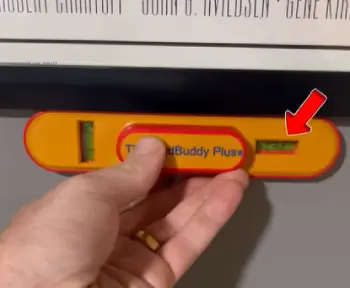
- Extremely Easy to Use
I honestly believe this is the biggest advantage.
You simply place it on the wall and slowly move it until the magnet grabs a hidden screw. There are no calibration steps, confusing settings, flashing lights, or sensitivity adjustments.
Even if you’ve never used a stud finder before, you’ll likely feel comfortable within minutes.
I found this especially useful when working on multiple rooms because I could immediately begin scanning without preparing the tool.
- No Batteries Ever Required
One feature I never stop appreciating is the battery-free design.
Electronic stud finders always seem to need fresh batteries right when I need them most. The StudBuddy completely eliminates that inconvenience.
I never have to check battery levels, replace power cells, or worry about electronic failures caused by low voltage.
Years from now, it should still work exactly the same way it does today.
- Surprisingly Reliable
The magnetic attraction gives me confidence because I can actually feel the connection with the hidden screw.
Instead of relying solely on digital indicators or audible beeps, I receive physical confirmation.
That tactile feedback makes the entire experience more reassuring.
Even after repeated use, I continue trusting its results.
- Compact Enough for Every Toolbox
Its size makes daily use much easier.
I often keep it inside my pocket while installing shelves or picture frames. Because it weighs very little, carrying it around never becomes annoying.
Small size also means it fits inside crowded toolboxes without taking valuable storage space.
- Very Durable
Since there are no electronics inside, durability becomes another major advantage.
Accidental drops don’t concern me nearly as much compared with expensive electronic stud finders.
This makes it especially attractive for contractors, DIY enthusiasts, landlords, and homeowners who frequently work around the house.
- Consistent Performance
Electronic sensors occasionally become confused by textured walls, moisture, or improper calibration.
The StudBuddy follows a completely different approach.
If there’s a steel drywall screw behind the wall, the magnet finds it.
That consistency gave me much greater confidence during my projects.
- Affordable Value
Compared with many premium electronic stud finders, the StudBuddy delivers excellent value.
You’re paying for dependable functionality rather than digital features you may rarely use.
For occasional household projects, I think the price-to-performance ratio is outstanding.
Cons Of StudBuddy Magnetic Stud Finder
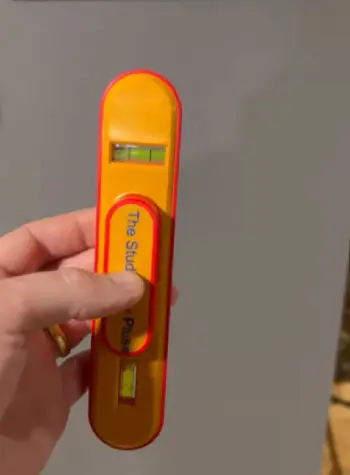
- Requires Metal Fasteners
The StudBuddy only works by detecting steel screws or nails.
If fasteners are missing, buried unusually deep, or spaced far apart, locating the first stud may take extra patience.
- Slower Than Advanced Electronic Models
Some premium electronic stud finders estimate stud edges quickly.
The StudBuddy requires a slower scanning motion until the magnet catches a fastener.
For professionals working under tight deadlines, that extra time may matter.
- Doesn’t Show Stud Width
It identifies fastening points rather than the complete stud profile.
You’ll usually need to locate multiple screws to estimate the stud’s center accurately.
- Limited Features
There are no displays, laser guides, wire detection, or pipe detection.
Some users may prefer multifunction electronic tools for complex renovation projects.
Maintenance Tips Of StudBuddy Magnetic Stud Finder
- Keep the Surface Clean
Although maintenance is minimal, I still wipe the exterior after dusty projects.
Drywall dust can build up around the magnets over time.
A soft microfiber cloth keeps everything clean without damaging the finish.
- Store It Away From Metal Debris
Because the magnets are powerful, they naturally attract loose screws, nails, washers, and metal shavings.
I prefer storing it separately from piles of hardware so unwanted metal doesn’t accumulate on the magnets.
This also keeps scanning performance consistent.
- Avoid Excessive Moisture
Even though the housing feels durable, I avoid leaving the tool in damp environments for long periods.
Keeping it dry helps preserve both the plastic body and embedded magnets for years.
- Protect the Magnetic Face
I try not to slam the magnetic surface against hard steel objects unnecessarily.
While the magnets are durable, avoiding repeated impacts helps maintain long-term performance.
- Inspect Before Large Projects
Before starting a major installation, I quickly remove any tiny screws or metal particles attached to the magnets.
A clean magnetic surface creates smoother movement across painted walls and improves detection consistency.
- Use Slow, Steady Movements
One maintenance habit that also improves performance is using gentle scanning motions.
Moving too quickly may cause you to miss drywall screws.
I learned that slower passes almost always produce better results.
- Pair It With a Pencil
Whenever I find one fastener, I immediately mark the wall lightly with a pencil.
Connecting several marks helps me visualize the stud line more accurately.
This simple habit saves time during installations.
- Store It Properly
I keep mine inside a dedicated compartment in my toolbox.
That prevents unnecessary contact with sharp tools while also reducing the amount of loose hardware attracted to the magnets.
Proper storage helps the StudBuddy remain ready for the next project without extra cleaning.
Comparison Of StudBuddy with Other Brands
- StudBuddy vs Franklin Sensors
Franklin Sensors focuses on advanced electronic detection using multiple internal sensors.
When I compare them, Franklin offers faster wall scanning and wider detection coverage. However, it depends on batteries and electronic calibration.
The StudBuddy wins in simplicity, durability, and reliability. If I want a tool that’s always ready, I usually choose the StudBuddy.
- StudBuddy vs Zircon
Zircon has built its reputation around electronic stud finders with multiple scanning modes.
These models often include live wire detection and deeper scanning capabilities.
While those features are useful, I sometimes experience inconsistent readings depending on wall conditions.
The StudBuddy feels more predictable because it physically locates drywall fasteners rather than interpreting wall density.
- StudBuddy vs CH Hanson Magnetic Stud Finder
CH Hanson also produces magnetic stud finders using powerful magnets.
Performance between these products is fairly similar.
I think the decision often comes down to design preference, grip comfort, and overall build quality.
Both products emphasize battery-free operation and dependable magnetic detection.
- StudBuddy vs Craftsman Electronic Stud Finder
Craftsman electronic models include additional technology for locating stud edges.
These tools work well for larger remodeling jobs but introduce more complexity.
Personally, I appreciate the StudBuddy whenever I need a straightforward tool that works immediately without setup.
Is The Studbuddy Worth Buying?
From my experience, yes.
If your primary goal is hanging televisions, mirrors, floating shelves, cabinets, curtain rods, or artwork, the StudBuddy offers dependable performance without unnecessary complexity.
I wouldn’t recommend it for every professional construction application where advanced wall scanning is required. However, for everyday homeowners, renters, and DIY enthusiasts, it delivers exactly what most people actually need.
Its durability, simplicity, affordability, and consistent performance make it one of the easiest stud finders to recommend.
Frequently Asked Questions (FAQ)
Yes. It works by locating the metal screws or nails that secure drywall to wall studs.
Yes. They are reliable when drywall is attached with steel fasteners, allowing magnets to detect their locations.
The StudBuddy is among the most trusted magnetic stud finders because of its strong magnets, durable construction, and battery-free design.
The StudBuddy typically detects steel fasteners through standard drywall up to approximately 1 inch thick, depending on wall construction and fastener placement.
Wrapping Up
After spending time with the StudBuddy Magnetic Stud Finder, I understand why it has earned such a loyal following. It doesn’t rely on flashy technology or complicated settings.
Instead, it focuses on dependable performance that makes everyday home projects easier.
If you want an affordable, durable, battery-free stud finder that consistently helps you locate wall studs, I believe the StudBuddy is an excellent investment and a tool you’ll likely reach for again and again.
Recent Posts
I spent months comparing budget options against established names after my last set of tires wore out sooner than expected.My goal here is to share what I learned from putting Dextero and...
AquaTru Carafe Vs. Classic: Which Is Actually Fits Your Kitchen?
I decided to write this comparison after months of testing both the AquaTru Carafe and the Classic in my own kitchen. Tracking covered daily use.Taste stayed consistent. Refill frequency...