
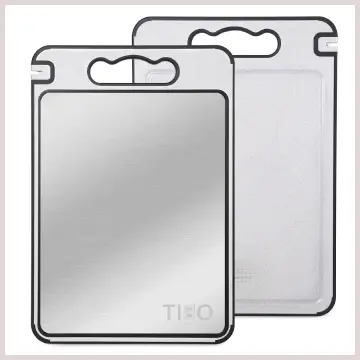
TIBO Titanium Cutting Board promises a modern alternative to traditional wooden and plastic chopping boards.
Its titanium surface, dual-sided design, and additional kitchen features sound appealing, but customer feedback raises questions about its quality, value, and overall reliability.
After examining its advertised features, pricing, customer complaints, and competing products, I wouldn’t recommend rushing to purchase it.
There are more established cutting boards that offer better confidence and value for everyday cooking.
My Personal Experience With The TIBO Cutting Board
When I evaluate a kitchen product, I look beyond its advertising.
A cutting board might look impressive in promotional videos, but what really matters is how well it performs during everyday food preparation.
It should be comfortable to use, stable on the countertop, easy to clean, and gentle enough on kitchen knives.
The TIBO Cutting Board caught my attention because it uses titanium as its primary selling point. Traditional cutting boards are generally made from wood, bamboo, plastic, or composite materials.
TIBO attempts to distinguish itself by offering a titanium cutting surface alongside additional features designed to simplify food preparation.
The company advertises a dual-sided design, a built-in knife sharpener, a garlic grater, and a juice groove.
These features suggest that the board can handle several kitchen tasks without requiring multiple separate accessories.
However, I would separate the product’s advertised capabilities from independently verified performance. I haven’t personally conducted hands-on durability or knife-sharpness tests on this board, so I wouldn’t present promotional claims as proven results.
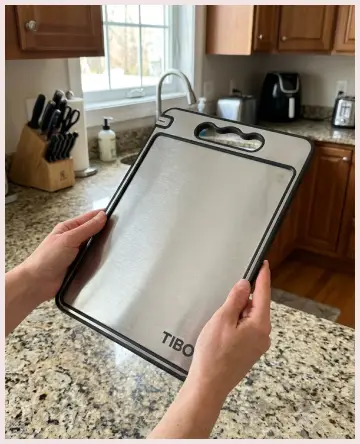
The TIBO Cutting Board has a modern appearance that may appeal to people who prefer contemporary kitchen accessories.
Its titanium construction is intended to provide a nonporous food preparation surface that is easier to rinse and maintain than some traditional materials.
The dual-sided construction is another interesting feature. The manufacturer promotes one side for meat preparation and the other for vegetables, fruits, and other ingredients. In theory, this arrangement makes meal preparation more convenient because you can flip the board instead of immediately reaching for another one.
Nevertheless, I would want to examine the actual dimensions, thickness, weight, and surface stability before considering it a practical replacement for my regular chopping board.
A cutting board that looks attractive but moves around while you’re slicing onions or cutting chicken isn’t particularly useful.
Also Read: Is Tivano Cutting Board Worth It?
Pros Of TIBO Cutting Board
- Titanium-Based Cutting Surface
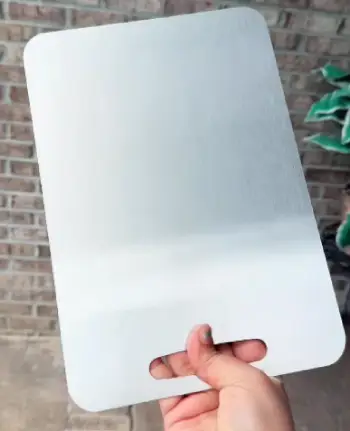
The biggest selling point is its advertised titanium construction.
Unlike conventional plastic boards, titanium does not have the same type of polymer surface that can produce plastic particles as it wears. This may appeal to people who are trying to reduce their use of plastic kitchen products.
The company advertises its titanium surface as nonporous, which is another attractive characteristic. A nonporous surface can be easier to rinse and less likely to absorb food odors than some damaged or heavily worn alternatives.
However, I wouldn’t interpret this as proof that the board eliminates bacteria or prevents foodborne illness. Proper cleaning and food handling remain essential.
- Dual-Sided Design
I like the general idea behind a reversible cutting board.
Having two usable surfaces can make kitchen preparation more organized. For example, you might use one side for raw ingredients and the other for vegetables or bread.
This arrangement could reduce the need to constantly switch between separate boards.
However, flipping a board isn’t a complete substitute for proper cross-contamination prevention. You must clean and sanitize surfaces appropriately, especially after preparing raw meat, poultry, or seafood.
I would also check whether both sides have sufficient working space for your usual ingredients.
- Integrated Garlic Grater
The garlic grater is a convenient addition on paper.
Garlic is a common ingredient in everyday cooking, and having a dedicated grating area could save you from searching through kitchen drawers for another utensil.
It may also help when preparing small quantities of ginger or similar ingredients, depending on the grater’s design.
Nevertheless, small integrated accessories can sometimes be harder to clean than separate kitchen tools. Food particles may collect around textured surfaces, so I would inspect the construction carefully before relying on this feature.
- Built-In Knife Sharpener
A built-in sharpener gives TIBO another point of difference.
Many home cooks continue using dull knives because they don’t have a convenient sharpening tool. An integrated sharpener could encourage more regular knife maintenance.
However, I wouldn’t assume that every built-in sharpener works equally well with every knife.
Different blades require different sharpening approaches. Expensive Japanese knives, for example, may require more careful maintenance than ordinary kitchen knives.
Before using the integrated sharpener, I would check its instructions and compatibility with my knives.
- Easy-Cleaning Potential
The manufacturer promotes the titanium surface as easy to clean.
This is an appealing feature because nobody wants to spend unnecessary time scrubbing a cutting board after preparing dinner.
A smooth, nonporous surface may be easier to rinse than deeply scratched plastic or poorly maintained wood.
Still, the entire board matters. You need to consider the edges, accessories, grooves, and any joints where moisture or food particles might collect.
I would never assume that a board is dishwasher-safe simply because its main surface is titanium. Always follow the actual care instructions for the complete product.
- Modern Kitchen Appearance
Another potential advantage is its contemporary appearance.
Traditional wooden cutting boards can look beautiful, but some people prefer the cleaner appearance of modern metal kitchen accessories.
TIBO’s design may suit kitchens with stainless steel appliances and minimalist countertops.
However, appearance shouldn’t be the primary reason to spend more on a food preparation tool. Practical performance should always come first.
Cons Of TIBO Cutting Board
- Customer Complaints Raise Quality Concerns
The first issue is customer satisfaction.
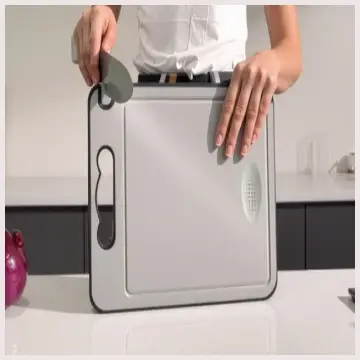
Some customer feedback describes disappointment with the board’s size, particularly the mini version. One purchaser also expressed concerns about exposed edges and the possibility of accidentally cutting their fingers.
Other complaints mention the perceived value of the product and difficulties associated with returning or registering purchases.
These are individual experiences rather than proof of widespread defects. Nevertheless, I consider them relevant because a cutting board should be comfortable and dependable during repeated use.
- The Price May Not Justify the Features
TIBO is positioned as a premium kitchen accessory.
Its promotional pricing has been around $59.99 for the main board, compared with an advertised regular price of $119.99. Actual offers can change depending on the product page and promotional period.
TIBO-KITCHEN+1
At that price, I would expect excellent construction, clear product specifications, dependable customer service, and a convincing reason to choose it over established alternatives.
Unfortunately, a built-in grater and sharpener don’t automatically make a cutting board worth the additional expense.
You can purchase a reliable traditional board and separate kitchen accessories without necessarily spending as much.
- Uncertainty About Knife Friendliness
One of my biggest concerns is the effect of the cutting surface on knife edges.
TIBO claims that its titanium surface is gentle on knives. However, I would want independent testing that compares its effect on blade sharpness with wood, plastic, and rubber cutting surfaces.
A cutting board is used repeatedly, sometimes several times a day. Even a small difference in how a surface interacts with a blade can matter over months of regular use.
If you own quality kitchen knives, this is not something I would overlook.
- Potential Stability Issues
Stability is extremely important.
Imagine cutting a large onion while the board moves across your countertop. Even if the material is excellent, an unstable board can make food preparation uncomfortable and potentially dangerous.
A nonslip base is useful, but its effectiveness depends on the countertop surface, board weight, dimensions, and condition of the gripping material.
I would prefer a board with consistently dependable grip rather than relying on an accessory that might need additional support.
- Limited Independent Performance Evidence
Marketing descriptions can explain what a company intends its product to do. They don’t necessarily establish how well it performs.
I would like to see more independent testing covering:
- Long-term surface wear.
- Knife-edge retention.
- Resistance to staining and odors.
- Stability during heavy chopping.
- Cleaning around integrated accessories.
- Durability after repeated washing.
Without convincing evidence in these areas, I wouldn’t consider the product a proven upgrade over traditional cutting boards.
- Questions About Returns and Customer Support
A company’s return policy matters just as much as its product description.
A customer should understand the refund period, return shipping charges, restocking fees, and warranty exclusions before purchasing.
Some reported customer experiences mention dissatisfaction with return-related costs. This doesn’t mean every customer will encounter the same situation, but it makes reading the complete policy particularly important.
Shop+1
I wouldn’t purchase an expensive kitchen accessory without understanding what happens if it arrives damaged, doesn’t match its description, or simply doesn’t meet expectations.
Also Read: Is Katuchef Cutting Board Worth It?
Maintenance For A TIBO Cutting Board
- Clean the Board Immediately After Use
I recommend cleaning your cutting board immediately after preparing food.
Don’t leave raw meat juices, vegetable residue, or garlic particles sitting on the surface for hours.
Use warm water and an appropriate dishwashing detergent. Pay attention to the areas around the edges and any textured accessories.
A quick rinse may remove visible food particles, but proper washing is necessary to remove grease and residue.
- Follow Appropriate Food Safety Practices
Never assume that titanium automatically makes a cutting board bacteria-proof.
If you’re preparing raw chicken, fish, or meat, clean and sanitize the board using an appropriate food-safe method.
I also recommend keeping separate boards for raw animal products and ready-to-eat foods whenever practical.
This is a straightforward way to reduce the possibility of cross-contamination.
- Pay Attention to the Built-In Grater
The garlic grater may be useful, but textured surfaces require attention.
Small pieces of garlic, ginger, and other ingredients can become trapped between the grating elements.
Use a suitable cleaning brush to remove food particles, following the manufacturer’s instructions.
Avoid aggressive cleaning tools that could damage the grater or surrounding components.
- Inspect the Board’s Edges Regularly
Edges deserve more attention than many people realize.
Check for sharp areas, loose components, damaged corners, or changes in the protective border.
If you notice a sharp edge or structural damage, stop using the board until the problem has been addressed.
I would be particularly careful with the mini version because customer feedback has raised concerns about its exposed edges.
- Store It in a Dry Location
After washing, dry the board thoroughly before putting it away.
Although titanium itself is corrosion-resistant, other components may have different care requirements.
Avoid storing a damp board in a tightly enclosed space where moisture can remain trapped.
A dry cabinet or suitable vertical storage rack is generally a sensible option.
- Avoid Unapproved Cleaning Chemicals
Don’t experiment with strong cleaning chemicals simply because the product is advertised as durable.
Follow the manufacturer’s care instructions and use food-safe cleaning products.
Harsh chemicals can affect non-titanium components, rubber elements, or protective materials.
- Maintain Your Kitchen Knives Separately
The integrated sharpener should not replace proper knife maintenance.
Keep your knives clean and dry, and use a sharpening method appropriate for their blade material and construction.
If you’re uncertain about the sharpener’s compatibility, consult the knife manufacturer before using it.
Comparison Of TIBO Cutting Board With Other Brands
- TIBO vs. OXO Good Grips Cutting Boards
Practical plastic cutting board alternative
OXO Good Grips is another option I would consider.
Its cutting boards are designed around practical everyday cooking requirements, including comfortable handling and nonslip features on selected models.
Compared with TIBO, OXO offers a more conventional approach to food preparation.
Plastic boards are generally easy to clean and can be convenient for separating raw ingredients from vegetables and ready-to-eat foods.
However, plastic boards can develop knife grooves with repeated use, and damaged surfaces should be replaced when they become difficult to clean.
I would choose an OXO model if affordability, practical design, and everyday convenience mattered more to me than having a titanium surface.
- TIBO vs. Epicurean Cutting Boards
Lightweight composite alternative
Epicurean offers cutting boards made from a wood-fiber composite material.
This is an interesting middle ground between traditional wood and plastic.
I like that composite boards can provide a relatively lightweight design without requiring the same conditioning routine as many traditional wooden boards.
They can also be practical for people who want a modern-looking cutting board without choosing a metal surface.
TIBO’s titanium design may sound more innovative, but innovation alone isn’t enough to make a product better.
I would compare the actual thickness, surface feel, dishwasher compatibility, and knife performance before deciding.
- TIBO vs. Teakhaus Cutting Boards
Traditional hardwood alternative
Teakhaus is worth considering if you prefer natural materials.
Teak boards are popular because of their appearance and suitability for kitchen preparation.
A properly maintained teak board can be a useful long-term kitchen accessory. It also provides a different cutting experience from a hard metal surface.
Compared with TIBO, Teakhaus focuses on traditional wooden construction.
The main trade-off is maintenance. Wood requires appropriate cleaning, drying, and periodic care.
Nevertheless, I would not dismiss a good wooden cutting board simply because titanium sounds more advanced.
- TIBO vs. Sonder Los Angeles Cutting Boards
Premium wood and design alternative
Sonder Los Angeles offers attractive wooden cutting boards designed for both food preparation and presentation.
Its products are worth considering if you want something that looks good on your countertop while remaining functional.
Compared with TIBO, Sonder emphasizes natural materials and contemporary wooden-board design.
I particularly appreciate the idea of buying one accessory that can move from food preparation to serving.
However, I would still check the specific model’s material, construction, cleaning requirements, and dimensions.
Also Read: Is Titan Carve Cutting Board Worth It?
Frequently Asked Questions (FAQ)
Gordon Ramsay has been associated with John Boos wooden cutting boards, particularly large maple butcher-block-style boards. He has also recommended using a large, stable wooden cutting surface for food preparation.
There isn’t one universally highest-rated cutting board because ratings vary between retailers and independent testing organizations. Boardsmith, John Boos, Teakhaus, OXO, and Epicurean are among the established brands worth considering. Bon Appétit named the Boardsmith Maple End-Grain Cutting Board its best overall wooden cutting board in its November 2026 recommendations.
The exact manufacturing country of the TIBO Titanium Cutting Board isn’t clearly established in the product information I could verify. I would recommend contacting the manufacturer and requesting written confirmation of its country of origin before purchasing.
The advertised promotional price for the full-size TIBO Titanium Cutting Board has been approximately $59.99, compared with a listed regular price of $119.99. The mini version has been advertised around $39.99. Prices and promotions can change, so check the current offer before ordering.
Final Verdict
I wouldn’t recommend the TIBO Cutting Board as my first choice. Although its titanium surface, dual-sided design, and integrated accessories sound convenient, customer complaints and questions about its overall value make me hesitant.
I would rather spend my money on an established cutting board from John Boos, OXO, Epicurean, or Teakhaus. These alternatives provide more familiar choices for everyday food preparation.
Ultimately, a cutting board should offer dependable performance, comfortable handling, and easy maintenance—not just impressive advertising.
Recent Posts
Insta Surge XL Gummies are marketed as a convenient male enhancement supplement intended to support stamina, energy, confidence, and overall male vitality.However, after examining the available...
Resilia Aged Garlic Reviews: Is It Worth Buying For Heart Health?
Resilia Aged Garlic is gaining attention among people looking for natural ways to support cardiovascular wellness, healthy circulation, and everyday vitality.I find its aged garlic formula...