
I decided to put these two Wagner FLEXiO models side by side after using both on real home projects because I wanted a clear answer on which one actually fits longer sessions, fine cabinet work, and everyday wall jobs without the usual trial-and-error headaches.
goal here is simple: give you a straight, experience-based breakdown of the FLEXiO 4300 versus the 5000 so you can pick the right one for your next painting or staining task.
| Feature | FLEXiO 4300 | FLEXiO 5000 |
| Design | Stationary turbine base | Stationary turbine base |
| Hose Length | 15 ft | 11.5 ft |
| Main Nozzle | iSpray (1.5 qt cup) | iSpray (1.5 qt cup) |
| Detail Option | Gravity-feed cups (150 ml + 600 ml) | Detail Finish nozzle |
| Storage | Soft accessory bag | Integrated hard case |
| Power Control | Variable X-Boost | Variable X-Boost on handle |
| Best For | Fine finishes, cabinets, trim | Larger surfaces, longer sessions |
| Speed Claim | Up to 12x faster than brush | Up to 12x faster than brush |
| Thinning for Latex | Usually none | Usually none |
Key Differences Between The Wagner Flexio 4300 And 5000
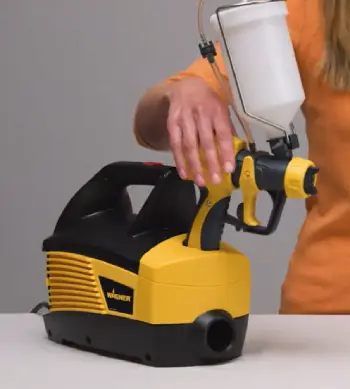
- Hose reach and mobility: The 4300 offers a full 15-foot hose. This gives about 30 feet of working space.
I stayed in one spot longer on hallways and fences. The 5000 uses an 11.5-foot hose. It covers most rooms well
I still moved the base more on big exterior jobs.
- Detail nozzle approach: The 4300 includes two gravity-feed cups. One holds 150 ml. The other holds 600 ml.
Gravity feed kept material flowing at odd angles. The 5000 uses a standard Detail Finish nozzle.
Both create fine results. The gravity setup felt more forgiving on tight cabinet work.
- Storage and portability: The 5000 packs the hose and nozzles into its hard case. Everything stayed protected after use. The 4300 comes with a soft bag.
The bag holds the hose and nozzles. The base stays exposed during storage.
- Handle controls: The 5000 places the X-Boost dial on the gun handle. I changed air output without walking back.
The 4300 keeps most adjustments on the base. That small difference mattered on ceiling jobs.
- Project scale focus: The 4300 suits cabinets, furniture, and trim. The gravity cups shine on detailed surfaces.
The 5000 handles multiple walls and decks better. Both share the same turbine power. The accessories steer each model toward different strengths.
- Overall comfort during long sessions: The lighter gun on both reduces wrist strain. The 5000 felt slightly better on all-day wall work.
The 4300 stayed comfortable on mixed furniture days.
Key Features Of The Wagner FLEXiO 4300
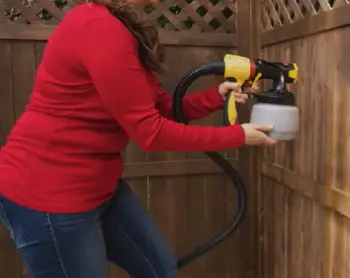
- Stationary X-Boost turbine: The motor sits on the floor.
The gun stays light in my hand.
I sprayed a full set of kitchen cabinets without wrist fatigue.
- 15-foot air hose: Extra reach reduced base moves.
I worked almost continuously on a long exterior fence.
That saved time and effort.
Dual gravity-feed cups: The 600 ml cup handled medium trim runs.
- The 150 ml cup worked for touch-ups and crafts. Gravity feed cut sputtering on upward angles.
- iSpray nozzle with 1.5-quart cup: This larger cup covers broad surfaces fast.
I finished an 8-by-10 wall in under five minutes. Unthinned latex sprayed evenly.
- Adjustable material flow, pattern, and air power: Numbered dials matched stain one day and thick paint the next.
Horizontal, vertical, and round patterns covered every surface.
- Lock-N-Go system and five cup liners: Cleanup stayed quick. I rinsed five parts and swapped liners. The unit was ready for the next color in minutes.
- Soft storage bag: It keeps the hose and nozzles organized. The base needs separate handling when packing up. The bag is light for car transport.
Pros Of The Wagner FLEXiO 4300
- Longer hose improves continuous work: The extra 3.5 feet cut the number of base moves. Hallway and fence projects finished with less interruption. Rhythm stayed steady longer.
- Gravity-feed detail cups excel at fine work: Cabinets and trim received smoother coats. Risk of dry spots dropped. The two cup sizes gave flexibility without buying extras.
- Lighter overall package for transport: Soft bag plus separate base made car trips easy. I moved it between jobs without strain. Neighbor projects stayed simple.
- Strong value for mixed interior tasks: Wall touch-ups and furniture refinishing both worked well. One tool covered both needs. Occasional users get good return.
- Reliable unthinned latex performance: Standard interior and exterior latex sprayed straight from the can. Coverage stayed even every time. Thinning was rarely needed.
- Quick cleanup after detailed jobs: Few parts rinsed clean fast. Cup liners sped color changes. I finished a multi-color furniture day without long delays.
Cons Of The Wagner FLEXiO 4300
- Soft bag offers less protection: The base sits outside the bag. Dust and minor scuffs appear more easily. Storage needs extra care.
- Power adjustments stay on the base: Changing air settings required a short walk. Ceiling work felt more interrupted. Momentum broke on long passes.
- Gravity cups demand careful filling: Overfilling leads to minor drips. Careful setup is needed. Angled work still requires attention.
- Slightly less convenient for pure large-surface days: Walls and siding sessions felt slower to switch. The Detail Finish nozzle on the 5000 seemed more streamlined. Pure exterior runs favored the other model.
- Base stays exposed during moves: Soft bag leaves the turbine open. Transport across yards picks up more dirt. Extra wiping is sometimes needed.
- Variable speed for different coatings: I dialed power down for thin stains. Higher settings handled full-body latex without thinning. Results stayed consistent across materials.
Key Features Of The Wagner FLEXiO 5000
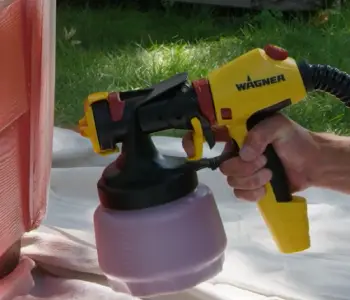
- Stationary X-Boost turbine in hard case: The motor stays on the floor. The case itself stores everything.
I coiled the hose and dropped in both nozzles after each job.
- 11.5-foot air hose: It covers most interior rooms and moderate exterior runs.
I noticed the shorter length only on very long continuous surfaces. Reach still felt practical.
- iSpray and Detail Finish nozzles: The iSpray handled walls, ceilings, and siding. It left a consistent roller-like texture.
The Detail Finish nozzle produced smooth results on furniture and cabinets.
- Power dial on the handle: Changing air output mid-pass kept momentum high. I never left the spray position for adjustments.
That single feature cut time on large projects.
- 1.5-quart cup capacity: One fill covered a 10-by-12 wall section. I spent less time refilling.
More time went into actual spraying.
- Full adjustability for flow, width, and pattern: Settings matched the 4300 range.
On-handle control made fine-tuning faster while the gun stayed in motion. Patterns switched easily.
- Lock-N-Go design and cup liners: Cleanup mirrored the 4300. Few parts needed rinsing.
Liners allowed fast color changes. The integrated case made storage cleaner.
- Improved nozzle design for less mess: The current iSpray pattern stayed tighter than older models. Overspray around baseboards dropped. Cleanup around windows went quicker.
Pros Of The Wagner FLEXiO 5000
- Integrated hard case simplifies everything: One closed unit holds hose, nozzles, and cups. Truck loading stayed clean. Every piece remained protected.
- On-handle power dial speeds workflow: Air output changed without stopping. Large sessions kept steady momentum. Time savings added up fast.
- Excellent for extended large projects: Lighter gun and solid base reduced arm fatigue. Full rooms of walls and ceilings felt manageable. All-day work stayed comfortable.
- Improved nozzle design reduces overspray: Tighter pattern cut cleanup around trim. Baseboards stayed cleaner. Windows needed less masking touch-up.
- Strong all-around versatility: Walls, fences, decks, cabinets, and furniture all produced solid results. Two nozzles covered most needs. One tool handled varied lists.
- Cleaner post-job storage: Hard case keeps dust out. Hose and nozzles stay organized. Next project starts faster.
Cons Of The Wagner FLEXiO 5000
- Shorter hose limits continuous reach: Long fences needed more base moves. Multi-room layouts required extra repositioning. Rhythm broke more often than with the 4300.
- Higher price point: Integrated case and handle controls raise the cost. Occasional small projects may not justify the premium. Budget buyers notice the difference.
- Detail nozzle is not gravity-fed: Angled cabinet interiors needed careful positioning. Flow consistency required more focus. Gravity cups on the 4300 felt easier here.
- Heavier packaged unit: Hard case adds bulk. Stairs and yard carries feel heavier. Transport takes more effort on multi-site days.
- Slightly more bulk for storage space: Closed case takes more shelf room. Soft bag on the 4300 packs flatter. Compact garages notice the difference.
Real-World Performance Comparison
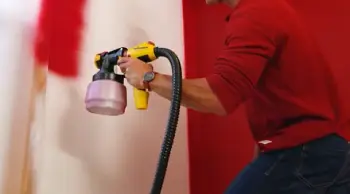
I ran both sprayers on the same materials. Interior latex, exterior latex, solid stain, and water-based polyurethane all went through identical conditions.
Coverage speed stayed nearly the same. An 8-by-10 wall took roughly five minutes with latex on either unit. Stain went down in about one minute.
Atomization of unthinned latex stayed clean. Only occasional minor orange peel appeared. Light sanding between coats removed it.
Comfort and accessory fit showed the real gaps. A full day of cabinet spraying favored the 4300. Gravity cups kept material flowing inside upper cabinets.
Odd angles caused fewer issues. The 5000 Detail Finish nozzle produced equally smooth results. It needed more deliberate gun orientation. A long exterior fence favored the 4300 longer hose. Continuous rhythm lasted longer. A multi-room interior favored the 5000. Handle dial and hard case storage made the day feel more efficient.
Noise levels matched on both. Hearing protection became necessary after thirty minutes. Overspray stayed manageable with proper technique.
Six to eight inches from the surface worked best. Fifty percent overlap and steady motion kept edges clean. Cleanup for both stayed under ten minutes when rinsed right away.
Who Should Choose The FLEXiO 4300?
You spend most of your time refinishing tables, chairs, dressers, or full kitchen cabinets.
The gravity-feed cups keep material flowing smoothly even at awkward angles. This setup reduces sputtering inside upper cabinets and tight corners. Results stay consistent without constant gun adjustments.
Your list often includes doors, baseboards, window casings, or decorative moldings. The 150 ml and 600 ml gravity cups give precise control for these smaller surfaces.
You can switch cup sizes quickly for touch-ups or longer trim runs. Fine finishes come out cleaner with less overspray on nearby walls.
You handle both furniture pieces and a few wall sections in the same weekend. The longer 15-foot hose lets you move freely between rooms without frequent base shifts.
The iSpray nozzle covers walls fast while the gravity system handles the detailed pieces. One tool covers the full range without feeling stretched.
Who Should Choose The FLEXiO 5000?
You regularly face multiple walls, ceilings, siding, decks, or long fence runs. The 5000 earns its place through reduced fatigue. Cleaner storage and on-handle controls become real time-savers. Larger or more frequent projects justify the step up.
Frequently Asked Questions (FAQ)
Most ordinary latex paints and stains spray fine without thinning. Only thicker enamels or certain heavy-body coatings may need a small amount of thinner when using the Detail Finish nozzle.
It depends on your typical projects. The 5000 suits larger surfaces and longer sessions. The 4300 shines on fine finishing and mixed smaller jobs.
Both share similar power. The 4000 includes a 15-foot hose and soft bag. The 5000 offers an 11.5-foot hose and integrated hard case with handle-mounted controls.
Both use a 15-foot hose and stationary base. The 4000 pairs the iSpray with a standard Detail Finish nozzle. The 4300 replaces that detail nozzle with 150 ml and 600 ml gravity-feed cups for improved fine-work control.
Final Thoughts
After months of switching between these two sprayers I no longer see them as rivals. They feel like tools matched to different parts of the same toolbox.
The FLEXiO 4300 earned its place on my shelf for cabinet and furniture days. The 5000 became the one I grab first when the project list includes whole rooms or exterior runs.
You already know the size and style of work you face most often. Match that reality to the hose length, detail system, and storage style each model offers.
The choice becomes straightforward. Pick the one that removes friction from the jobs you actually do. You will finish faster with less fatigue and better results.
Recent Posts
I spent months comparing budget options against established names after my last set of tires wore out sooner than expected.My goal here is to share what I learned from putting Dextero and...
AquaTru Carafe Vs. Classic: Which Is Actually Fits Your Kitchen?
I decided to write this comparison after months of testing both the AquaTru Carafe and the Classic in my own kitchen. Tracking covered daily use.Taste stayed consistent. Refill frequency...