
If you are dealing with hard water and want a compact softener that does not demand a huge installation space, I think a WaterBoss water softener is worth considering.
I especially recommend it for homeowners who want practical performance, automatic regeneration, and a relatively compact design without moving toward a much larger whole-house system.
After looking at its features, operating approach, advantages, and drawbacks, I found that WaterBoss makes the most sense when you match the model to your home’s actual water usage and hardness level.
My Personal Experience With A Waterboss Water Softener
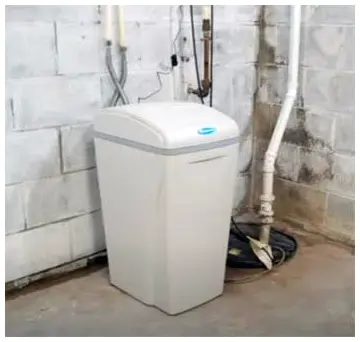
When I first started looking at WaterBoss water softener reviews, what caught my attention was the compact design.
Traditional water softeners can take up a surprising amount of space, especially when you have a small utility room or crowded basement.
WaterBoss takes a different approach by keeping the overall system relatively compact while still providing the basic functions I expect from a modern water softener.
The first thing I noticed was how straightforward the system felt. I wasn’t looking for a machine overloaded with unnecessary features.
My main goals were simple: reduce hard-water minerals, protect plumbing, improve the feel of water, and avoid constantly thinking about regeneration.
Once installed correctly, a WaterBoss system can automatically regenerate based on its settings and water consumption.
For me, that automatic operation is important because I don’t want to manually monitor every regeneration cycle.
The biggest difference I noticed with softened water was the feel. Hard water can leave that familiar residue on sinks, faucets, shower doors, and dishes. Soap can also feel harder to rinse away. With properly softened water, those annoyances become much less noticeable.
I also like the fact that WaterBoss systems are designed with homeowners in mind. The relatively compact footprint can be a genuine advantage if you don’t have room for a massive tank setup.
That said, I wouldn’t call WaterBoss perfect. Installation quality matters enormously. If the unit is poorly installed, incorrectly programmed, or supplied with water that exceeds its intended operating conditions, even a good softener can disappoint.
I also think you need to choose the capacity carefully. A softener that is too small for your household may regenerate more frequently than expected, while choosing an unnecessarily large system can mean spending more money than necessary.
My overall experience is that WaterBoss focuses more on practical functionality than luxury features. If you want a compact residential water softener that handles ordinary hard-water problems without turning the system into a complicated home appliance, I can see the appeal.
What Is a WaterBoss Water Softener?
A WaterBoss water softener is a residential water-treatment system designed primarily to reduce hardness-causing minerals such as calcium and magnesium.
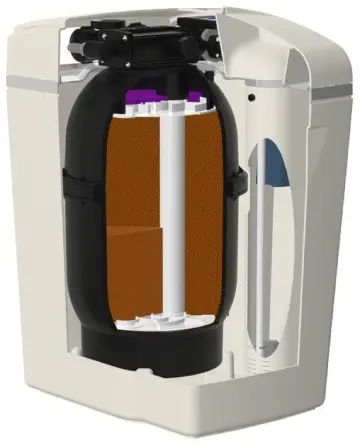
Like other traditional ion-exchange softeners, it uses resin to exchange hardness minerals for sodium or, depending on the setup, another regenerating ion. When the resin becomes loaded with hardness minerals, the system goes through a regeneration process using a salt solution.
The basic idea is simple.
Hard water enters the softener. The resin captures hardness minerals. Treated water then travels through your home’s plumbing. During regeneration, the accumulated minerals are flushed away so the resin can continue working.
This process can help reduce scale formation and improve how water behaves throughout your home.
For me, that is the real reason to buy a conventional softener. I’m not purchasing it because the control panel looks impressive. I’m purchasing it because I want fewer hard-water deposits and better water performance.
Pros Of WaterBoss Water Softeners
- Compact Design
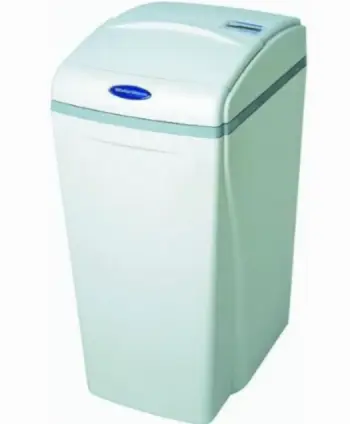
One of the strongest advantages I see with WaterBoss is its compact design.
If you’ve ever tried to install equipment in a cramped utility room, you already know how valuable a few extra inches can be.
A bulky softener can make maintenance awkward and consume valuable floor space.
WaterBoss systems are generally designed with space efficiency in mind. That makes them appealing for smaller homes, apartments, utility areas, and installations where a conventional oversized tank setup would be inconvenient.
I particularly like this advantage for homeowners who want whole-house softening without dedicating an enormous area to the equipment.
- Effective Hard-Water Reduction
The primary job of a water softener is to reduce hardness, and WaterBoss systems use the conventional ion-exchange method that has been used successfully for residential water treatment for many years.
When correctly sized and maintained, the system can reduce calcium and magnesium that contribute to scale.
You may notice the difference on faucets, shower glass, sinks, and other surfaces. I also find that softened water generally makes household cleaning less frustrating because you are not fighting the same mineral residue.
- Automatic Regeneration
Another advantage is automatic regeneration.
Once the system is properly configured, you don’t have to stand next to it and manually initiate every regeneration cycle. Depending on the model and settings, the unit can regenerate based on programmed or metered water usage.
That matters because efficient regeneration can help avoid unnecessary salt and water consumption.
For me, automation is one of those features I appreciate more over time. You might not think about it when buying the softener, but you certainly notice it when you don’t have to constantly manage the equipment.
- Good Option for Smaller Spaces
I think WaterBoss has a particularly strong appeal for homes where space is limited.
Some traditional softeners require enough room for separate equipment and large tanks. A compact system can make installation much easier.
If you are replacing an older system and don’t want to rearrange your entire utility area, a smaller WaterBoss configuration may be attractive.
- Straightforward Operation
I prefer equipment that does what it is supposed to do without making me spend hours adjusting settings.
WaterBoss systems generally keep the basic operating concept straightforward. Once the system has been properly installed and configured for your household’s water conditions, routine operation can be fairly hands-off.
That simplicity is a genuine benefit for homeowners who don’t want a complicated water-treatment setup.
- Can Improve Everyday Water Quality
A softener does not make contaminated water safe to drink, and I wouldn’t treat it as a purification system. Its primary role is hardness reduction.
However, reducing hardness can make a noticeable difference in everyday household use.
Soap may lather more easily. Mineral spotting may decrease. Faucets can stay cleaner. Shower surfaces may accumulate less scale. Plumbing fixtures may also benefit from reduced mineral buildup.
These are small improvements individually, but together they can make softened water much more pleasant to live with.
Cons Of WaterBoss Water Softeners
- Salt-Based Maintenance
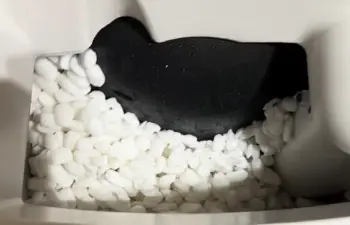
The biggest drawback for me is the fact that traditional WaterBoss systems require salt or another regeneration medium.
You have to monitor the salt supply and refill it when necessary. If you forget, the system may eventually stop softening effectively.
This isn’t a WaterBoss-only problem. It is simply part of owning a conventional salt-based water softener.
- Installation Matters
I wouldn’t recommend treating installation as an afterthought.
Incorrect plumbing connections, unsuitable drain arrangements, poor programming, or incorrect settings can affect performance.
If you are not comfortable working with plumbing, hiring an experienced installer can be a smarter choice than trying to save money and creating a bigger problem later.
- Replacement Parts Can Become a Concern
Like any mechanical appliance, a WaterBoss system contains components that can eventually wear out.
Depending on the age and model, you may need replacement seals, valves, resin-related components, control parts, or other service items.
Before buying, I recommend checking the availability of parts and local service support. A water softener can last for years, but convenient access to service is something I would not overlook.
- Not a Complete Water Filtration System
This is an important distinction.
A water softener is not automatically a complete water purification system. It primarily addresses hardness.
If your water has sediment, iron, sulfur odor, bacteria, or other specific contaminants, you may need additional treatment equipment.
I would always test the water first rather than assuming a softener will solve every water-quality problem.
- Salt and Water Consumption
Regeneration requires both salt and water.
The actual consumption depends on the model, settings, water hardness, household usage, and regeneration frequency. If the system is incorrectly sized or configured, operating costs can become higher than necessary.
That’s why I consider proper sizing one of the most important purchasing decisions.
Maintenance Tips Of WaterBoss
- Check the Salt Regularly
The easiest maintenance habit is also one of the most important: check your salt level.
I would make it part of a regular household routine rather than waiting until the system shows obvious signs of trouble.
You don’t necessarily need to fill the brine tank every few days. The frequency depends on household water consumption and system settings. But checking it periodically helps prevent the softener from running out of regeneration salt.
Try not to create a massive salt mound and assume everything is fine. Salt can sometimes form a hard layer or bridge that prevents proper contact with the water underneath.
- Clean the Brine Tank When Necessary
The brine tank can accumulate sediment, salt residue, and other material over time.
You don’t necessarily need to clean it constantly, but periodic inspection is sensible.
If you notice unusual buildup, excessive debris, or problems with salt dissolving properly, cleaning the tank may be appropriate.
Always follow the instructions for your specific model because maintenance procedures can vary.
- Keep the Area Around the Unit Clean
I recommend keeping the area around the softener dry, clean, and accessible.
Don’t stack boxes against the equipment. Don’t bury the plumbing connections behind household storage.
When you can easily see the system, you’ll notice leaks, salt problems, unusual moisture, or other issues much sooner.
- Inspect for Leaks
Every so often, take a quick look at the inlet, outlet, drain line, and other visible connections.
A tiny leak can eventually become a much bigger problem.
You don’t need to perform a technical inspection every week. A simple visual check can catch obvious issues early.
- Clean the Control Area Carefully
The control head is one of the most important parts of the system, so I would avoid treating it like an ordinary surface.
Keep dirt, moisture, and unnecessary objects away from the controls. If you need to clean the exterior, use an appropriate method recommended for the equipment rather than flooding the area with water.
- Use Appropriate Regeneration Salt
Not all salt products are identical.
I recommend choosing a suitable water-softener salt or regeneration product that matches the manufacturer’s recommendations.
Using inappropriate material can contribute to buildup or operating problems.
- Check Water Hardness Periodically
Your home’s water conditions can change.
If you are experiencing symptoms such as renewed spotting, scale, poor soap performance, or water that feels hard again, don’t automatically assume the resin is failing.
Check the water hardness first.
The problem could be a depleted salt supply, incorrect settings, excessive household demand, or another issue.
- Pay Attention to Regeneration
If you suddenly notice the system regenerating much more frequently than before, investigate it.
Frequent regeneration can result from increased water consumption, incorrect programming, a leak somewhere in the home, or other operational problems.
I wouldn’t simply ignore a major change in regeneration frequency.
- Schedule Professional Service When Needed
There is a point where DIY maintenance stops making sense.
If the system develops a persistent leak, fails to regenerate, produces unusually hard water, or has a control-valve problem, professional service may save you considerable frustration.
I would rather pay for a proper diagnosis than randomly replace components and hope the problem disappears.
Comparison Of Waterboss With Other Brands
- WaterBoss vs. Fleck
When I compare WaterBoss with systems built around Fleck control valves, I see a difference in approach.
Fleck-based systems are often attractive to homeowners and installers who prioritize widely recognized valve platforms, flexibility, and serviceability.
WaterBoss, on the other hand, appeals to me more when compactness and an integrated residential design are priorities.
If you enjoy having a highly configurable system and easy access to aftermarket components, a Fleck-based setup may be more appealing. If you want a compact packaged unit, WaterBoss deserves consideration.
- WaterBoss vs. Culligan
Culligan is a major name in residential water treatment, and its biggest advantage is the breadth of its treatment services and product ecosystem.
I see Culligan as a stronger option for homeowners who want professional water testing, installation, service, and ongoing support through an established treatment provider.
WaterBoss can make more sense if you prefer a conventional softener without necessarily wanting a broader service relationship.
Your priorities matter here. If service convenience is your number-one concern, Culligan deserves serious consideration. If compact equipment and straightforward ownership matter more, WaterBoss can be attractive.
- WaterBoss vs. EcoWater
EcoWater is another established name in residential water treatment, with systems that can include more advanced controls and water-management features depending on the product line.
I would consider EcoWater if I wanted a more feature-rich system and had access to strong local support.
WaterBoss has a simpler appeal. It is easier for me to understand what I’m buying: a compact system designed primarily to soften hard water.
- WaterBoss vs. Whirlpool Water Softeners
Whirlpool-branded water softeners are familiar to many homeowners and are commonly associated with retail-oriented water-treatment equipment.
Compared with WaterBoss, the better choice depends heavily on model specifications, water hardness, household size, installation conditions, and service availability.
I wouldn’t choose solely by brand name. I would compare actual capacity, regeneration requirements, dimensions, warranty terms, parts availability, and expected operating costs.
Which One Would I Choose?
If I had limited space and wanted a practical conventional softener, WaterBoss would stay on my shortlist.
If I prioritized extensive professional service or wanted a more comprehensive treatment relationship, I would look harder at brands such as Culligan or EcoWater.
If I wanted maximum flexibility around components and valve configurations, I would consider a system built around a well-supported Fleck platform.
In other words, I wouldn’t call WaterBoss the universal winner. I see it as a practical option for a specific type of homeowner.
Frequently Asked Questions (FAQ)
Yes. They can provide effective hard-water reduction when properly sized, installed, and maintained.
A WaterBoss softener can last many years, although lifespan depends on water quality, usage, maintenance, and component wear.
Common issues include salt bridging, regeneration problems, clogged components, leaks, control-valve issues, and reduced softening performance.
WaterBoss is a residential water-treatment brand associated with the broader water-treatment industry and its authorized manufacturing and distribution network.
Final Verdict
I think WaterBoss water softeners are worth considering if you want a compact, conventional salt-based system for reducing hard-water problems.
I especially like them for smaller installations where space matters. They are not maintenance-free, and they are not a substitute for comprehensive water filtration, but a correctly sized and properly maintained WaterBoss can provide useful whole-house softening.
If your priority is practical performance rather than an oversized or feature-heavy system, I would put WaterBoss on my shortlist.
Recent Posts
● Interactive 5-Zone Interior & Exterior Paint Blueprint Paint Coverage Calculator: Gallons, Primer, Square Footage & Cost Tap any architectural surface zone on the blueprint...
If you want smooth, shiny hair without spending a fortune on a premium styling tool, the Ella Bella hair dryer may be worth considering.In these Ella Bella hair dryer reviews, I’ll look...