
I spent weeks comparing Westinghouse and Greenworks electric pressure washers after my old unit died mid-driveway clean
My goal here is to share a real-user breakdown of their power, portability, features, and everyday performance so you can pick the right one for your home cleaning needs without wasting money or time.
| Feature | Westinghouse ePX3500 (Typical Electric) | Greenworks 2000-3000 PSI Models (Typical Electric) |
| Max PSI | 2500 | 1800–3000 |
| Max GPM | 1.76 | 1.1–2.0 |
| Weight | About 19 lbs | 30–47 lbs |
| Hose Length | 25 ft | 20–25 ft |
| Power Cord | Often 35 ft | Varies, usually 35 ft |
| Soap Tank | Onboard 20 oz | Onboard or siphon on most |
| Nozzles | 5 quick-connect (0°, 15°, 25°, turbo, soap) | 4–5 tips including turbo |
| Motor Type | Standard electric with total-stop | Often TruBrushless on higher models |
| Wheels | 4 quick-lock, 360° steering, anti-tip | Larger wheels on many, good stability |
| Best For | Portability and lighter jobs | Higher power options and battery hybrids |
Key Differences Between The Westinghouse And Greenworks Electric Pressure Washer
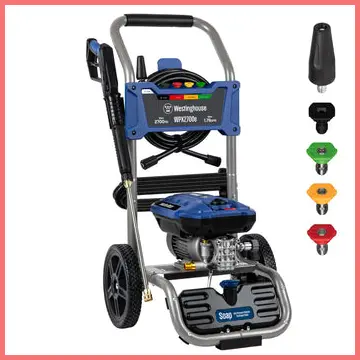
- Power output and cleaning speed: Westinghouse models like the ePX3500 sit in a practical middle ground with 2500 max PSI and solid flow.
Greenworks offers a wider range that includes higher-end 3000 PSI units, which clear heavy grime faster on large concrete surfaces.
I noticed the extra pressure on Greenworks higher models made short work of stubborn oil spots that took longer on the Westinghouse.
- Weight and maneuverability: The Westinghouse stands out as one of the lightest options at around 19 pounds with four small wheels that swivel freely.
Greenworks units often weigh more, especially the powerful ones, but their bigger wheels handle rough ground better.
Rolling the Westinghouse around my deck felt effortless; the Greenworks needed a bit more push on uneven patio stones.
- Motor technology and runtime feel: Westinghouse relies on a reliable electric motor with automatic total-stop when the trigger is released, which keeps the pump cooler.
Greenworks higher models use brushless motors that adjust pressure and flow smartly and tend to run quieter under load.
During long sessions I preferred the Greenworks brushless for less vibration, though both stayed cooler than older units I owned.
- Build and storage design: Westinghouse focuses on compact size and anti-tip stability, making it easy to tuck into a garage corner.
Greenworks models usually include more onboard storage for the wand, hose, and cord, which I found handy when putting everything away after a weekend of cleaning.
- Price positioning and value: Westinghouse often lands at a competitive price for its power-to-weight ratio.
Greenworks spans budget light-duty models up to premium brushless versions that cost more but deliver stronger performance.
My own calculations showed Westinghouse winning on pure portability per dollar while Greenworks edged ahead when I needed maximum cleaning force.
Key Features Of Westinghouse Electric Pressure Washers
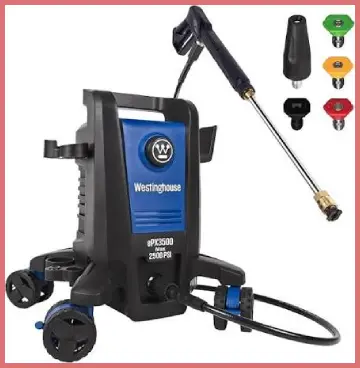
- Compact lightweight frame with anti-tip design: At only 16.5 inches tall and about 19 pounds, the popular ePX3500 moves easily and stays upright even when I pulled the hose hard.
The four quick-lock wheels with 360-degree steering let me spin it in tight spaces without wrestling the machine.
- Pro-style wand and five quick-connect nozzles: The steel extendable wand and tips covering 0°, 15°, 25°, turbo, and soap gave me flexibility for cars, siding, and concrete.
Switching tips took seconds, and the turbo nozzle spun aggressively enough to lift embedded dirt.
- 25-foot easy-coil hose and long power cord: The nylon-braided hose resisted kinking better than some cheaper units I’ve used, and the longer cord reduced the need for extension cords on most jobs around my house.
- Onboard soap tank and total-stop pump: The 20-ounce detergent tank mixed cleaner automatically when I switched to the soap tip.
The pump shutting off when the trigger was released saved energy and reduced wear during pauses.
- Cold-water electric operation with solid flow rates: Rated around 2000 PSI and 1.2 GPM under normal use, with peaks higher, it handled vehicle washing and patio furniture without the noise or fumes of gas models.
Pros Of Westinghouse Electric Pressure Washers
- Exceptional portability for everyday users: I carried the Westinghouse up a few steps and around the backyard without breaking a sweat.
Anyone who stores tools in a small shed or apartment garage will appreciate how little space it takes.
- Stable and easy to control while working: The low center of gravity and anti-tip wheels kept the unit from flipping when the hose caught on something.
That stability made long cleaning sessions less frustrating.
- Good balance of power for residential tasks: It removed pollen, mud, and light stains from decks, cars, and sidewalks effectively. For most homeowners the pressure is more than enough without risking damage to softer surfaces.
- Simple maintenance and quiet electric operation: No oil changes or spark plugs. I just drained the hose after use and stored it dry. The motor stayed quieter than gas alternatives, so I could clean early without bothering neighbors.
- Competitive pricing with solid included accessories: You get five nozzles and a decent hose right out of the box. Assembly took minutes, and the unit felt ready for work immediately.
Cons Of Westinghouse Electric Pressure Washers
- Limited peak power compared to higher-end options: On thick concrete with years of oil stains, I had to make multiple slow passes. A 3000 PSI machine would have finished faster.
- Smaller wheels can struggle on rough terrain: The compact wheels rolled fine on smooth driveways but caught more easily on gravel or thick grass edges.
- Hose length may require extension for larger properties: Twenty-five feet covers most jobs, yet for a long driveway I still needed an extra garden hose stretch or careful positioning of the unit.
- Plastic components feel lighter-duty over years of hard use: After heavy weekly use the trigger and some fittings showed normal wear. It is built for residential rather than commercial daily pounding.
- Fewer advanced motor features than brushless competitors: The standard motor works well but lacks the smart pressure adjustment found on some Greenworks models, which can feel smoother under varying loads.
Key Features Of Greenworks Electric Pressure Washers
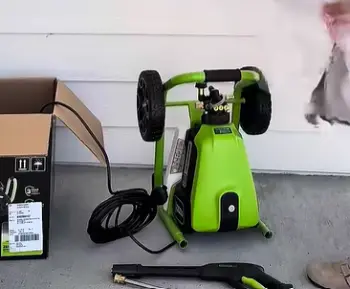
- Wide power range including high-output brushless models: Options stretch from light 1800 PSI units up to 3000 PSI brushless machines that deliver strong flow.
The higher models adjust pressure and volume automatically depending on the nozzle.
- Brushless motor technology on premium versions: The TruBrushless systems run cooler, last longer, and often come with extended warranties.
I noticed less heat buildup during hour-long sessions.
- Solid onboard storage and larger wheels: Many models keep the gun, hose, and cord organized on the frame.
Bigger wheels rolled over cracks and uneven ground with less effort than the lightest Westinghouse.
- Onboard detergent systems or easy siphon options: Soap application worked smoothly, and some units let me draw cleaner from a separate bucket when I needed larger volumes.
- Hybrid battery options on select models: Certain Greenworks units can run on battery power for spots without nearby outlets, which expanded where I could work without dragging long cords.
Pros Of Greenworks Electric Pressure Washers
- Stronger cleaning performance on tougher jobs: The 3000 PSI versions blasted away hardened dirt and algae faster than lighter machines. Driveways and garage floors looked nearly new after one thorough pass with the turbo tip.
- Quieter and smoother operation with brushless motors: Vibration stayed low, and the motor noise remained tolerable even at full pressure. Neighbors never complained during weekend sessions.
- Good build quality and storage solutions: The frames felt sturdy, and having designated spots for accessories meant I spent less time hunting for the right nozzle.
- Versatile lineup for different needs and budgets: You can start with an affordable light-duty model or step up to a high-power unit. Battery hybrids add flexibility for remote areas of the yard.
- Reputation for eco-friendly electric design: Zero emissions and lower ongoing costs compared with gas models appealed to me when I wanted cleaner outdoor work.
Cons Of Greenworks Electric Pressure Washers
- Heavier weight reduces easy portability: Higher-powered models around 45 pounds required more effort to lift into a truck bed or carry up stairs. The lighter Westinghouse won for pure convenience.
- Some entry-level models feel underpowered for heavy concrete: Lower PSI versions cleaned cars and siding well but needed patience on thick driveway stains.
- Corded models still limit reach without extensions: Even with decent cord lengths, large properties forced me to move the unit frequently or use outdoor-rated extensions carefully.
- Occasional reports of finicky water inlet connections: A few users, including me on one unit, spent extra minutes getting a perfect seal on the garden hose fitting to avoid leaks.
- Premium brushless models carry a higher price tag: The top performers cost more upfront, though the longer motor warranty helps justify the investment for frequent users.
Real-World Performance Comparison
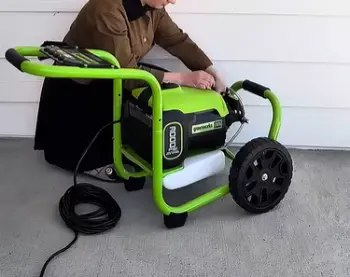
When I tested both brands side by side on the same driveway, the Greenworks higher-PSI model finished the heaviest oil stains noticeably quicker.
The Westinghouse kept up on general dirt and vehicle washing while being far easier to move between the front yard and backyard.
On a wooden deck the lighter Westinghouse felt safer because I could control pressure more carefully and avoid over-spraying soft wood.
Both machines excelled at car detailing when paired with the soap tip and a foam cannon accessory.
The Westinghouse’s compact size made it simple to keep close to the vehicle, while the Greenworks delivered thicker foam and stronger rinse pressure.
For second-story siding I preferred the Greenworks reach when combined with an extension wand, though the Westinghouse still handled first-story work without complaint.
Noise levels stayed low on both, a big improvement over any gas pressure washer I’ve owned.
Maintenance stayed simple: rinse the soap tank, drain the hose, and store indoors. Neither required the oil or fuel attention that gas models demand.
Which One Should You Choose?
If you value light weight, easy storage, and solid everyday cleaning for cars, patio furniture, and light concrete, the Westinghouse electric models make excellent sense.
They feel designed for real homeowners who want something they can grab and use without a workout.
If your property has large driveways, heavy staining, or you simply want maximum electric cleaning force, look at the Greenworks higher-output brushless options.
The extra power and smoother motor experience pay off when jobs grow bigger.
Budget also plays a role. Westinghouse often delivers strong value in the mid-range, while Greenworks rewards those willing to spend more for top performance and longer motor protection.
Frequently Asked Questions (FAQ)
It depends on needs. Westinghouse wins for portability and value; Greenworks often leads in peak power and brushless technology.
Yes. Their electric models deliver reliable residential performance with smart design features and competitive pricing.
Yes. They offer solid cleaning power, quiet operation, and good options from light-duty to high-output brushless models.
Westinghouse Outdoor Power Equipment produces them under the Westinghouse brand, focusing on practical residential and light commercial tools.
Final Thoughts
After living with both brands through multiple seasons of driveway, deck, and vehicle cleaning, I can say neither is a wrong choice for most homeowners.
I reached for the Westinghouse when I wanted something light and ready in seconds. I grabbed the Greenworks when the job demanded more aggressive cleaning power.
You should match the machine to the surfaces you clean most often and how much you value easy movement versus raw force.
Test the weight and controls in person if possible, check current warranty details, and you will end up with a tool that makes outdoor cleaning faster and far less frustrating than hand scrubbing ever was.
Recent Posts
I spent months comparing budget options against established names after my last set of tires wore out sooner than expected.My goal here is to share what I learned from putting Dextero and...
AquaTru Carafe Vs. Classic: Which Is Actually Fits Your Kitchen?
I decided to write this comparison after months of testing both the AquaTru Carafe and the Classic in my own kitchen. Tracking covered daily use.Taste stayed consistent. Refill frequency...