
I wanted the Woof Bite and Brush to be an easy way to keep my dog’s teeth cleaner without turning brushing into a daily struggle.
However, after looking at its design, intended use, and the concerns raised in customer feedback, I would not recommend buying it.
While the concept is convenient, dental care is too important for me to rely on a product that may not deliver consistent cleaning.
If your dog needs better oral hygiene, I would choose a proven toothbrush-and-dog-toothpaste routine instead.
My First Experience With The Woof Bite And Brush
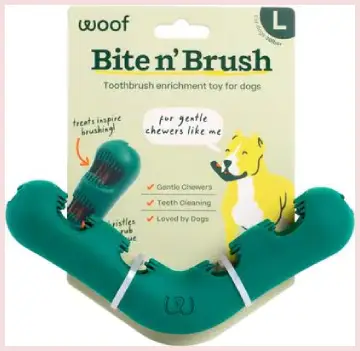
When I first came across the Woof Bite and Brush, I understood the appeal immediately.
If you have ever tried brushing a dog’s teeth, you probably know how quickly a simple two-minute task can turn into a wrestling match.
My dog does not exactly sit still and open wide when I bring out a toothbrush, so the idea of a chew-style product that could combine playtime with dental cleaning sounded practical.
The basic concept is straightforward. Instead of expecting me to manually brush every tooth, the product is designed around chewing.
As the dog bites and works the toy with its mouth, the textured sections are supposed to contact the teeth and gums. That sounds convenient because I can give my dog something to chew while potentially helping with plaque and food debris.
At first glance, I liked the idea of reducing the amount of effort involved. A conventional dog toothbrush requires cooperation from both of us.
I have to lift the lips, reach the back teeth, move the brush along the gumline, and make sure I am not rushing. With a chew-oriented product, the dog does much of the work.
But that convenience is also where my concerns began.
A dog does not chew evenly across every tooth. My dog tends to favor certain sides of the mouth and certain chewing positions.
That means I cannot assume that a textured toy will reach the same areas that I would target with a toothbrush. The molars and gumline can be particularly difficult to clean with a general chew toy.
I also noticed an important difference between chewing and brushing. Chewing can provide mechanical contact, but brushing gives me control. When I brush my dog’s teeth, I can deliberately concentrate on areas where plaque tends to collect. With a chew toy, I have much less control over where the cleaning action happens.
Another issue is that dogs have different chewing styles. Some dogs are enthusiastic chewers and can destroy toys surprisingly quickly.
Others lose interest after a few minutes. If your dog is a powerful chewer, durability becomes especially important because damaged pieces can create another concern.
I also would not expect this type of product to replace professional dental care. If my dog already had significant tartar, bad breath, red gums, bleeding, loose teeth, or obvious mouth discomfort, I would not try to solve the problem with a chew toy. Those signs would make me want veterinary advice instead.
The more I considered how I actually want to maintain my dog’s oral health, the less convincing the all-in-one concept became.
For me, the biggest problem is not that the product has no potential value. A textured chew toy can encourage chewing and may help mechanically disturb some debris. The problem is that I would have difficulty depending on it as the primary dental-care method.
That distinction matters.
If I buy something specifically marketed for dental hygiene, I want predictable coverage and a clear routine. I want to know what I am cleaning, how I am cleaning it, and how often I should do it. A toothbrush gives me that control.
So, after considering the convenience against the limitations, I would not make the Woof Bite and Brush my first choice. I would rather spend my money on a suitable dog toothbrush, veterinarian-approved toothpaste, and appropriate dental products that fit my dog’s size and chewing habits.
Pros Of Woof Bite And Brush
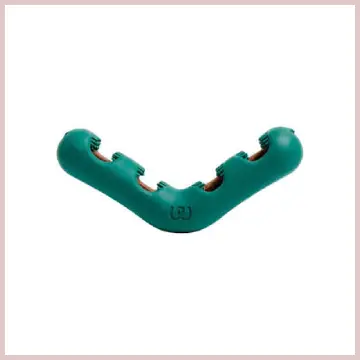
- Convenient for Dogs That Resist Toothbrushing
The biggest advantage I can see is convenience. If your dog absolutely dislikes having a toothbrush placed in its mouth, a chew toy may be easier to introduce.
You can offer the product during supervised playtime rather than forcing a conventional brushing session. For some dogs, that can make dental-care routines feel less stressful.
I also like the fact that chewing is a natural behavior. Many dogs already enjoy chewing toys, so turning that behavior toward a dental-oriented product can be appealing.
Still, I would treat this as a convenience feature rather than proof of superior dental cleaning.
- Encourages Chewing
Chewing can be mentally stimulating for dogs. It gives them something to do and may help satisfy their natural urge to gnaw.
From my perspective, this is a genuine benefit. A dog that enjoys the product may interact with it regularly, whereas a toothbrush can sit untouched if the dog refuses to cooperate.
Regular chewing can also help physically disturb some loose food particles. However, I would avoid assuming that this means the toy can remove established tartar.
- No Traditional Brushing Motion Required
I do not have to manually scrub every tooth with a product like this. That can save time and make the routine easier for busy owners.
For someone who struggles to brush a dog’s teeth every day, the simplicity may be attractive.
But I would still want a proper brushing routine whenever possible.
- Potentially Useful as a Supplemental Dental Toy
I think the most reasonable way to view a product like this is as an addition to an oral-care routine.
I could use an appropriate chew toy for enrichment while continuing to brush my dog’s teeth. That approach does not put all my expectations on one product.
- Can Make Dental Care More Interactive
Dogs often respond better to activities that feel like play.
Instead of making every oral-care session feel like a chore, a chew toy can make the process more engaging. If your dog likes chewing, that may be a useful behavioral advantage.
Cons Of Woof Bite And Brush
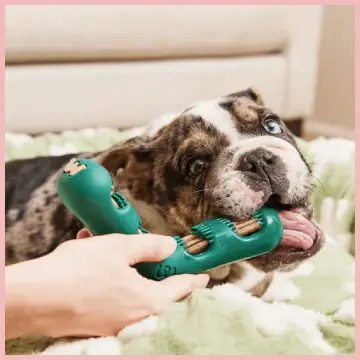
- I Cannot Depend on It for Complete Dental Cleaning
This is my biggest concern.
A chew toy cannot give me the same control as a toothbrush. I cannot tell it to clean the back molars, move along the gumline, or spend extra time on a particular tooth.
That makes me uncomfortable relying on it as my dog’s main dental-care solution.
- Uneven Tooth Contact
Dogs chew differently. One dog may bite primarily with the front teeth, while another may favor the back teeth.
Because of this, some surfaces may receive plenty of contact while others receive very little.
For me, that makes the cleaning effect difficult to predict.
- Not a Substitute for Veterinary Dental Care
If your dog has significant tartar buildup, gum inflammation, persistent bad breath, bleeding gums, or painful chewing, I would not expect a chew toy to fix the underlying problem.
Professional examination and dental treatment may be necessary.
- Durability Can Be a Concern
Any chew product needs to be evaluated according to the dog’s size, bite strength, and chewing behavior.
If your dog quickly destroys toys, you need to inspect the product frequently. A damaged chew item should not simply be left available because the dog enjoys it.
- Results May Vary From Dog to Dog
One dog may happily chew for twenty minutes. Another may ignore the toy after thirty seconds.
Even if the product works mechanically, the benefit depends partly on whether the dog actually uses it.
- Convenience Can Create False Confidence
This is an important point for me.
When a product makes dental care look effortless, it can be tempting to assume that the job is already done. I would not make that assumption.
Dog dental health needs consistent attention. A convenient toy should not make me forget about brushing, dental examinations, diet, or other appropriate oral-care practices.
Maintenance For The Woof Bite And Brush
- Inspect It Before Every Use
I would make a quick inspection part of my routine.
I would look for cracks, deep scratches, loose pieces, sharp edges, or sections that appear to be breaking apart. If I noticed significant damage, I would stop using it.
This is especially important if your dog is a strong chewer.
- Clean It Regularly
A chew toy that goes into a dog’s mouth repeatedly should not be ignored after use.
I would clean it according to the manufacturer’s care instructions and make sure it dries properly before storing it. Moisture trapped in enclosed areas can create an unpleasant environment for bacteria and odors.
- Do Not Let Your Dog Destroy It
I would supervise chewing, particularly during the first few uses.
If your dog starts tearing pieces from the product rather than simply chewing it, I would remove it. A dental toy is not useful if it becomes a source of swallowed fragments.
- Choose the Correct Size
Size matters.
A toy that is too small can potentially present a swallowing hazard, while one that is too large may be difficult for a smaller dog to use comfortably.
I would always match the product to my dog’s size and chewing behavior rather than choosing based only on appearance.
- Keep It Separate From Dirty Toys
I prefer keeping dental-care products reasonably clean and separate from toys that spend a lot of time outdoors.
If a toy falls onto a dirty floor, I would clean it before giving it back to my dog.
- Replace It When It Shows Significant Wear
I would not try to squeeze months of extra use from a damaged chew toy.
Replacement is particularly important when the surface has changed substantially or pieces are beginning to detach.
- Continue Regular Toothbrushing
This is the maintenance step I would prioritize most.
Even if my dog enjoys the chew toy, I would continue using a dog-safe toothbrush and appropriate toothpaste. A toothbrush allows me to target the gumline and individual tooth surfaces much more deliberately.
Comparison Of Woof Bite And Brush With Other Brands
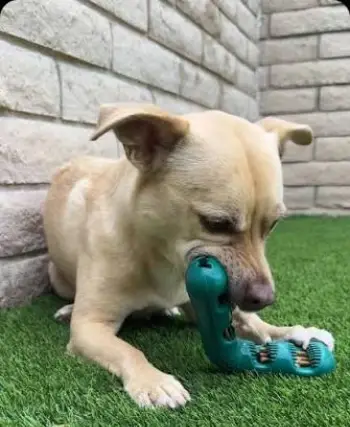
- Woof Bite and Brush Vs Traditional Dog Toothbrushes
A traditional toothbrush gives me more control.
I can lift my dog’s lip, reach the outer tooth surfaces, and gently work around the gumline. That makes it easier to establish a repeatable routine.
The Woof Bite and Brush is more passive. I give it to the dog and allow chewing to provide the mechanical action.
That is easier, but the tradeoff is precision.
If I had to choose a primary dental-care method, I would rather have direct control over brushing. I would consider a chew product an optional addition rather than the foundation of my routine.
- Woof Bite and Brush Vs Dental Chews
Dental chews are designed to encourage prolonged chewing and mechanical contact with the teeth. Depending on the product, they may have specific textures or shapes intended for oral care.
The important thing for me is not simply whether something is called a dental chew. I want to consider the ingredients, texture, size, calorie content, durability, and whether the product is appropriate for my dog’s age and chewing habits.
A chew product can be useful, but I would not assume that every dental chew provides the same level of oral-health benefit.
- Woof Bite and Brush Vs Finger Brushes
Finger brushes give me more direct contact than a chew toy but can be easier to maneuver than a conventional long-handled toothbrush.
If my dog tolerates having my finger near its teeth, this could be a practical option.
However, I still need cooperation from my dog, so it does not completely eliminate the behavioral challenge that makes chew products attractive.
- Woof Bite and Brush Vs Professional Dental Cleaning
There is really no substitute for professional veterinary dental care when a dog has significant dental disease.
A chew toy is intended for routine use. Professional dental care is designed to address problems that a home product cannot adequately treat.
If I see substantial tartar, inflamed gums, loose teeth, pain, or other concerning symptoms, I would stop looking for a simple toy-based solution and speak with a veterinarian.
Is Woof Bite And Brush Worth It?
For me, the answer is no as a primary dental-care purchase.
The concept is clever, and I understand why dog owners may find it attractive. It is convenient, encourages chewing, and may provide some mechanical contact with the teeth.
But I would not confuse those advantages with complete oral hygiene.
My concern is consistency. I cannot control which teeth my dog cleans while chewing, and I cannot be certain that the product reaches the gumline effectively. When I am trying to protect my dog’s dental health, that uncertainty matters.
If I were spending my money, I would prioritize a proper dog toothbrush and suitable canine toothpaste. I could then add dental chews or toys if they fit my dog’s needs.
Also Read: Is ReNu Dog Brush Worth It?
Frequently Asked Questions (FAQ)
It may provide some mechanical contact with the teeth while a dog chews, but I would not rely on it as a complete substitute for toothbrushing. Its effectiveness can vary depending on chewing behavior, tooth contact, and how consistently the dog uses it.
Some dental chews can help mechanically reduce plaque or food debris when used appropriately, but results depend on the individual product and dog. I would look for products designed specifically for canine dental care and discuss choices with a veterinarian.
There is no single chew toy that is best for every dog. I would choose according to the dog’s size, chewing strength, age, and safety needs. I would also treat a chew toy as supplemental rather than replacing regular toothbrushing.
For me, the most useful toothbrush is one that fits my dog’s mouth and allows me to comfortably reach the outer tooth surfaces and gumline. A soft-bristled canine toothbrush or appropriately sized finger brush can work well when introduced gradually and used consistently.
Final Verdict
After considering the concept, practical use, limitations, and the concerns reflected in customer feedback, I would not recommend buying the Woof Bite and Brush as your dog’s main dental-care product.
I like the convenience, but I want more control over cleaning my dog’s teeth. If you want to improve your dog’s oral hygiene, I would put your money toward a suitable canine toothbrush, dog-safe toothpaste, appropriate dental products, and regular veterinary dental care.
That approach gives me much more confidence than relying on a chew toy alone.
Recent Posts
● Interactive 5-Zone Interior & Exterior Paint Blueprint Paint Coverage Calculator: Gallons, Primer, Square Footage & Cost Tap any architectural surface zone on the blueprint...
If you want smooth, shiny hair without spending a fortune on a premium styling tool, the Ella Bella hair dryer may be worth considering.In these Ella Bella hair dryer reviews, I’ll look...