
I decided to put these two Yonex frames side by side. I kept seeing players switch between them. They asked the same question I once asked myself.
Which one actually fits my game better? My goal here is to give you a clear real-court picture of the Yonex Ezone 98 versus the Ezone 100. You can choose with confidence based on how each one plays.
| Feature | Yonex Ezone 98 | Yonex Ezone 100 |
| Head Size | 98 sq in | 100 sq in |
| Unstrung Weight | 305 g | 300 g |
| Strung Weight (approx.) | 323 g | 318 g |
| Swingweight (approx.) | 320 | 315 |
| Stiffness (RA) | 63-65 | 68 |
| Balance | 6 pts HL | 4 pts HL |
| Beam Width | 23.8 / 24.5 / 19.5 mm | 24.5 / 26.5 / 23 mm |
| String Pattern | 16 × 19 | 16 × 19 |
| Length | 27 in | 27 in |
| Power Level | Medium | Medium-High |
| Best For | Control-oriented intermediates to advanced | Power-seeking intermediates to advanced |
Key Differences Between The Yonex Ezone 98 And 100
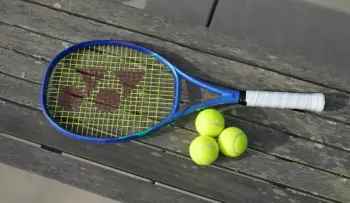
- Head size and sweet-spot size: The 98 keeps the hitting surface tighter. This rewards clean contact.
It gives sharper directional control when I aim for the lines. The 100 spreads that surface wider.
Off-center hits still travel with useful depth. I notice the difference most on defensive balls.
- Static weight and swingweight: The 98 sits a few grams heavier unstrung. It carries a slightly higher swingweight.
That extra mass helps me plow through the ball. It stays stable against heavy pace. The 100 feels a touch quicker through the air.
This helps on quick reactions. It also helps when I need to generate racket-head speed for spin.
- Beam profile and stiffness: The 98 uses a thinner more tapered beam. It has a softer flex rating. I feel more frame bend on contact.
This softens the impact. It gives a connected sensation. The 100 thickens the beam toward the tip and throat.
This raises stiffness. It delivers a firmer more explosive response.
- Balance point: The 98 is more head-light. The head comes around faster on serves. It also comes around faster on volleys.
The 100 sits a bit closer to even. This adds a little more plow-through on groundstrokes.
The frame does not feel tip-heavy.
- Overall playing character: I experience the 98 as a control-first frame. It still offers modern power when I accelerate fully.
The 100 leans toward free power. It also leans toward forgiveness. This lets me stay aggressive even when my timing is slightly off.
Key Features Of The Yonex Ezone 98
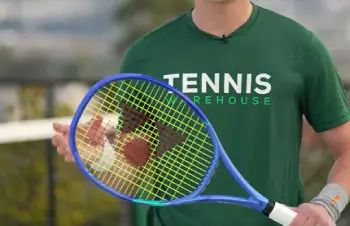
- Isometric head shape: Yonex stretches the sweet spot laterally. The effective hitting area feels larger than a traditional 98.
I still get the control of a smaller head. I also enjoy more margin than older control frames offered.
- Minolon and Vibration Dampening Mesh: These materials sit in the shaft. They also sit in the handle. They cut harsh vibrations.
Feedback stays intact. After long sessions my arm feels fresher. It feels fresher than with stiffer 98s from other brands.
- 16 × 19 open pattern: The pattern bites the ball well for spin. It stays dense enough for directional accuracy.
I can shape shots. The strings do not move excessively.
- Aero-shaped beam with variable thickness: The thinner profile at the tip keeps the head fast. The mid-section adds stability.
Serves feel whippy. Overheads feel whippy. The frame holds up when I take big cuts at the baseline.
- 305 g unstrung weight with head-light balance: The combination gives me enough mass for solid contact.
Preparation does not slow down. I can still change direction quickly at the net.
Pros Of The Yonex Ezone 98
- Precise targeting: I can aim closer to the lines with confidence. The smaller head keeps the ball from launching long. The lower trampoline effect helps too. This helps on approach shots. It also helps when I try to hit winners into tight spaces.
- Connected feel and feedback: The softer flex lets me sense where the ball meets the strings. The thinner beam does the same. That feedback improves my timing over the course of a match. It helps me adjust mid-rally.
- Excellent maneuverability for a mid-weight frame: The head-light balance makes volleys feel natural. The moderate swingweight does the same for reaction shots. I do not feel the head lag when I move forward.
- Comfort that supports longer sessions: Vibration control is strong. I finish three-set matches without forearm fatigue. Players dealing with mild arm issues often find this frame more forgiving. It is more forgiving than pure control sticks.
- Solid spin potential without excess launch: The open pattern grips the ball. The smaller head keeps the launch angle manageable. I can hit heavy topspin. The ball does not sail long on flat days.
Cons Of The Yonex Ezone 98
- Smaller margin for error: Off-center hits lose more depth. They also lose more pace than on the 100. When my footwork is late the ball can land short. The same happens when I am stretched.
- Requires a fuller swing for power: I need to accelerate through contact. This produces the same ball speed the 100 produces with less effort. Players with compact swings may feel underpowered at first.
- Slightly higher swingweight can fatigue some arms: Over very long matches the extra mass becomes noticeable. This happens if my preparation slows. Adding lead tape for more plow-through can push the weight past the comfort zone for some intermediates.
- Less free power on defensive shots: When I am pushed wide the frame does not give automatic depth. The same happens when I am forced to hit on the rise with a short swing. The 100 supplies that depth more readily.
Key Features Of The Yonex Ezone 100
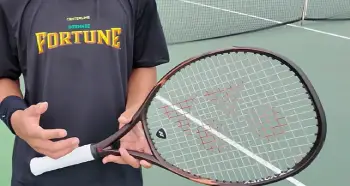
- Larger isometric sweet spot: The extra two square inches create a very forgiving power frame.
The updated isometric geometry helps too. Balls hit toward the edges still leave the string bed with decent pace.
They also leave with decent depth.
- Thicker beam for energy return: The wider sections at the tip store more energy. The throat does the same.
They release more energy. I get depth on shorter swings. Those swings would die with a thinner frame.
- Same open 16 × 19 pattern: Spin access stays high. The larger head lets the strings pocket the ball a fraction longer.
This helps me load topspin. I do not force the motion.
- Slightly lower static and swing weight: At 300 g unstrung the frame feels lively. I generate racket speed easily.
This is useful on returns. It is also useful when I am pushed deep behind the baseline.
- Comfort-focused construction: Minolon keeps the stiffer flex from feeling harsh. The Vibration Dampening Mesh does the same.
The frame still has a crisp pop. It does not jar my elbow the way older stiff power frames once did.
Pros Of The Yonex Ezone 100
- Easy depth and power: I can stay aggressive from the baseline. Perfect timing is not required. Shorter swings still produce penetrating balls. This is valuable in long rallies. It is also valuable when I am tired.
- Large forgiving sweet spot: Mishits that would die on a 98 still clear the net. They land with usable pace. This confidence lets me take bigger cuts. It keeps me in points longer.
- High spin access with manageable launch: The open pattern lets me load heavy topspin. The larger head does the same. I still keep the ball inside the lines more often. This is better than pure power frames of the past.
- Quick and lively through the air: The lower swingweight helps on returns. It also helps on defensive flicks. I can generate racket-head speed. This happens even when my feet are not perfectly set.
- Comfort despite higher stiffness: The dampening materials keep the firmer flex from feeling harsh. My arm stays comfortable. This holds true even after hours of hard hitting.
Cons Of The Yonex Ezone 100
- Can feel less precise on tight targets: The extra trampoline effect sometimes sends the ball wider. It also sends the ball longer than I intend. This happens when I try to go for lines. I have to dial back aggression slightly on big points.
- Firmer response may not suit every arm: The higher RA rating still transmits more shock than the 98. This occurs on very off-center hits. Players with existing arm issues often prefer the softer flex of the 98.
- Slightly less plow-through against heavy pace: The lower static weight means the frame can twist a fraction more. The lower swingweight does the same. This happens when absorbing big serves. It also happens with heavy groundstrokes. Adding a bit of weight at 3 and 9 o’clock helps. The lively feel then changes.
- Launch angle can climb with flat swings: Players who hit flatter trajectories sometimes watch balls sail long. They learn to add more shape. They also learn to shorten the swing.
On-Court Performance Comparison
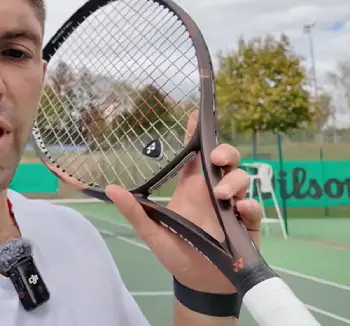
When I step on the baseline with the 98 the first thing I notice is clean ball exit on well-struck shots. Groundstrokes feel precise.
I can change direction. I can hit sharp angles. The ball does not float. Serves gain good spin.
They also gain good placement. Pure pace requires a full motion. At the net the head comes around quickly. Volleys stay crisp.
Switching to the 100 changes the rhythm. Depth arrives more easily. I can take shorter swings. I still push my opponent back.
Spin loads naturally. The larger sweet spot forgives late contact. Serves feel heavier with less effort.
Returns of serve jump back with authority. The trade-off appears on absolute corners. The ball sometimes travels a few inches farther than planned.
Both frames share the same 16 × 19 pattern. They share the same overall length. String choice affects them similarly.
Tension does the same. I usually string both in the mid-to-upper 40s. I use a poly main for durability. I also use it for spin. I adjust tension a couple of pounds higher on the 100. This tames the extra power.
Who Each Racket Suits Best?
The Ezone 98 fits intermediate to advanced players. These players already generate their own pace. They want a frame that rewards clean technique.
Placement is central to their game. Variety is central too. Taking the ball early matters. The 98 gives the needed tools. It also works well for all-court players. These players move forward often.
The Ezone 100 suits a broader range of intermediates. It suits advanced players too. These players value free power.
They value spin. They value forgiveness. Aggressive baseliners feel at home. They like to dictate from the back of the court.
It is also a strong option for players transitioning from lighter frames. Those players still want modern performance characteristics.
Frequently Asked Questions (FAQ)
Choose the 98 if you prioritize control. You need a full consistent swing. Choose the 100 if you want easier power. You also want a bigger sweet spot.
It suits solid intermediate to advanced players. This is roughly 4.0 NTRP and above. These players generate their own pace.
Carlos Alcaraz uses a Babolat Pure Aero 98. He does not use a Yonex model.
It delivers easy power. It delivers spin. It delivers forgiveness. The package is comfortable. It works for a wide range of intermediate and advanced players.
Final Thoughts
I have spent enough hours with both frames. Neither is simply better than the other. The Ezone 98 gives me the precision I want.
It gives the connected feel I want. This happens when my timing is sharp. I look to construct points carefully.
The Ezone 100 lets me stay aggressive on imperfect days. It keeps me in rallies longer. The physical cost is lower.
You will know which one matches your game. Feel the difference between the tighter more precise response. Feel the free depth of the larger head. Demo both if you can. String them similarly.
Pay attention to how the ball leaves the string bed on your typical shots. The right choice will feel natural within a few games. That confidence is worth more than any single spec on the chart.
Recent Posts
● Interactive 5-Zone Interior & Exterior Paint Blueprint Paint Coverage Calculator: Gallons, Primer, Square Footage & Cost Tap any architectural surface zone on the blueprint...
If you want smooth, shiny hair without spending a fortune on a premium styling tool, the Ella Bella hair dryer may be worth considering.In these Ella Bella hair dryer reviews, I’ll look...