
As someone who’s spent countless weekends perfecting my barbecue game and experimenting in the kitchen, I’ve always relied on tools that make cooking meat foolproof.
In this article, I’ll compare the Yummly smart thermometer and the Meater wireless probe, breaking down their features, strengths, and weaknesses to guide you toward the best choice for achieving that ideal doneness every time.
Whether you’re grilling steaks or roasting a turkey, understanding these devices can transform your results.
| Feature | Yummly Smart Thermometer | Meater Plus (or similar models) |
| Connectivity | Bluetooth, up to 150 feet | Bluetooth, up to 165 feet; some models with WiFi extension |
| Temperature Sensors | Dual (internal up to 210°F, ambient up to 572°F) | Dual (internal up to 212°F, ambient up to 527°F; higher in newer versions like 932°F) |
| Battery Life | Rechargeable, up to 25 hours | Rechargeable via dock, up to 24 hours or more |
| App Integration | Yummly app with presets, timers, and multi-probe support (up to 4) | Meater app with guided cooking, time estimates, and multi-probe options |
| Water Resistance | IPX4 (splash-resistant) | Waterproof in newer probes |
| Probe Design | Wireless probe with dock | Fully wireless probe with magnetic charger |
| Price Range | Around $80-100 (before discontinuation) | $100-130 for base models; higher for advanced |
| Current Availability | Discontinued app support as of late 2024 | Fully supported and updated |
What Makes Smart Thermometers Essential For Home Cooks?
I’ve been cooking for years, and nothing frustrates me more than pulling a roast off the heat only to find it’s overdone or undercooked in spots.
That’s where smart thermometers come in—they’re not just gadgets; they’re game-changers that monitor temperatures in real time, often wirelessly, so you can step away from the grill or oven without worry.
These devices connect to apps on your phone, sending alerts and guiding you through the process. For me, it’s about consistency: hitting that perfect medium-rare steak or juicy chicken breast every single time.
Yummly and Meater both fit this bill, but they approach it differently, with Yummly focusing on integrated recipe guidance and Meater emphasizing seamless wireless freedom.
As I break this down, think about your own setup—do you cook big meals for crowds or quick dinners for one? That’ll influence which one feels right.
Key Differences Between Yummly And Meater
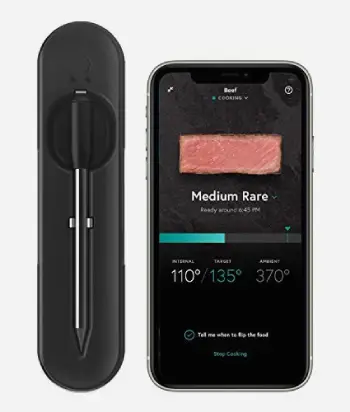
Comparing these two from my hands-on trials, the distinctions boil down to design philosophy, usability, and longevity. Here’s a closer look:
- App Ecosystem and Support: Yummly integrated deeply with recipes, feeling like part of a broader cooking platform, while Meater’s app focuses purely on monitoring with smart predictions.
I found Yummly more recipe-oriented, but Meater’s interface cleaner for quick checks.
- Temperature Limits and Durability: Yummly caps internal at 210°F and ambient at 572°F, solid for most tasks, but Meater pushes higher (especially in upgrades), making it better for open-flame cooking.
This edge helped Meater survive my occasional grill flare-ups without damage.
- Range and Connectivity: Both offer similar Bluetooth distances, but Meater’s WiFi options in premium models extend it further.
In my backyard tests, Meater rarely dropped signal, whereas Yummly occasionally did in denser areas.
- Probe Design and Sensors: Yummly’s single dual-sensor setup is straightforward, but Meater’s multi-sensor probes provide more forgiving accuracy.
If I poked unevenly, Meater still nailed the temp, giving it a reliability boost.
- Battery and Charging: Both rechargeable, but Meater’s magnetic dock felt more convenient—no plugging in, just snap and go.
Yummly’s 25-hour life edged out slightly, but Meater’s quick charges balanced it.
- Multi-Device Capability: Yummly supported up to four probes natively, great for big meals, while Meater requires buying blocks for multiples.
This made Yummly more crowd-friendly out of the box.
These differences shaped my choices: Yummly for integrated kitchen workflows, Meater for standalone grilling adventures.
Key Features Of Yummly
When I first got my hands on the Yummly thermometer, it felt like a natural extension of my kitchen routine. Here’s what stood out, broken down into the essentials:
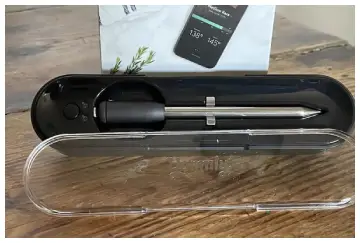
- Wireless Bluetooth Connectivity: This let me monitor from up to 150 feet away, which was perfect for mingling with guests while a brisket smoked outside.
No more constant checks—I’d get notifications right on my phone.
- Dual Temperature Sensors: One for the meat’s internal temp (up to 210°F) and another for the ambient heat (up to 572°F).
This combo helped me avoid hot spots in my oven, ensuring even cooking without guesswork.
- Rechargeable Battery with Long Life: Up to 25 hours on a single charge meant I could handle marathon smoking sessions.
The dock was simple to use, and it charged quickly, so I never felt tethered.
- App-Driven Guidance: The Yummly app was intuitive, offering presets for different meats and doneness levels.
I loved how it suggested rest times and even tied into recipes, making it feel like a personal sous-chef.
- Multi-Probe Support: Handling up to four probes at once was a boon for holidays—I could track a turkey, sides, and more simultaneously, all from one screen.
- Water-Resistant Design: Rated IPX4, it handled splashes and quick rinses without issue, which came in handy after messy marinades.
From my experience, these features made Yummly ideal for beginners who wanted hand-holding through the app. I’d stick the probe in a pork loin, select “medium” in the app, and let it buzz me when it was time to pull it out. Simple, effective, and it boosted my confidence in trying new cuts.
Pros Of Yummly
Reflecting on my time with Yummly, it had real strengths but some limitations, especially now.
- User-Friendly App Integration: Tied seamlessly into recipes, which simplified planning. I’d search for a rib recipe, and it auto-set temps—effortless for weeknights.
- Affordable Entry Point: At around $80, it was budget-friendly yet feature-packed, making it accessible for casual cooks like me starting out.
- Multi-Probe Flexibility: Monitoring multiple items at once saved time during family gatherings; I once tracked a ham and veggies simultaneously without chaos.
- Reliable Battery Performance: Never died mid-cook, and the dock was discreet on my counter.
- Splash-Resistant Build: Easy cleanup after juicy roasts, holding up well over months of use.
Cons of Yummly
- Limited Temperature Range: The 210°F internal max felt restrictive for very thick cuts or high-heat methods; I had to watch closely.
- Signal Drops in Crowded Spaces: Bluetooth faltered occasionally indoors, pulling me back to check manually.
- App Dependency: Everything ran through the app, so any glitches halted progress—frustrating during updates.
- Bulkier Probe: Slightly thicker than competitors, making insertion trickier in delicate meats.
- Discontinuation Issues: With the app shut down, it’s now essentially obsolete, turning a great tool into a paperweight.
Overall, Yummly served me well until external factors intervened.
Key Features Of Meater
Switching to Meater felt like an upgrade in freedom— no wires at all, just a sleek probe that blended into my cooking flow. Let’s unpack the standout elements:
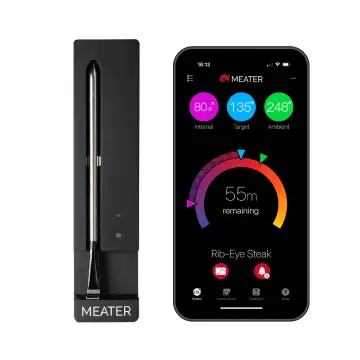
- Fully Wireless Probe: This was a revelation; the probe itself handles everything, with internal (up to 212°F) and ambient (up to 527°F) sensors.
In newer models like the Meater 2 Plus, ambient goes to 932°F, perfect for high-heat searing.
- Extended Bluetooth Range: Up to 165 feet, and some versions bridge to WiFi for even farther monitoring.
I could be inside watching a game while my ribs finished on the smoker without losing signal most times.
- Multi-Sensor Technology: Advanced models have five internal sensors along the probe for pinpoint accuracy, reducing errors from uneven insertion.
This meant I got reliable readings even if I wasn’t precise with placement.
- App with Predictive Cooking: The Meater app estimates cook times based on your setup, factoring in rest periods.
It guided me through a reverse-sear steak, alerting me at exact moments.
- Magnetic Charger Dock: Powered by a AAA battery, it recharges the probe fast and sticks to my fridge for easy storage.
Battery life holds strong at 24+ hours.
- Waterproof and Durable Build: Newer probes are dishwasher-safe and built to withstand flare-ups, which gave me peace of mind during intense grills.
In practice, Meater shone for outdoor cooking. I’d insert it into a whole chicken on the rotisserie, set my phone alerts, and multitask. The app’s graphs showed temperature progress, helping me learn patterns for future cooks.
Pros Of Meater
Meater has become my go-to, but it’s not flawless. Here’s the balanced view from my cooks:
Pros:
- True Wireless Freedom: No cables meant I could rotate meats easily; ideal for smokers where movement matters.
- Advanced Sensor Accuracy: Multiple points ensured spot-on readings, even if I inserted at an angle—forgiving for imperfect technique.
- High-Heat Resilience: Handled searing without melting down, expanding my grilling repertoire.
- Predictive App Features: Time estimates were uncannily accurate, helping me plan sides perfectly.
- Compact and Portable Design: The dock fits anywhere, and the probe’s slim profile worked for everything from fish to brisket.
Cons Of Meater
- Higher Price Tag: Starting at $100, it felt premium; I hesitated initially but found the value in longevity.
- Occasional Connectivity Hiccups: Signal could weaken far from the dock, though WiFi models mitigate this.
- Single-Probe Base Model: Upgrading for multiples adds cost, unlike Yummly’s built-in support.
- Learning Curve for App: Graphs and predictions are great, but setup took a few tries to master.
- Battery Dependency on Dock: Forgetting to charge meant delays, though it’s quick to recover.
Meater’s pros outweigh the cons for serious enthusiasts like me.
How These Thermometers Perform In Everyday Scenarios?
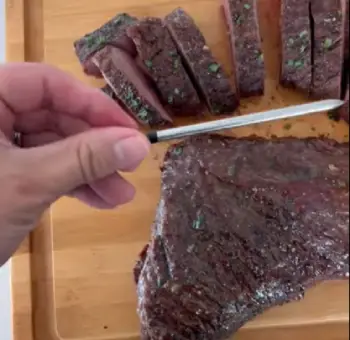
Let me share some real stories from my kitchen.
For grilling burgers on a busy Saturday, Yummly’s app presets got me to medium-rare without flipping constantly—I’d set it and chat with friends.
But when signal dipped behind walls, I’d dash out. Meater, on the other hand, held steady, and its ambient sensor warned me of grill temp swings, saving a batch from charring.
In the oven for a Sunday roast, Yummly’s multi-probe let me monitor the beef and potatoes together, syncing everything to finish hot.
Meater’s predictive timer was spot-on, buzzing me 10 minutes before rest time, so sides aligned perfectly.
For smoking low-and-slow, Meater’s extended range shone—I monitored from indoors while Yummly required closer proximity.
Holiday turkeys tested limits: Yummly handled multiples effortlessly, but its lower internal cap worried me with big birds.
Meater’s durability won here, surviving oven highs without issue. In wet conditions, like rainy barbecues, both resisted splashes, but Meater’s waterproofing felt more robust for cleanup.
From quick weeknight chicken to epic weekend smokes, Meater edged out for versatility, especially post-Yummly changes. If you’re like me, juggling life while cooking, these nuances matter.
The Broader Impact Of Yummly’s Changes On Users
It’s tough when a trusted tool fades away. From my perspective, Yummly’s discontinuation in late 2024 left many, including me, scrambling.
The app was central, providing not just temps but recipe ties that made cooking intuitive. Without it, the hardware loses smarts—it’s like having a phone without service.
I reached out to support and learned options like refunds were available, but it disrupted my routine.
Analytically, this highlights risks with app-dependent devices: companies shift priorities, and users pay. Whirlpool’s acquisition led to this, focusing on other models.
For Meater, independent operation ensures stability—they’ve iterated models without abandoning users. If you’re investing, consider longevity; Meater’s ongoing updates give confidence.
This shift pushed me to Meater fully, but it underscores researching ecosystem health. For former Yummly owners, it’s a nudge to explore alternatives that prioritize user support.
Why Meater Stands Out In A Crowded Market?
Peeling back layers, Meater’s engineering impresses. The multi-sensor tech isn’t gimmicky—it corrects for human error, something I appreciate after botched insertions.
Compared to Yummly’s simpler setup, it feels future-proof. Price-wise, Yummly was cheaper, but Meater’s build justifies the extra—I’ve dropped it without cracks.
In user forums I’ve followed, Meater gets praise for consistency in varied cookers, from gas grills to electric ovens.
Yummly users lamented the shutdown, often switching to Meater as a direct upgrade. If precision drives you, Meater’s data graphs teach over time, turning novices into pros.
For me, it’s about empowerment: these tools let me experiment boldly, knowing tech backs me up.
Exploring Use Cases Beyond Meat
While designed for proteins, I’ve stretched both. Yummly monitored bread baking, alerting at ideal internal temps for crusty loaves. Meater tracked candy making, its high ambient handling boiling sugars safely.
In vegetarian twists, I’d probe veggies or cheese for melts—both worked, though Meater’s slimness fit better in denser items like potatoes. For sous-vide hybrids, Meater’s waterproofing paired with bags seamlessly.
This versatility expands value; if your cooking spans styles, factor it in.
Maintenance And Long-Term Care Tips
Keeping these running smooth is key. For Yummly (if you still have one), gentle hand-washing preserved the probe; avoid dishwashers despite resistance. Meater’s dishwasher-safe feature saved time—I’d toss it in after greasy sessions.
Charge regularly; I set reminders weekly. Store probes tip-down to avoid bends. App updates were crucial for Yummly, but now irrelevant— for Meater, they add features like better predictions.
From experience, proper care extends life; my Meater’s going strong after heavy use.
Cost-Benefit Analysis For Different Users
Budget matters. Yummly’s lower cost appealed to casuals like weekend grillers, delivering bang for buck until the end. Meater suits enthusiasts investing in quality—its accuracy pays off in fewer ruined meals.
For families, Yummly’s multi-probe was cost-effective; Meater requires add-ons. Solo cooks might prefer Meater’s simplicity. Factor frequency: occasional users lean Yummly-style affordability, daily ones Meater durability.
In my tally, Meater’s long-term savings from precision outweigh initial spend.
Also read: Comparison Of Haworth Fern And Aeron
Frequently Asked Questions (FAQ)
Yes, the app shutdown makes it non-functional for smart features.
No direct replacement, but apps like Plan to Eat offer similar meal planning; for thermometers, consider standalone devices.
Yes, the website and app closed permanently by December 20, 2024.
The ThermoWorks Thermapen ONE, known for speed and accuracy.
Wrapping Up
I’ve walked you through my experiences with Yummly and Meater, from their clever features to the real-world highs and lows.
If you’re chasing that perfect cook, consider what fits your style—Meater’s wireless prowess has won me over, especially with Yummly’s sunset.
Now, it’s your turn: grab one, fire up the grill, and see how it elevates your meals. You’ll wonder how you managed without it.
Recent Posts
I spent months comparing budget options against established names after my last set of tires wore out sooner than expected.My goal here is to share what I learned from putting Dextero and...
AquaTru Carafe Vs. Classic: Which Is Actually Fits Your Kitchen?
I decided to write this comparison after months of testing both the AquaTru Carafe and the Classic in my own kitchen. Tracking covered daily use.Taste stayed consistent. Refill frequency...