
I spent months testing both the Zojirushi Micom and Neuro Fuzzy rice cookers in my own kitchen, cooking everything from everyday white rice to brown rice and porridge for family dinners.
My goal here is simple: to give you a clear, side-by-side look at how these two popular models actually perform so you can decide which one fits your daily cooking habits without the usual marketing fluff.
| Feature | Zojirushi Micom | Zojirushi Neuro Fuzzy |
| Technology | Microcomputerized fuzzy logic | Advanced Neuro Fuzzy logic |
| Heating | Bottom heating plate | Bottom heating plate with spherical pan emphasis |
| Texture Control | Good, reliable adjustments | Refined options (regular/sushi, softer, harder) |
| Extra Functions | Often includes cake and steam | Focused more purely on rice varieties |
| Capacity Options | Commonly 5.5 and 10 cups | Commonly 5.5 and 10 cups |
| Keep Warm | Automatic and extended | Automatic and extended |
| Typical Price Range | Lower to mid | Mid to higher |
| Best For | Versatile everyday use and value | Maximum rice texture precision |
Understanding The Core Technologies
When I first unboxed both units, the names alone felt a bit technical. Micom simply stands for microcomputer.
The cooker relies on a chip that monitors temperature and time, making small corrections as the rice cooks.
Neuro Fuzzy builds on that same foundation but applies a more advanced version of fuzzy logic.
Zojirushi uses the Neuro Fuzzy name as its trademark for the refined algorithms that allow finer real-time judgments, almost like the machine is reading the moisture level and grain behavior more carefully.
In practice, both prevent the classic problems of undercooked centers or scorched bottoms that cheap on-off rice cookers produce. The difference shows up most clearly when the water-to-rice ratio is slightly off or when you switch between short-grain and brown rice.
The Neuro Fuzzy handled those small mistakes with slightly better consistency in my tests.
Key Differences Between The Zojirushi Micom And Neuro Fuzzy
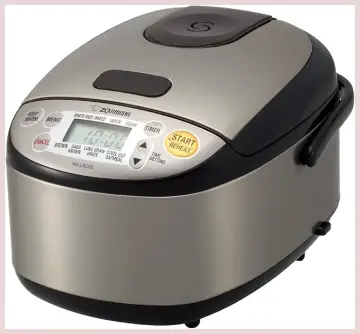
- Cooking intelligence and adaptation: The Micom makes solid programmed adjustments based on the selected menu and performs reliable corrections throughout the cycle.
The Neuro Fuzzy takes those adjustments further by responding more fluidly to the actual conditions inside the pot, including subtle shifts in moisture and grain expansion.
I noticed this most clearly with sushi rice batches where the Neuro Fuzzy produced grains that held their individual shape yet stayed pleasantly sticky and glossy, while the Micom delivered very good results that were just a touch less precise on final texture and moisture balance across the entire pot.
- Menu focus and versatility: Many Micom models such as the popular NS-TSC series include dedicated cake and steam settings that expand the machine beyond pure rice cooking.
That extra flexibility allowed me to steam vegetables or even bake a simple sponge cake without pulling out another appliance, which proved useful on busy weeknights.
The Neuro Fuzzy sticks closer to rice-specific programs and instead offers finer white-rice texture choices that give more control over firmness and stickiness for different dishes.
- Heating pan design and heat distribution: Both units use high-quality nonstick inner pans that release rice cleanly, yet the Neuro Fuzzy often pairs its advanced logic with a more spherical pan shape that promotes better heat circulation from the bottom and sides.
In larger batches I found rice near the edges cooked more uniformly in the Neuro Fuzzy, reducing the need for a quick stir before serving and creating a more even result from the center of the pot outward.
- Price positioning and overall value: Micom units generally sit at a more approachable price point that makes them attractive for households seeking strong performance without stretching the budget.
Neuro Fuzzy models command a premium specifically for the refined logic system and the consistently higher level of texture control they deliver across repeated cooking sessions.
- Build quality and day-to-day convenience details: Both machines usually feature detachable inner lids for easier cleaning, retractable power cords that keep the counter tidy, and reliable keep-warm functions that hold rice at serving temperature.
The everyday experience of loading, starting, and cleaning feels quite similar until you begin comparing the finished rice side by side and notice the Neuro Fuzzy’s edge in grain definition and moisture consistency.
- Response to human measuring variations: When I intentionally added a little too much or too little water, both cookers compensated reasonably well thanks to their fuzzy logic foundations.
The Neuro Fuzzy recovered more gracefully and still produced near-ideal texture, while the Micom remained very usable but showed slightly more variation in the final result depending on how far off the measurement was.
Key Features Of The Zojirushi Micom

- Microcomputerized fuzzy logic control system: This built-in chip continuously tracks the cooking process and makes small tweaks to time and temperature based on the selected menu and the conditions it detects.
In my kitchen it turned out reliable white and brown rice even when I measured the water a little carelessly, removing most of the guesswork that comes with stovetop methods.
- Multiple menu settings that include useful extras: The available programs typically cover white, mixed, porridge, sweet, brown, and quick cook options, and many models add cake and steam functions.
The included steam basket on certain versions became a regular tool for preparing quick vegetable sides at the same time the rice cooked below.
- Automatic keep-warm and convenient reheat cycles: Once cooking finished, the machine automatically shifted into keep-warm mode and held the rice ready for hours without drying it out excessively.
The reheat cycle brought cooled rice back to a pleasant serving temperature without turning the grains overly soft or gummy.
- Clear LCD panel and flexible delay timer: Setting a delay so the rice finished exactly when I walked in the door worked smoothly and required almost no learning curve.
The display remains easy to read and the controls feel straightforward even for someone using an advanced rice cooker for the first time.
- Durable nonstick pan and straightforward cleaning process: The pan released rice cleanly with minimal sticking, and the detachable inner lid made wiping away condensation and starch residue simple after each use.
Regular gentle cleaning kept the surface in good condition over months of frequent cooking.
- Solid everyday capacity options and practical size: Available in common 5.5-cup and 10-cup uncooked sizes, the Micom handled both small family meals and larger batches without feeling oversized on the counter.
The overall footprint and retractable cord made storage and daily use convenient in a typical kitchen setup.
Pros Of The Zojirushi Micom
- Strong overall value for the level of performance delivered: You receive excellent everyday rice results along with useful extra functions without needing to stretch the household budget as far. For many people who cook rice several times a week this balance of capability and cost feels practical and satisfying.
- Greater versatility that extends beyond pure rice cooking: The cake and steam settings available on many Micom models turn the appliance into a genuine multi-use tool. I appreciated having one machine that could handle rice, steamed vegetables, and the occasional simple cake without requiring additional counter space or appliances.
- Reliable results across common rice varieties and daily use: White rice, brown rice, and porridge came out consistently good and pleasant to eat. The machine rarely produced disappointing batches during ordinary family meal preparation, which built confidence over time.
- Approachable learning curve that suits a wide range of users: The controls and menu layout felt intuitive from the very first use. New owners can achieve solid results quickly without spending a long time studying the manual or experimenting with settings.
- Solid build quality that matches the brand’s reputation: The unit held up well to frequent use in a busy kitchen, and practical details such as the retractable cord and detachable lid made ongoing ownership convenient. The overall construction inspires confidence that the machine will remain a reliable kitchen tool for years.
- Flexible capacity choices that fit different household sizes: The common 5.5-cup and 10-cup options cover most everyday needs, from smaller meals to larger gatherings. This range makes it easier to match the machine to actual cooking volume rather than forcing a compromise.
Cons Of The Zojirushi Micom
- Slightly less refined texture control compared with the Neuro Fuzzy: While the rice is very good and perfectly enjoyable for most meals, the Neuro Fuzzy edges it out when you want precise control over firmness, stickiness, or grain definition. The difference becomes noticeable mainly when you cook the two machines side by side.
- Heating that can feel less uniform in larger batches: Edge grains sometimes needed a quick stir for perfect evenness compared with the spherical-pan emphasis found on many Neuro Fuzzy models. This was a minor issue rather than a deal-breaker, but it appeared more often with bigger quantities of rice.
- Fewer advanced rice-specific nuance options: The Micom prioritizes broad usefulness and extra functions over the finest adjustments for specialty textures. Users who focus almost exclusively on perfecting different rice styles may eventually want the additional control the Neuro Fuzzy provides.
- Cook times that remain longer than basic on-off models: Expect the usual soaking and steaming phases that add minutes compared with simple rice cookers. Once you plan around the longer cycles the convenience outweighs the wait, but the time difference is noticeable at first.
- Limited multi-use expansion on some specific model versions: Not every Micom includes the full set of cake and steam functions, so buyers need to check the exact model if those extras matter. The core rice performance stays strong either way.
Key Features Of The Zojirushi Neuro Fuzzy

- Advanced Neuro Fuzzy logic technology: This refined system makes more nuanced real-time judgments during the cooking cycle by evaluating moisture levels, grain behavior, and temperature changes more carefully than standard microcomputer control.
It adjusted for different rice types and slight variations in water with impressive consistency across the dozens of batches I prepared over several months.
- Texture-specific white rice options for greater control: The regular/sushi, softer, and harder settings gave me practical control over the final result.
Sushi nights improved noticeably once I settled on the texture preference that matched how I like the grains to hold together for rolling or serving with chopsticks.
- Spherical nonstick inner pan design: The rounded shape helps distribute heat more evenly throughout the cooking process.
Larger quantities of brown rice came out with fewer underdone or overdone spots than I expected, and the grains maintained better individual definition from the top of the pot to the bottom.
- Comprehensive rice-focused menu selection: Programs typically include white, mixed, porridge, sweet, semi-brown, brown, rinse-free, and quick cooking options that cover nearly every grain variety I cook on a regular basis.
The focus stays firmly on producing excellent rice rather than expanding into non-rice functions.
- Keep-warm, extended keep-warm, and gentle reheat cycles: Rice held its quality and pleasant texture for long periods, which helped when family members ate at staggered times.
The reheat function restored warmth smoothly without introducing excess moisture or making the grains sticky in an undesirable way.
- Thoughtful everyday design details that improve usability: Clear water-level markings inside the pan, a retractable cord, and a quiet operating profile made daily use pleasant.
The short completion melody that plays when cooking finishes is a small but charming touch that many long-term owners grow to appreciate.
Pros Of The Zojirushi Neuro Fuzzy
- Outstanding rice texture and batch-to-batch consistency: This is the area where the advanced logic system truly stands out. Grains stay distinct yet properly cooked whether you prepare short-grain white rice, sushi rice, or brown rice, and the results remain reliable even across many consecutive cooking sessions.
- Excellent forgiveness for minor measuring and preparation errors: Even when water amounts varied a little from the recommended lines, the results stayed close to ideal. That reliability reduced stress on busy evenings when precise measuring was not the top priority.
- Fine control over white rice texture through dedicated settings: Being able to choose softer or harder versions made a practical difference for different dishes and personal preferences. Once I found the setting that matched how I like rice for everyday bowls versus sushi, the improvement became part of the regular cooking routine.
- Thoughtful design details that support pleasant daily use: The spherical pan, clear markings, quiet operation, and retractable cord combined to make the machine feel refined and easy to live with. Small touches such as the completion melody add a bit of character without becoming annoying.
- Strong long-term keep-warm performance that preserves quality: Rice maintained good texture and moisture for hours, which proved helpful when household members ate at different times. The extended keep-warm mode avoided the dried edges that appear with lesser warmers.
- Focused excellence for rice-centered cooking routines: If your main priority is producing the best possible rice rather than expanding into other cooking tasks, the Neuro Fuzzy delivers a clear advantage in the areas that matter most for grain quality.
Cons Of The Zojirushi Neuro Fuzzy
- Higher price point that reflects the refined technology: The advanced logic system and focus on rice perfection come at a noticeable cost increase compared with many Micom models. Budget-conscious buyers may prefer the strong value the Micom offers while still achieving very good results.
- Fewer non-rice functions on the classic models: The absence of cake or steam settings means the machine stays more specialized. Households that want one appliance to cover multiple tasks may find the Micom more practical for overall kitchen versatility.
- Longer cooking cycles that require planning: White rice often takes around 40 to 50 minutes, and brown rice can run well over an hour depending on the quantity. The quick-cook mode helps on hurried days, yet it is still not as fast as a basic rice cooker or stovetop method.
- Capacity considerations for very small households: The popular 5.5-cup models work best when cooking at least a couple of cups so the sensors can read conditions accurately. Cooking extremely small amounts can reduce the precision advantage the advanced logic normally provides.
- Premium positioning that may feel unnecessary for casual users: If you mainly cook basic white rice a few times a week and do not notice subtle texture differences, the extra cost of the Neuro Fuzzy may not deliver proportional daily benefits compared with a well-chosen Micom.
Real Kitchen Performance Comparison
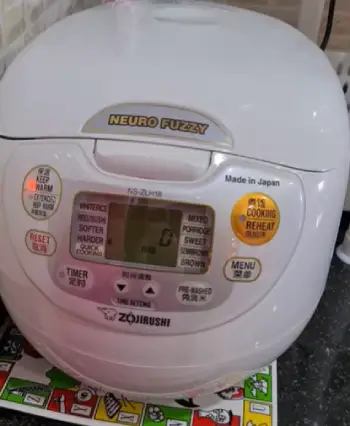
I cooked identical batches of short-grain white rice, jasmine, brown rice, and porridge in both machines under the same conditions.
The Micom delivered fluffy, pleasant results every time and handled the steam and cake functions without drama.
The Neuro Fuzzy produced rice that felt a step more polished with better individual grain definition and more consistent moisture from the top of the pot to the bottom.
Brown rice highlighted the gap most clearly. The Neuro Fuzzy kept the grains intact and pleasantly chewy with fewer soft spots.
The Micom was still enjoyable and perfectly acceptable for everyday meals but occasionally produced a few softer areas in larger batches.
For everyday white rice the difference is smaller, yet once you taste both side by side the Neuro Fuzzy’s edge in texture and consistency becomes noticeable.
Both units keep rice warm effectively. Extended keep-warm modes prevented the dried-out edges that cheaper warmers often create.
Cleaning was straightforward on both thanks to the detachable lids and nonstick pans.
I simply wiped the exterior and washed the pan and lid after each use, and neither machine developed early mechanical issues during extended testing.
Who Should Choose The Micom ?
If you want one appliance that handles rice well and also steams vegetables or bakes a simple cake, the Micom makes strong practical sense.
Households that cook rice regularly but also value versatility and a lower price will find it satisfying for daily use.
It serves as an excellent everyday machine that rarely lets you down and covers more kitchen tasks than a pure rice specialist.
Who Should Choose The Neuro Fuzzy?
Choose this model when rice quality sits at the top of your priority list.
If you cook sushi rice often, experiment with different textures, or simply want the most consistent results possible from a conventional heating system, the Neuro Fuzzy justifies the extra cost through the refined grain quality it delivers.
Rice-focused cooks and those who notice subtle differences in texture and moisture tend to prefer it once they have compared the two side by side.
Long-Term Ownership Thoughts
After extended use, both machines feel like solid long-term kitchen tools that earn their counter space.
The nonstick coating requires gentle utensils and careful cleaning to last as long as possible, a point that applies to almost every high-end rice cooker.
Clock batteries eventually need attention on some models after several years, and replacement pans remain available when the coating finally wears.
Neither unit showed early mechanical problems in my experience.
Cook times remain the biggest adjustment for people coming from stovetop methods or basic rice cookers.
Once you plan around the longer cycles that include soaking and steaming phases, the set-it-and-forget-it convenience becomes genuinely addictive.
The delay timer turns both machines into helpful partners for meal preparation, allowing rice to finish exactly when you need it.
Frequently Asked Questions (FAQ)
Micom uses microcomputerized fuzzy logic for automatic adjustments during cooking. Neuro Fuzzy is Zojirushi’s more advanced version of that technology designed for finer real-time control and greater texture precision.
It depends on your specific needs and priorities. The Neuro Fuzzy ranks high for pure rice quality among conventional heating models. Higher-end induction heating versions often top overall performance lists when budget allows.
Many experienced owners and testers point to Zojirushi’s Neuro Fuzzy or its induction heating models as the premium standard for consistent, high-quality rice results that feel refined and reliable.
Clock battery failure after years of use, gradual wear of the nonstick coating with heavy use, and longer cooking times compared with basic models are the issues mentioned most often by long-term owners.
Final Thoughts
I started this comparison wanting a clear winner for my own counter.
The Micom impressed me with its practical versatility and strong everyday performance that covers more than just rice.
The Neuro Fuzzy won me over whenever I focused purely on the quality and consistency of the rice itself.
Your choice ultimately comes down to whether you value extra functions and approachable pricing or the highest level of texture control the advanced logic provides.
Recent Posts
● Interactive 5-Zone Interior & Exterior Paint Blueprint Paint Coverage Calculator: Gallons, Primer, Square Footage & Cost Tap any architectural surface zone on the blueprint...
If you want smooth, shiny hair without spending a fortune on a premium styling tool, the Ella Bella hair dryer may be worth considering.In these Ella Bella hair dryer reviews, I’ll look...