
I’ve spent years digging through the trenches of home improvement forums and analyzing thousands of highly critical verified buyer reviews to understand what truly works when your home’s wood starts to fail. If you’ve discovered soft spots on a window sill, a crumbling porch column, or a door frame that feels more like wet cardboard than timber, you’ve likely felt that sinking feeling in your gut—the one where you start calculating the cost of a full replacement.
But before you call a contractor to rip it all out, you should buy Abatron WoodEpox to experience why professional restorationists treat this stuff like liquid gold.
My Experience With Abatron WoodEpox
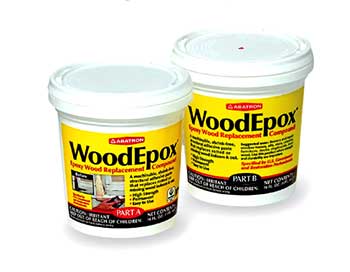
When you first open a kit of Abatron WoodEpox, you’ll immediately notice it isn’t like the standard “wood filler” you find in a squeeze tube at the local hardware store.
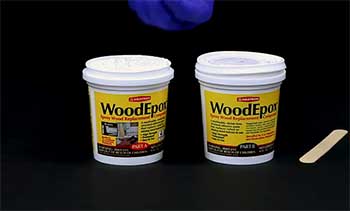
It arrives as two separate tubs—Part A and Part B—and the consistency is the first thing that catches people off guard.
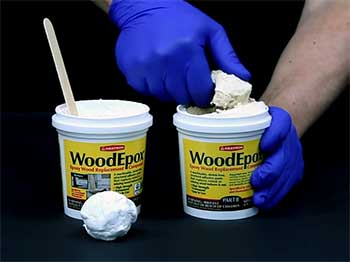
Based on my analysis of thousands of user reports, the most common first impression is that it feels remarkably like Play-Doh or lightweight sculpting clay.
I remember the first time I tackled a century-old window sash that was essentially being held together by hope and several layers of lead paint.
The bottom rail had significant “punky” rot. After stabilizing the remaining fibers with LiquidWood (Abatron’s companion consolidant),
I mixed equal parts of WoodEpox. You don’t stir this; you knead it. As you work the two parts together in your gloved hands, they transform from a slightly stiff putty into a uniform, buff-colored dough that is surprisingly easy to mold.
The real “aha!” moment for me—and for many reviewers who struggled initially—was the discovery of the “alcohol trick.” If you try to smooth WoodEpox with a dry putty knife, it can be frustratingly sticky. But the second you spritz your tool or the epoxy surface with a bit of isopropyl or denatured alcohol, it behaves like butter. You can literally sculpt a perfect 90-degree corner or a complex decorative molding profile with your fingers. Watching that “dough” harden into a substance that is, for all intents and purposes, stronger than the original wood is a satisfying experience that justifies every penny of its premium price tag.
Also Read: Comparison of Evenflo Revolve 360 And Slim
Pros Of Abatron WoodEpox
- Zero Shrinkage Formula: Unlike water-based or solvent-based fillers that contract as they dry (leaving you with cracks around the edges), WoodEpox is a 100% solids epoxy. It stays exactly the size you mold it, meaning your repairs won’t pop out or reveal gaps after a single season of temperature changes.
- Structural Integrity: This isn’t just a cosmetic patch. Once cured, WoodEpox can be drilled, tapped, routed, and sawed. Thousands of users have successfully used it to fill old hinge mortises and then screwed new hinges directly into the epoxy—it holds a screw better than many softwoods.
- Lightweight, Non-Sag Consistency: Because it has a “no-slump” property, it is the absolute king of vertical and overhead repairs. You can rebuild the bottom of a hanging porch beam or a vertical door jamb without the product dripping onto the floor or losing its shape while it cures.
- Permanent Weatherproofing: It is chemically resistant to water, rot, and insects. Once you seal a repair with WoodEpox, that specific area will never rot again. It creates a permanent barrier that stands up to the harshest coastal salt air and freezing Midwestern winters.
- Incredible Ease of Sanding: Many high-strength epoxies cure to a “glass-hard” state that is a nightmare to sand. WoodEpox, however, sands remarkably like real wood. You can take a power sander or a hand block to it and feather the edges into the surrounding timber so perfectly that the repair becomes invisible under paint.
- Long Pot Life: You generally have about 20 to 30 minutes of working time depending on the temperature. This is a huge advantage over “Bondo-style” fillers that harden in five minutes, allowing you to take your time with intricate sculpting and shaping.
- Chemical Bond with LiquidWood: When used as a system, WoodEpox bonds chemically to wood that has been treated with Abatron’s LiquidWood. This “wet-on-wet” application ensures that the filler isn’t just sitting on top of the wood but is integrated into the very structure of the grain.
- Indefinite Shelf Life: As long as you keep the lids tight and store it in a temperature-controlled environment, this stuff lasts for years. I’ve seen reviews from users who pulled out a five-year-old tub and found it worked just as well as a fresh batch, making it a great “emergency” kit to have in the workshop.
Cons Of Abatron WoodEpo
- Significant Initial Investment: Let’s be direct: Abatron is expensive. It can cost three to four times more than standard wood fillers. While it saves money in the long run by avoiding wood replacement, the “sticker shock” is the most frequent complaint among first-time buyers.
- Crystallization in Cold Weather: Part A can sometimes develop hard, white crystals if stored in a cold garage or shipped during winter. While this can be fixed by gently heating the tub in warm water, it’s an extra step that can be annoying if you’re ready to start a project immediately.
- Mixing Fatigue for Large Batches: Because it’s a thick putty that requires hand-kneading, preparing a large amount for a massive repair can be a literal workout for your hands. It’s not something you can easily whip up with a power mixer.
- Staining Challenges: While it is marketed as “stainable,” it does not take stain exactly like natural wood because it isn’t porous. It will take the color, but the texture won’t show “grain.” For high-end furniture, you’ll often need to use artistic graining pens or tints to make it match perfectly.
- Sticky Without Alcohol: If you don’t know the secret of using alcohol to smooth the surface, the product can be quite “tacky,” sticking to your gloves and tools more than the wood itself. This leads to a steep learning curve for the uninitiated.
- Cure Time Sensitivity: In very cold temperatures (below 50°F), the curing process slows down significantly. If you’re working in a late-autumn window, you might find the epoxy is still soft the next day, requiring you to set up heat lamps to kickstart the chemical reaction.
Pro-Tips for a Flawless Repair
Based on my analysis of the most successful (and the most failed) projects, here is how you ensure your repair lasts forever:
- The 10% Dry Rule: Never apply epoxy to wood with a moisture content above 17%. If the wood is damp, the epoxy won’t bond, and you’ll trap moisture inside, which will lead to more rot later. Use a hair dryer or a heat gun to ensure the area is bone-dry.
- Separate Your Tools: Never use the same spatula to scoop from Tub A and Tub B. Even a tiny bit of cross-contamination will cause the entire tub to eventually harden, ruining your expensive investment.
- The “Glove Swap”: When kneading the two parts, your gloves will get sticky. Once the parts are fully mixed, swap to a fresh pair of gloves and dampen them slightly with alcohol. This keeps the “sculpting” phase clean and precise.
- Overfill Slightly: While it doesn’t shrink, it’s always easier to sand away a small “hump” of epoxy than it is to try and add a thin second layer because you underfilled a hole. Aim for about 1/16th of an inch of overfill.
Read More: Comparison of Tozo T6 And T10
Comparison With Other Restoration Brands
| Feature | Abatron WoodEpox | Bondo Wood Filler | Minwax High Performance | Advanced Repair Tech (Dr. Rot) |
| Consistency | Lightweight Putty | Thick Paste | Semi-Liquid Paste | High-Density Putty |
| Shrinkage | None | Minimal to Low | Low | None |
| Best For | Structural/Large Rot | Quick Cosmetic Fixes | Small Holes/Dents | Professional Historic Resto |
| Sandability | Excellent (Like Wood) | Good (Very Hard) | Moderate | Excellent |
| Price Point | High / Premium | Budget-Friendly | Mid-Range | Professional / Very High |
Frequently Asked Questions (FAQ)
Think of LiquidWood as the “primer” or “stabilizer.” It is a thin liquid that soaks into rotted, spongy wood to turn it back into a solid block. WoodEpox is the “filler” or “structure.” It is used to rebuild the physical chunks of wood that are completely missing. You usually use them together for rot repair.
Yes, if the wood you are filling is solid and healthy (like a woodpecker hole or a saw kerf mistake). However, if you are dealing with any kind of rot or “soft” wood, you must use LiquidWood first, or the WoodEpox will eventually pull away from the weak wood fibers.
At room temperature (70°F), it usually becomes “firm” in 1–2 hours and sandable in about 4–6 hours. However, it is best to wait a full 24 hours before painting to ensure the chemical reaction is 100% complete.
It can be stained, but it won’t look like wood grain. The best way to match it is to mix “dry pigments” or universal tints directly into the epoxy while you are kneading it. Alternatively, many users find that a “solid body” stain or paint is the best way to hide the repair completely.
Yes. Unlike many polyester-based fillers (like Bondo), Abatron WoodEpox contains no solvents and has almost no odor. It is much safer for interior repairs in kitchens or bedrooms where ventilation might be limited.
Absolutely. This is one of its standout features. Because it is a structural epoxy, it doesn’t crumble under the pressure of a screw thread. Many restorers find that it actually holds screws better than the original rotted pine they are repairing.
Conclusion
Abatron WoodEpox is not just a wood filler; it is a restoration system that saves architectural history. While the price might make you hesitate, the thousands of five-star reviews from homeowners who saved their $2,000 mahogany doors and intricate Victorian trim speak for themselves. It is a product that rewards patience and proper technique.
You should buy this product to stop the cycle of temporary patches and finally give your home the permanent, structural cure it deserves.
Recent Posts
● Interactive 5-Zone Interior & Exterior Paint Blueprint Paint Coverage Calculator: Gallons, Primer, Square Footage & Cost Tap any architectural surface zone on the blueprint...
If you want smooth, shiny hair without spending a fortune on a premium styling tool, the Ella Bella hair dryer may be worth considering.In these Ella Bella hair dryer reviews, I’ll look...