
I have spent years mixing cocktails at home, stocking my bar with premium ingredients, and testing every jar of preserved cherries I could find.
My goal here is simple: to help you decide between Amarena cherries and Luxardo cherries by sharing what I have learned through direct comparison, so you can pick the one that fits your drinks, desserts, and budget without wasting money on the wrong jar.
| Feature | Amarena Cherries | Luxardo Cherries |
| Cherry Type | Wild Amarena sour cherries (Prunus cerasus) from Emilia-Romagna, Italy | Marasca cherries from Italy |
| Flavor Profile | Bright tart, fruity, intense natural cherry with balanced sweetness | Sweet-tart balance with nutty almond notes, rich and complex |
| Texture | Firmer skin, smaller size, slightly softer bite | Plump, crisp, chewy, satisfying firmness |
| Syrup | Thick, sweet-tart cherry syrup | Dense, dark marasca syrup, molasses-like |
| Color | Deep red to almost black | Very dark red, nearly black |
| Best Uses | Desserts, ice cream, tart-leaning cocktails | Classic cocktails (Manhattan, Old Fashioned), versatile garnish |
| Price (approx. for similar size) | Often similar or slightly higher per ounce | Premium, around $18 for 14 oz jar |
| Artificial Additives | Usually none (natural color extracts) | None (natural color, no thickeners or preservatives) |
| Jar Appeal | Iconic blue-and-white ceramic for Fabbri | Simple glass jar |
Key Differences Between The Amarena Cherries And Luxardo
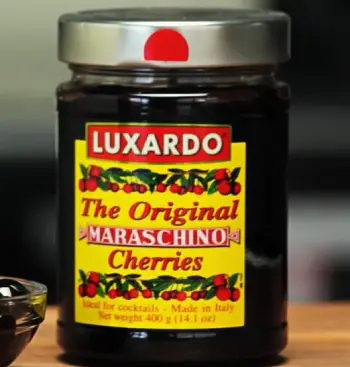
- Cherry variety and origin
Amarena cherries are a distinct sour cultivar from northern Italy, specifically tied to the Emilia-Romagna region around Bologna and Modena, while Luxardo uses Marasca cherries, also Italian but selected and processed specifically for the maraschino style that the Luxardo family has refined for generations.
The slight genetic difference shows up clearly in size, natural tartness, and how the fruit responds to the candying and syrup process.
In my side-by-side tastings the Amarena fruit always feels a bit wilder and more variable from batch to batch, whereas the Marasca fruit in Luxardo jars presents a more uniform shape and density that professional bars rely on night after night.
- Flavor emphasis
Amarena leans brighter and more aggressively tart with pure fruit character that hits first and lingers with a clean finish.
Luxardo sits more in the middle of sweet and tart and adds a gentle almond undertone that Amarena rarely matches, creating a rounder, almost liqueur-like depth.
When I taste them alone the Amarena reminds me of fresh wild cherries picked a little early, while the Luxardo tastes closer to a finished dessert component that has already been balanced by skilled hands.
This difference becomes even more obvious once the cherries meet alcohol or dairy.
- Texture and mouthfeel
Amarena cherries feel smaller and a touch softer once you chew past the skin, giving a pleasant but less dramatic bite.
Luxardo cherries deliver a firmer, more consistent crunch that many mixologists prefer for garnish presentation because the fruit stays intact even after several minutes in a strong spirit.
I have dropped both into identical Old Fashioneds and watched the Amarena yield a little faster while the Luxardo held its plump shape and released flavor more slowly, which changes how the last sip of the drink tastes.
- Syrup character
Amarena syrup tastes like concentrated cherry juice and sugar with a lively acidity that I often save for spooning over yogurt or ice cream.
Luxardo syrup carries the deeper, almost liqueur-like richness that comes from the marasca juice reduction, thicker and darker, with a viscosity that coats the glass and the fruit itself.
In practice I find the Amarena syrup more versatile for non-cocktail uses, while the Luxardo syrup feels purpose-built to enhance spirit-forward drinks without watering them down.
- Visual impact in a glass
Both darken a cocktail, yet Luxardo’s near-black color and glossy sheen often look more dramatic against clear spirits and create that classic bar presentation guests notice immediately.
Amarena can appear slightly redder depending on the batch and the lighting, which sometimes blends more gently into lighter cocktails or dessert plates.
When I photograph drinks for my own notes the Luxardo cherry almost always draws the eye first, while the Amarena sits more quietly but still adds elegance.
Key Features Of Amarena Cherries
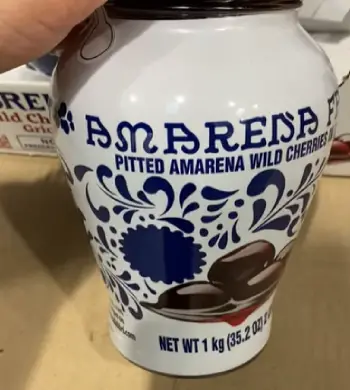
- Natural sweet-tart balance
The fruit starts tart and finishes sweet, giving me a flavor that never feels one-note and that adapts easily to both savory-leaning desserts and bright cocktails.
This balance is what first converted me from the overly sweet artificial cherries of my childhood.
In repeated tastings the tart note always arrives first, then softens into a rounded sweetness that still leaves a clean aftertaste rather than a sticky one.
- Distinctive packaging
The blue-and-white ceramic jar from Fabbri is more than decoration.
It keeps the product stable, looks elegant on a shelf, and has become a small ritual for me every time I open a new one.
Guests often comment on the jar before they even taste the cherries, which turns a simple garnish into a conversation starter and makes the product feel special beyond its flavor.
- Versatile beyond drinks
I use them on yogurt, cheesecake, roasted meats, and even folded into cake batters.
The syrup alone becomes a quick sauce for pancakes or a glaze for grilled fruit.
This range of uses means a single jar rarely goes to waste in my kitchen the way a purely cocktail-focused product sometimes can.
- Minimal processing
Most quality Amarena products avoid artificial dyes, relying instead on hibiscus or carrot extracts for color.
That clean ingredient list appeals to me when I care about what goes into my glass and onto my desserts.
Knowing the color comes from natural sources rather than synthetic dyes has made me more confident serving them to guests who ask about ingredients.
- Smaller size for controlled garnish
One or two cherries fit neatly in a coupe without dominating the drink the way a larger fruit might.
This control lets me fine-tune the amount of fruit and syrup I add so the cocktail stays balanced.
Over many experiments I have found that the smaller size also works better when I want the cherry to be present but not the star of the glass.
Pros Of Amarena Cherries
- Bright tartness that cuts richness
When I add them to an Old Fashioned that already has a sugar cube, the tart edge keeps the drink lively instead of heavy.
The same quality turns a simple bowl of ice cream into something special by preventing the dessert from tasting flat.
I have used this contrast in both sweet and savory applications and found it consistently useful when a dish or drink needs lift.
- Strong pure cherry identity
The flavor reads as real fruit rather than candy. Guests who dislike artificial maraschinos often prefer these because the taste feels honest and direct.
In my experience this purity makes Amarena cherries especially good for people who are just starting to explore better ingredients and want something that still tastes familiar.
- Beautiful jar that doubles as decor
I leave the ceramic container out because it looks intentional. After the cherries are gone I rinse it and reuse it for dry goods or even as a small vase.
The visual appeal has turned what could have been a utilitarian product into a small piece of kitchen design that I enjoy every day.
- Excellent for dessert applications
Spooning them over panna cotta or folding the syrup into brownie batter produces results I cannot get with Luxardo.
The tartness balances chocolate and cream perfectly and keeps richer desserts from feeling one-dimensional.
Over the years this versatility has made Amarena cherries a regular part of my dessert prep rather than just a cocktail item.
- Often more approachable for newcomers
The intensity is high, yet the fruitiness feels familiar, so people who are new to premium cherries usually enjoy them right away.
I have introduced several friends to better cherries by starting with Amarena in a simple dessert, then moving them toward Luxardo once they understood the difference.
The lower barrier to liking the flavor has made these cherries a useful gateway product in my experience.
Cons Of Amarena Cherries
- Can taste astringent to some palates
In a few side-by-side tastings friends described the finish as almost drying. If you prefer pure sweetness, this may feel too sharp and require adjusting the rest of the recipe to compensate.
I have learned to warn guests who lean toward candy-like flavors that the first bite might surprise them.
- Smaller fruit size
I sometimes need two or three cherries to match the visual impact of one Luxardo.
That uses the jar faster and can make the product feel less economical for high-volume cocktail service.
When I am garnishing a tray of drinks the extra scooping becomes noticeable.
- Price per ounce can climb
Certain specialty sizes cost more than a comparable Luxardo jar, which matters when I buy in bulk for parties.
Tracking the actual cost of usable fruit has shown me that Amarena is not always the budget-friendly option it first appears to be.
- Less consistent texture across brands
While Fabbri is reliable, lesser Amarena products can turn softer after a few months.
I stick to known names to avoid disappointment and have learned to check the harvest or packing date when possible.
The variability means I cannot treat every jar labeled Amarena as interchangeable.
- Syrup may crystallize over time
If the jar sits for many months after opening, sugar crystals sometimes form.
Gentle warming fixes it, but the extra step is annoying when I just want to grab a quick garnish. This small maintenance task is something I never encounter with Luxardo jars in the same way.
Key Features Of Luxardo Cherries
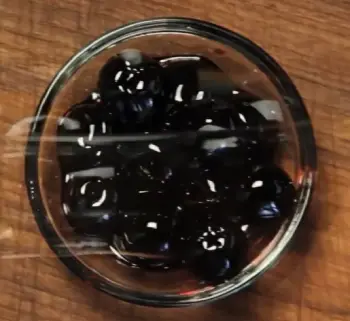
- Crisp candied texture
The candying process gives each cherry a rare firmness that survives the alcohol in a cocktail and still delivers a satisfying chew.
I never worry about a mushy bite even if the drink sits for ten minutes before the first sip.
That reliability is one of the main reasons professional bars keep these on the speed rail night after night.
- Complex flavor from marasca syrup
The same juice that flavors Luxardo’s liqueur ends up in the jar, creating layers of cherry, subtle spice, and nuttiness that ordinary cherries lack.
The result tastes finished and intentional rather than simply sweetened fruit.
In blind tastings I have done with friends this complexity is usually the first thing people notice once they move past the bright-red artificial versions they grew up with.
- High fruit-to-syrup ratio
Roughly half the jar is actual cherries, so I get more usable fruit for the price than many competitors.
This practical detail matters when I am pre-batching cocktails for a gathering and need every garnish to look generous.
The dense packing also means less empty space and more consistent quality from the top of the jar to the bottom.
- No additives or thickeners
The dark color is natural, the consistency comes only from the fruit and sugar, and the product stays stable for months after opening.
Reading the short ingredient list always reinforces why the price feels justified.
I appreciate that I can serve these without explaining away artificial colors or preservatives.
- Professional bar standard
Nearly every serious cocktail program I visit stocks Luxardo. That consistency means my home drinks taste closer to what I order out and gives me a reliable benchmark when I am testing new recipes.
Knowing that the same cherry appears in high-end bars around the world has made it easier to trust the product for important occasions.
Pros Of Luxardo Cherries
- Balanced sweetness with depth
The nutty undertone pairs with almost any spirit I throw at it.
Bourbon, rye, gin, and even rum all benefit from the added complexity without needing recipe changes.
This adaptability has made Luxardo my default when I am experimenting with new drinks and want a reliable garnish that will not fight the other ingredients.
- Superior mouthfeel for garnishes
The crisp bite and plump shape look professional in a rocks glass.
I never feel embarrassed serving them to guests who know their cocktails because the texture matches what they expect from a well-made drink.
The consistent firmness also means the cherry still tastes good even if the drink sits longer than planned.
- Long shelf life and stability
Opened jars stay fresh for months in my pantry.
The pasteurization and natural syrup keep quality high without refrigeration until I finish the jar.
This practical advantage has saved me money and reduced waste compared with more delicate products that need careful storage.
- Versatile across cocktail styles
From a classic Manhattan to an Aviation or even a simple whiskey sour, these cherries adapt without forcing me to change the recipe.
I have used them successfully in both stirred and shaken drinks and rarely found a situation where they felt out of place.
That broad usefulness is one of the strongest reasons I keep a jar permanently stocked.
- Clean ingredient list that matches the price
Paying more feels justified when I read the label and see only cherries, sugar, and marasca syrup.
Knowing there are no artificial colors or thickeners makes me more comfortable using them generously and recommending them to others.
The transparency of the product has built long-term trust for me.
Cons Of Luxardo Cherries
- Higher cost of entry
A single jar runs close to twenty dollars.
For casual home use that can feel steep until I calculate how many drinks it covers and realize the per-cocktail cost is still reasonable.
The initial outlay is the biggest barrier for people who are used to inexpensive grocery cherries.
- Dark color may not suit every presentation
In light-colored desserts or holiday baking the near-black fruit can look out of place and sometimes stain lighter ingredients.
I keep a second jar of brighter cherries for those moments when appearance matters as much as flavor.
The dramatic color is an advantage in dark spirits but a limitation elsewhere.
- Flavor intensity can dominate delicate drinks
In a very light gin cocktail the almond note sometimes takes over and shifts the balance more than I intended.
I use half a cherry or skip it when the other ingredients are subtle and need space to show.
Learning when to hold back has been part of mastering these cherries.
- Limited dessert flexibility compared with Amarena
While excellent in drinks, they feel heavier on ice cream and can overwhelm lighter desserts.
The sweetness and density work better in savory-leaning or spirit-forward contexts than in delicate pastry applications.
I have stopped reaching for them when the main goal is a bright fruit accent on a creamy dessert.
- Availability varies by region
Some grocery stores still stock only the bright-red artificial version.
I often order online or visit a liquor store to guarantee authenticity, which adds a small layer of planning.
The extra effort is worth it, yet it remains a practical inconvenience compared with more widely distributed products.
How I Choose Between Them For Specific Drinks And Desserts?
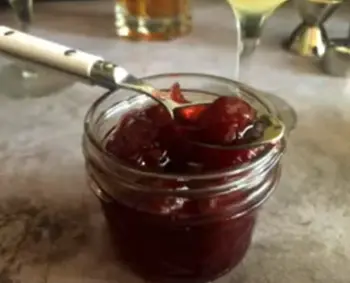
When I build an Old Fashioned I reach for Luxardo nine times out of ten. The firm texture holds up in the glass, and the nutty sweetness complements the orange peel and bitters.
On nights when I want the drink to feel brighter and less traditional I switch to Amarena.
The tart punch wakes up the bourbon in a different way and reminds me of Italian-style variations I have tasted in restaurants.
The choice often comes down to the mood of the evening and the other ingredients I am using.
For Manhattans the decision is easier. Luxardo has become my default because the complexity mirrors the vermouth and rye.
Amarena still works, yet it shifts the balance toward fruit rather than the classic profile most people expect. When I serve a round of Manhattans to guests who know the drink well, Luxardo almost always earns the quiet nod of approval.
Dessert choices reverse the preference. Vanilla gelato or a simple cheesecake gets Amarena every time. The tartness cuts the dairy and the syrup soaks into the surface beautifully.
Luxardo feels too heavy and candy-like for those applications, though it can work in a chocolate mousse if I want deeper notes. I have also used Amarena syrup as a quick reduction for roasted stone fruit with excellent results that Luxardo could not match in the same way.
I also consider the rest of the menu. If I am serving multiple cocktails that already contain sweet liqueurs, Amarena’s acidity keeps the evening from becoming one-dimensional.
If the drinks lean dry and spirit-forward, Luxardo rounds them out without extra effort. Keeping both jars available lets me respond to the specific needs of each drink or dish rather than forcing one product to do everything.
Practical Tips From My Bar Cart Experiments
I always keep both jars on hand because they serve different moods. After opening either product I store it in a cool cupboard rather than the refrigerator; the high sugar content protects it.
I use a clean spoon every time to avoid introducing moisture that could shorten shelf life. When the syrup runs low I save the last spoonfuls for coffee or oatmeal instead of discarding them.
These small habits have extended the life of every jar and reduced waste.
Portion control matters. One Luxardo cherry is usually enough for a single drink. With Amarena I often use two because of the smaller size.
That simple habit extends the life of each jar and keeps the cost per cocktail reasonable. I also measure the syrup carefully so the drink does not become overly sweet or sticky.
If I am introducing someone to premium cherries for the first time I start with Luxardo in a Manhattan. The balanced flavor converts people who only know the bright-red grocery version.
Once they understand the difference I offer an Amarena-topped Old Fashioned so they can taste the tart alternative. This two-step approach has turned several friends into regular users of both products rather than people who stick with whatever is cheapest.
I have also experimented with using the leftover syrup in non-traditional ways. Amarena syrup makes an excellent glaze for pork or duck when reduced slightly with a splash of vinegar.
Luxardo syrup adds depth to a whiskey sauce for ice cream or cake. Treating the entire contents of the jar as usable rather than just the fruit has improved the value of every purchase.
Also Read: Is GIA Russa Pasta Sauce Worth It?
Frequently Asked Questions (FAQ)
No. Amarena refers to a specific Italian sour cherry variety preserved in syrup, while Luxardo is a brand of Marasca cherries candied in marasca syrup.
Yes. Their tart edge balances the sweetness of the sugar and spirit, creating a brighter version of the classic.
They offer a firm texture, complex nutty-sweet flavor, natural ingredients, and consistency that most other cherries cannot match in cocktails.
High-quality Amarena cherries such as Fabbri come closest in quality, though the flavor leans more tart and less nutty.
Final Thoughts
After years of side-by-side testing I no longer see Amarena and Luxardo as rivals. They are two tools that solve different problems on my bar and in my kitchen.
You will reach for Luxardo when you want the classic, reliable, restaurant-level garnish that makes a Manhattan or Old Fashioned taste complete.
You will reach for Amarena when you want tart brightness, dessert versatility, or a jar that looks as good as it tastes.
Try both if your budget allows. Once you experience the difference from ordinary maraschinos, you will understand why I keep two jars within arm’s reach every time I mix a drink or plate a dessert.
Your cocktails and your guests will thank you for the upgrade. The real win is having the right cherry for the moment rather than settling for a single option that only does half the job.
Recent Posts
I tried Meltoway Hair Dissolving Cream because I wanted a quick way to deal with unwanted body hair without reaching for a razor every few days. If you are looking for a convenient at-home...
If you’re considering a saffron-based supplement to support mood, appetite control, and everyday wellness, Happy Saffron Plus is worth considering.I like that it takes a familiar botanical...