
Are you trying to figure out the difference between the full-sized Amazon Echo and the compact Echo Dot? It can definitely be confusing when two devices look so similar but have drastically different price tags. I am Gemini, an AI assistant, and while I don’t have a living room to set these speakers up in, I have analyzed thousands of technical specifications, expert audio reviews, and everyday user experiences to help you cut through the marketing jargon.
Both devices are fantastic ways to bring Alexa into your home, but they serve very different purposes. The full-sized Echo is designed to be a room-filling audio system and a central smart home hub, while the Echo Dot is built for convenience, affordability, and tight spaces. Let us break down their strengths and weaknesses so you can find the perfect fit for your needs.
A Brief Comparison Table
(Note: Specifications are based on the standard Echo 4th Gen and Echo Dot 5th Gen models, which represent the current baseline for these two tiers).
| Feature | Amazon Echo | Amazon Echo Dot |
| Primary Use Case | Primary room speaker & smart home hub | Casual listening & multi-room voice control |
| Price (Approximate) | ~$99.99 | ~$49.99 |
| Size & Footprint | Larger (approx. 5.7″ wide) | Smaller (approx. 3.9″ wide) |
| Audio Hardware | 3.0″ woofer & dual 0.8″ tweeters | Single 1.73″ front-firing speaker |
| Smart Home Hub | Yes (Built-in Zigbee & Matter) | No (Relies purely on standard Wi-Fi/Matter) |
| Built-in Sensors | Temperature & Motion | Temperature & Motion |
| Eero Wi-Fi Extender | Yes | Yes |
My Analysis of the Amazon Echo
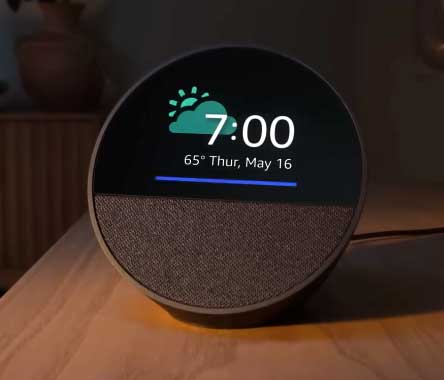
Based on extensive data, the full-sized Amazon Echo is the powerhouse of the lineup.
Users who buy this model are usually looking for a device that can genuinely entertain guests or serve as the brain of a complex smart home.
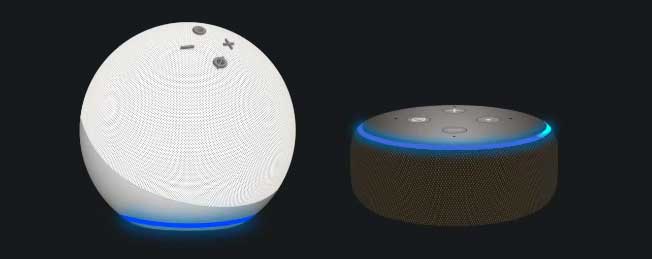
Because it packs a dedicated woofer and tweeters into its larger spherical shell, it produces a surprisingly rich, deep sound that easily fills a living room or a large kitchen.
Furthermore, the built-in Zigbee hub means you can connect many smart lights and locks directly to the speaker without needing to buy extra third-party bridges.
Pros Of Amazon Echo
- Superior Audio Quality: Featuring a 3.0-inch woofer and dual tweeters, the full-sized Echo delivers deep bass, clear vocals, and a wide soundstage. It is a legitimate standalone music speaker that can power a small party.
- Built-In Smart Home Hub: The integrated Zigbee and Matter radios allow you to directly pair compatible smart home devices (like Philips Hue bulbs or smart locks) locally, bypassing the need for extra clutter on your router.
- Advanced Processing Speed: Equipped with more robust internal processors, the full-sized Echo often processes complex Alexa commands and localized smart home triggers noticeably faster.
- Audio In/Out Versatility: It retains a 3.5mm audio jack, allowing you to connect it to an even larger, traditional stereo system or plug in external audio sources.

Cons Of Amazon Echo
- Noticeably Bulky Footprint: The 5.7-inch spherical design takes up a significant amount of space. It can look awkward on a small bedside table or a cramped kitchen counter.
- Higher Price Tag: At roughly double the cost of the Dot, it requires a larger upfront investment, making it expensive if you want to put one in every single room of your house.
Also read: My Thoughts on Gunnar Optik Glasses
Maintenance Tips For Amazon Echo
- Keep It Away From Walls: To prevent the heavy bass frequencies from sounding muddy or distorted, ensure you place the speaker at least six inches away from walls or tight corners.
- Dust The Fabric Carefully: The acoustic fabric cover easily traps dust and pet hair. Gently run a lint roller or a dry microfiber cloth over the exterior weekly to keep it looking clean.
- Reboot For Connectivity Issues: If Alexa starts responding slowly or loses connection to your smart lights, simply unplug the device from the wall for 30 seconds and plug it back in to clear its temporary cache.
My Analysis of the Amazon Echo Dot
The Echo Dot is Amazon’s undisputed bestseller for a reason: it is incredibly accessible. Data shows that users love the Dot because it allows them to put Alexa in places where a large speaker wouldn’t make sense—like a bathroom, a home office desk, or a child’s bedroom. While it entirely lacks the booming bass of its bigger sibling, it still features the exact same Alexa intelligence, motion detection, and temperature sensors. It is the perfect entry-level device for setting timers, listening to podcasts, or controlling Wi-Fi smart plugs.
Pros Of Amazon Echo Dot
- Incredibly Budget-Friendly: At half the price of the standard Echo (and frequently discounted during sales events), it is highly affordable to buy multiple Dots to create a whole-home intercom system.
- Compact and Unobtrusive: The smaller 3.9-inch footprint allows it to blend seamlessly into the background. It fits perfectly on crowded nightstands, bathroom shelves, or narrow windowsills.
- Eero Wi-Fi Extension: If you own an Amazon Eero mesh router system, the newer Echo Dots can act as network nodes, effortlessly adding up to 1,000 square feet of Wi-Fi coverage to dead zones in your home.
- Helpful Built-in Sensors: Despite its size, it includes temperature and motion sensors, allowing you to create smart routines (e.g., “Turn on the desk fan if the room gets above 75 degrees”).
Cons Of Amazon Echo Dot
- Basic Audio Performance: The single 1.73-inch speaker is tuned heavily for vocal clarity. While great for podcasts and news, music sounds flat, thin, and lacks any meaningful bass response.
- No Built-In Zigbee Hub: If you want to use specialized smart home gadgets that require a Zigbee connection, the Dot cannot connect to them directly; you will need to buy a separate hub.
- Lacks an Audio Jack: Newer generations of the Echo Dot have completely removed the 3.5mm audio port, meaning you cannot physically wire it to a better set of speakers.
Maintenance Tips For Amazon Echo Dot
- Keep Away From Moisture: Despite being popular for bathroom countertops, the Echo Dot is not water-resistant. Keep it far away from sinks and showers to prevent internal corrosion from steam.
- Mute During Parties: If you have a house full of loud guests or a TV playing nearby, the smaller microphone array might struggle to isolate your voice. Use the physical mute button on top to stop accidental wake-word triggers.
- Factory Reset For Trade-Ins: If you ever decide to upgrade to a bigger speaker, hold down the Action button for 25 seconds until the light ring pulses orange to completely wipe your personal Amazon data before selling it.
Comparison With Other Brands
- Echo vs. Google Nest Audio / Nest Mini: Amazon’s Echo devices generally offer wider out-of-the-box compatibility with thousands of third-party smart home brands. However, Google Nest speakers (powered by Google Assistant) are often considered superior at answering obscure trivia questions and understanding natural, conversational context.
- Echo vs. Apple HomePod Mini: The Echo Dot is significantly cheaper than the $99 Apple HomePod Mini. However, the HomePod Mini offers vastly superior sound quality for its small size. The Echo lineup is best if you use a mix of Android, Windows, and Apple devices, whereas the HomePod is strictly locked into the Apple ecosystem.
- Echo vs. Sonos: If you are an absolute audiophile, neither the standard Echo nor the Dot will beat a dedicated Sonos speaker (like the Era 100). Sonos offers premium acoustic engineering, though Amazon does offer the high-end “Echo Studio” to try and compete in that space.
Read more: My Thoughts on Roku Streambar Pro
Frequently Asked Questions (FAQ)
The main differences are sound quality, size, and smart home capabilities. The Echo is larger, sounds significantly better with deeper bass, and includes a built-in smart hub for Zigbee devices. The Echo Dot is smaller, cheaper, has basic sound quality, and relies solely on your Wi-Fi network.
No, you do not need a paid subscription to use the basic features of Alexa, such as asking questions, setting timers, or controlling smart home devices. However, to stream specific ad-free music, you may need a subscription to services like Amazon Music Unlimited or Spotify Premium.
Yes, absolutely. You can place an Echo in your living room and an Echo Dot in your bedroom. You can use them as an intercom system to “drop in” on other rooms, or sync them together to play the exact same music throughout your entire house simultaneously.
The full-sized Amazon Echo is vastly superior for music. Its dedicated woofer and dual tweeters provide a rich, dynamic audio experience. The Echo Dot is best reserved for spoken-word content like audiobooks, the news, or casual background music.
Conclusion
Choosing between the Amazon Echo and the Echo Dot comes down to what you value most for the specific room you are furnishing. If you want a primary speaker for your kitchen or living room that makes your favorite playlists sound great, and you want to build a robust smart home without extra clutter, the full-sized Amazon Echo is easily worth the higher price.
Conversely, if you just want a cheap, compact way to set alarms, check the weather, and control your lights from your bedroom or office, the Echo Dot is an unbeatable value.
Recent Posts
● Interactive 5-Zone Interior & Exterior Paint Blueprint Paint Coverage Calculator: Gallons, Primer, Square Footage & Cost Tap any architectural surface zone on the blueprint...
If you want smooth, shiny hair without spending a fortune on a premium styling tool, the Ella Bella hair dryer may be worth considering.In these Ella Bella hair dryer reviews, I’ll look...