
I’ve used plenty of cutting boards, but the Apex Titanium Cutting Board caught my attention because it takes a very different approach to everyday food preparation.
Its titanium construction promises durability, easy cleaning, and a surface that doesn’t behave like traditional wood or plastic.
After considering how it performs for chopping, slicing, and general kitchen prep, I think it’s worth buying if you want a long-lasting, low-maintenance cutting surface and don’t mind a firmer cutting feel.
My First Experience With The Apex Titanium Cutting Board
When I first started using the Apex Titanium Cutting Board, the biggest thing I noticed was how solid it felt.
It doesn’t have the softer, slightly flexible sensation you get from plastic, nor does it have the warm texture of a wooden board. Instead, the surface feels firm and substantial under the knife.
For everyday preparation, that firmness can be convenient. I could move the board around the counter, chop vegetables, slice meat, and prepare ingredients without feeling like the surface was going to flex underneath me.
That gave me a sense of stability, especially when working with larger ingredients.
Cleaning was another area where I appreciated the design. After preparing food, I didn’t have to spend much time worrying about food particles getting trapped in a porous surface.
A thorough wash made the board ready for the next task. For someone like me who doesn’t want kitchen cleanup to become another project, that’s a meaningful advantage.
I also liked the fact that titanium has a reputation for being highly durable and resistant to corrosion.
A cutting board is something I use repeatedly, so I prefer a product that can handle frequent washing without looking worn out after a short period.
That said, the experience isn’t identical to cutting on wood. The hard surface produces a noticeably different feel beneath the knife. If you love the traditional sensation of a quality wooden cutting board, you may need some adjustment.
For me, the Apex Titanium Cutting Board makes the most sense as a practical, easy-to-clean kitchen tool. It feels more focused on durability and hygiene-friendly maintenance than traditional kitchen aesthetics.
Pros Of The Apex Titanium Cutting Board
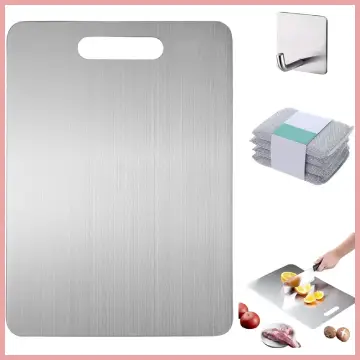
- Extremely Durable Construction
Durability is probably the strongest reason I would consider buying this type of cutting board.
Titanium is a tough material, and a properly made titanium board can withstand repeated kitchen use without behaving like a fragile household accessory.
I like kitchen products that I can use regularly without constantly worrying about scratches, warping, swelling, or general deterioration.
Wood can eventually show knife marks and may require conditioning. Plastic can develop deep cuts and discoloration.
Titanium approaches the problem from a completely different direction.
If you prepare food every day, durability becomes more important. You’re not buying a decorative board that sits on the counter.
You’re buying a tool that receives repeated impact from knives, moisture, ingredients, and cleaning.
- Easy to Clean
I find easy cleanup particularly valuable after preparing raw proteins. A cutting board needs proper cleaning, and I prefer a surface that doesn’t make that process unnecessarily complicated.
The nonporous nature of titanium is appealing because it doesn’t absorb liquids in the same way some natural materials can. After chopping messy ingredients, I can focus on washing the surface thoroughly instead of worrying about what may have soaked into the board.
For busy households, this convenience adds up quickly.
- Resistant to Moisture and Corrosion
A cutting board spends plenty of time around water. Between rinsing, washing, and food preparation, moisture is unavoidable.
Titanium is naturally resistant to corrosion, which makes it an interesting material for kitchen applications. I don’t have the same concern about moisture-related deterioration that I might have with certain wooden products.
That makes it particularly attractive if you want a board that can tolerate frequent cleaning.
- Doesn’t Easily Hold Food Odors
Some ingredients have strong aromas. Garlic, onions, fish, spices, and certain meats can leave noticeable smells behind on kitchen surfaces.
A nonporous titanium surface is appealing when you want to minimize lingering odors. I find this especially useful if I’m switching between different types of food during the same cooking session.
You don’t want yesterday’s fish smell influencing today’s fruit preparation.
- Stain Resistance
Brightly colored ingredients can leave marks on certain cutting boards. Tomatoes, berries, turmeric, sauces, and other foods can make a board look older than it really is.
Titanium offers a clean-looking alternative because its surface doesn’t absorb food pigments like porous materials can.
For me, that means less time worrying about appearance and more time using the board.
- Stable Cutting Surface
When I’m chopping quickly, I want my cutting board to remain stable. A rigid board can provide a dependable platform when placed on a suitable countertop.
That stability is particularly useful when slicing vegetables into uniform pieces or handling larger cuts of meat.
I still recommend using a secure, nonslip setup because any cutting board can move on a smooth countertop if there isn’t enough friction.
- Low Maintenance
Another advantage is the reduced maintenance compared with traditional wooden boards.
Wood can require occasional oiling and conditioning. Some boards need extra attention after exposure to moisture. Titanium is much simpler from a maintenance perspective.
If you prefer kitchen equipment that works without demanding a lengthy care routine, this characteristic can be very appealing.
- Long-Term Value
A cutting board that lasts for years can provide better value than repeatedly replacing cheaper boards.
I’m not saying titanium is automatically the right financial choice for everyone. The initial cost matters. But if you use your cutting board constantly and want something designed around durability, the long service life can justify considering it.
Cons Of The Apex Titanium Cutting Board
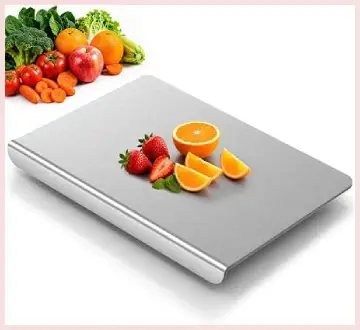
- The Hard Surface May Not Suit Every Knife
This is the biggest consideration I would keep in mind.
Titanium is hard, and knives interact differently with hard surfaces than they do with traditional wood or softer cutting materials.
If you have expensive chef’s knives and care deeply about maintaining their edges, you should think carefully about the surface you want to use every day.
I wouldn’t automatically assume that a titanium board is the perfect match for every knife in your kitchen.
- Different Cutting Feel
If you’ve spent years using wooden cutting boards, titanium feels different.
Wood has a familiar tactile quality. Titanium feels more rigid and industrial. Some people will love that firmness, while others may find it less comfortable.
For me, this is more of a preference issue than a fundamental problem.
- Less Traditional Appearance
A beautiful wooden cutting board can double as servingware. You can take it directly from the kitchen to the dining table and create a rustic presentation.
A titanium cutting board has a more functional appearance. It looks like a serious kitchen tool rather than a decorative centerpiece.
That may be exactly what you want, but it’s worth considering.
- Hardness Can Change Knife Maintenance
If you regularly sharpen premium knives, I would pay attention to how your blades behave over time. The board itself may remain in excellent condition while your knives require more frequent attention depending on how you use them.
That’s why I wouldn’t purchase a titanium cutting board solely because it is durable. Your knife collection matters too.
- Weight and Handling
Depending on the specific construction and thickness, a metal cutting board can feel different from a lightweight plastic board.
If you frequently move your cutting board from one side of the kitchen to another, weight and handling should be part of your decision.
Maintenance For Apex Titanium Cutting Board
- Wash It After Every Use
I always recommend washing a cutting board promptly after preparing food. Don’t let meat juices, sauces, or food particles sit on the surface longer than necessary.
Use warm water and an appropriate dishwashing soap, then rinse thoroughly. This simple habit keeps the board ready for your next meal.
- Pay Extra Attention After Raw Meat
Whenever I prepare chicken, beef, pork, or seafood, I treat cleanup more seriously.
Wash the entire surface rather than only the area where the food touched. Pay attention to corners and edges, especially if the board has grooves, seams, or other design features.
- Dry the Board Properly
Even though titanium is highly resistant to corrosion, I still prefer drying kitchen equipment after washing it.
A clean towel can remove residual water and prevent unnecessary moisture from remaining on your countertop.
- Avoid Leaving Food Residue Overnight
I wouldn’t leave chopped vegetables, meat juices, or sauces sitting on the board until morning.
Cleaning immediately is easier than dealing with dried-on residue later. It also keeps your kitchen workflow cleaner.
- Use Appropriate Knives
This is where I would be particularly careful.
If you use premium knives, consider how their edges interact with a hard cutting surface. Keep your knives properly sharpened and use controlled cutting movements rather than striking aggressively against the board.
You want the knife doing the work, not brute force.
- Don’t Use the Board as a General Work Surface
A cutting board should remain a cutting board.
I wouldn’t use it as a platform for opening packages, hammering objects, handling non-food materials, or performing tasks that could introduce contamination or damage.
Keeping it dedicated to food preparation makes more sense.
- Store It in a Clean, Dry Place
When I’m finished using a cutting board, I prefer storing it somewhere clean and dry.
If you stack it with other kitchen equipment, make sure it has adequate space to dry completely before storage.
- Inspect It Regularly
Even a durable board deserves occasional inspection.
Look at the surface, edges, and any attachments or feet. If something becomes loose, damaged, or difficult to clean, address it before continuing regular use.
- Apex Titanium Cutting Board for Meat Preparation
I can see why meat preparation is one of the more appealing uses for a titanium cutting board.
When I work with raw meat, I want a surface that is straightforward to clean afterward. Chicken, fish, and other proteins can create juices that I don’t want lingering in kitchen materials.
The nonporous nature of titanium makes the cleanup process attractive. After cutting, I can thoroughly wash the board rather than worrying about moisture soaking into a wooden surface.
Still, the board doesn’t replace good food-safety habits. I would always wash my hands, clean utensils, prevent cross-contamination, and properly sanitize the work area when appropriate.
The material can make cleaning easier, but safe food handling still depends on how you use the entire kitchen.
- Apex Titanium Cutting Board for Vegetables
For vegetables, the board feels particularly convenient.
I can chop carrots, onions, peppers, potatoes, tomatoes, and herbs without worrying much about staining. The firm surface also gives me a predictable base for repetitive chopping.
If you cook large meals, this can make preparation feel more organized. You can chop one ingredient, move it to a bowl, quickly clean the surface, and continue.
I also like the fact that strong-smelling vegetables are less likely to become a long-term concern when the surface is properly cleaned.
- Apex Titanium Cutting Board for Everyday Cooking
For everyday cooking, I think the value comes down to your priorities.
If you want a traditional board that feels warm, natural, and forgiving beneath a knife, wood may remain your preference.
If you want something lightweight and inexpensive, plastic may be more convenient.
But if your priorities are durability, easy cleaning, moisture resistance, and a low-maintenance surface, titanium becomes an interesting alternative.
That’s the category where I think the Apex Titanium Cutting Board makes the most sense.
Comparing Of Apex Titanium With Other Cutting Board
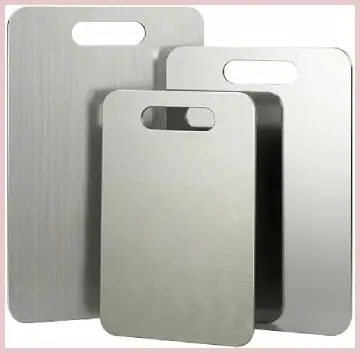
- Apex Titanium Vs Wooden Cutting Boards
Wooden cutting boards have a timeless appeal. I enjoy their natural appearance and comfortable cutting sensation.
They can also be excellent kitchen tools when properly maintained. However, wood typically needs more attention.
Depending on the material and construction, it may require drying, conditioning, and careful handling around moisture.
The Apex Titanium Cutting Board takes a lower-maintenance approach. It sacrifices some of the traditional character of wood in exchange for a more modern, rigid surface.
For someone like me who values convenience, that difference matters.
- Comparing Apex Titanium Vs Plastic Cutting Boards
Plastic boards are popular because they are generally affordable, lightweight, and easy to replace.
I like plastic when I need a simple work surface without worrying too much about cost. However, repeated knife cuts can create grooves over time.
Those grooves can make a board harder to clean thoroughly once they become deep enough.
A titanium board is positioned toward durability rather than low initial cost. I would choose between them based on whether you prioritize long-term construction or simple affordability.
- Comparing Apex Titanium Vs Bamboo Cutting Boards
Bamboo provides a nice middle ground between natural appearance and practical kitchen use.
It is often lighter and more affordable than premium hardwood, while still offering an attractive look.
However, bamboo remains a natural material that requires sensible care around moisture.
The Apex Titanium Cutting Board is more focused on resistance and minimal maintenance. If you don’t want to think about conditioning or moisture-related issues, titanium may better match your habits.
Is the Apex Titanium Cutting Board Worth Buying?
For me, the answer depends on what you expect from a cutting board.
I would consider buying it if durability, simple cleaning, stain resistance, and low maintenance are high on your list.
I would think twice if you have delicate or premium knives and strongly prefer a softer traditional cutting surface.
The most important thing is to match the board with your cooking habits. A product can have impressive material properties and still not be the right fit for every kitchen.
Who Should Consider The Apex Titanium Cutting Board?
I think it is particularly interesting for people who cook frequently and want a board that can handle repeated use.
It can also appeal to people who dislike maintaining wooden boards or replacing plastic boards after they become heavily marked.
If you prepare meat regularly, the easy-clean surface may be another reason to consider it.
On the other hand, traditionalists who love wooden boards may not find the same enjoyment from a metal surface.
Also Read: Is Tivano Cutting Board Worth It?
Frequently Asked Questions (FAQ)
There isn’t one universally best brand. Compare construction, dimensions, surface finish, durability, knife compatibility, and cleaning requirements before choosing.
Yes. Their hard surface can provide a different cutting feel and may not be ideal for every knife, especially if maintaining a particular edge is important to you.
Gordon Ramsay has used and recommended different kitchen tools in various settings, so there isn’t a single cutting board that should be treated as his universal choice.
There isn’t one universally healthiest material. Proper cleaning, food separation, and regular replacement when a board becomes deeply damaged are more important factors.
Final Verdict
After looking at the Apex Titanium Cutting Board from a practical kitchen perspective, I see it as a durable, low-maintenance alternative to conventional cutting boards.
I like its resistance to moisture, easy cleanup, and sturdy construction, although the hard surface may not suit every knife user.
If you want a modern cutting board built around longevity and convenience, I think the Apex Titanium Cutting Board is worth buying and adding to your kitchen setup.
Recent Posts
● Interactive 5-Zone Interior & Exterior Paint Blueprint Paint Coverage Calculator: Gallons, Primer, Square Footage & Cost Tap any architectural surface zone on the blueprint...
If you want smooth, shiny hair without spending a fortune on a premium styling tool, the Ella Bella hair dryer may be worth considering.In these Ella Bella hair dryer reviews, I’ll look...