
I’ve spent months testing countertop reverse osmosis systems in my own kitchen. I filled tanks. I swapped filters. I tasted results. I tracked every gallon of waste water.
My goal here is simple. I give you a clear honest side-by-side look at AquaTru and Bluevua.
You can decide which one fits your daily water needs. Budget matters. Counter space matters. Marketing fog stays away.
| Feature | AquaTru | Bluevua |
| Filtration stages | 4-stage RO (optional alkaline) | 5–6 stage RO (UV + remineralization options) |
| Certifications | IAPMO/NSF 42, 53, 58, 401 (80+ contaminants) | WQA and component-level (NSF 58 membrane common) |
| Wastewater ratio | Roughly 4:1 pure-to-waste (highly efficient) | Roughly 2:1 to 3:1 |
| Storage | 0.75 gal plastic tank or glass carafe models | Glass carafe (approx. 1.7 L) |
| Unique extras | Optional Wi-Fi monitoring, alkaline boost | Built-in TDS display, UV sterilization, remineralization standard on many models |
| Approx. price | $350–$500 | $200–$350 |
| Annual filter cost | $100–$120 | $80–$150 |
| Power needed | Yes | Yes |
| Setup | Plug-and-play, no plumbing | Plug-and-play, no plumbing |
Key Differences Between AquaTru And Bluevua
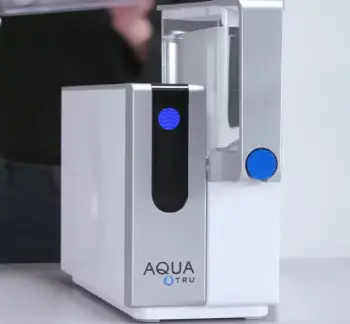
- Certification depth: AquaTru carries full system-level IAPMO certification to multiple NSF/ANSI standards.
Those standards cover more than eighty contaminants. Bluevua relies more on WQA ratings. It also uses individual component certifications.
The difference appears when you seek documented proof. Strong lab claims alone do not match verified listings.
- Water efficiency: AquaTru wastes noticeably less water per gallon of pure output.
Bluevua’s ratio sits closer to typical countertop RO performance.
You pour more water down the drain over time with Bluevua. Daily use multiplies the gap.
- Storage material and style: Bluevua ships with a borosilicate glass carafe as standard. Water stays away from plastic.
The carafe looks cleaner on the counter. AquaTru offers both plastic tank versions and glass carafe versions. The classic model still uses plastic for the main reservoir.
- Built-in extras: Bluevua often includes UV sterilization. It also includes a remineralization stage right out of the box.
A real-time TDS meter comes standard on popular models. AquaTru keeps the core filtration tighter. It sells the alkaline filter as a separate add-on.
- Price and long-term cost: Bluevua wins the initial sticker price. AquaTru usually costs less per gallon after you factor in filter life.
Lower waste further improves AquaTru’s long-term numbers.
Key Features Of AquaTru
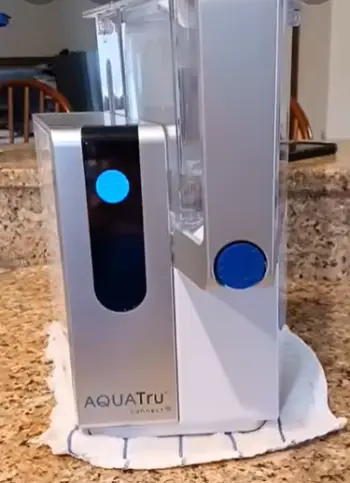
- Four-stage reverse osmosis process: The system uses a sediment pre-filter. Next comes a carbon block. The RO membrane follows.
A final carbon polish completes the sequence. The membrane handles the heavy lifting on dissolved solids. It also targets metals and many organic compounds.
- Strong independent verification: IAPMO testing backs reduction claims for lead. It covers PFAS compounds.
Fluoride reduction appears on the list. Chromium-6, arsenic, nitrates receive the same verification.
Independent lab panels show near-complete removal of common municipal contaminants.
- Efficient pure-to-waste ratio: Many users report roughly four gallons of purified water for every gallon of wastewater.
That efficiency adds up with daily runs. Utility bills reflect the savings. Environmental impact shrinks as well.
- Simple plug-and-play design: You fill the dirty-water tank. You plug the unit in. You press a button.
No under-sink drilling occurs. No permanent plumbing is required. The unit sits on the counter. It processes batches in about ten to fifteen minutes for a full clean tank.
- Optional upgrades: An alkaline remineralization filter is available. A Wi-Fi version tracks filter life. It also monitors water quality through an app.
These features remain optional. Core performance stays solid without them.
- Filter replacement schedule: Pre-filters and carbon filters need attention every six to twelve months. The RO membrane lasts about two years.
Annual cost stays predictable. Average household use keeps the figure near one hundred dollars.
Pros Of AquaTru
- Highest confidence in contaminant removal: Independent tests line up with the official performance data sheet. You know exactly what the system has been verified to reduce. This matters if your water report lists PFAS. Lead concerns also favor this strength. Fluoride presence receives the same benefit.
- Lower ongoing water waste: The efficient ratio means less water goes down the drain every cycle. A year of daily use makes the difference noticeable. Utility bills improve. Environmental impact shrinks.
- Established track record: The brand has refined countertop RO for more than a decade. Support stays consistent. Filter availability remains steady. User feedback follows the same pattern.
- Predictable long-term cost: Filter packs carry reasonable prices. They last as claimed under normal conditions. Cost per gallon stays low. Many competitors charge more over time.
- Clean modern design options: The classic tank model looks intentional. Glass carafe versions also look intentional on a kitchen counter. Temporary lab equipment appearance never appears.
Cons Of AquaTru
- Higher upfront price: You pay more at purchase than for the Bluevua equivalent. The gap feels large if budget drives the decision. Long-term savings later offset part of the difference.
- Plastic tank on the base model: Preference for water that never touches plastic requires the glass carafe version. An external glass container also solves the issue. The classic model sticks with plastic.
- Batch processing limits capacity: The clean tank holds about three-quarters of a gallon. Larger households refill more often. Waiting periods increase with higher demand.
- Pump noise during cycles: The unit is not silent while purifying. Most people run it while away from the kitchen. The sound remains noticeable during active cycles.
Optional extras cost more: Remineralization adds to the total. Smart features raise the price further. Core performance does not require them.
Key Features Of Bluevua
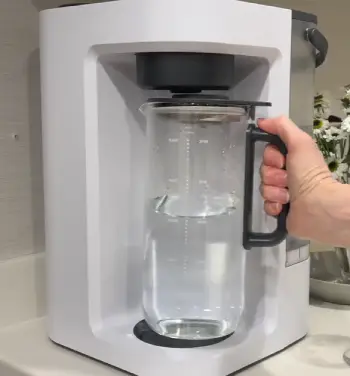
- Multi-stage filtration with extras: Most popular models run five or six stages. Stages include sediment. Carbon appears next.
The RO membrane follows. Post-carbon comes after. Optional UV adds a layer. A remineralization cartridge finishes the set.
Extra stages aim to improve taste. They also add a final microbial barrier.
- Glass carafe storage: Finished water sits in borosilicate glass. Plastic contact never happens. You lift the carafe straight to the table.
You can also place it in the fridge. Plastic taste stays absent. Leaching risks disappear.
- Real-time TDS monitoring: A digital display shows incoming total dissolved solids. It also shows outgoing levels.
Immediate feedback confirms the system works. Filter attention timing becomes clearer.
- Built-in remineralization: Many versions restore some calcium. Magnesium returns as well after the RO stage.
The water tastes less flat than pure RO output. People who notice mineral differences often prefer this result.
- Compact footprint options: The overall shape resembles a coffee maker. It fits tighter counter spaces better than bulkier units. An outlet is still required. Room to lift tanks remains necessary.
- Filter life indicators: Side-access filters twist in. They also twist out. The unit prompts you when replacements are due. Maintenance stays straightforward. Guesswork drops away.
Pros Of Bluevua
- Lower entry price: Solid RO performance arrives at a lower cost. Glass storage comes included. Extras appear without extra purchases. Trying countertop RO becomes easier. Large commitments stay unnecessary.
- Glass carafe standard: Finished water never contacts plastic. The carafe looks attractive enough for table use. Fridge storage works the same way.
- UV and remineralization included on many models: These stages address taste concerns. Microbial concerns receive attention as well. Extra purchases remain unnecessary for these benefits.
- Helpful digital display: TDS numbers drop in real time. Confidence builds with each reading. Filter timing becomes simpler.
- Competitive filter costs: Annual replacements stay in a similar range to AquaTru. Some sets cost a bit less. Exact packages determine the final figure.
Cons Of Bluevua
- Less comprehensive system certification: WQA ratings provide useful information. Component certifications add value. They do not cover the same breadth of contaminants. Independent rigor falls short of AquaTru’s IAPMO listings.
- Higher wastewater ratio: More water is discarded per gallon of pure output. High-use homes notice the increase. Long-term waste totals grow.
- Smaller clean-water capacity: The glass carafe holds less than AquaTru’s tank on some models. Frequent refills become part of the routine. Larger households feel the limit first.
- Newer brand presence: Support remains solid through major retailers. Long-term filter availability follows the same path. The company holds a shorter public track record.
- Footprint still matters: Even the more compact versions need dedicated counter space. An outlet is required. Tight kitchens notice the difference.
Real-World Performance And Daily Use?
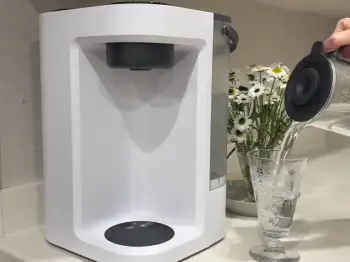
I first set both units side by side. Differences appeared in small consistent ways. AquaTru’s filtration cycle felt slower on pure volume.
The pure-to-waste math favored it every time I measured. Bluevua finished a batch faster. The glass carafe made pouring more pleasant.
Taste tests stayed close. Both removed chlorine notes. Metallic notes disappeared from my municipal supply.
Bluevua water carried a slightly fuller mouthfeel with a fresh remineralization cartridge. AquaTru water tasted cleaner. It also tasted flatter until the optional mineral filter was added.
Maintenance proved simple on both. Filters twist into place. Tools stay unnecessary. I kept a small notebook of replacement dates.
TDS readings went into the same notebook. AquaTru’s membrane held performance longer between changes.
Bluevua’s display made rising numbers obvious. Neither system leaked. Power-on failures never occurred during the months of use.
Counter space acts as the quiet deal-breaker for many people. Measure available area before ordering. Both units match the size of a large coffee maker. Crowded kitchens favor the more compact Bluevua shape. The classic AquaTru tank takes more room.
Who Should Choose Which?
Verified reduction of a long contaminant list sits at the top of some priority lists. AquaTru becomes the safer pick in those cases.
Certifications reward the higher purchase price. Efficient water use does the same over years of daily drinking. Families with young children often land here.
Households on well water with documented metals follow the same path. Anyone seeking the strongest paper trail chooses the same way.
Glass storage appeals to other buyers. A lower starting price matters to them. UV serves as insurance. Remineralized taste arrives right away.
Bluevua makes strong sense for those needs. Renters often prefer it. Apartment dwellers follow the same preference.
Aesthetics matter to this group. Simplicity ranks high as well. The trade-off involves a slightly higher waste ratio. Less extensive independent certification data comes with the choice.
Neither system replaces proper source-water testing. A current water report helps. A home test kit works too. You learn which contaminants matter in your location. Both units handle common municipal threats well. Lifestyle fit then decides the outcome. Budget decides the outcome as well.
Long-Term Ownership Considerations
Filter availability stays good for both brands. Major online retailers stock them. Shipping times stay short in most regions.
Warranty coverage is typically one year. Some retailers offer extended protection. Electricity use remains modest. Both units run only while purifying. Power bill impact stays small.
Noise levels match closely. The RO pump creates the main sound. Running cycles overnight solves most annoyance.
Leaving the house during cycles works the same way. Cleaning stays straightforward. Wipe the exterior. Rinse the tanks or carafe. Follow the manufacturer’s flush schedule after filter changes.
Five-year total cost of ownership favors AquaTru in most scenarios. Lower waste drives the advantage. Solid filter longevity adds to it. Bluevua stays competitive. Glass carafe value matters to some. Included extras matter enough to accept higher water use.
Also Read: Comparison Of SimPure And AquaTru
Frequently Asked Questions (FAQ)
It ranks among the top countertop options for certified contaminant reduction. Efficiency ranks high as well. Best status depends on specific water conditions. Priorities also decide the answer.
Yes. It delivers solid performance. Glass storage comes included. Useful features appear at a competitive price. User feedback on ease of use stays strong.
No single unit wins for everyone. Countertop models excel for renters. Simple installs favor them. Under-sink systems suit permanent homes. Higher volume needs favor those systems.
Rankings shift with new testing. AquaTru often leads certified countertop RO lists. Bluevua competes strongly on value. Design strength supports Bluevua as well.
Wrapping Up
After living with both systems I can say the decision comes down to Tuesday morning needs. You just want a glass of clean water.
AquaTru gives the strongest verification. Thriftiest water use comes with it. Bluevua gives glass storage.
Extras arrive with a friendlier price. Either one leaves tap water tasting better. Testing results improve as well. Measure your space.
Check your water report. Pick the unit that matches daily life. Clean water should not feel complicated. Both systems deliver on that promise once the right choice is made.
Recent Posts
I spent months comparing budget options against established names after my last set of tires wore out sooner than expected.My goal here is to share what I learned from putting Dextero and...
AquaTru Carafe Vs. Classic: Which Is Actually Fits Your Kitchen?
I decided to write this comparison after months of testing both the AquaTru Carafe and the Classic in my own kitchen. Tracking covered daily use.Taste stayed consistent. Refill frequency...