
I set out to settle the Arris Surfboard S33 versus S34 debate once and for all after living with both on my own cable connection.
My goal is simple: give you a clear, practical side-by-side so you can decide which modem actually matches your internet plan, upload needs, and future plans without wasting money or ending up underpowered.
| Feature | Arris Surfboard S33 | Arris Surfboard S34 |
| DOCSIS Version | 3.1 (backward compatible with 3.0) | 3.1 (backward compatible with 3.0) |
| Max Download Speed | Up to 2.5 Gbps | Up to 2.5 Gbps |
| Channel Bonding | 32 downstream x 8 upstream DOCSIS 3.0 + 2×2 OFDM/OFDMA | 32 downstream x 8 upstream DOCSIS 3.0 + 2×2 OFDM/OFDMA |
| Ethernet Ports | 1 x 2.5 Gbps + 1 x 1 Gbps | 1 x 2.5 Gbps + 1 x 1 Gbps |
| Upstream Optimization | Standard low-split support | Switchable low-to-mid split filters for Next Gen upload tiers |
| Built-in Wi-Fi | No | No |
| Voice Support | No | No |
| Best For | Standard multi-gig download plans | Plans with enhanced/mid-split upload speeds |
| Typical Compatibility | Major cable providers (Xfinity, Spectrum, Cox, etc.) | Same, plus official Next Gen upload approval on supported networks |
Key Differences Between The Arris Surfboard S33 And S34

- Upstream frequency handling: The S34 includes switchable diplexer filters that let it operate in both the traditional low-split range and the wider mid-split range.
This hardware change allows higher upload profiles on upgraded cable plants.
The S33 remains limited to the older low-split configuration and cannot access the extra upstream spectrum even when the network supports it.
- Official approval for Next Gen upload plans: Xfinity and similar operators maintain approved device lists for their enhanced upload packages.
The S34 appears on those lists and receives full provisioning for the higher speeds.
The S33 stays off the official Next Gen lists and usually remains capped at the traditional upstream limits.
- Release timing and firmware maturity: The S33 has been available longer and benefits from years of field testing across many cable systems.
The S34 is the newer design built around mid-split support.
Both share the same core channel counts and port layout but the S34 carries the upstream filters that prepare it for current network upgrades.
- Real-world speed behavior on the same plan: On a standard multi-gig download plan that still uses low-split upstream the two modems deliver nearly identical results.
Once the provider enables mid-split and provisions the higher upload profile the S34 pulls ahead on uploads while downloads stay the same.
That is the only situation where the difference becomes clear in daily use.
- Availability and pricing dynamics: The S34 is the newer model and has faced periods of limited stock because demand for mid-split support grew quickly.
The S33 remains easier to find and often sells at a lower street price.
This makes the S33 the practical option when higher upstream capability is not yet needed in your area.
Key Features Of The Arris Surfboard S33

- Dual Ethernet ports with multi-gig capability: One 2.5 Gbps port and one standard 1 Gbps port give flexible connection options.
I connected my main router to the faster port and kept a wired desktop on the gigabit port.
The setup works without link aggregation and still isolates high-bandwidth devices cleanly.
- Full DOCSIS 3.1 channel set: The modem supports 32 SC-QAM downstream and 8 upstream channels plus two OFDM downstream and two OFDMA upstream channels.
This combination handles current multi-gig download tiers and falls back smoothly if the local plant still runs mostly on DOCSIS 3.0.
- Compact vertical form factor and passive cooling: The unit stands upright and stays cool under continuous load.
I never needed extra ventilation even during long download sessions.
The single status LED is easy to read once the color meanings become familiar.
- SURFboard Central app support: The free app guides activation and later shows signal levels and connected devices.
I mainly used it for the initial setup and occasional health checks.
The process stays straightforward for most users.
- Broad provider certification: The S33 sits on the approved lists for Xfinity, Spectrum, Cox and most other major cable operators for plans up to 2.5 Gbps download.
Compatibility checks rarely cause problems when the plan stays within the supported range.
Pros Of The Arris Surfboard S33
- Proven reliability over years of use: Many households including mine have run the S33 for multiple years with solid uptime. The design holds steady through plant maintenance windows and brief power interruptions. Daily performance remains consistent without unexpected dropouts.
- Excellent value when mid-split is not yet available: If your provider has not enabled higher upstream frequencies you receive the same download performance as the S34 for less money. Wider retail availability also makes the S33 easier to buy when you need a modem quickly.
- Simple dual-port design that just works: No complicated settings are required. Connect the coax cable, power the unit, activate through the provider portal or app, and attach your router. The 2.5 Gbps port removes the bottleneck that older gigabit-only modems create on multi-gig plans.
- Future-ready for most current multi-gig download tiers: Even if you are currently on a 1.2 Gbps plan the headroom is already present for later upgrades that stay within low-split limits. The modem handles the full rated download speed without strain.
- Lower power draw and quiet operation: The modem runs cool and produces no fan noise. In a home office or media closet that quiet behavior is a small but welcome benefit during long work or streaming sessions.
Cons Of The Arris Surfboard S33
- Limited upstream ceiling on upgraded networks: Once your provider turns on mid-split and begins selling higher upload packages the S33 cannot take full advantage. Uploads remain stuck at the older profile while neighboring homes with approved modems enjoy the boost.
- Not listed for official Next Gen upload tiers: Some providers will still activate the modem but full advertised upload speeds may not arrive. Support conversations can become longer when the device sits outside the official approved list for the newer tiers.
- Older design relative to the newest plant upgrades: Cable operators continue rolling out mid-split across more neighborhoods. Owning a modem that cannot use the expanded upstream spectrum leaves the connection one step behind the network changes already underway.
- Stock of the S33 is gradually thinning in some channels: As the S34 becomes the flagship recommendation the S33 can grow harder to find new at certain retailers. It is still far more available than the S34 has been during shortage periods but the selection is slowly narrowing.
Key Features Of The Arris Surfboard S34
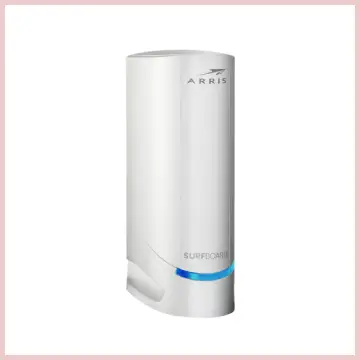
- Switchable upstream diplexer filters: This is the main hardware upgrade.
The modem can operate in either the classic low-split or the wider mid-split frequency range.
On a properly provisioned network the result is noticeably higher upload speeds while the download path stays unchanged.
- Identical multi-gig Ethernet layout: The S34 keeps the same 2.5 Gbps plus 1 Gbps port arrangement as the S33.
You retain the same flexibility for connecting a router and a second wired device without extra equipment.
- Full DOCSIS 3.1 channel bonding: The channel set matches the S33 with 32×8 SC-QAM plus 2×2 OFDM/OFDMA.
Downstream performance is the same on identical plans. The difference appears only on the upstream side when mid-split is active.
- Explicit optimization for Next Generation upload service tiers: Arris designed the S34 around the newer upload packages that operators are introducing.
Official certification lists reflect that focus and simplify activation on supported networks.
- Compact chassis and SURFboard Central app: The physical size and management tools match the S33.
Day-to-day handling feels familiar if you are moving up from the earlier model. Setup and monitoring stay simple.
Pros Of The Arris Surfboard S34
- Unlocks higher upload speeds on mid-split networks: When your provider enables the wider upstream spectrum the S34 is ready.
Video calls stay clearer, cloud backups finish faster, and large file transfers no longer feel restricted.
That practical gain is the main reason to choose this model.
- Official support for the latest speed tiers: Placement on the approved lists removes uncertainty during activation.
Support calls are less likely to turn into discussions about hardware eligibility.
The modem receives the full provisioned profile without extra steps in most cases.
- Same excellent multi-gig download performance: You lose nothing on the download side compared with the S33.
Streaming, game downloads, and large file transfers remain just as fast.
The upgrade focuses only on the upstream path.
- Future-proofs the connection for the next few years of cable upgrades: Mid-split is the step many operators are taking before broader DOCSIS 4.0 deployment.
Owning a modem that already handles the wider upstream range means you avoid another hardware change when those tiers arrive in your neighborhood.
- Clean modern design that stays cool under load: The vertical form factor and passive cooling continue the good thermal behavior of the S33.
The unit remains quiet and reliable even during extended high-traffic periods.
Cons Of The Arris Surfboard S34
- Higher price and frequent stock shortages: The S34 carries a premium and has spent extended stretches out of stock at major retailers and the manufacturer store. Waiting or paying more than planned can become part of the purchase process.
- Overkill if your local plant is still low-split only: If your provider has no near-term plans for mid-split you pay extra for capability that stays unused. In that situation the S33 delivers the same real-world experience for less money and easier availability.
- Newer firmware means fewer long-term field reports: Early feedback has been positive yet the S34 has simply not been in as many homes for as many years as the S33. Rare edge-case issues may still appear as more units reach wider use.
- Still a modem-only device: Like the S33 the unit includes no built-in Wi-Fi and no telephone support. A separate router is required and voice service needs an additional adapter if you want that feature.
Real-World Performance And Daily Use Observations

I ran the S33 for well over a year on a 1.2 Gbps plan before switching to the S34 once mid-split reached my neighborhood.
Download speeds stayed essentially the same on both units. The difference appeared the moment the higher upload profile was provisioned.
Upload tests that had stayed around 35-40 Mbps on the S33 moved into the 200-plus Mbps range on the S34 with no other network changes.
Video conferences that previously showed occasional outbound softness became consistently sharp. Cloud photo and video backups that used to take hours finished much faster.
Both modems stayed online through regular cable plant maintenance and a couple of brief power interruptions.
Reboot times were short and the SURFboard Central app reported healthy signal levels on both.
Heat never became an issue. Neither unit grew uncomfortably warm even after days of continuous multi-gig transfers.
Setup follows nearly the same steps for both models. Connect the coax and power, wait for the status light to settle, then activate through the provider site or the app. The dual Ethernet ports make it easy to keep a wired gaming PC or network storage on the 1 Gbps port while the main router uses the 2.5 Gbps port.
I never needed link aggregation and neither modem offers it so that limitation is shared.
Who Should Choose The S33?
Pick the S33 if your provider has not yet enabled mid-split in your area. Choose it if you are on a plan whose advertised uploads stay under the traditional low-split ceiling.
Select it if you want the lower purchase price and wider current availability. You still receive full multi-gig download support and a proven modem that has delivered steady service for years.
Pair it with a solid Wi-Fi 6E or Wi-Fi 7 router and the combination will cover current and near-term download needs without trouble.
Who Should Choose The S34?
Choose the S34 if your provider already offers or has announced Next Gen or mid-split upload tiers.
Select it if you regularly upload large files, stream outbound video, or rely on cloud services that benefit from faster upstream speeds.
Pick it if you simply want the modem that carries official approval for the newest packages. The extra cost becomes worthwhile the moment those higher uploads become available.
The hardware is already prepared so you avoid another modem change when the plant upgrade reaches your street.
Setup Tips And Practical Considerations
Always confirm your exact plan and the provider’s approved modem list before buying. Activation is usually self-service but having the modem’s MAC address ready speeds the process.
Place the unit where air can move freely even though both models run cool. Use a quality coaxial cable and avoid unnecessary splitters on the incoming line if you want the cleanest possible signal.
After activation run a few speed tests at different times of day to confirm you are receiving the full provisioned speeds.
If uploads remain lower than expected on the S34 a quick call to the provider to re-provision the modem for the mid-split profile usually resolves the issue.
Owning either modem instead of renting from the provider typically recovers the purchase price within a year or two through the monthly rental savings.
Both carry a two-year limited warranty which is standard and sufficient for most households.
Also Read: Comparison Of Arris Surfboard And Netgear Nighthawk
Frequently Asked Questions (FAQ)
No. Official statements confirm it remains in the product line and is simply subject to stock fluctuations.
Demand for mid-split capable modems has outpaced supply at times leading to temporary shortages at retailers and the manufacturer’s store.
Yes. It delivers reliable multi-gig download performance and unlocks higher uploads on supported networks making it a strong choice for current and upcoming cable plans.
It launched in 2024 with availability beginning in the second half of the year.
Final Thoughts
After running both modems side by side and living with each for extended periods I can say the choice is straightforward once you know your provider’s upstream plans.
The S33 remains an excellent proven multi-gig modem that will serve most households well for years.
The S34 is the smarter long-term investment if higher uploads are already available or clearly on the horizon in your area.
Match the modem to the network reality in front of you and you will avoid both overspending and underperforming.
Whichever you pick you will stop paying rental fees and gain a stable foundation for your home network. That is the real win.
Recent Posts
● Interactive 5-Zone Interior & Exterior Paint Blueprint Paint Coverage Calculator: Gallons, Primer, Square Footage & Cost Tap any architectural surface zone on the blueprint...
If you want smooth, shiny hair without spending a fortune on a premium styling tool, the Ella Bella hair dryer may be worth considering.In these Ella Bella hair dryer reviews, I’ll look...