
If you are tired of paying for bottled water, concerned about tap water quality, and looking for a reliable gravity filter that actually delivers clean-tasting water every day, you need to read this comparison of Berkey versus Boroux right now.
I have tested both systems in my own home over several months, and this article shares my real experience so you can figure out which one fits your lifestyle, budget, and kitchen counter better.
Whether you prioritize brand reputation, filter longevity, or getting the most value for your money, one of these two systems is likely the right answer for you.
A Brief Comparison Table
| Feature | Berkey | Boroux |
|---|---|---|
| Price | Premium pricing | More affordable |
| Filter Life | 3,000–6,000 gallons per set | Up to 3,000 gallons per filter |
| Flow Rate | Slower but steady | Comparable gravity flow |
| Filter Type | Black Berkey elements with optional PF-2 | Multi-stage carbon block filters |
| Capacity | 1.5 to 6 gallons | Multiple size options |
| Construction | Stainless steel | Stainless steel |
| Made In USA | No | Yes |
| Fluoride Removal | Yes (with PF-2 add-on) | Yes (with add-on filters) |
| Ease Of Setup | Requires priming | Simple setup |
| Best For | Maximum filtration stages | USA-made value and performance |
My Experience With Berkey
I started with a Berkey because the reputation preceded it in every water quality forum, prepper community, and health-focused household discussion I came across.
The Big Berkey looked genuinely impressive sitting on my kitchen counter — the brushed stainless steel finish communicates quality before you even pour a glass. The water tasted noticeably cleaner and crisper compared to straight tap water from day one, which immediately justified the investment in my mind.
What I didn’t fully anticipate was the weight. Lifting a full upper chamber to refill it is a two-handed job, and in a busy household morning that small inconvenience adds up faster than you’d expect.
The priming process for the Black filter elements caught me off guard during setup. You hold each filter up to a tap and force water through the compressed media, which sounds simple enough but took me a couple of messy attempts before I got it right. Once primed and running, though, the system operated quietly and consistently without much daily attention required.
Flow rate was slower than I expected for a household filtering water for multiple people. Filling the upper chamber before bed and having filtered water ready by morning became my routine, which worked fine once I adjusted my habits.
Replacement filter costs landed harder than I anticipated. The Black elements are rated for thousands of gallons, which sounds impressive, but when the time comes to replace them, the price is significant and they must be replaced in matched pairs regardless of individual wear.
Pros Of Berkey
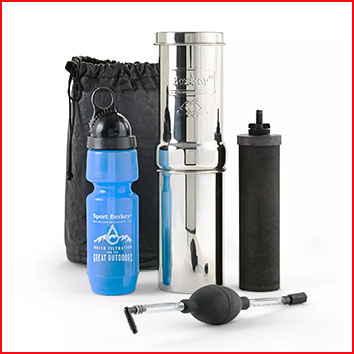
- Removes 200-plus contaminants: The Black filter elements tackle an extraordinary range of substances including viruses, bacteria, heavy metals, chloramines, and pharmaceutical compounds that most gravity filters cannot reach.
- Exceptional filter lifespan: Each pair of Black filters handles up to 6,000 gallons combined — for a typical household, that translates to several years of daily use before replacement is necessary.
- Premium stainless steel construction: The food-grade stainless steel body resists corrosion, avoids plastic odor absorption, and maintains structural integrity over many years of continuous daily use.
- Scalable capacity options: Berkey offers five sizes from the 1.5-gallon Travel Berkey up to the 6-gallon Crown Berkey, covering households of every size and daily water consumption level.
- No electricity or plumbing required: The entire system operates on gravity alone — no power outlet, no tap connection, and no household infrastructure needed to produce clean filtered water consistently.
- Fluoride and arsenic removal available: Adding PF-2 post-filter elements enables removal of fluoride and arsenic, which many competing gravity systems cannot offer at any price point.
- Trusted by preparedness communities: Berkey carries a well-established reputation among off-grid households, well water users, and emergency preparedness communities who need serious filtration depth they can rely on.
- Low long-term cost per gallon: Despite the high upfront price, the extended filter lifespan reduces the per-gallon filtration cost to just a few cents, making Berkey highly efficient over a multi-year ownership period.
Cons Of Berkey
- High upfront purchase price: The Big Berkey starts around $280, and adding PF-2 fluoride filters pushes the total past $450 — a significant barrier for budget-conscious households shopping gravity filter options.
- Regulatory challenges in California: Berkey has faced Prop 65 certification issues that restrict direct sales to California residents, cutting off a large segment of the American market from easy access.
- No remineralization capability: Berkey strips water thoroughly but restores nothing — the result is very clean but flat-tasting water compared to systems that add beneficial minerals back after filtration.
- Priming filters is cumbersome for beginners: First-time users must prime Black elements under tap pressure before installation, a step that frequently confuses new buyers and creates a messy first experience.
- Large and heavy countertop footprint: The stainless steel tower is significantly taller and wider than most alternatives — finding stable, accessible counter space in smaller kitchens is a real logistical challenge.
- No water level visibility: Solid stainless steel tanks make it impossible to check remaining water volume without removing the lid, which becomes genuinely annoying during rushed morning or evening routines.
- Filters must be replaced in matched pairs: Even if only one Black element shows reduced performance, both must be replaced simultaneously — doubling the replacement cost every service cycle regardless of individual filter condition.
Maintenance Tips For Berkey
- Prime every filter before installation: Always prime Black filter elements before first use and after any extended storage period — skipping this step reduces flow rate and delays the system reaching full filtration effectiveness.
- Scrub Black filters every three to four months: Use a clean scotch-brite pad under cold running water to scrub each Black element’s exterior surface — this removes surface sediment buildup and restores proper flow rate quickly.
- Hand wash stainless tanks monthly: Clean both upper and lower chambers with warm water and unscented mild dish soap, then rinse thoroughly — leftover soap residue inside the tank directly affects filtered water taste.
- Run the red dye test after reinstallation: After cleaning or replacing filters, run the food coloring test Berkey recommends — it confirms each filter is seated correctly and no unfiltered water is bypassing the element seal.
- Replace PF-2 fluoride filters on schedule: PF-2 elements have a significantly shorter lifespan than Black filters — replace them every 1,000 gallons or once per year to maintain consistent fluoride and arsenic removal performance.
- Dry filters fully before long-term storage: If taking Berkey offline for an extended period, dry the Black elements completely before packing — moisture trapped inside carbon media during storage creates conditions favorable for mold development.
- Check wing nut tightness every month: The wing nuts securing Black filters to the upper tank base loosen gradually with regular refilling — hand-tighten them monthly to prevent unfiltered water from flowing around the filter seal.
Comparison With Other Brands: Berkey
- Vs. Boroux: Boroux uses stainless steel construction like Berkey and offers USA-made filters at a more accessible price — Berkey wins on brand legacy and virus removal depth, while Boroux wins on affordability and domestic manufacturing.
- Vs. Alexapure Pro: Alexapure uses a similar gravity-fed stainless design and a single filter element rated for 5,000 gallons — it’s a legitimate Berkey competitor at a lower price but lacks Berkey’s multi-decade reputation.
- Vs. ProOne Big-Plus: ProOne holds independent NSF certifications that Berkey lacks and uses a single ceramic-carbon hybrid element — for buyers who prioritize third-party certified filtration, ProOne is a strong alternative to consider.
- Vs. Santevia: Santevia focuses on remineralization and alkaline pH output rather than heavy contaminant removal — Berkey is the stronger choice for purification depth, while Santevia suits mineral-focused everyday drinking water preferences.
- Vs. 4Patriots: 4Patriots offers comparable gravity filtration at a significantly lower upfront price in a lightweight plastic body — Berkey wins on build quality and filter lifespan, 4Patriots wins on daily convenience and cost savings.
My Experience With Boroux
I came across Boroux while looking for an alternative to Berkey after seeing discussions about regulatory issues and rising replacement filter costs in several water quality communities online.
What immediately caught my attention was the Made in USA claim, which Berkey cannot make for its filter elements. For someone who prioritizes domestic manufacturing and wants to support American-made products, that distinction matters more than most brands acknowledge.
Setup was noticeably simpler than Berkey. There was no priming requirement, no messy first-attempt process — I assembled the stainless steel body, dropped in the filters, added water to the upper chamber, and had filtered water flowing within the hour.
The stainless steel construction matches Berkey’s premium feel at a meaningfully lower price point. Sitting side by side on my counter, you would not immediately identify one as the premium system and one as the challenger — they look like equals from across the room.
Water taste was clean, crisp, and consistently good from the first pour. My family noticed no meaningful taste difference between Boroux-filtered water and Berkey-filtered water after a few weeks of parallel testing, which tells you something important about where Boroux actually sits in the gravity filter market.
Flow rate felt comparable to Berkey in my day-to-day experience. I filled the upper chamber each morning and had a full lower tank available by mid-afternoon without any issues keeping up with household demand.
The replacement filter cost is where Boroux genuinely pulls ahead for budget-aware buyers. Keeping the system serviced costs noticeably less than maintaining a Berkey, and the filters are manufactured domestically — which means the supply chain concerns that affected Berkey are less likely to impact Boroux owners.
Read More: Comparison Of Patriot Water Filter Vs. Berkey
Pros Of Boroux
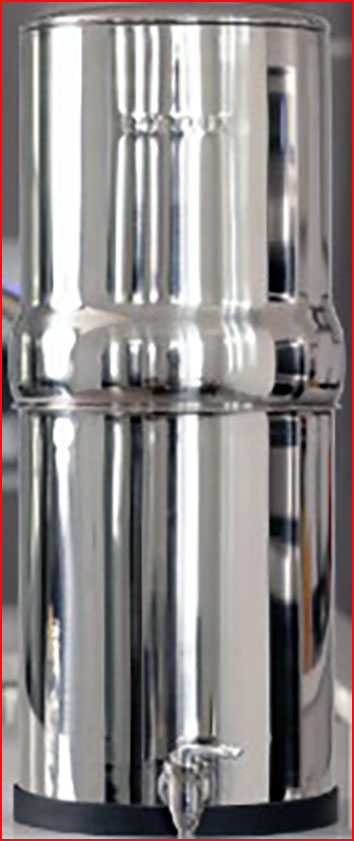
- Made in the USA: Boroux filters are manufactured domestically, which appeals strongly to buyers who prioritize supporting American manufacturing and want supply chain reliability that imported filter systems cannot always guarantee.
- More affordable than Berkey: The upfront system price and ongoing replacement filter costs sit meaningfully below Berkey’s pricing, making quality gravity filtration accessible to a wider range of household budgets.
- Stainless steel construction: Like Berkey, Boroux uses food-grade stainless steel for its body — you get the same premium look, corrosion resistance, and odor-free performance without paying the Berkey premium price.
- No priming required: Boroux filters do not require the cumbersome priming process that trips up many first-time Berkey users — setup is genuinely straightforward from the moment you unbox the system.
- Effective multi-stage filtration: The carbon block filter elements remove a wide range of common contaminants including chlorine, heavy metals, sediment, and other substances that affect daily drinking and cooking water quality.
- Compatible with Berkey systems: Boroux filters are designed to fit Berkey stainless steel housings — existing Berkey owners can switch to Boroux replacement filters as a more affordable ongoing option without buying a new system.
- Cleaner, great-tasting water: Water filtered through the Boroux system tastes noticeably better than unfiltered tap water, and in side-by-side household testing my family detected no meaningful difference compared to Berkey output.
- Domestic supply chain reliability: Because filters are made in the USA, Boroux is less vulnerable to the import disruptions and regulatory complications that have periodically affected Berkey’s filter availability and sales operations.
Cons Of Boroux
- Less established brand recognition: Boroux is a newer, smaller brand compared to Berkey’s decades-long market presence — some buyers find it harder to trust a less familiar name for something as critical as daily drinking water.
- Fewer independent lab test results publicly available: Berkey has more publicly accessible third-party testing documentation — Boroux’s filtration claims are credible but less exhaustively documented in independently verified public formats.
- Smaller product ecosystem: Berkey offers a wide range of accessories, size variants, and add-on filters — Boroux’s product lineup is more limited, which can feel restrictive for buyers who want configuration flexibility.
- Less community and forum support: Because Berkey has a much larger user base, troubleshooting resources, community forums, and peer advice are far more abundant for Berkey owners than for Boroux system users.
- Virus removal claims less established: Berkey’s Black elements are specifically documented for virus removal — Boroux’s equivalent claims have less publicly available independent verification for buyers prioritizing biological contamination protection.
- Limited size options: Boroux does not offer the same broad range of tank sizes as Berkey — households with very high daily water consumption may find the available capacity options less flexible for their specific needs.
- Newer market entrant uncertainty: As a newer brand, Boroux’s long-term customer support, warranty reliability, and parts availability carry slightly more uncertainty than an established brand with a multi-decade service track record.
Maintenance Tips For Boroux
- Replace filters on a consistent schedule: Follow the manufacturer’s recommended replacement timeline based on gallons filtered — tracking your usage keeps filtration performance strong and water taste consistently clean over time.
- Clean the stainless tanks monthly: Hand wash both the upper and lower stainless steel chambers with warm water and mild unscented soap, then rinse completely — residual soap inside the tank affects filtered water flavor noticeably.
- Flush new filters before first use: Run a full upper chamber of water through new filters before consuming the output — this initial flush removes any manufacturing residue and ensures the best possible taste from the very first real use.
- Inspect filter seating after every refill: Periodically check that filter elements are seated firmly and seals are intact — a loose filter allows unfiltered water to bypass the media and reach the lower tank undetected.
- Wipe the exterior weekly: Use a damp microfiber cloth to clean the stainless steel exterior surface — routine wiping prevents water spot buildup and keeps the system looking clean and presentable on your counter.
- Store dry if taking the system offline: If removing Boroux from daily service for travel or extended storage, dry all components thoroughly before packing — moisture left inside the carbon media during storage encourages mold or bacterial growth.
- Monitor flow rate as a filter health indicator: A noticeably slower flow rate is often the first signal that filters are nearing the end of their effective life — catching this early prevents a gradual drop in filtration quality going unnoticed.
Comparison With Other Brands: Boroux
- Vs. Berkey: Berkey carries more brand recognition and documented virus removal capability — Boroux matches on stainless steel build quality and offers USA-made filters at a lower price, making it the stronger value proposition for most daily home users.
- Vs. Alexapure Pro: Alexapure uses a single long-life filter element in a stainless steel body at a competitive price point — both are solid Berkey alternatives, but Boroux’s domestic manufacturing gives it a sourcing advantage Alexapure cannot claim.
- Vs. 4Patriots: 4Patriots uses a lightweight plastic body and targets emergency preparedness buyers — Boroux’s stainless construction and kitchen-ready aesthetics make it the better choice for permanent everyday countertop installation.
- Vs. Santevia: Santevia focuses on alkaline and mineral-rich water through a remineralization stage — Boroux prioritizes contaminant removal without mineral addition, making each system better suited to a distinctly different type of water health priority.
- Vs. ZeroWater: ZeroWater uses a five-stage ion exchange system and measures TDS for purity verification — Boroux offers more practical daily volume capacity and a less maintenance-intensive experience for standard household drinking and cooking water needs.
Also Read: My thoughts on Santevia Vs Berkey
Frequently Asked Questions (FAQ)
Yes, depending on your priorities. Boroux offers comparable stainless steel gravity filtration at a lower price with USA-made filters. ProOne and Alexapure also provide strong alternatives with independent certifications Berkey currently lacks.
Yes. Boroux produces clean, great-tasting water through effective carbon block filtration, uses food-grade stainless steel construction, and offers the added advantage of being manufactured in the United States — making it a genuinely solid everyday gravity filter choice.
Yes. Boroux filter elements are manufactured in the United States, which is a meaningful distinction from Berkey and many other gravity filter brands that source their filter media or components from overseas suppliers.
Several factors have driven this trend — Berkey’s regulatory challenges with the EPA and California’s Prop 65 requirements, rising replacement filter costs, and growing awareness of capable alternatives like Boroux that offer comparable performance at a lower price point.
Conclusion
After months of using both Berkey and Boroux in my home, I can tell you honestly that both systems produce clean, great-tasting water — but they serve buyers with different priorities, and that difference matters when you are spending real money on daily water quality.
Berkey remains the benchmark for gravity filtration reputation, virus removal documentation, and long-term filter lifespan. If you want the most widely recognized name in gravity water filters and are willing to pay a premium for that reassurance, Berkey still earns its position at the top of the category.
Boroux is the smarter everyday choice if you want stainless steel quality, comparable daily filtration performance, and USA-made replacement filters without the Berkey price tag or the regulatory uncertainty that has followed the brand in recent years.
You should choose Berkey if brand legacy, documented virus removal, and maximum filtration stages matter most to you. You should choose Boroux if you want excellent value, domestic manufacturing, and a straightforward setup experience that delivers clean water your family will actually notice and appreciate every single day.
One thought on “Berkey Vs Boroux: Which One Is Better?”
Leave a Reply
Recent Posts
● Interactive 5-Zone Interior & Exterior Paint Blueprint Paint Coverage Calculator: Gallons, Primer, Square Footage & Cost Tap any architectural surface zone on the blueprint...
If you want smooth, shiny hair without spending a fortune on a premium styling tool, the Ella Bella hair dryer may be worth considering.In these Ella Bella hair dryer reviews, I’ll look...
Thank you so much for this honest review and comparison of mainly the Berkey and the Boroux water filtration systems. I have a big Berkey that was given to me (still shocked over this!) several years ago. We used it for a while but it took up too much space in our kitchen, so it has been in storage with plans to use it again eventually. It currently has 4 of the ceramic filters that appear barely used. This Berkey belonged to a friend’s elderly mother who was in a retirement home, so it was not used very much. Can your provide any info on performance of the ceramic filters and how I know when it is time to replace them? I had priced replacement Berkey filters and that scared me into just waiting! I was thrilled to see your comment that the Boroux filters can be used in the Berkey system. When I do replace filters, do I need to use 4 filters, or can I use just 2? I currently live where I have good quality city water, but my fridge has a filter that I utilize for drinking water. I will be moving though and will be on well water. At that time, I plan to use my Berkey. Thank you for your help on this!