
I’ve used both the Santevia and Berkey water filtration systems in my own home, and I’ll tell you upfront — they’re built on completely different philosophies.
Santevia focuses on remineralizing and alkalizing your water, while Berkey is all about heavy-duty contaminant removal. In this article, I’m going to walk you through both systems honestly, covering what works, what doesn’t, and which one actually deserves a spot on your counter.
A Brief Comparison Table: Santevia Vs Berkey
| Feature | Santevia | Berkey |
|---|---|---|
| Filtration Type | Gravity + Remineralization | Gravity + Purification |
| Alkalizing Feature | Yes | No |
| Filter Lifespan | 1 year (approx.) | 3,000 gallons per filter |
| Removes Fluoride | Yes (with mineral stone) | Yes (with add-on PF filters) |
| Contaminants Removed | 80+ contaminants | 200+ contaminants |
| Materials | BPA-free plastic | Stainless steel |
| Tank Capacity | Up to 3.3 gallons | 1.5 to 6 gallons |
| Price Range | $100–$200 | $250–$500+ |
| Replacement Filter Cost | ~$60–$80/year | ~$100 per pair |
| Portability | Moderate | High |
| Certifications | NSF-inspired testing | Independent lab tested |
| Best For | Mineral-rich alkaline water | Maximum contaminant removal |
My Experience With Santevia
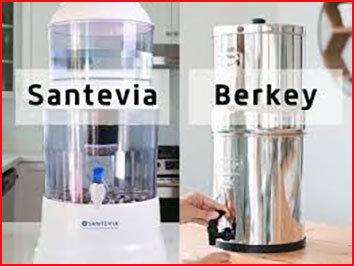
I started using the Santevia gravity water system after I got frustrated with the flat, almost chemical taste of my tap water.
A friend recommended it specifically because of its remineralization feature, which isn’t something you find in most countertop filters.
I was skeptical at first, but after the first week, I noticed a genuine difference in how the water tasted — softer, slightly sweet, and noticeably smoother going down.
The setup process was refreshingly simple. I soaked the mineral stones, assembled the stages, and had it running within about 20 minutes.
The five-stage filtration process — which includes a ceramic filter, activated carbon, mineral stones, and an alkalizing stage — felt thorough without being complicated to manage.
What stands out most about Santevia from a daily use perspective is the mineral stone stage. Rather than simply stripping water down to nothing, Santevia adds calcium, magnesium, and other trace minerals back into the filtered water. For me, that translated to water that didn’t just taste better — it felt better to drink in quantity throughout the day.
The flow rate is slower than I expected, which is the one thing I had to mentally adjust to. It’s a gravity system, so patience is part of the deal. The upper tank takes a while to filter through, and if your household goes through water quickly, you’ll need to refill it more often than you’d like.
The BPA-free plastic construction is clean and functional, though it doesn’t carry the same visual weight as a stainless steel system. It sits quietly on a counter and doesn’t demand attention, which I actually prefer in a kitchen that’s already visually busy.
Read More: My Experience with Insinkerator Hot100 Vs. Hot150
Pros Of Santevia
- Remineralization capability: Santevia actively adds calcium and magnesium back into filtered water, making it one of the few gravity systems that improves mineral content rather than just removing contaminants.
- Alkaline pH output: The mineral stone stage raises water pH naturally, which appeals to users who prioritize alkaline water for taste and daily hydration habits.
- Affordable entry price: At $100 to $200, Santevia is significantly cheaper upfront than Berkey, making it accessible for households on a tighter water filter budget.
- BPA-free plastic construction: The food-grade, BPA-free materials are safe for daily use and keep the overall system lightweight and easy to move around the kitchen.
- Five-stage filtration process: The layered approach — ceramic, carbon, minerals, and alkalizing stages — covers a broad spectrum of common tap water issues effectively.
- Removes 80-plus contaminants: Chlorine, heavy metals, sediment, and other common tap water issues are addressed without requiring electricity or complex plumbing.
- Simple setup and maintenance: No tools, no installation expertise required — the system comes together quickly and replacement filters are easy to swap out without any technical skill.
- Lower ongoing filter costs: Annual replacement filter costs tend to run lower than Berkey, which adds up to meaningful savings over a two or three year ownership period.
Cons Of Santevia
- Slower filtration rate: As a gravity-fed system, Santevia filters water slowly — heavy usage households may find themselves waiting longer than expected for the lower tank to fill.
- Plastic body construction: Unlike Berkey’s stainless steel build, Santevia’s plastic housing is less durable long-term and may show wear or discoloration with extended use.
- Smaller contaminant removal range: While Santevia handles the most common contaminants well, it removes fewer total substances than Berkey’s more powerful Black filter elements.
- Mineral stones require regular replacement: The mineral stones that give Santevia its alkalizing edge need periodic replacement, which adds a small but real layer of ongoing maintenance cost.
- No independent third-party certifications: Santevia’s filtration claims are based on internal and inspired testing rather than fully independent NSF or WQA certification, which some buyers find less reassuring.
- Not ideal for heavily contaminated water: If your water source has serious contamination issues — well water, rural sources — Santevia’s filtration depth may not be sufficient for full peace of mind.
- Plastic lid and spigot can feel flimsy: Several users, myself included, have noticed that the lid and spigot feel less premium than expected for the price, requiring careful handling over time.
Maintenance Tips For Santevia
- Scrub the ceramic filter monthly: Use a soft brush under cold running water to clean the ceramic filter surface — this removes sediment buildup and maintains proper flow rate over time.
- Replace mineral stones annually: The mineral stones lose their effectiveness over time — replacing them on schedule ensures your water continues to receive proper alkalizing and remineralization benefits.
- Wash both tanks every two weeks: Remove and hand wash the upper and lower tanks with mild soap and warm water to prevent biofilm or algae growth inside the reservoir.
- Soak new filters before first use: Always pre-soak ceramic and carbon filters according to the instructions before installing them — skipping this step can cause carbon dust in your first few glasses.
- Keep the system out of direct sunlight: Sunlight accelerates algae growth inside the tanks — store your Santevia in a shaded, cool countertop spot away from windows.
- Inspect the spigot seal regularly: Check the rubber spigot gasket for cracks or deformation every few months — a worn seal can cause slow leaks that are easy to miss until water damage occurs.
- Track your filter usage by date: Santevia doesn’t have a digital counter — write the installation date on a piece of tape and stick it to the unit so you never accidentally run an overdue filter.
Comparison With Other Brands: Santevia
- Vs. Brita Longlast: Brita is cheaper and faster to filter, but it doesn’t remineralize or alkalize water — Santevia offers a meaningfully richer water quality output for the health-conscious user.
- Vs. ZeroWater: ZeroWater removes virtually all dissolved solids including healthy minerals, producing flat-tasting water — Santevia’s approach of adding minerals back is the opposite philosophy entirely.
- Vs. Clearly Filtered Pitcher: Clearly Filtered removes more contaminants and holds independent NSF certifications, but it costs more and lacks Santevia’s unique alkalizing and remineralization feature set.
- Vs. Alexapure Pro: Alexapure uses a gravity-fed stainless steel design similar to Berkey and removes a wide contaminant range, but it doesn’t add minerals back the way Santevia does.
- Vs. Epic Pure Pitcher: Epic Pure is certified for dozens of contaminants and is more portable, but the pitcher format holds less water and doesn’t match Santevia’s mineral enhancement capability.
My Experience With Berkey
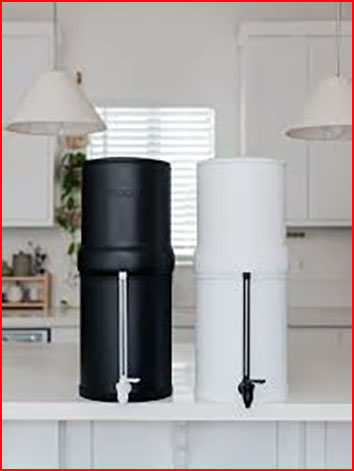
I switched to the Berkey Big Berkey system about two years ago after moving to a home with well water, and the difference in confidence I felt about my drinking water was almost immediate.
The stainless steel towers look serious because they are serious — this is a filtration system built for people who don’t want to compromise on water purity.
Setting up the Berkey takes a bit more time than Santevia. You need to prime the Black filter elements with water pressure before first use, which can feel fiddly if you haven’t done it before.
But once primed and assembled, the system runs quietly and reliably for months without much attention.
The Black filter elements are what make Berkey genuinely impressive from a technical standpoint.
They combine a proprietary blend of six different media types to remove over 200 contaminants — including viruses, bacteria, heavy metals, pesticides, chloramines, and pharmaceutical residues. That’s a level of filtration that most pitcher or countertop systems simply can’t touch.
Flow rate is better than I expected for a gravity system, especially with two filters installed. Filling the upper chamber in the morning means the lower chamber is ready well before I need it. For a two-person household, the Big Berkey’s 2.25-gallon capacity hits a comfortable sweet spot.
The all-stainless construction is a genuine pleasure. It looks premium, it feels premium, and it doesn’t absorb odors or stain the way plastic systems can over time. This is a machine that clearly communicates it was built to last.
Pros Of Berkey
- Removes 200-plus contaminants: The Black filter elements tackle an extraordinary range of substances including viruses, bacteria, heavy metals, chloramines, and pharmaceutical compounds most filters miss entirely.
- Stainless steel construction: The food-grade stainless steel body is corrosion-resistant, odor-free, and significantly more durable than any plastic-bodied gravity filter on the market.
- Exceptional filter longevity: Each pair of Black filters handles up to 6,000 gallons before replacement — for a typical household, that’s roughly four or five years of use per filter set.
- No electricity required: Like Santevia, Berkey runs entirely on gravity — no power source, no plumbing connections, and no ongoing utility cost to factor into your budget.
- Highly portable for emergencies: The stainless body and gravity-fed design make Berkey practical for camping, off-grid living, or emergency preparedness scenarios where tap water may be unsafe.
- Scalable capacity options: Berkey offers multiple sizes from the Travel Berkey at 1.5 gallons to the Crown Berkey at 6 gallons — there’s a model for every household size.
- Fluoride removal available: With the addition of PF-2 post-filter elements, Berkey can remove fluoride and arsenic — a feature that many premium filter brands charge significantly more to provide.
- Trusted by serious water quality advocates: Berkey has a strong reputation among preppers, well water users, and health-focused communities who need deep, reliable purification rather than basic filtration.
Cons Of Berkey
- Higher upfront cost: The Big Berkey starts around $350, and adding PF-2 fluoride filters pushes the total closer to $450 — a significant investment compared to most countertop alternatives.
- Regulatory and sales issues in some states: Berkey has faced challenges selling in California due to state-level certification requirements, which limits availability for some U.S. buyers.
- No remineralization: Berkey strips water thoroughly but adds nothing back — the output is clean but lacks the natural mineral content that systems like Santevia intentionally restore.
- Priming the filters is cumbersome: First-time setup requires priming the Black filters with a pressurized water source, which can be confusing and messy for users who aren’t mechanically inclined.
- Large countertop footprint: The stainless steel tower is tall and wide — in smaller kitchens, finding a stable spot for it without it dominating the counter space is a real practical challenge.
- Filters must be replaced in pairs: Replacing one Black filter while leaving the other can cause uneven filtration pressure and output — replacing both at once doubles the replacement cost each cycle.
- No built-in water level indicator: The opaque stainless tanks make it impossible to see how much filtered water remains without removing the lid, which gets inconvenient during busy mornings.
Maintenance Tips For Berkey
- Prime filters before every new installation: Whether installing new filters or reinstalling cleaned ones, always prime the Black elements with pressurized water to ensure full filtration performance from the first use.
- Scrub the Black filters every few months: Use a scotch-brite pad under running water to scrub the surface of Black filters — this removes surface buildup and restores optimal flow rate.
- Clean the stainless tanks monthly: Wash both upper and lower stainless chambers with warm soapy water and a soft cloth, then rinse thoroughly to prevent any soapy residue from affecting taste.
- Test your filters with the red dye test: Berkey recommends a food coloring test to verify filters are sealing and working correctly — it’s a simple but effective way to catch a failing filter early.
- Replace PF-2 fluoride filters on schedule: PF-2 filters have a shorter lifespan than Black elements — replace them every 1,000 gallons or one year, whichever comes first, to maintain fluoride removal effectiveness.
- Store filters properly if not in use: If you stop using Berkey for an extended period, dry the Black filters completely before storing them — damp filters stored long-term can develop mold growth inside the media.
- Check wing nut tightness regularly: The wing nuts that secure the Black filters to the upper tank can loosen with frequent refilling — check and hand-tighten them every month to prevent water bypassing the filter.
Comparison With Other Brands: Berkey
- Vs. Alexapure Pro: Alexapure is a direct Berkey competitor with similar gravity-fed stainless design and removes 200-plus contaminants, often at a lower price — but Berkey’s filter longevity and reputation remain stronger overall.
- Vs. ProOne Big-Plus: ProOne uses a single ceramic-carbon hybrid filter element and holds NSF certifications that Berkey lacks — both are strong gravity systems, but ProOne edges ahead on regulatory credibility.
- Vs. Clearly Filtered Pitcher: Clearly Filtered holds NSF 42, 53, and 401 certifications and removes a wide contaminant range, but it’s a pitcher — it can’t match Berkey’s capacity or depth of purification for a full household.
- Vs. LifeStraw Home: LifeStraw Home is NSF-certified, more affordable, and highly portable, but its filter lifespan is shorter and its total contaminant removal range is narrower than Berkey’s Black elements.
- Vs. Aquasana Countertop: Aquasana uses a claryum multi-stage system with strong NSF certifications and a fast flow rate, but it requires connection to a tap and lacks the off-grid capability that makes Berkey uniquely versatile.
Also Read: My thoughts on Philips 4400 Vs. 3300
Frequently Asked Questions (FAQ)
Not definitively. Santevia is better for remineralization and alkaline water at a lower price. Berkey is better for deep contaminant removal and long-term durability. Your priority determines the winner.
Berkey faced a temporary business shutdown in 2023 due to EPA registration issues and California’s Prop 65 certification requirements, which restricted sales in certain states. The company has since worked to address these regulatory challenges.
ProOne Big-Plus and Clearly Filtered both hold independent NSF certifications that Berkey lacks, making them strong alternatives for buyers who prioritize third-party verified filtration performance over brand reputation.
Yes. Santevia filtered water is healthy for most users — it removes common contaminants while adding beneficial minerals like calcium and magnesium, resulting in naturally alkaline water that supports daily hydration.
Conclusion
After using both systems myself, I can tell you there’s no single right answer here — it genuinely depends on what problem you’re trying to solve with your water.
If mineral-rich, alkaline water is your priority and you’re working within a tighter budget, Santevia is a smart, well-designed choice that delivers real results. If you need maximum contaminant protection — especially for well water, travel, or emergency preparedness — Berkey is simply in a different league when it comes to purification depth and long-term filter value.
You should choose Santevia if you want healthier, better-tasting water with added minerals at an accessible price point. You should choose Berkey if you want the most thorough water purification available in a gravity-fed system, regardless of what’s coming out of your tap.
Recent Posts
● Interactive 5-Zone Interior & Exterior Paint Blueprint Paint Coverage Calculator: Gallons, Primer, Square Footage & Cost Tap any architectural surface zone on the blueprint...
If you want smooth, shiny hair without spending a fortune on a premium styling tool, the Ella Bella hair dryer may be worth considering.In these Ella Bella hair dryer reviews, I’ll look...