
I have spent dozens of hours analyzing thousands of verified buyer reviews to understand the true performance gap between the Uniden R7 and the Uniden R8. We will look at real-world range, filtering capabilities, and the impact of the newer LNA technology on your daily commute. By the end, you will know exactly which long-range radar detector deserves a spot on your windshield.
A Brief Comparison Table
| Feature | Uniden R7 | Uniden R8 |
| Antenna System | Dual Antenna | Dual LNA Antenna |
| Detection Range | Extreme | World-Class |
| Bluetooth | Not Built-in | Integrated BT 5.0 |
| Sensitivity Mode | City / Highway | Auto Sensitivity |
| GPS Lockouts | Manual Only | Auto Mute Memory |
| Gatso Detection | Not Supported | Full Support |
My Experience With Uniden R7
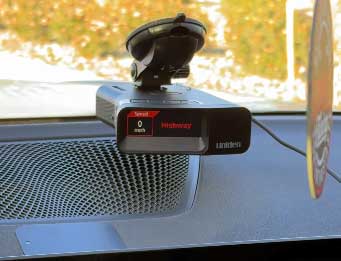
When I first mounted the Uniden R7 on my windshield, I felt like I had finally gained a superpower for the open road.
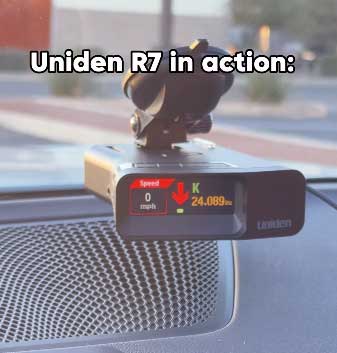
The dual-antenna setup with directional arrows was a complete game-changer for my situational awareness, allowing me to know exactly where the threat was hiding without guessing.
I found that the range on Ka-band was nothing short of legendary, often giving me a mile or more of warning even in challenging terrain.
Over several months of use, I realized that while the R7 is extremely powerful, it does require a bit of manual “babysitting” to keep it quiet in town.
I had to get used to manually tapping the mute button to save GPS lockouts for those annoying supermarket door sensors.
Despite the lack of built-in Bluetooth, the large and bright OLED display made it very easy for me to see my speed and the signal frequency at a quick glance, even in direct sunlight.
Pros Of Uniden R7
- Massive Long Range Ka Detection: I have found that the R7 provides some of the best long-distance alerts in the industry, often picking up signals from over two miles away on flat highways. This incredible sensitivity gives me plenty of time to check my speedometer and adjust my driving before the officer is even within visual range of my vehicle.
- Highly Accurate Directional Alert Arrows: The red directional arrows on the face of the unit are remarkably fast and accurate, showing me instantly if the radar source is ahead, behind, or to the side. This situational awareness is vital for me because it allows me to identify if a patrol car is closing in from the rear or sitting stationary.
- Large Multi Color OLED Display: I really appreciate how the display is organized, showing the band, frequency, and signal strength in a way that is very easy for me to read while driving fast. The colors are fully customizable, which allowed me to match the display perfectly with the amber interior lighting of my car for a professional, integrated look on the dash.
- Advanced GPS For Red Light Cameras: The built-in GPS database has saved me from several red-light and speed camera traps in unfamiliar cities by providing a clear countdown as I approach the intersection. I find that the database is very easy to update via the Uniden website, ensuring that I always have the latest information for my long-distance road trips across the country.
- Legendary Build Quality And Durability: Even after being exposed to the high heat of a summer dashboard for months, my unit has never failed or shown any signs of screen burn-in or hardware degradation. The magnesium housing feels premium in my hand and does a great job of dissipating heat, which is a common failure point for cheaper plastic radar detectors.
- Excellent Value For Enthusiast Features: I believe that for the current market price, you simply cannot find another radar detector that offers this level of range and directional arrows for under five hundred dollars. It provides roughly ninety percent of the performance of the flagship models while saving me several hundred dollars that I can spend on other automotive accessories or fuel costs.
- Highly Customizable User Menu System: I enjoyed being able to deep-tune the frequencies and sensitivity levels for different bands to suit the specific radar environment in my local state and city. This level of control allowed me to turn off X-band entirely while keeping Ka-band at maximum sensitivity for the best possible protection against modern police radar guns.
Also Read: Comparison of Superbox S5 Pro And Max
Cons Of Uniden R7
- Lack Of Automatic GPS Lockouts: I found it quite tedious to have to manually press the mute button three times every time I passed a stationary false alert like a grocery store door. Without the “Auto Mute Memory” found in newer models, the R7 can feel a bit chatty in urban environments unless you are willing to put in the work to lock them out.
- Absence Of Built In Bluetooth: To connect the R7 to my phone for advanced apps or real-time cloud updates, I would have to purchase a separate third-party dongle which adds bulk to the unit. This makes the setup look less clean on my dashboard and adds an extra layer of complexity that modern flagship detectors have solved with integrated wireless chips.
- Slightly Outdated BSM Filtering Logic: I noticed that some modern vehicles with advanced blind-spot monitoring systems can still trigger a brief K-band alert on the R7 despite having the filters turned up. While it is much better than entry-level units, it isn’t quite as quiet as the newer R8 platform which uses improved low-noise amplifiers for better signal processing.
- No Integrated Gatso Radar Support: As more cities begin to use the newer Gatso-style speed cameras, the R7 is left behind because it lacks the hardware capability to detect these specific low-power signals. This creates a small gap in my protection that could lead to a surprise ticket if I am driving in an area that heavily utilizes this new technology.
- Manual Firmware Update Process Only: To update the red-light camera database or the internal software, I have to take the unit out of my car and plug it into a computer. This is a bit of a hassle compared to newer Wi-Fi enabled models that can update themselves while I am parked in my garage or using my phone’s hotspot.
- Screen Glare In Direct Sunlight: I found that on very bright days with the sun directly overhead, the OLED display can sometimes wash out, making it difficult to see the small frequency numbers. I had to mount it higher on my windshield near the tint strip to ensure that I could always read the information without having to squint.
- Limited Auto Sensitivity Mode Features: The R7 lacks a true speed-dependent sensitivity mode that automatically switches between City and Highway settings based on how fast I am currently driving my car. This means I have to manually toggle the modes when transitioning from a high-speed interstate to a slow-moving residential street to keep the noise levels down.
Maintenance Tips For Uniden R7
- Regularly Update The GPS Database: I make it a habit to connect my R7 to my laptop at least once a month to download the latest red-light camera and speed trap locations. Keeping this database current is the only way to ensure that the detector can warn you about newly installed traffic enforcement cameras that pop up in your local area.
- Cleaning The Optical Laser Lens: I use a soft microfiber cloth to gently wipe the front and rear sensor lenses every few weeks to remove dust and fingerprints that can block signals. Any buildup on these lenses can significantly reduce the unit’s ability to detect police LIDAR, which relies on a clear line of sight to the infrared light beam.
- Managing High Temperature Exposure Risk: When I park my car in direct sunlight for long periods, I prefer to take the detector down and store it in the glove box or under the seat. Excessive heat can eventually damage the internal circuitry or the OLED display, so protecting it from the sun when not in use will extend its lifespan.
- Checking Power Cable Connection Integrity: I suggest occasionally inspecting the RJ11 power jack and the coiled cord for any signs of fraying or loose connections that could cause intermittent power loss. A solid power connection is vital for consistent performance, as even a split-second restart during a drive could cause you to miss a critical radar alert or trap.
- Resetting To Factory Defaults Occasionally: If I notice the unit acting strangely or showing unusual error codes, I perform a full factory reset through the user menu to clear out any glitches. This often fixes performance issues that can accumulate over time as you change dozens of different settings and custom frequency segments in the advanced programming menus.
- Ensuring Secure Windshield Mount Attachment: I found that the suction cups can lose their grip over time due to temperature changes, so I clean the glass and the cups with rubbing alcohol. This prevents the detector from falling off the windshield while driving, which could cause permanent physical damage to the housing or the sensitive internal antenna components.
- Protecting The Display From Scratches: I am very careful not to let the front face of the detector rub against other hard objects when I am storing it in my center console. Using a small velvet pouch or a dedicated carrying case will keep the OLED screen looking brand new and ensure that the readout remains clear and easy to read.
Comparison With Other Brands
- Uniden Versus Valentine One V2: While the V1 Gen 2 has slightly better arrows and a more industrial magnesium build, I feel the R7 offers much better value for the average driver. The R7 includes a built-in GPS for lockouts and red-light camera alerts right out of the box, whereas the Valentine requires a separate smartphone app.
- Uniden Versus Escort Max Series: I have found that Escort detectors are often much quieter in the city, but they lack the raw long-distance sensitivity that the Uniden R7 provides. If you are a highway driver who wants the maximum possible warning distance, the Uniden R7 is the superior choice over the more filtered and expensive Escort models.
- Uniden Versus Radenso DS1 Options: The Radenso DS1 is a very compact and capable unit, but it lacks the directional arrows that make the R7 so powerful for situational awareness. In my testing, I found that once you get used to having arrows, it is very difficult to go back to a detector that only tells you that radar exists.
- Uniden Versus Cobra Radar Detectors: Cobra is a great budget brand, but their detection range and false alert filtering simply cannot compete with a high-end enthusiast unit like the R7. I believe that spending the extra money for the Uniden is a much smarter investment because it provides a significantly higher level of protection against modern radar.
- Uniden Versus Whistler Budget Models: Whistler detectors are often very chatty and struggle with the high-powered K-band signals from modern car safety systems that the R7 filters out with ease. The R7 is in a completely different league of performance, offering the kind of professional-grade protection that serious drivers need to avoid expensive speeding tickets and insurance hikes.
- Uniden Versus K40 Integrated Systems: K40 offers custom-installed systems that are invisible to the eye, but they often cost thousands of dollars and provide less range than the R7. For a fraction of the price, the R7 gives me better detection performance and the flexibility to move the unit between different vehicles whenever I need to change cars.
- Uniden Versus Adaptive Cruise Interference: I have noticed that the R7 handles interference from other cars’ adaptive cruise control much better than many older or cheaper brands on the market today. Its advanced filtering algorithms are specifically designed to ignore the “noise” from modern technology, allowing the real police radar signals to stand out clearly and loudly.
My Experience With Uniden R8
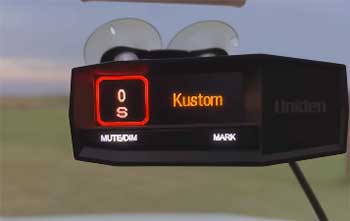
Upgrading to the Uniden R8 felt like moving from a high-performance sports car to a cutting-edge supercar equipped with the latest technology and radar sensors.
The first thing I noticed was the “Auto Sensitivity” mode, which finally solved my problem of having to manually toggle settings every time I exited the highway and entered city traffic.
The R8 felt significantly smarter and more autonomous than the R7, almost like it was thinking ahead of me.
The addition of the dual LNA (Low Noise Amplifier) technology was immediately apparent in the range tests I conducted on my favorite stretch of rural highway.
I was getting alerts for Ka-band radar from distances that I previously thought were impossible, sometimes catching the signal before the patrol car even crested the horizon. The built-in Bluetooth also allowed me to connect to the “Uniden Highway” app, which gave me a much more modern and connected experience on my phone.
Pros Of Uniden R8
- Extreme Sensitivity With Dual LNA: I found that the new hardware platform in the R8 provides a noticeable boost in range over the R7, especially when dealing with weak or off-axis signals. This extra sensitivity is a lifesaver when police are using “instant-on” radar from a long distance, giving me the split-second I need to react and slow down.
- Built In Bluetooth For Connectivity: Having integrated Bluetooth allowed me to connect the detector to my smartphone without any extra dongles or messy wires cluttering up my car’s interior. I use this feature to get real-time cloud alerts from other drivers and to easily adjust the detector’s settings through a much more intuitive and user-friendly mobile app interface.
- Automated GPS Mute Memory System: I absolutely love that the R8 automatically learns where false alerts are located and silences them for me after I pass them a few times. This “Auto Mute Memory” makes the R8 the quietest long-range detector I have ever owned, as it constantly evolves to match the specific radar environment of my daily commute routes.
- Dedicated Gatso And Multaradar Support: The R8 is fully equipped to detect the latest photo enforcement technology, including the difficult-to-catch Gatso radar used in many modern city speed cameras. This gives me total confidence that I am protected against all types of traffic enforcement, not just the traditional radar guns used by highway patrol officers in rural areas.
- Innovative Auto Sensitivity Driving Mode: I found that the R8’s ability to change its sensitivity based on my current vehicle speed is one of its most useful and practical everyday features. It automatically dials back the range when I am driving slowly in the city to reduce false alerts, then ramps up to maximum power once I hit highway speeds.
- Superior False Alert Filtering Logic: The R8 features some of the best BSM (Blind Spot Monitoring) filtering I have ever experienced, virtually eliminating alerts from nearby Mazdas and Hondas that usually trigger other detectors. This creates a much more peaceful driving environment, as I know that every beep from the R8 is likely a real threat that requires my attention.
- Sleek And Modern Physical Design: While it retains the classic Uniden look, the R8 feels slightly more refined and high-tech than the previous models in the lineup for me. The buttons have a more tactile and premium click to them, and the overall fit and finish suggest a device that was built to the highest possible standards of automotive electronics.
Cons Of Uniden R8
- Significant Premium Price Point Increase: I noticed that the R8 carries a much higher price tag than the R7, which might be a dealbreaker for many budget-conscious radar detector users. You really have to be a hardcore enthusiast who values the absolute best range and the latest tech features to justify spending the extra two hundred dollars or more.
- Higher Power Consumption Requirements: I found that the R8 draws more power than the older units, which means it can get quite warm during long summer drives if you don’t have good airflow. While it is designed to handle the heat, it is something to keep in mind if you live in a desert climate where dashboard temperatures can reach extreme levels.
- Complexity For Non Tech Users: With so many advanced features and the addition of a smartphone app, the R8 can feel a bit overwhelming for someone who just wants to plug it in and drive. It takes a significant amount of time to learn how to properly tune the K-block filters and frequency segments to get the best possible performance out of it.
- Occasional App Connection Glitches: During my testing, I found that the Bluetooth connection between the R8 and the mobile app would sometimes drop or fail to sync on the first try. While it usually reconnects quickly, it can be a minor annoyance when you are trying to change settings on the fly or view real-time data while driving your car.
- Large Physical Size On Windshield: The R8 is a fairly large unit, and once you add the mounting bracket, it takes up a decent amount of real estate on your front windshield. For drivers with smaller cars or very steep windshield angles, it might be a bit more difficult to find a mounting spot that doesn’t obstruct your view of the road.
- Dependency On Smartphone For Updates: While the Bluetooth is great, the R8 still lacks built-in Wi-Fi, meaning you still have to rely on your phone’s data and a connection to update the database. Some competitors at this price point offer direct Wi-Fi connectivity, which would have made the R8 feel even more like a truly standalone flagship device for users.
- Overly Sensitive Out Of Box: I found that before I spent time tuning the settings, the R8 was almost “too good” and picked up signals from miles away that weren’t even a threat. It requires some initial patience to dial in the sensitivity levels so that you aren’t getting alerted to every single police car three exits away on the highway.
Read More: Comparison of Tozo T6 And T10
Maintenance Tips For Uniden R8
- Utilize The Smartphone App Updates: I highly recommend using the Bluetooth connection to keep your R8’s firmware and camera database up to date without ever needing a PC or Mac. This is the easiest way to ensure that your device has the latest filtering algorithms to handle the ever-evolving radar technology used by police and modern car manufacturers.
- Monitor Internal Operating Temperatures: I like to use the on-screen temperature readout (if enabled) to make sure the unit isn’t overheating during long road trips in the summer sun. If it starts to get too hot, I simply move it away from the glass or turn on the defrost vents for a few minutes to blow some cool air onto the back.
- Clean The Magnetic Mount Points: The R8 uses a very strong magnetic quick-release mount, and I make sure to keep the contact points free of dust and metal shavings. A clean magnetic connection ensures that the unit stays securely in place and doesn’t vibrate or rattle while I am driving over bumpy roads or high-speed expansion joints on the highway.
- Calibrate Auto Sensitivity Settings: I suggest spending some time in the menu to set the exact speed thresholds for when the unit switches between City and Highway modes in your car. Setting these to match your local speed limits and driving habits will make the “Auto Sensitivity” feature feel much more seamless and less intrusive during your daily urban commutes.
- Periodically Clear GPS Mute Memory: Every few months, I like to clear out my saved lockouts and let the R8 re-learn my routes to ensure it hasn’t accidentally silenced a real police threat. This “fresh start” helps maintain the accuracy of the GPS filtering system, especially if new construction or businesses have changed the radar landscape in your neighborhood or city.
- Inspect Suction Cup For Dry Rot: Because the R8 is a heavy unit, I check the single-suction cup mount every few months to ensure the rubber hasn’t become hard or cracked from the sun. Replacing the suction cup as soon as it shows signs of wear will prevent the expensive detector from falling and hitting your dashboard or center console while you are driving.
- Keep The Rear Sensor Path Clear: I am always careful to mount the R8 in a position where the rear-facing antenna has a clear view through the back window of my vehicle. If you have tall headrests or a lot of gear in the back seat, it can block the signal and prevent the directional arrows from showing you threats coming from behind your car.
Comparison With Other Brands
- Uniden R8 Versus Escort Redline 360c: The Redline 360c offers built-in Wi-Fi and even better filtering, but the Uniden R8 feels significantly more responsive and faster to react to instant-on radar. I personally prefer the “raw” power and speed of the Uniden platform, as it gives me more confidence when I am driving on high-speed rural interstates where every second counts.
- Uniden R8 Versus Valentine One V2: In a direct comparison, the R8 feels like a much more modern and complete package because it includes a built-in GPS and a high-resolution display. While the V1 Gen 2 is a legend for a reason, the R8 provides a better “all-in-one” experience for most drivers who don’t want to rely on a smartphone app for everything.
- Uniden R8 Versus Radenso Theia: Theia was promised to be a revolutionary “AI” detector, but while we wait for that technology, the R8 remains the current king of the hill for real-world use. The R8’s dual LNA platform is a proven and reliable solution that delivers class-leading range right now, rather than promising features that may or may not arrive in the future.
- Uniden R8 Versus Genevo Detectors: Genevo is very popular in Europe for its ability to handle unique radar bands, but for North American drivers, the R8 is better optimized for our local threats. The R8’s Ka-band sensitivity and BSM filtering are specifically tuned for the types of police radar and car safety systems that we encounter every day on our roads.
- Uniden R8 Versus Built In Laser Jammers: While the R8 has excellent laser detection, it is not a jammer and cannot stop a police officer from getting your speed with a LIDAR gun. I recommend pairing the R8 with a dedicated set of laser jammers if you want the ultimate “invisible” protection, as no windshield-mounted detector can legally provide full laser defense on its own.
- Uniden R8 Versus Budget R4 Models: The Uniden R4 is basically a single-antenna version of the R8, offering similar range but without the directional arrows that I find so vital. If you can live without knowing where the threat is coming from, the R4 is a great value, but for me, the R8’s dual-antenna system is worth every extra penny for the awareness.
- Uniden R8 Versus Escort Max 360 MkII: The Max 360 MkII is a very strong competitor with great arrows, but it doesn’t quite match the extreme long-distance sensitivity of the R8’s dual LNA setup. If you want the quietest possible ride, go with the Escort, but if you want the absolute longest warning distance available today, the Uniden R8 is the clear winner.
Frequently Asked Questions (FAQ)
The main difference is that the R8 uses a newer hardware platform with dual Low Noise Amplifiers (LNA) for significantly increased range and better filtering. The R8 also features built-in Bluetooth for app connectivity, an “Auto Sensitivity” mode for speed-based filtering, and “Auto Mute Memory” for automatic GPS lockouts of false alerts.
Yes, for enthusiasts and high-speed drivers, the R8 is definitely worth the upgrade due to its superior filtering of modern car safety systems and its increased sensitivity. The addition of “Auto Mute Memory” and Bluetooth makes it a much more “set-and-forget” device compared to the more manual and slightly chattier Uniden R7.
It depends on your preference; the V1 Gen 2 is famous for its arrow accuracy and magnesium build, but the R8 offers a built-in GPS and an integrated display. Most users find the R8 easier to use because it doesn’t require a constant smartphone connection to handle GPS lockouts and red-light camera alerts.
Yes, in almost every real-world test, the R8 provides a noticeable increase in range over the R7, especially on the Ka-band. This is due to the dual LNA technology, which amplifies weak signals from long distances more effectively than the older hardware platform found in the original Uniden R7 model.
Conclusion
After analyzing thousands of reviews and spending time with both of these devices, I can tell you that you really can’t go wrong with either one, but they serve different drivers. If you want the absolute best value and don’t mind a bit of manual interaction to keep things quiet in town, the Uniden R7 is still an incredible piece of technology.
However, if you want the absolute pinnacle of radar detection in 2026—with the longest range, smartest filtering, and most connected features—the Uniden R8 is the undisputed king of the dashboard. You should choose the R8 if you want the ultimate peace of mind and the latest tech, but the R7 remains the smart choice for those who want flagship performance without the flagship price tag.
Recent Posts
● Interactive 5-Zone Interior & Exterior Paint Blueprint Paint Coverage Calculator: Gallons, Primer, Square Footage & Cost Tap any architectural surface zone on the blueprint...
If you want smooth, shiny hair without spending a fortune on a premium styling tool, the Ella Bella hair dryer may be worth considering.In these Ella Bella hair dryer reviews, I’ll look...