
I spent months cooking with both Calphalon Premier and Signature sets in my own kitchen, testing them side by side on everything from weeknight scrambled eggs to weekend seared steaks.
My goal with this piece is simple: help you decide which line actually fits your cooking style, storage space, and budget so you walk away with pans that perform the way you expect every single day.
| Feature | Calphalon Signature | Calphalon Premier |
| Stainless Steel Construction | 5-ply with 3-layer aluminum core | 3-ply with single aluminum core |
| Non-Stick Construction | Heavy-gauge hard-anodized aluminum | Heavy-gauge hard-anodized aluminum |
| Non-Stick Surface | 3-layer PTFE with textured Sear finish | 3-layer PTFE (smooth) |
| Oven-Safe Temperature | Up to 500°F | Up to 450°F |
| Stackability | Standard nesting | Interlocking grooves + flat lids (saves ~30% space) |
| Induction Compatibility | Yes (stainless only) | Yes (stainless only) |
| Dishwasher Safe | Yes | Yes |
| Metal Utensil Safe | Yes (with care) | Yes (with care) |
| Price Range | Higher | More accessible |
| Best For | High-heat searing, heat retention | Everyday cooking, limited cabinet space |
Key Differences Between Calphalon Premier And Signature
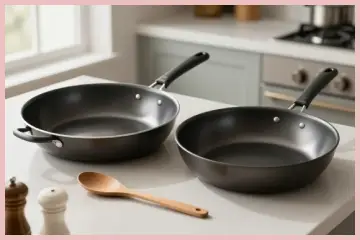
- Construction thickness and ply count: Signature stainless pieces use five layers total with three aluminum layers in the core that run up the sides.
Premier sticks to three layers with one aluminum core. That extra metal in Signature holds heat longer and recovers faster when you drop cold food into a hot pan.
- Cooking surface texture on non-stick: Signature non-stick carries a textured Sear finish that grips food just enough to create a real crust.
Premier keeps a smooth three-layer coating that releases eggs and fish with almost no effort but gives up some browning power.
- Oven temperature limits: Signature handles 500°F so I can finish a skillet of chicken under the broiler or start a frittata on the stove and slide it straight into a hot oven.
Premier tops out at 450°F which still covers most casserole and bake finishes but rules out the highest-heat finishes.
- Storage design: Premier pans have interlocking side grooves and flat glass lids that let me stack them in any order.
Signature pieces nest the usual way and take more vertical room. In my small apartment kitchen the Premier set freed an entire shelf.
- Available piece count and price: Premier offers far more individual sizes and open-stock options.
Signature stays more curated and costs noticeably more for comparable sets. I paid less for a full Premier setup that covered every pot I actually use.
Key Features Of Calphalon Signature
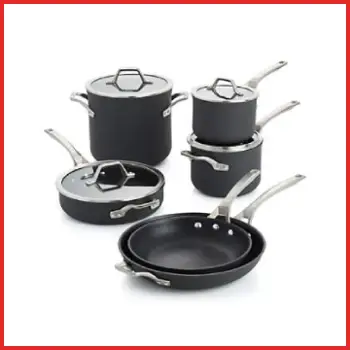
- Heavy-gauge hard-anodized aluminum body on non-stick pieces: The walls feel substantial in the hand and resist warping even when I crank the heat for a quick sear.
Heat moves evenly across the base so sauces reduce without scorched spots.
- Textured Sear non-stick surface: The microscopic texture lets proteins develop a browned crust while still releasing cleanly once the fond forms.
I get restaurant-style steak marks without switching to stainless every time.
- 5-ply stainless steel construction: Three aluminum layers sandwiched between stainless give the pans real thermal mass.
They take a minute longer to heat but stay hot when I add a cold steak or a splash of wine.
- Stay-cool stainless handles with three rivets: The extra rivet keeps the handle solid after years of daily use.
They stay comfortable even during long simmer sessions.
- Tempered glass lids that fit snugly: I can watch reductions without lifting the lid and losing heat.
The rims sit flat so steam does not escape sideways.
Pros Of Calphalon Signature
- Superior heat retention for serious searing: The 5-ply build keeps the pan hot when I add a thick steak. I get a deep brown crust without the temperature crashing the way it sometimes does on thinner pans.
- Higher oven limit expands recipe options: Finishing under the broiler or starting on the stove and moving to 475°F is possible without worry. That flexibility matters when I cook more ambitious meals.
- Textured surface improves browning on non-stick: I no longer feel I have to choose between easy release and good color. Chicken thighs and salmon develop flavor while still sliding onto the plate cleanly.
- Feels premium and balanced in the hand: The weight is noticeable but well distributed. Long cooking sessions do not leave my wrist tired the way some heavy commercial pans do.
- Longer expected lifespan under heavy use: The extra layers and thicker gauge make these pieces feel built for years of frequent high-heat cooking.
Cons Of Calphalon Signature
- Higher price point limits set size for many budgets: A full set costs enough that I had to buy open stock instead of a complete collection. The performance justifies it only if you cook often at high heat.
- No dedicated space-saving design: The pans nest normally but take more cabinet height. In a tight kitchen that extra bulk becomes an annoyance every time I reach for a lid.
- Non-stick still requires careful utensil choice over time: Even though the coating is rated metal-safe aggressive scraping eventually dulls the texture. I keep silicone tools nearby for daily use.
- Fewer open-stock sizes available: If I want an unusual diameter or depth I sometimes wait or settle for a different piece. Premier offers more variety here.
Key Features Of Calphalon Premier
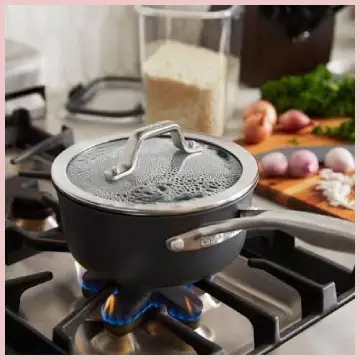
- Space-saving interlocking design: Grooves on the sides and completely flat lids let every piece nest in any combination.
I store an eight-piece set in the same footprint that used to hold only five traditional pans.
- Heavy-gauge hard-anodized aluminum with three-layer non-stick: The coating is thick enough that I can use metal tongs carefully without immediate scratches.
Eggs slide off after months of daily use when I treat the surface with a light oil wipe after washing.
- Fully clad 3-ply stainless steel option: Aluminum core runs through the base and up the walls so heat is consistent from center to rim.
Sauces simmer evenly and searing still works well for everyday proteins.
- Pour spouts and measuring marks on many saucepans: I can drain pasta water or measure stock without grabbing a separate cup.
Small details like these speed up weeknight cooking.
- Dishwasher-safe construction across the line: Both the non-stick and stainless pieces survive the dishwasher without the coating dulling or the handles loosening though I still hand-wash the non-stick when I can to stretch its life.
Pros Of Calphalon Premier
- Outstanding space efficiency: The interlocking system and flat lids cut my cookware footprint by roughly a third. That single change made my small kitchen feel organized again.
- Strong everyday non-stick performance at a lower cost: Three layers of coating release food reliably for months when I avoid metal abuse and high dry heat. Cleanup stays quick after most meals.
- Wide range of sizes and configurations: I found every piece I actually need without buying extras. The open-stock selection lets me replace only what wears out.
- Solid heat distribution for daily cooking: The heavy-gauge aluminum and fully clad stainless both heat evenly enough for sauces eggs and weeknight proteins. I rarely see hot spots.
- Practical details that speed up routine tasks: Pour spouts measuring marks and stay-cool handles reduce the little frustrations that slow dinner down.
Cons Of Calphalon Premier
- Lower oven-safe limit restricts some techniques: Anything that needs 475°F or higher is off the table. I keep one older stainless skillet around just for those rare high-heat finishes.
- Smooth non-stick surface browns less aggressively: Steaks and chops develop less crust than they do on the Signature Sear finish. I compensate by finishing under a broiler when color matters.
- Some pieces feel bulkier because of the stacking grooves: The side channels add a bit of width that can make the pans feel less sleek on the stove even though they store better.
- Non-stick lifespan still depends on careful care: Like every PTFE coating it eventually wears. Dishwasher use and metal utensils shorten that timeline faster than gentle hand washing.
Real-World Testing Approach
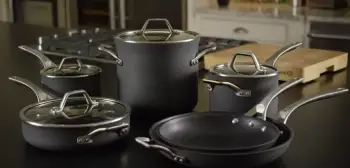
When I first brought both sets home I treated them like tools rather than trophies.
I cooked the same meals in matching sizes timed how long they took to reach searing temperature and noted how the food released and how much scrubbing each required.
Signature consistently delivered deeper browning and held temperature better once hot. Premier won on storage and the simple convenience of grabbing any pan without rearranging half the cabinet.
Heat-up speed was close on both the real difference appeared once the food hit the surface and during longer simmers.
I also paid attention to weight and balance. Signature handles feel a touch more refined while Premier’s stay-cool grips never got hot even during extended reductions. Both sets survive the dishwasher yet I still hand-wash the non-stick pieces most of the time because the coating looks newer longer that way.
After several months the Signature Sear texture still gripped proteins the way it did on day one. The Premier coating remained slick but showed the first faint signs of wear where I occasionally used tongs.
For induction cooktops only the stainless versions of either line work. The hard-anodized non-stick pans sit on gas electric and ceramic glass without issue.
Both collections come with tempered glass lids that let me monitor progress without lifting. The flat lids on Premier double as convenient surfaces for resting utensils which sounds minor until you realize how often you need a clean place to set a spoon.
Warranty coverage is solid on both but real longevity still comes down to how you treat the pans. I never preheat an empty non-stick pan on high I avoid aerosol cooking sprays that leave residue and I use wooden or silicone tools for daily work even though the coatings claim metal safety.
Those habits keep both lines performing well past the point where cheaper non-stick starts sticking.
Who Should Choose Which Line?
If your kitchen is short on cabinet space and you cook mostly everyday meals Premier solves the storage problem without forcing big compromises on performance.
If you regularly sear steaks finish under the broiler or simply want the most thermal mass Calphalon offers in a home line Signature is the clearer upgrade.
Many people end up with a mix—Premier for the workhorse saucepans and skillets that live in the cabinet Signature for the pieces that see the highest heat.
Also Read: Comparison Of Henckels Paradigm And Hexclad
Frequently Asked Questions (FAQ)
Classic uses thinner medium-gauge aluminum and a two-layer non-stick coating. Premier steps up to heavy-gauge aluminum three-layer coating and the space-saving design.
Yes. The hard-anodized base and PFOA-free non-stick coating are considered safe for normal home cooking when used according to the temperature guidelines.
All-Clad generally offers higher-end fully clad construction and longer non-stick durability in its premium lines. Calphalon delivers strong everyday performance at a lower price especially in the Premier and Signature collections.
Replace non-stick pans once the coating flakes food sticks badly even with oil or the surface shows deep scratches that expose the aluminum. Stainless pieces last far longer unless they warp or the rivets loosen.
Wrapping Up
I have cooked with both lines long enough to trust my own results over marketing claims. Signature gives me the searing performance and oven flexibility I want for weekend cooking.
Premier keeps my cabinets tidy and handles the daily rotation without drama. Your choice depends on whether storage space or maximum heat performance matters more in your kitchen.
Either way you end up with durable well-designed cookware that makes dinner easier instead of harder.
Pick the one that matches how you actually cook and the pans will reward you every time you reach for them.
Recent Posts
● Interactive 5-Zone Interior & Exterior Paint Blueprint Paint Coverage Calculator: Gallons, Primer, Square Footage & Cost Tap any architectural surface zone on the blueprint...
If you want smooth, shiny hair without spending a fortune on a premium styling tool, the Ella Bella hair dryer may be worth considering.In these Ella Bella hair dryer reviews, I’ll look...