
I have spent years scrubbing sinks, tubs, and cookware with both Comet and Bon Ami, and I wrote this piece to help you decide which powder cleanser actually fits your home, your surfaces, and your tolerance for chemicals.
My goal is simple: give you a clear, side-by-side look at how these two classic products perform in real kitchens and bathrooms so you can pick the one that works without second-guessing every scrub.
| Feature | Comet | Bon Ami |
| Main abrasive | Calcium carbonate (coarser particles) | Feldspar + limestone (finer particles) |
| Bleach content | Yes (chlorine-based) | None |
| Fragrance / dye | Yes | None |
| EWG-style safety profile | Poor | Strong |
| Scratch risk | Higher on delicate surfaces | Lower |
| Disinfecting power | Strong | None (washes away soil only) |
| Typical price range | Lower | Slightly higher |
| Best for | Heavy grime, bleaching, disinfection | Everyday scrubbing, gentler surfaces |
| Made in | Various (often overseas for consumer line) | USA |
Key Differences Between Comet And Bon Ami
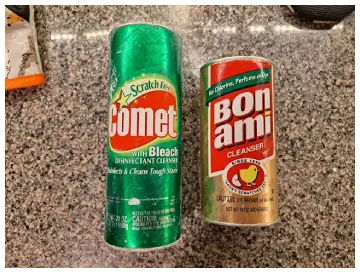
- Abrasiveness level: Comet uses larger calcium carbonate particles that dig into stuck-on messes with more force.
They cut through thick layers faster on the first pass. Bon Ami relies on finer feldspar and limestone particles.
The grit feels smoother under a sponge or cloth. I notice less risk of fine scratches with Bon Ami when I clean softer finishes like older stainless or enamel.
- Chemical profile: Comet contains a chlorine-releasing agent that bleaches stains and kills many common bacteria on contact.
The odor is sharp and fills the room quickly. Gloves and open windows become necessary for comfort.
Bon Ami sticks to limestone, feldspar, soda ash, baking soda, and a mild surfactant. No chlorine. No perfume. No dye. The air feels cleaner and more neutral after the rinse.
- Surface compatibility: I keep Comet away from aluminum, soft plastics, silver, painted surfaces, and certain rubber items.
Bon Ami works well on porcelain, stainless steel, enamel, and ceramic tile with fewer restrictions.
I still avoid glass and mirrors with both products to prevent any haze or damage.
- Cleaning philosophy: Comet suits heavy-duty jobs where speed and disinfection matter most.
Bon Ami fits repeated gentle use in homes that prefer fewer synthetic additives and a softer approach to daily maintenance.
- Rinse and residue: Comet can leave a faint green tint from its dye in the rinse water. Thorough flushing is required.
Bon Ami rinses clear with almost no color left behind. Surfaces feel smoother and cleaner to the touch after Bon Ami in my tests.
- Odor after cleaning: Comet leaves a chlorine scent that lingers in the air for a while.
Bon Ami leaves almost no smell once the surface is rinsed. The kitchen stays neutral and ready for cooking right after the job.
Key Features Of Comet
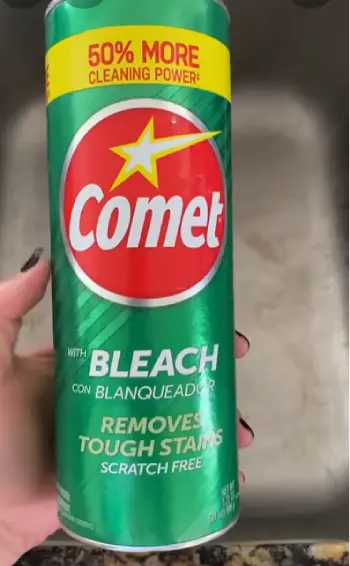
- Chlorine bleach action: The bleach lifts organic stains and brightens dull surfaces.
I reach for it when a bathroom has visible mold spots or a sink has yellowed from hard water and food residue.
Results show up quickly on porcelain and fiberglass.
- Strong surfactant system: It cuts grease and oil fast once mixed with water.
A light sprinkle plus a damp sponge forms a thick paste that grabs onto soap film and kitchen residue.
Vertical surfaces respond well with this paste.
- Wide availability and low cost: Most grocery stores and big retailers carry it year-round.
The can lasts a long time for the price paid.
It works as a reliable default for large cleaning areas or frequent deep sessions.
- Deodorizing effect: The chlorine smell covers musty odors in tubs, drains, and damp corners for a short period.
It masks smells while the cleaning action continues.
- Fast stain removal: Burnt-on food, rust rings, and thick soap scum break down in fewer passes.
I finish tough jobs quicker compared with milder powders.
Visible whitening power: Porcelain and fiberglass often look brighter after one session because of the bleaching action.
The change is easy to see under normal light.
Pros Of Comet
- Fast results on tough stains: Burnt-on food, rust rings, and thick soap scum disappear faster under the coarser grit and bleach. I finish certain deep-cleaning jobs in less time than with gentler options. The power shows on neglected bathroom surfaces.
- Built-in disinfection: The chlorine gives extra assurance on surfaces that have handled raw meat or bathroom bacteria. Pure mechanical scrubbing alone does not match this level of germ control.
- Budget-friendly price: The lower cost per can and wide distribution make it easy to keep stocked. Large cleaning jobs or multiple rooms stay affordable without stretching the budget.
- Visible whitening: Porcelain and fiberglass often look brighter right away from the bleaching action. The improvement is noticeable under kitchen or bathroom lighting.
- Strong grease cutting: Oil and soap film lift quickly once the paste forms. Vertical surfaces like shower walls respond well with proper bottom-up technique.
- Long can life: One container covers many deep-cleaning sessions when used carefully. Storage stays simple in a cool dry place with the lid sealed.
Cons Of Comet
- Harsher on surfaces and skin: Larger particles and chlorine can dull finishes over repeated use. Hands feel dry or irritated if gloves are skipped. Fine scratches appear on softer stainless steel after several sessions.
- Strong chemical odor: The chlorine smell fills the room fast and can trigger headaches or discomfort in poorly ventilated spaces. Windows and sometimes a mask become part of the routine for larger jobs.
- Limited surface safety: Avoid aluminum, rubber, painted surfaces, and certain plastics. Accidental spills on carpet or clothing leave permanent bleach spots that are hard to fix.
- Environmental and health trade-offs: Bleach and synthetic components raise more concerns for indoor air quality and wastewater. Careful use and good ventilation reduce the impact but do not remove it.
- Extra precautions needed: Gloves and ventilation become standard steps. Mixing with acids or ammonia creates real danger and must be avoided at all times.
- Potential residue issues: Dye can tint the rinse water a faint green. Thorough flushing is required to avoid any leftover film or color on the surface.
Key Features Of Bon Ami
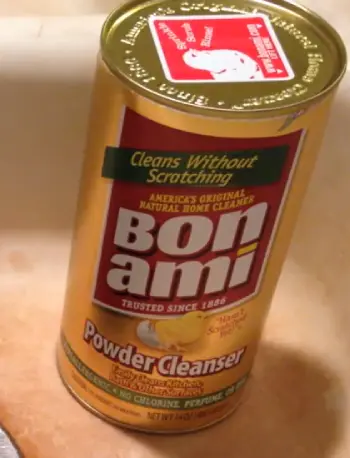
- Mineral-based abrasion: Feldspar and limestone provide the scrubbing power without harsh quartz grit.
The particles feel softer against metal and enamel surfaces.
I trust it on older sinks that already show some wear from years of use.
- Simple ingredient list: Five main components keep the formula transparent and easy to understand.
I know exactly what goes down the drain and what stays on food-contact surfaces after a thorough rinse.
- Hypoallergenic and fragrance-free: No added scent means no lingering perfume that clashes with cooking smells.
Sensitive noses stay comfortable during and after cleaning. The powder itself has almost no odor once wet.
- Biodegradable cleaning agents: The surfactant and mineral base break down more readily than many conventional formulas.
This matters when I think about what leaves the house through the pipes.
- Gentle polishing effect: Regular use keeps surfaces smooth and free of haze.
It polishes more than it scratches on porcelain and stainless steel over time.
- Easy daily application: A light sprinkle handles light grime without much effort.
I can use it more often on the same sink without watching for surface wear or damage.
Pros Of Bon Ami
- Gentle yet effective scrubbing: The finer grit removes everyday grime, light rust, and soap film without the aggressive feel of coarser powders. I use it more often on the same sink and still keep the surface looking smooth.
- Safer ingredient profile: No chlorine. No perfume. No dye. I feel comfortable using it around food prep areas and in homes with kids or pets once the surface is fully rinsed.
- No residual scent: Surfaces smell like clean water after rinsing. Open kitchens stay pleasant and ready for cooking that follows the cleaning session.
- Long track record of surface care: Generations of users have relied on it for enamel and porcelain. It polishes more than it scratches when used regularly over months.
- Hypoallergenic formula: Sensitive skin handles contact better than with bleach-based powders. Gloves stay optional for most light to medium jobs.
- Clear rinse results: No color is left behind in the water. The finish feels smooth and free of haze after consistent use on sinks and tubs.
Cons Of Bon Ami
- Less power on extreme messes: Heavy burnt residue or thick mineral scale often needs more elbow grease. A second pass or a light pre-soak with water helps on the most stubborn spots.
- No disinfection claim: It washes soil and grime away but does not kill bacteria or viruses on contact. High-risk areas still need a separate sanitizer when germ control is the priority.
- Slightly higher cost and narrower retail presence: It is not always stocked in every big-box store the way Comet is. The price per ounce sits a little above the cheapest bleach powders on the shelf.
- Still an abrasive product: Even the milder grit can damage glass, mirrors, non-stick coatings, and highly polished decorative surfaces if used carelessly or with too much pressure.
- More elbow grease required: Tough jobs take longer than with Comet. Patience and steady pressure become part of the process for best results.
- Limited bleaching effect: Surfaces do not brighten as dramatically. Yellowed or stained areas may need extra work or a different product for full restoration.
How I Choose Between Them In Daily Use?
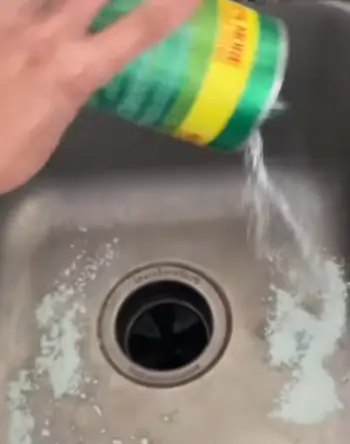
When I face a bathroom that has gone too long without attention—thick soap scum, possible mildew, and a need for brightening—I reach for Comet.
The bleach and coarser grit get the job done in one focused session. I put on gloves, open the window, work in sections, and rinse thoroughly.
The trade-off in odor and surface caution feels worth it for those infrequent deep cleans.
For the kitchen sink that sees daily use, stainless pots, and the porcelain tub that only needs light maintenance, Bon Ami is my default.
I sprinkle, dampen a sponge or cloth, scrub in small circles, and rinse. The lack of perfume keeps the space pleasant, and I never worry about chemical residue near food.
Over months of regular use the surfaces stay smooth and free of the fine haze that coarser abrasives can leave.
Both powders need water to activate. Dry powder alone does little. I dampen the surface or the sponge first, then apply enough product to form a light paste. Too
much product only creates extra rinsing work. On vertical surfaces like shower walls I work from the bottom up so the paste does not dry into streaks before I can wipe it.
Storage is straightforward for both: cool, dry place with the lid tight. Moisture turns either powder into a solid brick that is hard to use.
Bon Ami’s cardboard canister is recyclable in many areas; Comet’s plastic cans vary by version but often contain recycled content.
Real-World Performance Notes
On a heavily stained stainless sink, Comet removed the dark rings and food residue in fewer strokes.
The surface looked brighter immediately, though I noticed a faint green tint in the rinse water from the dye.
Bon Ami required a bit more pressure and a second light application on the worst spots, but the finish felt smoother afterward and showed no color residue.
On a porcelain bathtub with soap film and light rust near the drain, both worked. Comet finished faster and left a bleached look.
Bon Ami took longer yet left the enamel looking polished rather than etched. For a glass cooktop or non-stick pan, I skip both and use non-abrasive methods; neither is designed for those surfaces.
Price per cleaning session ends up close once I factor in how much product each job requires.
Comet’s lower sticker price is offset by the need for gloves, extra ventilation, and occasional surface caution. Bon Ami’s modest premium buys peace of mind on everyday surfaces.
Also Read: Comparison Of Bon Ami And Bar Keepers Friend
Frequently Asked Questions (FAQ)
Bar Keepers Friend offers similar scouring power but uses oxalic acid and is more aggressive. Baking soda provides a milder, cheaper alternative for light jobs.
No. The powder cleanser remains available in standard sizes at many retailers and online, though some larger can sizes have been phased out in certain markets.
No. Bon Ami relies on mineral abrasives without strong acids or bleach. Bar Keepers Friend centers on oxalic acid for rust and mineral deposit removal and has a different safety profile.
Its simple mineral and surfactant formula earns high marks from independent evaluators for low hazard potential when used as directed and rinsed well. It lacks the chlorine and harsh additives found in many conventional powders.
Wrraping Up
I started comparing Comet and Bon Ami because I wanted a clear answer for my own cabinets and the homes I help maintain.
After testing both on real messes, the choice comes down to what you value most on any given day. When you need maximum power and disinfection, Comet delivers. When you want a gentler scrub that leaves fewer chemicals behind, Bon Ami is the steadier partner.
Keep both if your cleaning needs vary, or pick the one that matches the surfaces and air quality you care about most. Either way, you now have the practical details to decide without guessing.
Recent Posts
● Interactive 5-Zone Interior & Exterior Paint Blueprint Paint Coverage Calculator: Gallons, Primer, Square Footage & Cost Tap any architectural surface zone on the blueprint...
If you want smooth, shiny hair without spending a fortune on a premium styling tool, the Ella Bella hair dryer may be worth considering.In these Ella Bella hair dryer reviews, I’ll look...