
I have spent years tracking engine additives after dealing with high-mileage vehicles that started making more noise and using more oil than I liked.
My goal here is straightforward. I lay out a clear practical comparison of Dura Lube and Slick 50. You can decide which product fits your engine needs without the usual hype.
| Feature | Dura Lube | Slick 50 |
| Main Approach | Liquid formula that treats metal surfaces | Historically PTFE-based coating claim |
| Solid Particles | None (no PTFE, graphite, or similar) | Originally PTFE particles; later formulas varied |
| Claimed Protection Duration | Up to 50,000 miles | Up to 50,000–75,000 miles in older claims |
| Typical Use | Replace one quart of oil at change | Add to oil, often one treatment lasting multiple changes |
| FTC History | Settled claims in 2000, paid redress | Settled false advertising charges in 1990s |
| Current Availability | Still sold at major retailers | Brand continues under ownership changes |
| Primary Benefits Marketed | Cooler, quieter running; friction and heat reduction | Reduced wear, especially at startup |
| Compatibility | Gas and diesel, synthetic or conventional | Gas engines primarily in classic marketing |
Key Differences Between Dura Lube And Slick 50
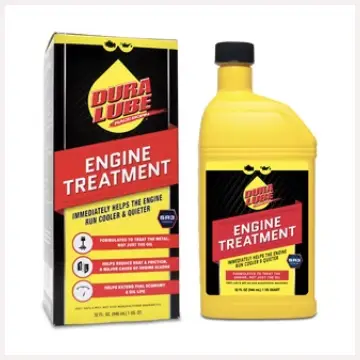
- Formulation base: Dura Lube relies on a pure liquid blend of synthetic polymers. Solvents and detergents form a thin protective layer directly on metal surfaces.
Solid particles stay completely absent from the mix. Slick 50 originally depended on PTFE particles mixed into carrier oil.
Those particles were intended to attach and plate the internal engine surfaces for lasting slipperiness.
- How the protection is supposed to work: Dura Lube aims at the metal itself rather than altering the oil film alone.
Friction drops through surface treatment. Heat generation slows as a result. Slick 50 centered its approach on creating a durable coating.
That coating was claimed to stay in place even after multiple oil drains and refills.
- Marketing claims and regulatory pushback: Both brands encountered Federal Trade Commission actions over performance statements.
Many early numbers lacked sufficient independent support. Dura Lube settled charges and paid consumer redress funds. Slick 50 faced similar pressure.
Advertising language became more limited afterward.
- Longevity of the treatment: Classic Slick 50 materials described protection lasting through numerous oil changes.
A single application was often positioned as long-term. Dura Lube typically calls for treatment at regular oil change intervals.
Ongoing application supports the claimed benefits over time.
- Target user and engine type: Dura Lube promotes use in gasoline engines as well as diesel engines. Higher-mileage units that develop extra noise or heat receive special attention.
Slick 50 advertising focused mainly on everyday passenger cars.
Protection during cold starts formed a repeated selling point in that campaign.
Key Features Of Dura Lube
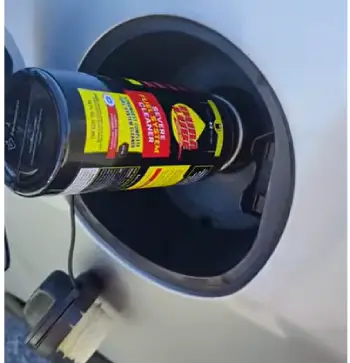
- Liquid-only composition: The entire formula remains liquid from bottle to crankcase. No solid particles of any kind enter the system.
Risks of settling or filter restriction stay minimal. Flow through tight passages continues without interference.
- Heat and friction reduction focus: Many users report engines that operate at lower temperatures after treatment.
Mechanical noise often decreases as friction falls. Components experience less thermal stress. Oil breakdown rates can slow under sustained load.
- Simple dosing method: At each oil change simply hold back one quart of the regular fill. Replace that volume with one full quart of Dura Lube.
The process requires no special tools or extra steps beyond normal maintenance.
- Compatibility across oil types: Conventional motor oil accepts the product without issue. Full synthetic blends work equally well.
Both gasoline engines and diesel engines are listed as suitable applications. Mixed vehicle fleets can share the same bottle.
- Long track record of retail availability: The product continues to appear on shelves at major auto parts and big-box stores. Ownership of the brand has transferred over the years.
Core formulation and packaging updates keep it accessible to consumers.
Pros Of Dura Lube
- Noticeable quieting effect for many users: Higher-mileage engines frequently become quieter after the initial treatment. Valve train tick or general mechanical sound often diminishes. Idle quality improves in a large number of reported cases. The change tends to appear within the first few hundred miles.
- No solid particle concerns: Because the formula contains only liquid ingredients particle accumulation never becomes an issue. Oil filters remain free of extra debris from the additive. Narrow galleries and passages stay clear. Engines with tight clearances benefit from that design choice.
- Cooler running temperatures: Oil temperature readings sometimes drop under highway or heavy load conditions. Coolant temperatures can follow a similar pattern. Reduced heat helps preserve oil viscosity longer. Component expansion stays more controlled.
- Works in both gas and diesel: A single product serves multiple engine types in a household or small fleet. Inventory management becomes simpler. Drivers avoid buying separate additives for different vehicles.
- Still actively sold and supported: Retail availability remains strong across major chains. Updated packaging appears periodically. The brand continues to maintain a visible market presence after decades of sales.
Cons Of Dura Lube
- Cost adds up with regular use: Treating the engine at every oil change means purchasing a new bottle each interval. Cumulative expense over several years becomes noticeable. Spending the same money on premium base oil sometimes delivers comparable or better results.
- Results vary by engine condition: Engines already showing significant wear respond less dramatically. Units containing heavy sludge deposits may show limited improvement. The product cannot reverse existing mechanical damage.
- Limited independent recent testing: Most publicly available data originates from company sources or older laboratory reports. Fresh large-scale independent studies remain uncommon. Consumers must rely on personal observation for current validation.
- Requires consistent application: Skipping treatments often causes earlier gains to fade. The product becomes another recurring item on the maintenance checklist. Consistent memory and budgeting are necessary for best effect.
Key Features Of Slick 50
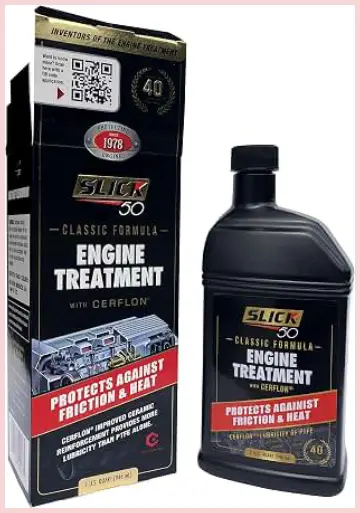
- PTFE heritage: Early versions of the product leaned heavily on PTFE particles known for extreme slipperiness.
That material formed the foundation of the original marketing story. Later reformulations reduced or altered the particle content while retaining the brand name.
- Startup wear emphasis: Advertising repeatedly highlighted the critical moments right after a cold engine starts.
Oil has not yet reached full circulation at that stage. Reduced metal-to-metal contact during those seconds was presented as a major advantage.
- One-treatment longevity claims: Marketing materials often stated that one bottle could deliver protection for tens of thousands of miles.
Multiple oil changes could occur under the same treatment. Drivers who preferred fewer additive purchases found the idea attractive.
- Wide historical distribution: At the height of its popularity the product was nearly impossible to miss in stores.
Extensive television advertising reinforced name recognition. That widespread presence still influences purchasing decisions for some buyers today.
- Evolution under different owners: Quaker State controlled the brand during a key growth period. Pennzoil later assumed ownership.
Subsequent corporate transitions brought further adjustments to formula and labeling.
Pros Of Slick 50
- Strong brand recognition: Generations of drivers grew up seeing the product name. Association with engine protection remains widespread. Familiarity reduces hesitation for first-time buyers. The brand carries residual trust for some owners.
- Potential friction reduction in controlled tests: Certain older laboratory evaluations recorded measurable drops in friction coefficients. Modest increases in horsepower appeared under controlled conditions. Fuel economy gains showed up in specific test scenarios.
- Convenience of longer claimed intervals: Claims of multi-change protection reduce the frequency of additive purchases. Time spent adding product decreases. Overall cost per mile can drop if the longevity statements hold true for the current formula.
- Historical focus on cold-start protection: Drivers who make many short trips in colder climates may still value that emphasis. The first seconds of operation receive special attention in the classic messaging. Modern oils already address much of that concern.
Cons Of Slick 50
- Particle-related questions: Early PTFE formulations prompted concerns about particles collecting in oil filters. Settling in the oil pan appeared in some technical discussions. Even after formula adjustments the historical reputation continues to influence opinions.
- Heavy regulatory history: Federal Trade Commission actions required significant changes to advertising language. Many professional mechanics retain skepticism toward remaining claims. Enthusiasts often approach the product with caution as a result.
- Formula changes over decades: Bottles sold today may differ substantially from those marketed in the 1980s and 1990s. Exact consistency across ownership periods is difficult to confirm. Independent side-by-side comparisons of old and new versions are limited.
- Mixed real-world reports: A portion of owners describe quieter idle and smoother response. Other drivers report no detectable difference after treatment. A smaller number describe operational issues following use. Outcomes remain highly individual.
Real Life Performance
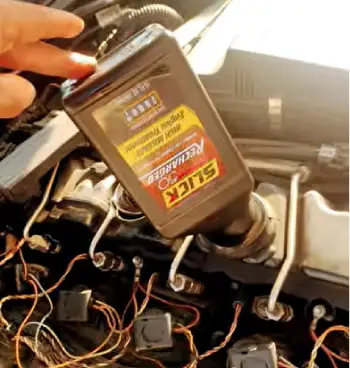
When I look at both products side by side the biggest practical distinction appears in particle content.
Dura Lube uses a liquid surface treatment. Heat drops. Noise drops. Solids never enter the picture. Slick 50 built its name on a coating concept. PTFE once formed the core. Both faced advertising scrutiny.
Neither receives a free pass on early numbers.
Modern engines already use better base oils. Manufacturing tolerances run tighter. Filtration improved over older designs.
Any additive holds a smaller window for dramatic gains. Older engines or those with many short trips can still respond. Extra friction reduction may help. Cost and extra steps must justify the possible quieter operation or lower temperature.
I have used both products in different vehicles over the years. Dura Lube produced a modest drop in valvetrain noise on a higher-mileage truck.
Idle settled smoother after the first treatment. An older bottle of Slick 50 showed harder-to-detect change against normal oil changes.
Neither product restored a tired engine to new condition. Neither replaced timely oil and filter changes. Value appears as incremental improvement. Night-and-day transformation stays rare.
Price and availability also factor in. Dura Lube sits on the same shelves as mainstream treatments.
Finding a bottle stays easy. Slick 50 remains recognizable. Ownership shifts and formula changes make label checks important.
Try either product on an engine already in decent shape. Keep notes on noise. Track oil consumption. Record temperatures. Personal data outweighs any advertisement.
Most daily drivers run quality synthetic oil on schedule. The strongest case for either product involves modest extra protection. Extreme conditions or higher-mileage engines that sound tired create that case. Quiet engines with low oil use and normal temperatures may gain little. Money spent on more frequent filter changes or higher-spec oil often returns better results.
Also Read: Is FRAM Ultra Synthetic Oil Filter Worth It?
Frequently Asked Questions (FAQ)
Many mechanics recommend quality full-synthetic oil changed on schedule. That approach often outperforms any aftermarket additive. Modern friction modifiers or zinc-boosted oils suit older engines better in some cases.
The brand changed hands multiple times. Quaker State ownership occurred. Later corporate owners followed. Formulas moved away from heavy PTFE emphasis. Aggressive claims scaled back after regulatory action.
The company settled FTC charges in 2000. Consumer redress was paid. Ownership transferred in 2005. The brand and core engine treatment continue through major retailers.
Results stay mixed. Some older tests showed friction reduction. Independent reviews questioned the scale of benefits. Particle concerns appeared. Modern oils already deliver strong protection. Any gain tends to remain modest.
Wrapping Up
In the end I return to the same practical test used on my own vehicles. An additive that helps the engine run quieter earns a place.
Cooler operation helps. Lower oil use helps. New problems must stay absent. Dura Lube and Slick 50 both attempt that result. Chemistry differs.
History differs. You now hold the side-by-side details. Strengths appear. Weaknesses appear. Real-world caveats appear.
Take the information. Examine your engine condition. Review your driving pattern. Choose the approach that fits the miles still ahead.
Recent Posts
I spent months comparing budget options against established names after my last set of tires wore out sooner than expected.My goal here is to share what I learned from putting Dextero and...
AquaTru Carafe Vs. Classic: Which Is Actually Fits Your Kitchen?
I decided to write this comparison after months of testing both the AquaTru Carafe and the Classic in my own kitchen. Tracking covered daily use.Taste stayed consistent. Refill frequency...