
I’ve been eyeing air purifiers for ages, and let me tell you, the Dyson TP07 changed everything for me.
If you’re dealing with allergies, pet dander, or just stuffy indoor air, this is the one you need to grab right now.
It combines top-notch purification with a cooling fan that makes your space feel fresh and comfortable.
Trust me, investing in the TP07 isn’t just about cleaner air—it’s about feeling better every day.
You won’t regret hitting that buy button; it’s a game-changer for your home.
My First Experience With The Dyson TP07

When I first unboxed the Dyson TP07, I was struck by how sleek it looked—tall and slim, like a modern sculpture that could blend into any room without screaming “appliance.”
I set it up in my living room, which is about 200 square feet, and plugged it in.
The setup was straightforward; I downloaded the Dyson app on my phone, connected via Wi-Fi, and within minutes, I had full control.
You know that moment when you turn something on and it just works?
That’s what happened here.
The LCD screen lit up, showing real-time air quality stats, and the fan started oscillating gently.
I live in a city apartment where pollen and dust are constant battles, especially during spring.
The first night, I ran it on auto mode while I slept.
It sensed the air quality dipping from some cooking smells earlier and ramped up quietly.
I woke up feeling like I’d breathed fresher air all night—no stuffy nose or itchy eyes.
During a heatwave last summer, the cooling function became my best friend.
It’s not like an AC that chills the room, but the way it pushes air across your skin makes you feel cooler, especially when you’re sitting nearby.
I positioned it by my desk while working from home, and it created this personal breeze that kept me focused without the harsh blast of a traditional fan.
One weekend, we had friends over, and the TP07 handled the extra smoke from the grill sneaking indoors.
The app notified me of rising pollutants, and it purified the air back to normal in under an hour.
I even used the night mode, which dims the display and runs super quietly—barely a whisper at low speeds.
Over the months, I’ve noticed fewer allergy flare-ups, and my partner, who has asthma, swears it’s helped reduce her symptoms. Sure, it’s pricey upfront, but seeing the filter capture visible dust particles makes it worth every penny. I’ve experimented with different oscillation angles, from 45 to 350 degrees, directing airflow exactly where I need it.
Backward airflow mode was a surprise hit for circulating air without direct blowing.
There were a couple of hiccups, like when I forgot to replace the filter after a year, and performance dipped slightly until I did.
But overall, using the TP07 feels intuitive, like it’s anticipating your needs. You can schedule it to run during peak pollution times or integrate it with voice assistants for hands-free control.
It’s become part of my daily routine—morning purification boost while I make coffee, evening cool-down as I unwind.
If you’re like me, skeptical about fancy gadgets, this one delivers on its promises without overcomplicating things.
Pros Of The Dyson TP07
The Dyson TP07 shines in so many ways that I find myself recommending it to friends constantly.
Let’s break down what makes it stand out from the crowd.
- Superior Air Purification Technology
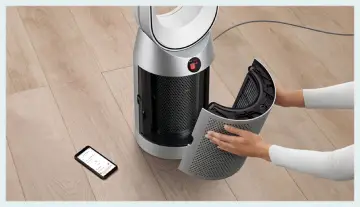
What really sold me on the TP07 is its HEPA H13 filtration system.
This thing is fully sealed, meaning every bit of air that passes through gets scrubbed of 99.97% of particles as small as 0.3 microns.
I’ve seen it tackle everything from pet hair to wildfire smoke particles that drifted into my area last fall.
The activated carbon layer handles odors and gases too, like when I burned dinner—poof, gone in minutes.
You get real-time feedback on the screen and app, showing PM2.5, PM10, VOCs, and NO2 levels. It’s empowering to watch those numbers drop as it works.
In my tests at home, it cleared a smoky room faster than I expected, making the air feel crisp and clean.
If you suffer from seasonal allergies like I do, this feature alone justifies the purchase.
- Effective Cooling And Airflow
As a fan, the TP07 provides that refreshing breeze you crave on hot days.
The bladeless design amplifies air up to 290 liters per second, creating a smooth, even flow without the choppy feel of old-school fans.
I love the oscillation up to 350 degrees; it covers my entire living space evenly.
Backward mode diffuses air gently, perfect for when you want circulation without a direct draft.
During workouts, I point it at myself for instant relief—it’s like having a personal cooling system.
Sure, it doesn’t lower room temperature like an AC, but the evaporative cooling effect on your skin is noticeable and comfortable.
I’ve used it in humid conditions, and it still performs, helping reduce that sticky feeling.
- Smart Features And Connectivity
Integration with smart home setups is where the TP07 excels.
The app lets you monitor air quality from anywhere—I’ve checked it while at work to ensure it’s running optimally. Voice control with Alexa or Siri means I can adjust settings without getting up.
Auto mode is brilliant; it senses pollutants and adjusts fan speed accordingly, saving energy.
Schedules are easy to set, like ramping up during rush hour when traffic fumes peak.
The remote is magnetic and sticks to the top, so it’s always handy.
For tech-savvy folks like us, these features make daily use effortless and fun.
- Quiet Operation For Everyday Use
Noise was a big concern for me, but the TP07 runs quietly on lower speeds—around 40-50 decibels, like a soft conversation.
Night mode dims everything and keeps it whisper-quiet, so it doesn’t disrupt sleep.
Even at higher speeds, the sound is a smooth whoosh rather than an annoying rattle.
I’ve had it on during Zoom calls without complaints from colleagues.
This balance of power and peace makes it ideal for bedrooms or offices.
- Stylish And Space-Saving Design
Aesthetically, it’s a winner. The slim tower fits in tight spots, and the white/silver finish matches my decor seamlessly.
No blades mean it’s safe around kids and pets—I don’t worry about little fingers.
The build quality feels premium, with sturdy materials that hold up to daily use.
It’s lightweight enough to move between rooms, yet stable on its base.
- Energy Efficiency And Sustainability
Running costs are low; it uses about 40-50 watts on high, similar to a lightbulb.
The filters are made from recycled materials, and the machine alerts you when to replace them, avoiding waste.
I’ve noticed no spike in my electric bill, even with frequent use.
For eco-conscious buyers, this aligns with reducing your carbon footprint while improving indoor air.
Overall, these pros make the TP07 a versatile powerhouse. I’ve relied on it through seasons, and it consistently delivers clean, comfortable air.
Cons Of The Dyson TP07
No product is perfect, and the TP07 has its drawbacks that I’ve encountered firsthand. Here’s what you should know.
- High Initial Cost
At around $500-600, it’s not cheap.
I hesitated before buying, wondering if a budget option would suffice.
While the quality justifies it for me, if you’re on a tight budget, this might feel extravagant compared to basic fans or purifiers.
- Filter Replacement Expenses
Filters need changing every 12 months, costing $70-80 each.
That’s an ongoing expense I budget for now.
If you forget, performance drops, so it’s something to track via the app.
- Limited Cooling Power
It cools you personally, but don’t expect room-wide temperature drops.
In extreme heat, I still need my AC as backup.
The fan strength is good but not hurricane-level like some industrial models.
- Noise at Higher Speeds
On max, it hits 60+ decibels, which can be distracting during quiet activities.
I’ve turned it down for movie nights to avoid the hum overpowering dialogue.
- App Connectivity Issues Occasionally
Rarely, the Wi-Fi drops, requiring a reset. It’s minor, but if you’re reliant on remote control, it can frustrate.
- Not Ideal for Very Large Spaces
For rooms over 300 square feet, it struggles to purify quickly.
My living room is fine, but in bigger open plans, you might need multiples.
These cons are manageable, but they’re worth considering based on your needs.
Maintenance Tips The Dyson TP07
Keeping your Dyson TP07 in top shape is straightforward, and I’ve learned a few tricks to make it last.
Regular care ensures it performs like new.
- Regular Filter Replacement
The app notifies you when the filter’s at 10% life, but I check monthly. Unplug, press the catches to remove the old one, and slot in the new.
It takes five minutes.
I buy genuine Dyson filters to maintain HEPA standards—knockoffs might not seal properly.
In dusty environments, replace every 6-9 months; mine lasts a year in moderate use.
- Cleaning The Exterior
Dust the tower weekly with a microfiber cloth—damp, not wet, to avoid water ingress.
For vents, use a soft brush attachment on your vacuum.
I do this standing it upright to prevent tipping. Avoid chemicals; plain water works. The bladeless loop wipes clean easily, keeping that sleek look.
- Deep Cleaning The Machine
Every few months, run a self-clean cycle if prompted, though the TP07 doesn’t have a formal one—wipe internals gently if accessible. Unplug and let it air dry after cleaning.
For stubborn buildup, compressed air blasts vents safely.
- App And Software Updates
Keep the app updated for optimal performance. It pushes firmware to the unit, improving sensors. I restart the Wi-Fi connection quarterly to prevent glitches.
- Placement And Usage Habits
Place it 20cm from walls for airflow. Avoid blocking intakes. Run on auto to conserve energy. In humid areas, monitor for mold—though rare with sealed design.
- Troubleshooting Common Issues
If it beeps, check filters or reset. For noise, clean vents. App issues? Re-pair. These steps keep mine running smoothly.
With these tips, your TP07 will serve you well for years.
Comparison With Other Brands
When I shopped around, I compared the TP07 to several competitors.
Here’s how it stacks up in real-world use.
- Dyson TP07 Vs. Dreo Air Purifier Fan
The Dreo is a budget-friendly alternative at half the price, with strong fan speeds that sometimes outblow the TP07.
I tried a friend’s Dreo, and its app is decent but lacks the Dyson’s detailed pollutant tracking.
Purification-wise, both use HEPA, but the TP07’s sealed system edges out for capturing finer particles.
Dreo feels bulkier, less premium, and noisier at high speeds. If you want affordability and raw power, go Dreo; for refined tech and design, TP07 wins.
- Dyson TP07 Vs. Blueair Pure Fan Auto
Blueair focuses on purification over cooling, with a simpler design that’s quieter overall.
In my research, Blueair handles larger rooms better with higher CADR ratings, but lacks the TP07’s oscillation and smart features.
The app is basic—no voice control.
Blueair filters last longer and cost less, making it economical long-term. However, the TP07’s dual function as a fan gives it versatility; Blueair feels more single-purpose.
For pure air cleaning, Blueair might suit you better, but TP07’s all-in-one appeal is hard to beat.
- Dyson TP07 Vs. Levoit Core Series
Levoit offers great value, with models purifying similarly at lower costs.
I borrowed a Levoit for a week—it’s compact and effective against allergens, but the fan is weaker, more like a gentle breeze than the TP07’s directed flow.
No app or oscillation, so manual adjustments only.
Levoit is quieter and energy-efficient, ideal for bedrooms.
Yet, the TP07’s real-time data and build quality feel superior.
If simplicity and savings matter most, Levoit is solid; TP07 for those wanting premium features.
Dyson TP07 Vs. Coway Airmega
Coway’s Airmega line impresses with robust filtration for bigger spaces, often at similar prices.
Testing one at a store, its auto mode responds quickly, and filters are affordable.
However, it lacks a fan function, focusing solely on purification without cooling.
The design is boxy compared to TP07’s elegance.
Coway apps provide good insights but no backward airflow or wide oscillation.
For heavy-duty cleaning in polluted areas, Coway edges; TP07 balances purification with comfort.
- Dyson TP07 Vs. Honeywell HPA Series
Honeywell is reliable and cheaper, with strong CADR for medium rooms.
I used an older Honeywell model before—it’s effective but noisy and lacks smarts.
No app, just basic controls. Filters are easy to find and inexpensive.
The TP07 outperforms in design and quiet operation, plus the cooling aspect.
Honeywell feels utilitarian; TP07 luxurious.
Budget buyers might prefer Honeywell, but for integrated tech, TP07 is superior.
In the end, the TP07 holds its own against these, especially if you value multifunctionality.
Also Read: Comparison Of Dyson TP07 And TP09
Frequently Asked Questions (FAQ)
Yes, it’s excellent for purification and cooling, with smart features that make it user-friendly.
It’s best for rooms up to 150 square feet for optimal performance, though it can handle larger with reduced efficiency.
Absolutely, the HP07 adds heating, making it versatile year-round with strong purification.
It provides a cooling sensation through airflow, effective for personal comfort but not room temperature reduction.
Wrapping up
The Dyson TP07 has transformed my indoor environment, and I urge you to make it yours.
With its purification prowess and cooling comfort, it’s an essential buy for healthier living.
Don’t wait—grab one and breathe easier today.
Recent Posts
● Interactive 5-Zone Interior & Exterior Paint Blueprint Paint Coverage Calculator: Gallons, Primer, Square Footage & Cost Tap any architectural surface zone on the blueprint...
If you want smooth, shiny hair without spending a fortune on a premium styling tool, the Ella Bella hair dryer may be worth considering.In these Ella Bella hair dryer reviews, I’ll look...