
I set out to compare The Farmer’s Dog and JustFoodForDogs after months of feeding both to my own dogs and tracking every detail that mattered—taste acceptance, stool quality, energy levels, cost over time, and how each fit into a busy household routine.
My goal is straightforward: give you a clear, side-by-side look at these two popular fresh dog food services so you can decide which one actually works better for your dog and your life.
| Category | The Farmer’s Dog | JustFoodForDogs |
| Food Type | Fresh, gently cooked, human-grade | Fresh frozen + shelf-stable options, human-grade |
| Recipes | 4–7 core options (beef, chicken, turkey, pork + grain-inclusive) | 6+ fresh recipes plus novel proteins, grain-inclusive, and specialty lines |
| Personalization | Fully customized portions via detailed quiz | Standard guidelines with custom diet service available |
| Veterinary Involvement | Board-certified nutritionists on staff | Strong vet team, feeding trials, Vet Support diets |
| Availability | Online subscription only | Online, retail stores, Petco |
| Storage | Freezer then fridge | Freezer (fresh) or pantry (shelf-stable) |
| Starting Price Range | Around $2–$12+ per day | Roughly $3–$20+ per day for full fresh diet |
| Shipping | Free with subscription | Free on qualifying orders or autoship |
| Best For | Convenience and precise daily portions | Variety, research depth, and flexible buying |
My Experience Switching Between Both Brands
I started with The Farmer’s Dog because the signup quiz felt thorough. I entered my dog’s age, weight, activity level, and body condition, and the system spit out exact daily calories and pre-portioned packs.
The food arrived frozen in recyclable packaging, labeled with my dog’s name. Thawing a pack overnight and serving it took almost no effort. My dog cleaned the bowl every time.
A few months later I tried JustFoodForDogs. The ordering process was different—more like shopping for packs of specific recipes rather than a fully calculated plan.
Portions required measuring, which added a small step. What stood out immediately was the wider menu.
I rotated through chicken and rice, beef and potato, fish, and even a venison option. My dog still ate enthusiastically, though the texture of some recipes felt denser.
Both improved coat shine and produced firmer stools compared with the previous kibble. Energy stayed steady.
The real differences showed up in daily logistics, cost tracking, and how much control I had over ingredients.
Key Differences Between The Farmer’s Dog And JustFoodForDogs
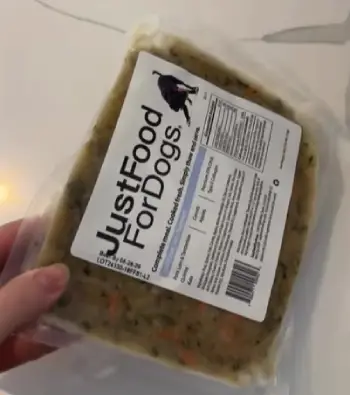
- Personalization approach: The Farmer’s Dog builds a complete calorie-matched plan from the start and sizes every pack for your dog’s exact daily needs.
JustFoodForDogs provides recipe choice plus a feeding calculator so you measure portions yourself and adjust more manually when needs change.
- Recipe range and flexibility: The Farmer’s Dog keeps the list short and focused so you usually pick up to three recipes per box.
JustFoodForDogs offers more proteins including fish, lamb, and venison along with grain-inclusive and grain-free choices that help when a dog develops a preference or mild sensitivity.
- Buying model: The Farmer’s Dog runs on a subscription that you can pause or cancel easily while the default stays recurring delivery.
JustFoodForDogs lets you buy one-time boxes, subscribe, or pick up in stores and also offers a shelf-stable PantryFresh line that removes the freezer requirement for some meals.
- Science and testing depth: Both meet AAFCO standards for complete nutrition.
JustFoodForDogs has published feeding trials on certain recipes and university digestibility studies while The Farmer’s Dog relies more on formulation by veterinary nutritionists with its own supporting research.
- Storage and prep: Both need freezer space for the fresh lines.
The Farmer’s Dog packs arrive ready to thaw and serve while JustFoodForDogs fresh packs often need measuring and the pantry versions sit on a shelf until opened.
Key Features Of The Farmer’s Dog

- Human-grade ingredients cooked gently in USDA kitchens: Recipes start with named meats and visible vegetables without mystery meals or heavy processing.
The nutrient blend fills in the vitamins and minerals needed for complete and balanced nutrition.
- Fully tailored daily portions: The online quiz collects age, weight, breed, activity, and spay or neuter status.
The company then calculates exact calories and packs the food accordingly which reduces guesswork and waste over time.
- Simple subscription management: Deliveries arrive on a schedule you choose and you can swap recipes, change frequency, or skip a box through the account dashboard.
Free shipping is standard with every order.
- Limited but consistent recipe lineup: Core options center on beef, chicken, turkey, and pork with some versions now including grains.
The short ingredient lists make it easier to spot potential triggers if a dog shows sensitivities.
- Eco-conscious packaging: Materials are designed to be recyclable or biodegradable.
The packs keep food frozen during transit and store cleanly in a freezer without taking excess space once organized.
Pros Of The Farmer’s Dog
- Precise portion control that matches your dog’s actual needs: The calculated packs help maintain ideal weight without constant measuring. I noticed less leftover food and steadier energy levels after the initial transition period settled in.
- High acceptance even with picky eaters: The texture and smell of the lightly cooked meals appeal to most dogs right away. My dogs finished every serving which had not always happened with other fresh brands I tried earlier.
- Straightforward daily routine: Thaw the pack, open it, and serve with almost no extra steps required once the plan is set. This matters a lot on busy mornings or when someone else needs to feed the dog.
- Clean ingredient lists: Short panels with recognizable foods make it simpler to rotate proteins or eliminate an ingredient if a sensitivity appears over time. The transparency helps owners feel more in control.
- Reliable delivery and packaging: Boxes arrive frozen and intact most of the time. The subscription tools let you adjust plans without calling customer service for every small change.
Cons Of The Farmer’s Dog
- Higher cost than kibble or many canned options: For larger dogs the monthly total climbs quickly and even with occasional discounts the ongoing expense sits well above conventional food. Budget planning becomes essential for multi-dog homes.
- Freezer space demand: A full shipment for a medium or large dog takes noticeable room in the freezer. Apartments or shared freezers can become tight unless you clear space in advance.
- Limited recipe variety: Four main proteins keep things simple but can feel repetitive for dogs that prefer frequent rotation or need a novel protein for longer periods. Some owners eventually look for more options.
- Subscription-only model: You cannot easily grab a single box without committing to the plan. Pausing works well yet the structure assumes ongoing delivery which may not suit every household.
- Transition adjustment: Moving from dry food requires a gradual switch over several days. Some dogs experience temporary loose stools if the change happens too quickly without proper mixing.
Key Features Of JustFoodForDogs

- Broad recipe selection including novel proteins: Fresh options cover chicken, beef, turkey, fish, lamb, and venison.
Grain-inclusive recipes sit alongside grain-free ones while specialty and veterinary support diets exist for dogs with specific needs.
- Open kitchens and transparent production: The company invites visits to its kitchens and prepares ingredients in small batches using human-grade sources.
This level of visibility builds trust for owners who want to see the process firsthand.
- Multiple formats: Fresh frozen packs, shelf-stable PantryFresh pouches, and DIY nutrient blends give real flexibility.
You can feed full meals, use the food as a topper, or mix formats depending on travel plans or storage limits.
- Research-backed formulation: Recipes are developed with veterinary nutritionists and some have undergone actual AAFCO feeding trials.
Digestibility studies show strong nutrient absorption compared with many processed foods on the market.
- Retail availability: You can buy online, through autoship, or at select pet stores and the brand’s own locations.
No forced subscription is required for basic purchases which keeps options open.
Pros Of JustFoodForDogs
- Greater recipe diversity and specialty options: Access to fish, lamb, venison, and grain-inclusive meals gives more tools for picky dogs or those with mild dietary preferences. The veterinary support line adds another useful layer for dogs under professional care.
- Strong research foundation: Feeding trials and digestibility data provide concrete evidence that the food performs well in real dogs. This level of testing is less common across the fresh food category overall.
- Flexible purchasing: One-time orders, store pickup, and shelf-stable choices reduce commitment pressure. You can test a few recipes without locking into a long subscription right away.
- Transparent kitchens: Knowing the food is prepared in facilities you can visit or at least research increases confidence in sourcing and handling standards. Owners who value openness often prefer this approach.
- Option to use as topper or full meal: The same recipes work for complete feeding or mixed with existing food which helps control cost while still improving the overall diet quality.
Cons Of JustFoodForDogs
- Premium pricing for full fresh feeding: Daily costs for medium and large dogs often exceed those of The Farmer’s Dog on a complete plan. Using it only as a topper softens the expense but reduces the full-diet benefit over time.
- Measuring required for many packs: Unlike pre-portioned competitors you often need to scoop or weigh servings each day. This adds a small daily step and creates potential for inconsistency if portions are not measured carefully.
- Freezer needs for the fresh line: The same storage challenge appears as with other frozen foods. The pantry versions help in some cases yet they differ in texture and overall price structure.
- Stronger aroma in some recipes: Certain packs release a more noticeable smell when first opened. This is normal for fresh meat-based food but can surprise first-time users who are used to milder kibble scents.
- Fewer built-in calorie calculations: The feeding guidelines are solid and reliable yet they do not automatically adjust every shipment the way a fully personalized quiz does. Owners need to monitor weight and energy more closely.
How Pricing Actually Plays Out?

Both services price according to your dog’s calorie needs rather than a flat monthly fee. For a small dog under 20 pounds, daily costs often land between two and five dollars.
Medium dogs in the 30-to-50-pound range commonly fall in the five-to-ten-dollar zone.
Large dogs push higher, sometimes past twelve or fifteen dollars a day on a full fresh diet.
The Farmer’s Dog frequently comes in slightly lower for medium and large dogs on a complete plan because the portions are tightly calculated.
JustFoodForDogs can feel more expensive at full volume, yet the ability to buy smaller quantities or use pantry versions creates room to manage the budget.
Introductory discounts on both sides make the first box more approachable. After that the regular rates apply.
I tracked my own spending for three months on each. The Farmer’s Dog stayed more predictable.
JustFoodForDogs varied more because I rotated higher-cost proteins some weeks. Over a full year the difference becomes noticeable, especially with multiple dogs.
Taste, Texture, And Real-World Acceptance
My dogs preferred the softer, more aromatic packs from The Farmer’s Dog at first. The meat and vegetable pieces stayed distinct.
JustFoodForDogs recipes sometimes appeared denser, closer to a pâté in certain flavors, yet acceptance remained high once the dogs adjusted.
Stool quality improved on both. Coats looked glossier within a few weeks. Energy levels stayed consistent rather than spiking and crashing. These observations matched what many other owners report when they move from highly processed kibble to gently cooked fresh food.
Which One Fits Different Situations?
If your priority is set-it-and-forget-it convenience with exact daily calories, The Farmer’s Dog usually wins. The pre-portioned packs and subscription tools remove friction.
If your dog needs novel proteins, grain options, or you want the freedom to buy without a subscription and access research-backed specialty diets, JustFoodForDogs has the edge.
The open-kitchen transparency and feeding-trial data also appeal to owners who weigh scientific support heavily.
Dogs with diagnosed medical conditions should involve a veterinarian before any switch. JustFoodForDogs offers more tools in that space through its veterinary support line. Healthy adult dogs do well on either brand when portions match their needs.
Storage, Travel, And Practical Logistics
Freezer space is the biggest shared constraint. Plan for a dedicated shelf or drawer. Thawing overnight in the refrigerator works for both. Once thawed, most packs stay good for a few days in the fridge.
For travel, JustFoodForDogs pantry options travel more easily. The Farmer’s Dog requires cooler packs or advance planning. Both companies make it simple to pause deliveries when you will be away.
Long-Term Observations After Extended Use
After six months alternating between the two, I saw no major health differences. Digestion stayed solid, weight remained stable when I followed the guidelines, and both dogs stayed eager at mealtime.
The deciding factors became lifestyle rather than nutrition quality. On weeks when time was short, the pre-portioned Farmer’s Dog packs felt easier. When I wanted to rotate proteins or try a fish-based meal, JustFoodForDogs delivered more options.
Cost remained the largest ongoing consideration. Fresh food is an investment. The payoff shows in coat condition, stool quality, and the simple pleasure of watching a dog finish a meal that looks and smells like real food.
Also Read: Comparison Of Open Farm And Stella And Chewy
Frequently Asked Questions (FAQ)
No single food ranks as the absolute healthiest for every dog. Both brands rank among the top fresh options because of human-grade ingredients and complete nutrition. The best choice depends on your dog’s individual needs and how the food fits your routine.
Many veterinarians recommend it, especially for its research, feeding trials, and veterinary support diets. The brand is frequently cited in discussions of fresh food backed by clinical data.
Yes. Numerous veterinarians view it favorably for its human-grade ingredients, veterinary nutritionist involvement, and personalized approach. Recommendations still depend on the individual dog.
It depends on priorities. JustFoodForDogs offers more recipe variety and stronger published feeding-trial data. Other fresh brands exist, yet both of these sit near the top of the category for quality and transparency.
Final Thoughts
I began this comparison wanting a clear winner. What I found instead is that both services deliver high-quality, gently cooked food that most dogs thrive on.
The Farmer’s Dog shines when you want precise portions and minimal daily effort. JustFoodForDogs stands out when variety, research depth, and flexible buying matter more.
You should weigh your dog’s preferences, your freezer space, your budget, and how much time you want to spend measuring versus simply opening a pack.
Talk with your veterinarian before making a full switch, especially if your dog has health conditions. Start with a trial box from either brand, watch how your dog responds, and adjust from there.
The right choice is the one that keeps your dog healthy, happy, and eager for the next meal while fitting the reality of your household.
Recent Posts
I tried Meltoway Hair Dissolving Cream because I wanted a quick way to deal with unwanted body hair without reaching for a razor every few days. If you are looking for a convenient at-home...
If you’re considering a saffron-based supplement to support mood, appetite control, and everyday wellness, Happy Saffron Plus is worth considering.I like that it takes a familiar botanical...