
As someone who’s logged thousands of miles on two wheels, I’ve put both Garmin and Wahoo bike computers through their paces on everything from casual rides to intense training sessions.
In this article, I’ll break down how these devices stack up, focusing on what matters most for cyclists like us—features, usability, and real-world performance—to help you decide which one fits your riding style.
| Feature | Garmin Edge Series (e.g., 840, 1040) | Wahoo Elemnt Series (e.g., Bolt V2, Roam V2) |
| Price Range | $300–$800 | $250–$400 |
| Display | Color touchscreen, customizable | Color or monochrome, button-based navigation |
| Battery Life | Up to 20–40 hours | Up to 15–17 hours |
| Navigation | Advanced turn-by-turn with rerouting | Solid mapping with offline capabilities |
| Integration | Wide ecosystem (Strava, TrainingPeaks, smart trainers) | Seamless with apps like Zwift, simple setup |
| Sensors | ANT+, Bluetooth, supports power meters, heart rate | ANT+, Bluetooth, easy pairing |
| Durability | Rugged, weatherproof | Lightweight, IPX7 water-resistant |
| Customization | Deep options for data fields | User-friendly, straightforward metrics |
Understanding Bike Computers And Why They Matter?
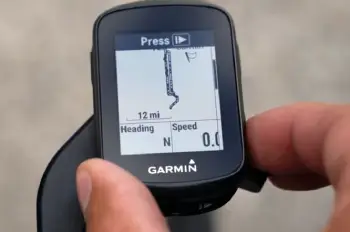
I’ve been cycling for over a decade, and let me tell you, a good bike computer transforms your rides from guesswork to precision.
These devices aren’t just glorified speedometers; they’re your on-bike command center for tracking speed, distance, heart rate, power output, and even navigation.
Garmin and Wahoo dominate the market because they offer reliable tech that syncs with your phone, apps, and other gear.
Garmin feels like the Swiss Army knife of cycling tech—packed with features for data junkies.
Wahoo, on the other hand, keeps things simple and intuitive, appealing to riders who want to focus on the road rather than fiddling with settings.
From my experience, choosing between them comes down to your needs.
If you’re training for races or love analyzing every pedal stroke, Garmin’s depth might win you over. But if you prefer a plug-and-play device that gets out of your way, Wahoo could be your match.
Both brands have evolved, with Garmin adding more user-friendly touches and Wahoo beefing up its mapping.
Key Differences Between Garmin And Wahoo
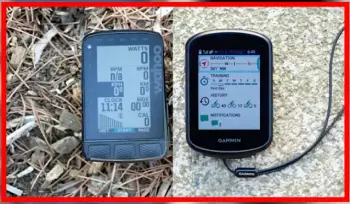
When I compare the two side by side, the distinctions become clear, shaping which one I’d recommend based on your riding habits.
- User Interface: Garmin’s touchscreen offers modern interactivity, while Wahoo’s buttons provide tactile reliability.
I’ve preferred buttons in rough weather.
- Navigation Depth: Garmin excels with dynamic rerouting and popularity-based routes; Wahoo keeps it basic but effective for most users.
- Battery and Durability: Garmin often edges out with longer life and solar options, but Wahoo’s lightweight build suits fast-paced rides.
- Integration and Ecosystems: Garmin’s broader compatibility with its own devices gives it an edge for multi-sport athletes; Wahoo focuses on cycling purity.
- Price and Value: Wahoo generally undercuts Garmin, making it accessible, but Garmin justifies the cost with more features for enthusiasts.
These differences highlight Garmin’s complexity versus Wahoo’s ease.
Key Features Of Garmin Bike Computers
Garmin’s Edge lineup, like the 840 and 1040 models, packs a punch with features that cater to serious cyclists.
I’ve used the Edge 1040 on long gravel adventures, and it’s impressive how it handles everything thrown at it.
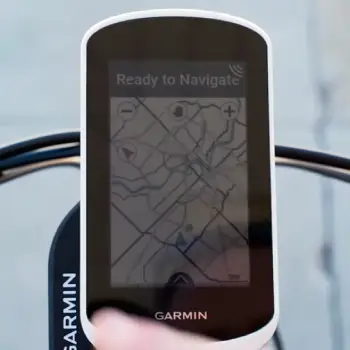
- Touchscreen Interface: The color touchscreen is responsive, even with gloves on, making it easy to swipe through menus mid-ride. You can pinch to zoom on maps, which feels natural if you’re used to smartphones.
- Advanced Metrics: It tracks climb profiles, stamina insights, and even suggests recovery times based on your efforts. As a user, I appreciate how it integrates with Garmin’s ecosystem for detailed post-ride analysis.
- Navigation Tools: Turn-by-turn directions with automatic rerouting if you go off course. I’ve relied on this during unfamiliar routes, and it rarely lets me down.
- Connectivity Options: Seamless pairing with sensors via ANT+ and Bluetooth. It also syncs with smart lights and radars for added safety.
- Battery Management: Up to 40 hours in some modes, with solar options on higher-end models. I’ve gone on multi-day tours without worrying about charging.
These features make Garmin feel comprehensive, especially if you’re into performance tracking.
Pros Of Garmin Bike Computers
Garmin has been my go-to for years on competitive rides, and its strengths are hard to ignore.
- Extensive Data Analysis: You get in-depth metrics like VO2 max estimates and training load.
As a rider pushing limits, this helps me optimize workouts.
- Versatile Ecosystem: Integrates with Garmin watches, indoor trainers, and third-party apps.
I’ve synced it with my Forerunner for multi-sport tracking.
- Safety Features: Incident detection sends alerts to contacts if you crash.
It’s given me peace of mind on solo rides.
- Customization Depth: Endless data pages and widgets.
I tailor it to show exactly what I need, from cadence to elevation gain.
- Long-Term Support: Regular firmware updates keep it fresh.
My older Edge still gets new features.
These pros make Garmin ideal for analytical cyclists.
Cons Of Garmin Bike Computers
No device is perfect, and Garmin has its drawbacks that I’ve encountered firsthand.
- Steeper Learning Curve: The menus can overwhelm beginners. It took me a few rides to get comfortable.
- Higher Price Point: Models like the 1040 cost a premium. If you’re on a budget, it might feel excessive.
- Battery Drain in Intensive Use: Full navigation and sensors can sap power faster than advertised. I’ve had to carry a power bank on epics.
- Bulkier Design: Some units are larger, which might not suit aero setups. It adds a bit of wind resistance.
- Occasional Glitches: Touchscreen can lag in cold weather. I’ve missed turns because of it.
Despite these, Garmin’s reliability outweighs the cons for me.
Key Features Of Wahoo Bike Computers
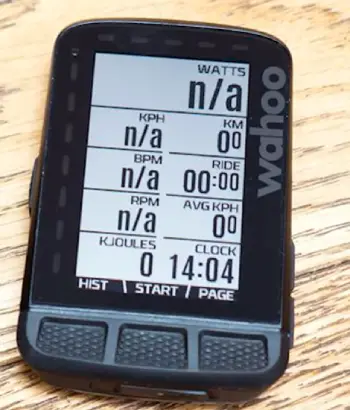
Wahoo’s Elemnt series, including the Bolt V2 and Roam V2, emphasizes simplicity without skimping on essentials.
I’ve taken the Roam on group rides, and its no-fuss approach keeps me engaged with the group rather than the device.
- Button-Based Controls: Physical buttons mean reliable operation in rain or with thick gloves. No accidental swipes like on touchscreens.
- LED Indicators: Quick-glance LEDs for navigation cues and performance zones. It’s a small touch, but it keeps your eyes on the road.
- Mapping Capabilities: Offline maps with route syncing from apps like Komoot or RideWithGPS. I’ve found it straightforward for planning adventures.
- App Integration: Easy setup via the Wahoo app, with live tracking and Strava segments. It pairs quickly with trainers for indoor sessions.
- Lightweight Design: Compact and aero-friendly, perfect for road bikes. The battery lasts 17 hours, which covers most long rides for me.
Wahoo shines in its user-centric design, making tech feel accessible.
Pros Of Wahoo Bike Computers
Wahoo’s appeal lies in its streamlined experience, which I’ve loved on casual outings.
- Intuitive Setup: Pairing and route loading is quick via QR codes. I was up and riding in minutes.
- Reliable Performance: Buttons work in all conditions. No touchscreen frustrations during wet rides.
- Affordable Options: Great value, especially the Bolt V2. It delivers core features without breaking the bank.
- Seamless App Experience: The companion app is clean and functional. Sharing rides to Strava is effortless.
- Community Focus: Integrates well with popular platforms. I’ve used it for virtual races on Zwift without issues.
Wahoo feels like a friendlier entry into smart cycling.
Cons Of Wahoo Bike Computers
Wahoo isn’t without flaws, based on my usage.
- Limited Advanced Metrics: Lacks some of Garmin’s deep analytics like stamina tracking. If you’re data-obsessed, it might fall short.
- Shorter Battery Life: 15-17 hours is solid but less than Garmin’s top models. I’ve cut rides short to charge.
- Fewer Customization Options: Data fields are straightforward but not as flexible. I miss Garmin’s widgets sometimes.
- Navigation Simplicity: No automatic rerouting; you have to manually adjust. It’s fine for planned routes but tricky otherwise.
- Ecosystem Lock-In: Relies heavily on third-party apps for extras. Not as self-contained as Garmin.
These cons are minor if simplicity is your priority.
Real-World Performance: My Experiences On The Road
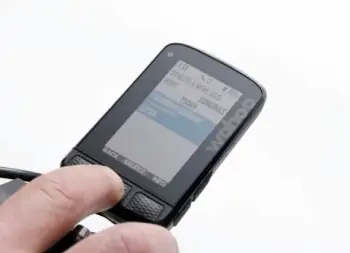
Out on the trails, Garmin’s Edge 840 has been my companion for hill climbs, where its climb pro feature breaks down ascents into segments, showing gradients and distances left.
It’s motivating when your legs are burning.
On a recent 100-mile ride, the stamina meter helped me pace myself, avoiding bonks. But setup took time—customizing data screens felt like tweaking a race car.
Switching to Wahoo’s Elemnt Roam V2, I appreciated the quick start. Scanning a QR code from my phone loaded a route instantly.
During a group ride, the LED turn indicators kept me informed without glancing down much.
However, when I deviated for a coffee stop, I had to pause and reroute manually, which interrupted the flow.
Battery held up for 12 hours of mixed use, but Garmin would’ve lasted longer.
In terms of accuracy, both nail GPS tracking, but Garmin’s multi-band GNSS feels snappier in dense urban areas.
I’ve noticed Wahoo occasionally lags in forests, but it’s rare.
For indoor training, Wahoo pairs flawlessly with my smart trainer, controlling resistance based on routes. Garmin does this too, but with more data overlays.
As a user, I find Garmin rewarding for long-term progress tracking, while Wahoo excels in the moment, letting me enjoy the ride.
Training And Analytics: How They Stack Up?
If you’re serious about training, Garmin’s Connect app is a goldmine.
It analyzes rides with heatmaps, performance graphs, and even suggests workouts based on your fitness level.
I’ve used it to build training plans, monitoring recovery to avoid overtraining.
The 840 model’s training status feature tells you if you’re productive or peaking—super useful for race prep.
Wahoo’s approach is more hands-off. The Elemnt app logs data cleanly but relies on exports to Strava or TrainingPeaks for deeper insights.
It’s great if you don’t want to overthink, but I missed Garmin’s built-in tools during a training block.
Both support structured workouts, but Garmin’s execution feels more polished, with on-screen prompts for intervals.
For power users, Garmin integrates with power meters seamlessly, displaying normalized power and intensity factors.
Wahoo does this too, but without the extra layers like left/right balance on compatible pedals.
Navigation And Mapping: Guiding Your Adventures
Navigation is crucial for explorers like me.
Garmin’s maps are detailed, with points of interest and trail ratings.
On a gravel trip, it suggested popular routes based on community data, avoiding dead ends. If traffic changes, it reroutes automatically— a lifesaver in cities.
Wahoo’s mapping is competent, supporting offline downloads and turn cues via LEDs. I’ve used it for bikepacking, where simplicity shines; no distractions from complex menus. But without auto-rerouting, you need to be vigilant.
Both sync with apps like Komoot, but Garmin’s in-device editing lets you tweak routes on the fly.
In low-signal areas, both perform well, but Garmin’s satellite tech edges it out for remote adventures.
Battery Life And Durability: Keeping Up With Your Rides
Battery is a big deal on long hauls. Garmin’s 1040 Solar extends life with sunlight, hitting 60+ hours in ideal conditions.
My standard 840 lasts 20-30 hours with navigation, which covers ultra events. Charging is USB-C, quick and convenient.
Wahoo’s Bolt V2 claims 15 hours, and in practice, I’ve gotten that with moderate use. It’s efficient, but for all-day epics, I pack a cable. Durability-wise, both are IPX7 rated, surviving rain and sweat.
Garmin feels more rugged for off-road, while Wahoo’s slim profile suits roadies.
I’ve dropped both; they bounce back, but Garmin’s screen protector options add extra peace.
Price And Value: What You Get For Your Money?
Garmin starts at around $300 for basics like the Edge 540, up to $800 for the 1040. You pay for features, and in my view, it’s worth it if you use them all.
Wahoo’s range is $250-$400, offering solid value.
The Bolt V2 at $280 punches above its weight for everyday riders. No subscriptions needed for either, unlike some competitors.
If budget matters, Wahoo gives more bang per buck; Garmin for long-term investment.
Customization And User Experience: Tailoring To You
Garmin lets you create multiple profiles for different bikes—road, MTB, commuter. Data fields are highly adjustable; I show 10 metrics per screen.
Wahoo’s customization is simpler: choose from presets or tweak basics. It’s faster to set up, which I appreciate on busy days.
Both have companion apps for updates, but Garmin’s is more feature-rich, with community challenges.
Safety And Additional Perks
Garmin’s LiveTrack shares your location in real-time, and group messaging during rides keeps teams connected.
Wahoo offers similar tracking but without the extras like weather overlays or nutrition reminders that Garmin provides.
These perks enhance safety, especially for solo cyclists like me.
Also Read: Comparison of Garmin Edge 1030 And 1030 Plus
Frequently Asked Questions (FAQ)
It depends on your needs—Garmin for advanced features, Wahoo for simplicity.
The Garmin Edge 1040 if you want top-tier tech; Wahoo Elemnt Bolt V2 for value.
Yes, they’re reliable, user-friendly, and great for most cyclists.
Garmin 840 offers touchscreen, deeper analytics, and longer battery; Wahoo Elemnt focuses on buttons, quick setup, and affordability.
Wrapping It Up
Looking back on my rides with both, I lean toward Garmin for its analytical edge that pushes me further, but I get why you’d choose Wahoo—it’s like that reliable buddy who never complicates things.
Whichever you pick, it’ll elevate your cycling. Think about what excites you on the bike, and go from there. Ride safe out there!
Recent Posts
● Interactive 5-Zone Interior & Exterior Paint Blueprint Paint Coverage Calculator: Gallons, Primer, Square Footage & Cost Tap any architectural surface zone on the blueprint...
If you want smooth, shiny hair without spending a fortune on a premium styling tool, the Ella Bella hair dryer may be worth considering.In these Ella Bella hair dryer reviews, I’ll look...