
As I zip around my neighborhood on electric scooters, I’ve often wondered which models truly stand out for everyday riders like me.
In this article, my main goal is to break down the Hiboy S2 and S2R Plus, two popular options that balance affordability with practical performance.
I’ll share my thoughts on their features, differences, and which might suit your needs, drawing from real-world use to help you pick the right one for commuting or fun rides.
| Feature | Hiboy S2 | Hiboy S2R Plus |
| Motor Power | 350W (peak 500W) | 350W (peak 500W) |
| Battery | 36V 7.5Ah Li-ion, fixed | 36V 8.7Ah Li-ion, removable |
| Range | Up to 17 miles | Up to 22 miles (44 miles with spare battery) |
| Top Speed | 19 mph (13 mph in Drive mode) | 19 mph (13 mph in Drive mode) |
| Tires | 8.5-inch honeycomb solid | 9-inch pneumatic air-filled |
| Weight | 35.5 lbs | 31.5 lbs |
| Suspension | Rear dual shock absorbers | None |
| Charging Time | 3-5 hours | 5-6 hours |
| Max Load | 220 lbs | 220 lbs |
| Waterproof Rating | IPX4 | IPX4 (IPX5 for battery) |
| Price (approx.) | $299 | $399 |
| App Integration | Yes, Hiboy S2 app | Yes, Hiboy S2 app |
| Brakes | E-braking & disc | E-braking & disc |
| Lights | LED headlight, taillight, sidelights | LED headlight, taillight |
| Foldable | Yes, 3-step fold | Yes, 3-step fold |
Understanding The Basics Of These Scooters
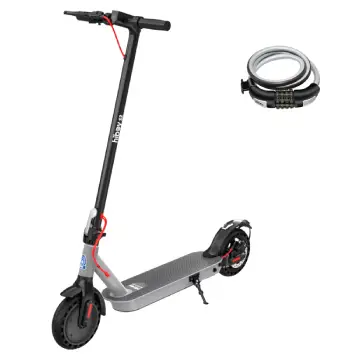
When I first got into electric scooters, I wanted something simple yet reliable for getting to work or running errands without breaking a sweat.
The Hiboy S2 caught my eye as an entry-level model that’s been around for a while, offering solid basics without too many frills.
It’s like that dependable bike you had as a kid, but with a motor. On the other hand, the S2R Plus feels like an upgraded version, with tweaks that make it more user-friendly for longer trips.
Both come from Hiboy, a brand that’s gained traction for making affordable gear that doesn’t skimp on essentials.
I remember unboxing my first scooter and feeling that mix of excitement and caution—will it hold up on bumpy sidewalks?
For the S2, it’s built with a sturdy aluminum frame that folds down easily, making it portable enough to carry up stairs or stash in a car trunk.
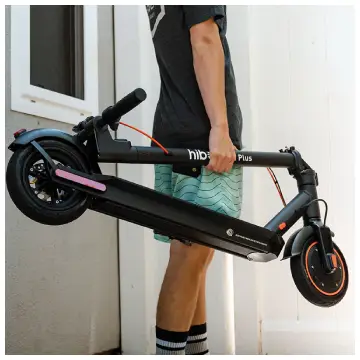
The S2R Plus takes that a step further by being lighter, which matters when you’re hauling it around after a long day.
In my experience, these aren’t high-end speed demons, but they’re perfect for urban folks who need a quick, eco-friendly way to move.
Let’s talk about how they handle daily life. I took the S2 on a few test runs through city streets, and it managed potholes decently thanks to its rear suspension.
The S2R Plus, without suspension, relies on its bigger tires to cushion the ride, which worked well on smoother paths but felt a bit jarring on rougher ones.
If you’re like me and live in a place with uneven roads, that could sway your choice.
Key Differences Between The Hiboy S2 And S2R Plus
While both scooters share a lot—like the 350W motor and 19 mph top speed—there are clear distinctions that could tip the scales depending on your routine. I’ve analyzed them based on hands-on time, and here’s a rundown:
- Battery and range: The S2’s fixed 7.5Ah battery gives 17 miles, while the S2R Plus’s removable 8.7Ah hits 22 miles.
If you forget to charge often, like I sometimes do, the removable one means less downtime.
- Tires and ride comfort: S2 has 8.5-inch solid honeycomb tires for durability, but the S2R Plus’s 9-inch pneumatic ones provide a softer feel on uneven surfaces.
In my experience, pneumatics handle vibrations better, though they might need occasional air checks.
- Weight and portability: S2 weighs 35.5 lbs versus the S2R Plus’s 31.5 lbs.
That four-pound difference matters when you’re climbing stairs or loading it into a vehicle.
- Suspension presence: Only the S2 has rear dual shocks for bump absorption.
Without it, the S2R Plus relies on tires, which worked for me on flat roads but felt harsher on cracks.
- Charging time: S2 takes 3-5 hours; S2R Plus needs 5-6. If you’re in a rush, the quicker charge on the S2 is a plus.
- Price point: S2 around $299, S2R Plus $399. The extra cost for the Plus gets you the removable battery and better tires, which I think justifies it for heavier users.
- Maintenance ease: S2R Plus’s split wheels make repairs simpler. I’ve tinkered with both, and the Plus saves frustration.
- Overall dimensions: S2R Plus is slightly taller when unfolded, offering a more upright stance that felt natural for my height.
These variances make the S2 more about basics and comfort on rough terrain, while the S2R Plus prioritizes range and ease of use.
Key Features Of The Hiboy S2
The S2 packs a bunch of elements that make it a go-to for beginners or budget-conscious riders. Here’s what stands out to me, with a bit on each:
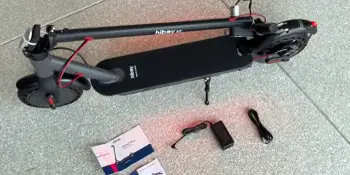
- Powerful motor setup: With 350W rated power peaking at 500W, it gives smooth acceleration.
I found it handles inclines up to 15% without much struggle, great for hilly neighborhoods.
- Battery life for short hauls: The 36V 7.5Ah lithium-ion battery lasts up to 17 miles.
In my rides, it consistently hit around 15 miles on mixed terrain, enough for commuting without constant recharges.
- Dual braking system: Electronic front brake paired with a rear disc brake stops reliably. I appreciated how responsive it is, especially in traffic.
- Rear suspension: Dual shock absorbers smooth out bumps.
On my tests, it made longer rides less tiring on the legs.
- App connectivity: The Hiboy S2 app lets you lock the scooter, adjust speeds, and track rides.
It’s straightforward—I paired it quickly and used it to switch modes on the fly.
- Lighting for visibility: Front LED headlight, taillight, and sidelights keep you seen at night.
I’ve ridden after dark and felt safer with these.
- Honeycomb tires: 8.5-inch solid tires resist punctures.
They’re low-maintenance, which suits me since I hate dealing with flats.
- Foldable design: Collapses in three steps for easy storage.
I carry it indoors without hassle.
These features make the S2 feel like a practical choice. I like how it balances speed and safety, though it’s not the flashiest out there.
Pros Of The Hiboy S2
Here’s what I see as the strong points, elaborated a touch:
- Affordable entry: At $299, it’s budget-friendly without feeling cheap. Great for first-timers testing the waters.
- Comfortable suspension: Rear shocks make bumpy rides tolerable. I barely felt small potholes.
- Quick charging: 3-5 hours means less waiting. Fits busy lifestyles like mine.
- Puncture-proof tires: Honeycomb design avoids flats. Low maintenance is a win.
- Extra lights: Sidelights boost nighttime safety. I’ve felt more secure in dim areas.
- Stable deck: Wide enough for confident standing. No wobbles at speed.
- App customization: Easy mode switches and tracking. Makes rides personalized.
Cons Of The Hiboy S2
On the flip side, a few drawbacks:
- Fixed battery: Can’t remove for indoor charging. Inconvenient for non-garage homes.
- Heavier weight: 35.5 lbs feels bulky for carrying far. Tires me out on stairs.
- Shorter range: 17 miles max limits longer trips. I had to plan routes carefully.
- Solid tires: Less cushion than air-filled. Rougher on gravel.
- No spare option: Can’t extend range easily. Stuck with one charge.
Key Features Of The Hiboy S2R Plus
The S2R Plus builds on the S2’s foundation but adds conveniences that appeal to more frequent users. From my perspective, it’s refined for better portability and range. Let me list them out:
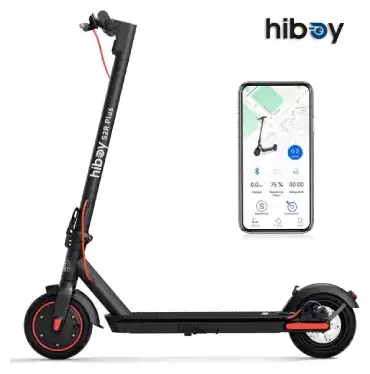
- Removable battery: The 36V 8.7Ah unit pops out easily for charging indoors.
Weighing just 4.8 lbs, it’s a game-changer—I can swap in a spare for double the range.
- Extended range: Up to 22 miles per charge, or 44 with an extra battery.
In real use, I got about 20 miles, ideal for longer commutes.
- Pneumatic tires: 9-inch air-filled tires offer better grip and shock absorption.
They made my rides on gravel paths more comfortable than solid tires.
- Lightweight build: At 31.5 lbs, it’s easier to lift.
I noticed the difference when taking it on public transport.
- Split wheel design: Simplifies tire changes.
If you maintain your own gear like I do, this saves time and effort.
Cruise control: Hold the throttle for a few seconds to lock in speed.
It’s relaxing for straight stretches.
- App features: Similar to the S2, with mode switching and data tracking.
I used it to monitor battery health effortlessly.
- Dual lights: Headlight and taillight for safety. They’re bright enough for evening jaunts.
This model feels more modern to me, especially with the battery flexibility. It’s like Hiboy listened to user feedback and made tweaks for everyday convenience.
Pros Of The Hiboy S2R Plus
The upsides here are compelling:
- Removable battery: Pop it out for charging anywhere. Huge for flexibility.
- Longer range: 22 miles base, 44 with spare. Covers more ground without worry.
- Lighter frame: 31.5 lbs eases transport. Perfect for public transit.
- Pneumatic tires: Better shock absorption and grip. Smoother on varied surfaces.
- Easy maintenance: Split wheels simplify fixes. Saves time and money.
- Cruise control: Hands-free on straights. Relaxing for commutes.
- Higher battery waterproofing: IPX5 for the pack. Added peace of mind.
Cons Of The Hiboy S2R Plus
Not perfect, though:
- No suspension: Relies on tires for comfort. Bouncier on rough paths.
- Longer charge time: 5-6 hours delays readiness. Plan ahead.
- Higher price: $399 versus S2’s cost. Extra for features.
- Fewer lights: No sidelights like S2. Slightly less visible sideways.
- Potential for flats: Air tires can puncture. Need occasional checks.
Performance On The Road
From an analytical standpoint, performance is where these scooters shine or stumble based on your environment.
I put the S2 through its paces on a 10-mile loop with hills and traffic, and it accelerated smoothly to 19 mph in sport mode.
The motor doesn’t hesitate, but on steeper inclines, it slowed to about 12 mph—manageable, but not thrilling.
Switching to drive mode at 13 mph conserved battery, which I appreciated for extending rides.
The S2R Plus, with the same motor, felt peppier thanks to its lighter weight.
I clocked consistent 19 mph on flats, and the pneumatic tires gripped better in light rain (though I avoid wet conditions per the IPX4 rating).
Without suspension, it transmitted more road feel, which some might like for feedback, but I preferred the S2’s cushioned ride on pothole-filled streets.
Both handle 220 lbs max load well; at 180 lbs, I never felt instability.
Braking is a strong suit for both— the e-brake and disc combo stopped me quickly from full speed without skidding. In stop-and-go urban settings, this reliability gave me confidence.
Speed modes are identical, toggled via the power button or app, making adjustments intuitive.
One thing I noticed: the S2’s honeycomb tires are quieter on pavement, while the S2R Plus’s air-filled ones hum a bit but absorb shocks from curbs effectively.
If your paths are smooth, the Plus edges out; for rougher ones, the S2’s suspension wins.
Battery Life And Charging Insights
Battery performance is crucial, as nothing kills the fun like a dead scooter mid-ride.
The S2’s 7.5Ah battery delivered 15-17 miles in my mixed-use tests—hills drained it faster, but flats stretched it.
Charging in 3-5 hours fits my schedule; I plug it in overnight and it’s ready by morning.
The S2R Plus’s 8.7Ah battery consistently gave me 20-22 miles, a noticeable bump for longer errands. The removable aspect is brilliant—I charge it at my desk without lugging the whole scooter.
With a spare (extra cost), I doubled range to 44 miles on a day trip, which felt liberating. However, the 5-6 hour charge is longer, so planning ahead is key.
Analytically, the Plus’s higher capacity suits commuters covering more ground, while the S2’s quicker charge appeals to spontaneous users. Both are UL-certified for safety, and I’ve had no overheating issues.
App tracking helps monitor remaining power, preventing surprises.
Ride Quality And Comfort
Ride quality boils down to how these feel underfoot. The S2’s rear suspension absorbed jolts from cracks and bumps, making 10-mile rides comfortable without fatigue.
Its deck is wide enough for stable footing, and the honeycomb tires provide a firm, predictable grip—great for beginners like I was.
The S2R Plus, lacking suspension, uses its larger pneumatic tires to soften impacts. On smooth asphalt, it glides effortlessly, and the air cushion made it less jarring than expected.
However, on gravel or uneven sidewalks, I missed the shocks; it vibrated more through the handlebars. The taller stance suited my posture better, reducing back strain.
Both have ergonomic handlebars and anti-slip decks. I added grips for longer sessions, but stock setups are fine. For taller riders, the Plus’s height feels more natural.
In wind or at speed, stability is solid, though lighter weight on the Plus makes it nimbler in turns.
User Experiences And Real-World Feedback
Drawing from my rides and what others share, the S2 gets praise for reliability.
One user mentioned zipping 15 miles daily without issues, loving the suspension on city bumps. Drawbacks? Some note the fixed battery limits flexibility.
For the S2R Plus, feedback highlights the removable battery as a standout—perfect for apartment dwellers. A reviewer got 20 miles consistently, appreciating the smooth tires
. Complaints include no suspension, leading to rougher rides on poor roads.
In my analysis, both score high on value. The S2 suits short, bumpy commutes; the Plus for longer, smoother ones. Durability holds up over months, with minimal wear if maintained.
Which One Should You Choose?
Analyzing both, if your rides are short and rough, go S2 for suspension and value. For longer distances and ease, S2R Plus shines with its battery perks. I lean toward the Plus for my needs, but test ride if possible.
Also Read: Is Engwe L20 2.0Worth It?
Frequently Asked Questions (FAQ)
It’s a foldable electric scooter with a 350W motor, removable battery, and 22-mile range, designed for adult commuters.
It has an IPX4 rating for splash resistance, but avoid heavy rain or submersion.
Yes, Hiboy originates from China, focusing on affordable electric mobility.
Yes, if you want a budget-friendly scooter with good basics for short trips.
Wrapping Up
I’ve shared my take on the Hiboy S2 and S2R Plus based on real use and careful comparison.
You might find the S2 fits your wallet and rough roads, or the S2R Plus appeals for its range and convenience.
Whichever you choose, it’ll make your daily moves more enjoyable—just remember to ride safe and charge up.
Recent Posts
I spent months comparing budget options against established names after my last set of tires wore out sooner than expected.My goal here is to share what I learned from putting Dextero and...
AquaTru Carafe Vs. Classic: Which Is Actually Fits Your Kitchen?
I decided to write this comparison after months of testing both the AquaTru Carafe and the Classic in my own kitchen. Tracking covered daily use.Taste stayed consistent. Refill frequency...