
I spent the last several weeks alternating daily between the Hypervolt Go 2 and the Theragun Mini on my own sore quads, tight shoulders, and lower back after runs and long hours at a desk.
My main intent with this article is to give you a clear, side-by-side breakdown of how these two compact percussion devices actually perform in real recovery so you can choose the one that matches your needs without second-guessing the purchase.
| Feature | Hypervolt Go 2 | Theragun Mini |
| Weight | About 1.5–1.6 lbs | Roughly 0.9–1.4 lbs |
| Battery Life | Up to 3 hours | Around 2.5 hours (150 minutes) |
| Speeds | 3 levels (approx. 2200–3200 RPM) | 3 levels (1750, 2100, 2400 PPM) |
| Amplitude / Stroke | Around 10 mm | 12 mm |
| Stall Force | Moderate (noticeable drop under heavy pressure) | About 20 lbs |
| Attachments Included | Typically 2 (flat and bullet) | Often 1–3 (standard ball plus extras) |
| Noise Level | Very quiet | Noticeable but manageable |
| Price Range (approx.) | $199 | $200–$220 |
| Portability | Compact but bulkier than true minis | Ultra-compact and travel-ready |
| Extra Features | Simple controls, no app | Some models support app pairing |
Why These Two Stood Out For Everyday Recovery?
I reached for both devices because full-size massage guns stay home more often than they get used.
After training sessions or when my neck tightens from screen time, I want something I can grab fast, hold with one hand, and pack in a gym bag or carry-on without thinking twice.
The Hypervolt Go 2 and Theragun Mini both promise that smaller footprint while still delivering useful percussion.
I treated them as tools for real muscle tightness rather than marketing claims, testing them on the same muscle groups under the same conditions so the differences would show up clearly.
Key Differences Between Hypervolt Go 2 And Theragun Mini
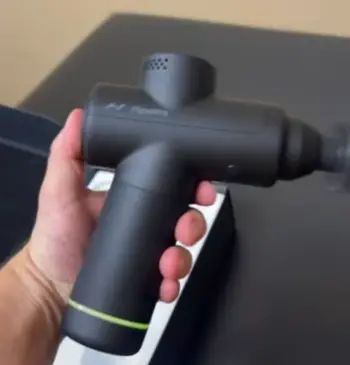
- Size and how they pack: The Theragun Mini wins for pure portability because it takes less space and weighs less, allowing me to toss it into a daypack or even a large coat pocket without a second thought, while the Go 2 remains easy to carry but occupies more room and feels bulkier during longer holds.
- Power delivery under pressure: The Mini maintains its percussion better when I lean into a tight muscle with real body weight, whereas the Go 2 starts to slow sooner under firm pressure, requiring me to lighten my hand to keep a steady rhythm on dense areas.
- Noise in daily use: The Go 2 runs noticeably quieter, so I used it in a quiet apartment early in the morning without concern, while the Mini produces a clearer mechanical sound that remains acceptable but stands out more in shared living spaces.
- Attachment options and reach: Both come with limited heads compared to full-size models, yet the Mini’s ball head felt versatile for most needs while the Go 2’s flat and bullet combination covered broad and pointed areas well, though I sometimes wished for a third option on either device.
- Battery longevity in practice: The Go 2’s three-hour claim held up across multiple short sessions, giving it a slight edge, while the Mini’s two-and-a-half hours still proved generous for typical daily recovery and never left me without power when I needed it.
- Feel of the massage itself: The longer stroke on the Mini created a deeper sensation on larger muscles that felt more thorough after hard efforts, whereas the Go 2 delivered a smoother vibrating quality that some prefer for general relaxation rather than intense deep-tissue work.
- Price and value perception: Both sit in a similar range, but the Go 2 often comes in slightly lower, making it feel like stronger everyday value when the overall performance gap stays modest for regular users.
- Ease of self-treatment on the upper body: The Mini’s shape and lighter weight made reaching the middle of my own upper back and opposite shoulder less awkward, while the Go 2 required more careful angling and occasional hand switches during those same movements.
Key Features Of The Hypervolt Go 2
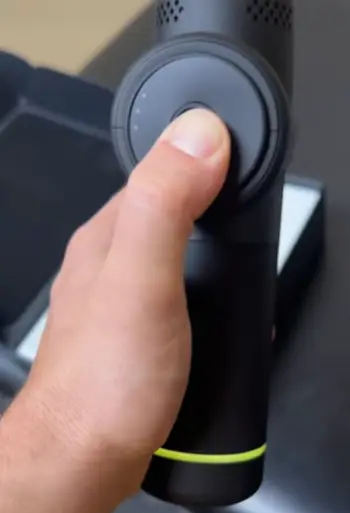
- Compact yet substantial build: The Go 2 sits comfortably in a middle ground between true pocket devices and full-size guns, giving me better leverage when working larger areas like the outer quads or thick upper traps without feeling oversized in a bag.
- Three speed settings with a quiet motor: The lowest speed suits warm-ups and sensitive spots while the middle and top speeds deliver enough consistent vibration to loosen post-run calves, and the brushless motor stays impressively quiet during early morning or shared-space sessions.
- Up to three hours of runtime: I regularly finished multiple short recovery sessions across two full days before needing a recharge, which made it reliable during busy training weeks when I only used it for ten to fifteen minutes at a time.
- Two included attachments: The flat head covers broader zones such as the glutes and hamstrings effectively, while the bullet head reaches tighter spots like the feet or along the shin with good precision for targeted work.
- Simple one-button operation: There are no menus or complicated settings to navigate, so I simply power it on, cycle through the speeds, and start treating tight areas within seconds of picking it up.
- Travel-friendly size without a case: It slides easily into a backpack side pocket or suitcase compartment, though I often wrapped it in a soft cloth for extra protection during longer trips.
- Consistent power delivery across the battery cycle: The motor maintains steady performance from a full charge down to lower levels, so the last session of the day still feels useful rather than weak.
Comfortable grip for extended holds: The handle shape reduces hand fatigue during longer passes over the back or legs, letting me finish a full recovery routine without needing to switch hands constantly.
Pros Of The Hypervolt Go 2
- Quiet operation that fits real life: I used the Go 2 while someone else was on a call in the next room and never received a complaint, which removed a common barrier and encouraged more consistent short sessions throughout the week.
- Strong battery that supports frequent short sessions: Three hours of runtime meant I charged it less often, and during a high-mileage training block I relied on it almost daily while still having charge left at the end of the week.
- Approachable power for beginners and regular users: The speeds feel effective without becoming aggressive, so people new to percussion massage or those who prefer milder pressure will likely appreciate the balanced and controlled sensation.
- Solid construction at a competitive price: The device feels well-made with responsive buttons and a motor that stays consistent across the battery cycle, delivering reliable performance without the higher cost of some premium alternatives.
- Easy to use right out of the box: There is virtually no learning curve, allowing me to charge it, attach a head, and begin working on tight spots within minutes of unboxing on the first day.
- Smooth vibration quality for longer sessions: The massage sensation stays comfortable over extended periods on the back or legs, reducing the chance of the treatment itself becoming tiring or irritating.
- Good leverage for broader muscle groups: The slightly larger frame helps when covering the quads, glutes, or upper back in fewer passes compared with ultra-light minis that can feel less stable under pressure.
Cons Of The Hypervolt Go 2
- Heavier and bulkier than true mini options: After twenty minutes of continuous use on my upper back my arm noticed the weight more than with the Mini, and packing it requires a slightly larger dedicated space in a bag.
- Limited pressure tolerance: When I pressed firmly into dense tissue the motor slowed noticeably, which reduced effectiveness on the thickest parts of the quads or the glute medius and forced lighter technique.
- Fewer attachments included: Two heads cover the basics adequately, yet I occasionally wanted a softer cushion or a fork-style head for the spine area, and buying extras increases the overall cost.
- No protective case in the box: I ended up wrapping it in a towel or soft cloth for travel to keep the head and body protected, which felt like an unnecessary extra step for a device in this price range.
- Slightly less refined grip for certain self-treatment angles: Reaching the exact middle of my own upper back or the opposite shoulder required more awkward wrist positions compared with the Mini’s more natural shape.
- Surface-level feel on some dense areas: The shorter stroke can leave deeper knots feeling only partially addressed unless I spend extra time and adjust pressure carefully.
Key Features Of The Theragun Mini
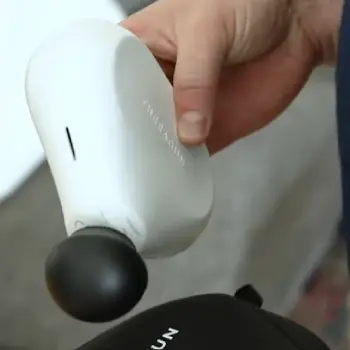
- Ultra-light and truly pocketable design: The Mini disappears into a jacket pocket or the smallest section of a gym bag, and its lower weight means I can hold it longer without forearm fatigue when treating my own upper back or shoulders.
- Three precise speed settings: Each level feels distinct, with the lowest gentle enough for the neck and forearms while the highest still provides noticeable percussion for larger muscle groups, and the LED indicators show the current speed clearly.
- Stronger stall force for its size: I could lean harder into dense tissue such as the IT band or the sole of the foot before the motor slowed, which made a practical difference on stubborn knots that needed more pressure.
- Longer stroke length: The 12 mm amplitude reaches deeper than many compact options on the same muscle, creating a more satisfying release especially on the calves and the middle of the back.
- Battery that lasts through a busy week: Two and a half hours of runtime covers several recovery sessions without constant charging, and the USB-C port makes it convenient when I already carry that cable for other devices.
- Ergonomic shape that fits natural hand positions: The angled grip lets me position the head into hard-to-reach spots with less wrist bending, so treating my own shoulders and lower back feels more natural and sustainable.
- Quick lock feature for travel safety: A simple button sequence locks the device so it will not turn on accidentally inside a bag, which removed one small worry during flights or crowded gym locker rooms.
- Versatile standard head for most daily needs: Even with fewer attachments in some packages, the included ball head handled the majority of my muscle groups effectively without constant switching.
Pros Of The Theragun Mini
- Exceptional portability and low weight: I carried it on short trips and even kept it in a work bag for mid-day tension relief, and the light feel lets me treat larger areas without arm fatigue setting in quickly during longer routines.
- Better resistance to pressure: The higher stall force kept the percussion consistent when I applied real body weight, so stubborn knots in the calves and hips responded more readily without the motor bogging down.
- Deeper stroke that reaches further: The 12 mm amplitude created a more satisfying and thorough sensation on bigger muscle groups, making recovery feel more complete after hard leg sessions or long runs.
- Comfortable ergonomics for self-use: The shape allowed me to angle the head into the shoulders and lower back with less wrist strain, which increased how often I actually reached for the device in daily life.
- Modern charging and clear speed indicators: USB-C compatibility and the LED lights make daily handling simple, so I always knew which speed I was on at a glance without interrupting the session.
- Strong performance in a true mini form factor: It punches above its size on power and depth, giving me results closer to larger guns while still fitting easily into the smallest bag compartments.
- Lock feature that adds travel peace of mind: The ability to lock the device prevents accidental activation inside a packed bag, which proved useful during flights and busy travel days.
Cons Of The Theragun Mini
- Louder than the quietest competitors: The sound is not extreme, yet it stands out more in a silent room, so I became more conscious of timing sessions around household quiet hours or shared living spaces.
- Slightly shorter claimed battery life: Two and a half hours is still ample for most people and daily routines, but the Go 2 edged it out when I stacked multiple longer sessions across a heavy training week.
- Higher price for similar core function: The premium sits close enough that the extra cost needs clear justification through the better pressure handling and compactness for the individual user.
- Limited included attachments on some packages: Depending on the exact version purchased, you may receive fewer heads than expected, and expanding the set to cover more specialized needs requires additional spending.
- Can feel intense on sensitive areas at higher speeds: The deeper stroke means I had to start lower on the neck and forearms and work up carefully to avoid discomfort on more delicate tissue.
- Less ideal for very quiet environments: Early-morning or late-night use in an apartment required more consideration of volume compared with quieter alternatives like the Go 2.
How They Perform On Common Problem Areas?
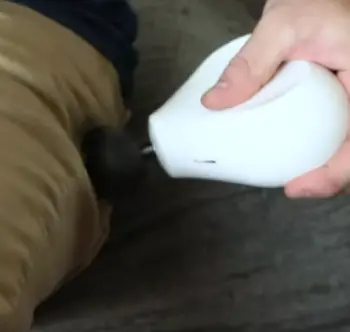
I tested both devices on the same set of tight spots that appear after my usual training.
On the calves the Mini’s longer stroke and higher stall force loosened the tissue faster and more thoroughly.
The Go 2 still helped but required more passes and lighter pressure to avoid motor slowdown.
For the upper traps and neck the quieter Go 2 felt more pleasant for longer sessions, while the Mini delivered a stronger initial release that I sometimes preferred after especially tense desk days.
On the glutes and hamstrings both worked well, though the Mini maintained rhythm better when I applied more body weight.
Foot work favored the bullet attachment on the Go 2 for precision targeting, yet the Mini’s overall power still felt effective even with the standard head.
Battery Life And Daily Practicality
Both devices support a realistic recovery schedule. I rarely run a massage gun for more than fifteen minutes at a stretch. Under that pattern the Go 2 easily spanned several days between charges.
The Mini needed charging a bit more often but never left me without power when I wanted it. Charging time for both is reasonable overnight.
The USB-C port on the Mini is a small convenience I appreciated when traveling with fewer cables overall.
Who Benefits Most From Each Device?
If you prioritize the smallest possible size, deeper pressure tolerance, and do not mind a bit more sound, the Theragun Mini fits well.
Runners, travelers, and people who treat their own upper back often will notice the advantages in real use.
If you want quieter operation, longer battery life, and a lower entry price while still getting effective everyday relief, the Hypervolt Go 2 makes strong sense.
Desk workers and those new to percussion massage may prefer its smoother, less aggressive feel for consistent daily sessions.
Also Read: Comparison Of Theragun Elite And Hypervolt 2 pro
Frequently Asked Questions (FAQ)
It depends on priorities. The Theragun Mini offers stronger pressure handling and smaller size. The Hypervolt Go 2 is quieter and often less expensive.
Yes for most people seeking reliable, quiet everyday relief at a competitive price. It performs well for general muscle tension without excess bulk.
The Hypervolt Go 2 stands as a direct alternative with quieter operation and solid battery life in a still-compact package.
The Theragun Mini currently leads for pure portability and pressure tolerance, while the Hypervolt Go 2 remains a strong contender for quieter, longer-lasting daily use.
Final Thoughts
I set out to settle the question of which compact massage gun actually earns a permanent spot in my recovery routine.
After weeks of switching between the Hypervolt Go 2 and the Theragun Mini on the same tight muscles, both proved useful, yet each shines in different situations.
You now have the side-by-side details on size, power, noise, battery, and real-world feel. Choose the one that matches how and where you recover, put it to work consistently, and you will notice the difference in how your body feels day to day.
The right tool only helps if you use it, so pick the one you will actually reach for.
Recent Posts
I tried Meltoway Hair Dissolving Cream because I wanted a quick way to deal with unwanted body hair without reaching for a razor every few days. If you are looking for a convenient at-home...
If you’re considering a saffron-based supplement to support mood, appetite control, and everyday wellness, Happy Saffron Plus is worth considering.I like that it takes a familiar botanical...