
I have renovated more kitchens than I can count and watched friends wrestle with the same choice that once stumped me: laminate or veneer cabinets.
My intent with this piece is straightforward. I want to give you a clear, side-by-side look at both materials so you can decide which one actually fits your daily life, budget, and the way your kitchen gets used.
No fluff, just the practical differences that matter once the cabinets are installed and the dust settles.
| Aspect | Laminate Cabinets | Veneer Cabinets |
| Core Material | Particleboard or MDF with printed surface | Real wood slice over plywood or MDF |
| Surface Feel | Smooth, uniform, often slightly plastic | Natural grain texture and variation |
| Cost Range | Lower to mid-range | Mid to higher range |
| Durability Against Moisture | Good when edges sealed properly | Moderate; sensitive if water sits |
| Scratch Resistance | High on quality grades | Moderate; softer woods mark more easily |
| Repair Options | Limited; usually panel replacement | Sanding and refinishing possible |
| Aesthetic Range | Wide patterns, including wood look-alikes | Authentic wood species and grain |
| Maintenance Level | Easy wipe-down | Needs more careful cleaning and care |
| Lifespan Expectation | 10–20 years with care | 20–40+ years if maintained |
| Eco Considerations | Often uses recycled cores; synthetic top | Uses real wood; can be more resource-heavy |
Key Differences Between Laminate And Veneer Cabinets
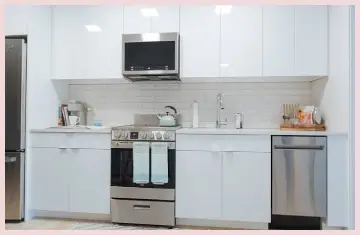
- Material authenticity: Laminate uses a photographic print under plastic.
Veneer uses a real wood slice.
That single fact drives almost every other difference in feel, aging, and repair options.
- Surface consistency: Laminate doors match each other almost perfectly across the whole kitchen.
Veneer doors show natural variation in grain and tone, and some people love that while others find it uneven.
- Response to moisture: Laminate handles short-term moisture better when the edges stay sealed.
Veneer can swell or delaminate if water sits against the surface or seeps under the edges for long periods.
- Repair path: Laminate damage usually means replacing the entire door or drawer front.
Veneer can often be sanded lightly and refinished, especially if the veneer layer is thick enough.
- Weight and structure: Both ride on similar cores, so the overall cabinet weight feels comparable.
The difference shows more in the door surface than in the box itself.
- Aging character: Laminate stays looking the same until it fails.
Veneer develops a patina and can darken or lighten with light exposure, much like solid wood furniture.
Also Read: Is Diamond Express Cabinets Worth It?
Understanding Laminate Cabinets From A Daily User View
I first installed laminate cabinets in a rental property I managed. The tenants were hard on everything, and those cabinets held up better than I expected.
Laminate starts with a dense core, usually particleboard or medium-density fiberboard. A printed decorative layer sits on top, sealed under a tough clear protective film. That film is what gives laminate its reputation for resisting stains and everyday wear.
The surface can mimic almost any wood species or solid color. Manufacturers have gotten skilled at printing realistic grain patterns, though under close inspection or certain lighting the uniformity still gives it away.
I like that the color stays consistent across every door and drawer. No two pieces of real wood match perfectly, and that inconsistency can bother some people who want a clean, modern look.
Installation feels straightforward. The panels arrive ready to hang, and the edges are usually finished with matching edge banding. When that banding is applied well, water has a harder time sneaking in.
When it is applied poorly, the edges become the first place damage shows up. I have seen cabinets that looked perfect for years until a dishwasher leak or a chronic sink splash started lifting the laminate at the bottom edges.
Key Features of Laminate Cabinets
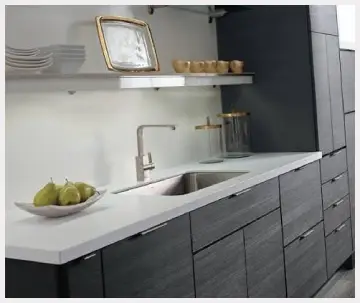
- Printed decorative layer: This layer gives consistent color and pattern across every piece.
I appreciate this when designing a large kitchen where exact matching is critical.
- Protective top film: The film creates a hard, non-porous surface that shrugs off most kitchen messes.
Coffee, tomato sauce, and grease wipe away with a damp cloth.
- Edge banding options: Modern edge banding can look nearly seamless.
Older or cheaper versions show a clear line that collects grime over time.
- Wide design library: You can choose solid colors, high-gloss, matte, wood-look, or even metallic effects.
The range lets you chase trends without committing to real wood inventory.
- Stable under temperature swings: The synthetic surface expands and contracts less dramatically than real wood.
This helps in kitchens that get very hot near the stove or very dry in winter.
Pros Of Laminate Cabinets
- Lower upfront cost: For the same cabinet footprint, laminate usually costs less than comparable veneer. That difference can free budget for better appliances or lighting.
- Strong resistance to scratches and stains: Quality laminate shrugs off keys, pet claws, and most food spills. I have watched kids draw on laminate doors with markers that wiped clean.
- Easy daily cleaning: A soft cloth and mild cleaner handle almost everything. No special wood cleaners are required.
- Consistent appearance: Every door looks the same on day one and years later, as long as the surface stays intact.
- Good performance in high-moisture zones: With proper edge sealing, laminate handles the area around the sink better than many people expect.
- Design freedom: You can change the entire look of the kitchen by choosing a different print pattern without changing the cabinet structure.
Cons Of Laminate Cabinets
- Limited repair options: Once the surface chips or the edge lifts, the fix is usually a full door replacement. Matching an older laminate pattern years later can be difficult.
- Heat sensitivity: Direct contact with hot pans or excessive heat from under-cabinet lights can discolor or blister the surface.
- Perceived lower quality: Some buyers and future home buyers still associate laminate with budget builds, even when the product is high-grade.
- Edge vulnerability: If the edge banding fails, water and dirt work their way under the laminate and the problem spreads.
- Less authentic feel: No matter how good the print, the surface never quite feels like wood under the hand.
- Difficulty refinishing: You cannot sand and restain laminate the way you can with real wood products.
Also Read: Is Fabuwood Kitchen Cabinets Worth It?
Understanding Veneer Cabinets Through Real Kitchen Use
Veneer cabinets entered my own home during a later remodel. I wanted the look of solid wood without the full solid-wood price and weight.
Veneer is a thin slice of actual wood, often between 0.5 mm and 3 mm thick, glued onto a stable core of plywood or MDF. Because the face is real wood, the grain, color variation, and texture feel authentic under your hand.
The first time I ran my fingers across a well-done walnut veneer door, the difference was immediate. It does not feel like a printed surface.
Light plays across it the way it does on solid wood. That authenticity is the main reason many people choose veneer even when the budget is tighter than a full solid-wood kitchen.
Veneer still needs a protective finish, usually a clear lacquer, polyurethane, or oil. The quality of that finish determines how well the cabinets resist daily use.
A good finish lets you wipe up spills quickly. A thin or poorly applied finish lets water and heat leave marks.
I learned that the hard way when a hot pot rested too long on a lower cabinet near the stove and left a faint ring that never fully disappeared.
Key Features Of Veneer Cabinets
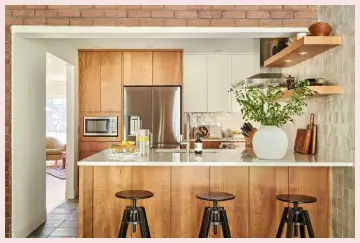
- Real wood face: The face delivers genuine grain and tactile warmth.
Guests often touch the doors without realizing why they feel different.
- Refinishing potential: Thicker veneers can be lightly sanded and recoated years later. This extends the useful life far beyond a single finish cycle.
- Species variety: You can select oak, walnut, maple, cherry, teak, and many others.
Each species brings its own grain character and color range.
- Finish flexibility: You can choose matte, satin, or high-gloss topcoats.
Oil finishes are also possible if you want to emphasize the wood itself.
- Matching to other wood elements: Floors, trim, or furniture in the same species create a cohesive room that laminate struggles to match exactly.
Pros Of Veneer Cabinets
- Authentic wood character: The grain, color shifts, and texture create a richer visual and tactile experience. Rooms feel warmer and more intentional.
- Longevity with care: A well-maintained veneer cabinet set can last decades and still look relevant after a simple refinish.
- Refinishing ability: Light sanding and a new clear coat can refresh the entire kitchen without replacing doors.
- Better resale perception: Many buyers respond positively to real wood surfaces, even when they are thin veneer rather than solid.
- Species and finish matching: You can coordinate with existing wood floors or furniture more successfully.
- Aging gracefully: The surface develops character rather than simply wearing out in an obvious way.
Cons Of Veneer Cabinets
- Higher material cost: Real wood veneer and the labor to apply it cleanly push the price above most laminate options.
- Moisture sensitivity: Standing water or high humidity can cause the veneer to lift, bubble, or stain if the finish is compromised.
- Scratch and dent visibility: Softer woods show marks more readily. A dropped utensil can leave a permanent impression.
- Color change over time: Exposure to sunlight can darken or lighten certain species. This creates uneven tones if some doors receive more light than others.
- More careful maintenance: Harsh cleaners, abrasive pads, or prolonged water contact will damage the finish and eventually the wood itself.
- Quality variation: Thin, cheap veneer can peel or show core telegraphing. Thickness and adhesive quality matter a great deal.
How Cost And Budget Shape The Decision?
When I price out a full kitchen, laminate almost always comes in lower. The difference can be several thousand dollars on a mid-size project.
That savings is real and useful. Yet I have also seen clients spend the laminate budget, then feel disappointed a few years later when the cabinets look tired and cannot be refreshed easily.
Veneer costs more at the start, but the ability to refinish can make the long-term cost of ownership more competitive if you plan to stay in the home for a decade or longer.
Labor costs can also differ. Laminate cabinets often arrive as finished units ready to install.
Veneer may require more careful handling and finishing on site or in the shop, which adds labor hours. I always ask for a full installed price rather than comparing material-only quotes.
Durability In Real Kitchen Conditions
Daily life is hard on cabinets. Steam from the dishwasher, grease from cooking, kids leaning on doors, pets brushing past, and the occasional spill that sits overnight all test the surface.
Laminate handles the constant wipe-downs better. Its non-porous top layer keeps liquids on the surface where they can be cleaned.
Veneer relies on the integrity of its finish. Once that finish wears thin in high-touch areas such as around handles, the wood becomes vulnerable.
I have replaced laminate doors after edge failure more often than I have replaced veneer doors for the same reason.
Conversely, I have refinished veneer doors that looked worn and brought them back to nearly new condition. The repair path is simply different. Laminate is replace-oriented. Veneer is restore-oriented.
Style And Aesthetic Considerations
If your design goal is a seamless, contemporary kitchen with uniform color and minimal variation, laminate delivers that look reliably.
High-gloss white or solid-color laminate creates a clean, almost architectural surface. Wood-look laminates have improved enough that many guests never notice the difference at a normal viewing distance.
If you want the kitchen to feel connected to natural materials, veneer is harder to beat. The way light moves across real grain, the subtle shifts in tone between doors, and the tactile feedback when you open a drawer all contribute to a sense of quality that synthetic surfaces struggle to match.
I have watched people run their hands along veneer doors the same way they touch a nice piece of furniture. That reaction rarely happens with laminate.
Maintenance Routines That Actually Work
For laminate, my routine is simple. Wipe with a damp microfiber cloth and a mild dish soap solution. Dry the surface afterward.
Avoid abrasive cleaners and scrub pads. Check the edge banding once a year and address any lifting promptly before water can enter.
For veneer, I use the same mild cleaner but stay more vigilant about water. Wipe spills immediately. Use coasters or trivets near the stove and sink. Every few years I evaluate the finish.
When it starts to look dull or show fine scratches, a light professional refinish restores the protection and appearance. I avoid silicone-based polishes because they can interfere with future refinishing.
Installation And Long-Term Performance Notes
Both materials install on similar cabinet boxes. The difference shows up in how the doors and drawer fronts are finished and attached.
Laminate doors are often lighter and more consistent in thickness. Veneer doors can vary slightly because of the wood layer. Proper hinge adjustment and soft-close hardware help both types perform well for years.
I pay special attention to the area under the sink and next to the dishwasher. Those zones see the most moisture.
Extra sealing, good ventilation, and prompt repair of any leaks protect either material. I also recommend soft-close mechanisms. They reduce the slamming that can stress both laminate edges and veneer surfaces over time.
Choosing Based On How You Live?
If you cook often, have young children, or simply prefer low-maintenance surfaces, laminate is frequently the more practical daily companion.
If you value the look and feel of real wood, plan to stay in the home for many years, and are willing to give the cabinets a bit more care, veneer rewards that investment with lasting character.
I have installed both in homes I own and manage. The laminate kitchens stay looking neat with almost no effort. The veneer kitchens feel richer and age into the space rather than fighting it. Neither is universally better.
The right choice depends on the specific combination of budget, lifestyle, design preference, and how long you expect the cabinets to serve you.
Frequently Asked Questions (FAQ)
Look at the edge of a door. Laminate usually shows a thin printed layer over a uniform core. Veneer shows a distinct wood layer with visible grain on the edge. You can also feel the surface; real wood has subtle texture variation that printed laminate lacks.
Neither is better in every situation. Laminate wins on cost, consistency, and easy cleaning. Veneer wins on authenticity, refinishing potential, and long-term character. Match the material to your priorities rather than searching for a single winner.
Cabinets with heavy ornate details, very dark finishes that make the room feel closed in, or materials that show obvious wear and peeling often read as outdated. Flat-panel or shaker styles in current colors and finishes tend to feel more current regardless of whether they are laminate or veneer.
The main downsides are limited repair options once the surface is damaged, potential edge failure if moisture gets underneath, heat sensitivity, and a less authentic wood feel. Some people also perceive laminate as lower quality even when the product performs well.
Closing Thoughts
I started this comparison because I kept seeing the same questions from people planning kitchens.
You now have the practical differences laid out so you can weigh cost against authenticity, easy care against refinishing potential, and short-term budget against long-term satisfaction.
Walk through your own kitchen habits, measure how much time you want to spend maintaining surfaces, and decide which set of trade-offs feels right for the way you actually live.
The cabinets that work best are the ones that disappear into your routine instead of becoming a constant source of small frustrations.
Recent Posts
I decided to write this because I kept getting the same question from friends and neighbors planning their backyard upgrades: should I go with a wood deck or a concrete patio?After living with...
Lennox Mini Split Reviews: Is This Ductless Air Conditioner Worth Buying?
If you want efficient, quiet, and flexible home cooling without installing traditional ductwork, a Lennox mini split is worth considering. I like its combination of inverter technology,...