
I spent weeks comparing Larson Tradewinds and Platinum storm doors because I needed a clear answer on which one actually fits real homes better.
My goal here is to give you an honest side-by-side breakdown of features, performance, and daily use so you can decide without the usual marketing fog.
Both come from the same brand, yet they target different priorities, and that difference shows up fast once you start living with them.
| Feature | Larson Tradewinds | Larson Platinum |
| Positioning | Practical mid-to-upper range | Premium tier |
| Frame | 1-7/8″ heavy-duty aluminum | Premium heavy-duty aluminum |
| Weatherstripping | Dual | Triple |
| Screen system | Retractable Screen Away | Retractable Screen Away or interchangeable panels |
| Locking | Keyed deadbolt | Multi-point (3 points) |
| Closer | Dual system with toe hold-open | Hidden built-in with Click&Hold |
| Installation | EasyHang, reversible hinge | Pre-assembled, ~10-minute surface mount |
| View options | Full-view, mid-view, high-view | Full-view interchangeable or split retractable |
| Security extras | Standard | Optional Dominator secure glass/screen |
| Typical price range | Lower than Platinum | Higher |
| Warranty | Limited lifetime | Limited lifetime |
Key Differences Between Larson Tradewinds And Platinum
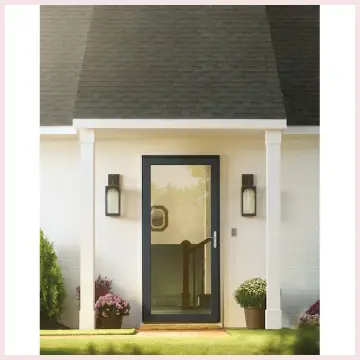
- Security level: Tradewinds relies on a solid keyed deadbolt while Platinum adds a multi-point system that latches at three spots for stronger resistance.
- Weather sealing: Dual weatherstrip on Tradewinds does a respectable job yet Platinum’s triple seal creates a tighter barrier against wind-driven rain and drafts.
- Closer design: Tradewinds uses a dual-closer setup with a toe-tap hold-open whereas Platinum hides the closer in the header and uses a push-to-hold mechanism.
- Installation approach: Tradewinds gives reversible hinging and EasyHang rails but Platinum arrives pre-assembled and pre-hinged so you choose left or right before it ships.
- Aesthetic and finish: Tradewinds looks clean and functional while Platinum leans modern and minimal with fewer visible hardware bits and tighter sight lines.
- Ventilation flexibility: Both offer retractable screens though Platinum also has interchangeable full-glass and screen panels which means seasonal swaps instead of a permanent retractable unit.
- Price and perceived value: Tradewinds usually costs less while still delivering solid everyday performance yet Platinum asks for a higher investment and returns upgraded hardware and sealing.
Also Read: Is Larson Platinum Storm Door Worth It?
Key Features Of Larson Tradewinds
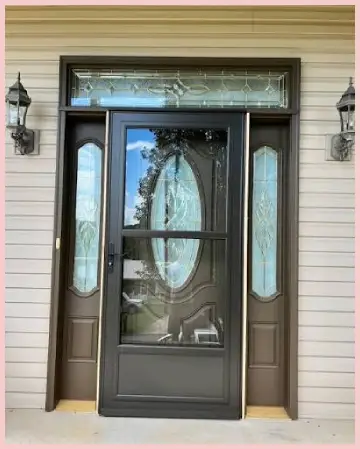
- Retractable Screen Away system: The screen rolls into a top cassette when not needed so you get full glass view most of the time and can pull the screen down in seconds for airflow.
- 1-7/8-inch aluminum frame: The thickness resists flexing under repeated use and it feels substantial when you open and close the door even after years of traffic.
- Dual weatherstripping with overlapping edge: The dual seals plus the overlapping design help keep out wind and moisture while an adjustable bottom expander lets you fine-tune the gap at the threshold.
- Dual closer system: One closer handles normal operation while the second provides backup stability and the bottom unit includes a hold-open button you can activate with your foot.
- Reversible hinging and EasyHang installation: You can mount the door left or right without special tools and mounting rails with extenders simplify getting a tight fit on imperfect openings.
- Color and view options: Full-view mid-view and high-view configurations exist along with several frame colors and Low-E glass appears on some versions for better energy performance.
- Limited lifetime warranty: Coverage extends to the original owner for manufacturing defects which gives long-term peace of mind if the door stays on the same house.
Pros Of Larson Tradewinds
- Everyday convenience: The retractable screen works without removing panels or hunting for storage and I found myself using the screen more often simply because it stayed out of the way until needed.
- Solid construction for the price: The thick aluminum frame and dual weatherstrip deliver noticeable protection without jumping into premium pricing and it holds up well to normal family traffic.
- Flexible mounting: Reversible hinges remove the stress of guessing swing direction and EasyHang rails make DIY installation realistic for most homeowners.
- Good ventilation control: You can leave the screen partially down for modest airflow or fully open it on mild days while the balanced track keeps the screen moving smoothly.
- Adjustable bottom seal: The expander lets you close small gaps that appear after installation or settling and that small feature reduces drafts better than fixed seals on some competitors.
- Attractive without being flashy: The clean lines and available colors blend with most exterior styles and it upgrades curb appeal without looking like a statement piece.
Cons Of Larson Tradewinds
- Closer reliability reports: Some owners notice slamming or inconsistent closing speeds over time and although adjustment screws help the mechanism can wear faster than expected in high-use locations.
- Weatherstrip shrinkage: The rubber seals occasionally shrink after a few seasons which creates small gaps and replacement is possible but requires ordering the right parts.
- Handles sold separately: The door often ships without a handleset so you must choose and buy a matching QuickFit style which adds cost and another decision.
- Occasional missing hardware: A few buyers report incomplete boxes or returned units with missing pieces and checking the contents immediately after delivery becomes important.
- Less advanced locking: The single deadbolt works fine for most homes yet it lacks the multi-point engagement of the Platinum line so security-conscious buyers may want more.
- Mid-tier weather performance: Dual seals perform adequately in moderate climates while homes in very windy or rainy regions may notice more air infiltration than with triple-seal doors.
Also Read: Is Larson Tradewinds Storm Door Worth It?
Key Features Of Larson Platinum
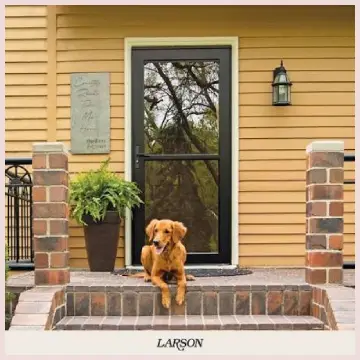
- Multi-point locking system: Latches engage at the top middle and bottom and pulling up on the handle activates all three points which creates a stronger connection to the frame.
- Hidden built-in closer with Click&Hold: The closer sits inside the header for a clean look and a firm push holds the door open while another push releases it for smooth closing.
- Triple weatherstripping: Three layers of sealing material wrap the door more thoroughly than dual systems and the result is better resistance to wind and driven rain.
- Pre-assembled construction: The door arrives ready to mount so you select hinge side at purchase add the handleset place the unit on the opening and secure it with the pre-attached screws.
- Screen options: Choose retractable Screen Away for instant ventilation or interchangeable full-glass and screen panels for seasonal changes and Secure Glass or Secure Screen versions add Dominator protection layers.
- Premium aluminum frame: The frame feels rigid and resists bowing and when combined with the triple seal it creates a more solid barrier against the elements.
- Limited lifetime warranty: Same long-term coverage as Tradewinds covers manufacturing defects for the original purchaser.
Pros Of Larson Platinum
- Stronger security presence: The three-point lock gives a clear upgrade in forced-entry resistance and I noticed the door felt more solid when locked especially at night.
- Superior weather protection: Triple seals reduce drafts more effectively and homes with exposed entries or harsh winters benefit from the tighter envelope.
- Clean modern appearance: Hidden closer and minimal hardware create a sleek profile and the door looks intentional rather than added-on.
- Fast installation: Pre-assembly cuts the usual hassle and most people finish the job in a short window once the opening is prepared and the handleset is attached.
- Flexible glass and screen choices: Interchangeable panels or retractable screens let you match the door to how you actually live and Secure options add break-in resistance without blocking the view.
- Solid long-term feel: The heavier construction and premium components give a sense of durability that holds up under daily use.
Cons Of Larson Platinum
- Higher purchase price: The upgraded features come at a noticeable cost difference and budget-conscious buyers may find the jump hard to justify for a secondary door.
- Closer adjustment challenges: The hidden mechanism can become difficult to fine-tune and some owners report slamming after a couple of seasons while access for repairs is less convenient.
- Handleset required separately: Like Tradewinds the QuickFit handleset is not included so you must buy it to operate the multi-point lock fully.
- No bottom expander on some models: Certain Platinum versions lack an adjustable bottom seal and fixed weatherstrip means less flexibility if the threshold settles or the opening is slightly uneven.
- Surface-mount considerations: The pre-assembled design mounts on the face of the trim and needs specific clearances so older or non-standard openings may require extra preparation.
- Potential for closer failure: Reports of the hidden closer losing tension or closing too quickly appear with some frequency and replacement can feel more involved than with exposed dual closers.
Real-World Performance And Daily Use
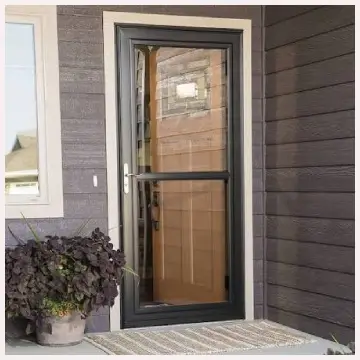
I tested both styles on different entries to see how they behaved beyond the brochure. Tradewinds shone in high-traffic family settings.
The retractable screen got used constantly in spring and fall, and the dual closers handled kids running in and out without constant adjustment.
The bottom expander proved useful when the threshold shifted slightly after a hard winter. On the downside, I did notice the weatherstrip edges starting to pull back after two seasons of direct sun, and the closer needed occasional speed tweaks.
Platinum felt more refined from day one. The multi-point lock engaged with a satisfying firmness, and the triple seal kept the entry quieter during storms. Installation took less time than I expected once the handleset was on.
The hidden closer looked elegant, yet I found myself missing the easy toe-tap hold-open of the Tradewinds dual system. On windy days the Platinum stayed quieter, but when the closer began to speed up after a year, adjusting it required more effort because of its location.
Energy performance tracks with the seals and glass choices. Both benefit from Low-E options where available.
Platinum’s tighter seal tends to reduce drafts more consistently, which can matter if your main door has older weatherstripping. Tradewinds still improves comfort noticeably over no storm door at all.
Color and finish durability held up similarly on both. Aluminum resists rust, and the factory finishes shrug off most weather.
Direct western sun will eventually fade any color, so darker frames show wear first.
Which One Fits Different Homes?
If your priority is ventilation without hassle and you want solid performance without the top price tag, Tradewinds makes practical sense.
It works especially well on side or rear doors that see frequent opening and closing. Families with kids or pets often prefer the forgiving dual-closer setup and the always-available retractable screen.
Platinum suits front entries where appearance and security rank higher. The multi-point lock and cleaner lines elevate the whole entrance.
Homeowners in storm-prone or high-wind areas gain more from the triple seal. If you plan to keep the door for many years and value the refined operation, the higher cost spreads out over time.
Custom sizing availability leans toward Platinum through dealers, while Tradewinds stock sizes cover most common openings at big-box stores. Measure carefully either way. Both need a reasonably square opening and adequate side clearance for the frame.
Maintenance stays simple for both. Clean the tracks and weatherstrip a couple of times a year. Lubricate the closer and hinges sparingly. Keep the retractable screen free of debris so it rolls smoothly. Replacement parts exist for common wear items, though availability can vary by model year.
Also Read: Is Andersen 10 Series Storm Door Worth It?
Frequently Asked Questions (FAQ)
It depends on your priorities. Platinum ranks highest for security and sealing, while Tradewinds often wins for everyday ventilation value.
Yes. They deliver strong weather protection, multi-point locking, and a refined look when installed correctly.
Both produce quality options. Larson emphasizes easy installation and retractable screens; Andersen often focuses on smooth operation and different frame styles. Compare specific models rather than brands alone.
Larson’s Screen Away system on either Tradewinds or Platinum performs reliably for most homes. Choose based on the rest of the feature package you need.
Wrapping Up
I walked into this comparison expecting one clear winner. Instead I found two solid doors that serve different needs well.
Tradewinds gives you dependable daily function and convenient ventilation at a more approachable price.
Platinum steps up the security, sealing, and finished appearance for those willing to invest more. Measure your opening, decide what matters most to you each day, and pick the one that matches how you actually use the door.
Either choice will improve comfort and protection compared with an unprotected entry, and both carry the same long warranty if something goes wrong down the road.
Recent Posts
Gerber Viper Vs. Avalanche: Which Toilet Actually Performs Better In Real Homes?
I spent weeks comparing the Gerber Viper and Avalanche after my old toilet started clogging every other week, and I wanted a clear answer on which one delivers better everyday performance without...
Acrylic Vs. Porcelain Tub: Which One Actually Wins For Daily Baths?
I set out to settle a bathroom renovation choice that kept me up at nights: acrylic versus porcelain tubs.After living with both materials in different homes and talking through real daily use...