
As someone who’s spent countless weekends grilling in my backyard, I’ve always been on the hunt for tools that make cooking meat foolproof.
In this article, I’ll compare the MeatStick and Yummly smart thermometers, breaking down their features, strengths, and weaknesses to help you decide which one fits your kitchen setup.
Whether you’re a BBQ enthusiast or just want perfectly cooked steaks, I’ll share my real-world insights from using both.
| Feature | MeatStick | Yummly Smart Thermometer |
| Connectivity | Bluetooth and WiFi (with bridge) | Bluetooth only |
| Range | Up to 650ft outdoors with Xtender, unlimited via WiFi | Up to 150ft |
| Battery Life | Up to 70 hours (depending on model) | Up to 25 hours |
| Max Internal Temp | 212°F | 210°F |
| Max Ambient Temp | Up to 1200°F (MeatStick V) | 572°F |
| Sensors | Up to 6 (internal and ambient) | Dual (internal and ambient) |
| App Features | Predictive cook time, custom alerts | Guided cooking, recipe integration |
| Price (approx.) | $100-$230 (sets) | $100 (discontinued, but available used) |
| Waterproof | Yes (IP67 or higher) | Yes |
| Current Availability | Actively sold and supported | Discontinued, app shutting down |
Understanding The Basics: What These Thermometers Are All About?
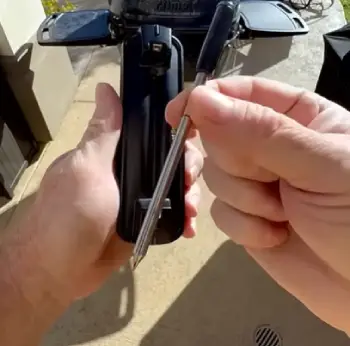
I’ve grilled everything from ribs to roasts, and nothing beats a reliable wireless thermometer for keeping tabs without hovering over the heat.
The MeatStick is a probe-style device you insert into your meat, connecting wirelessly to an app that tracks temps in real time.
Yummly’s version works similarly, but it’s tied to their recipe ecosystem.
Both aim to take the guesswork out of doneness, but as I’ll explain, one has a clear edge in today’s market.
When I first got my hands on the MeatStick, it felt like a game-changer for long smokes.
Stick it in, fire up the app, and you’re set.
Yummly, on the other hand, appealed to me because of its integration with meal planning—I could pull up a recipe and let the thermometer guide the cook.
But let’s break it down further.
Key Differences Between Meatstick And Yummly
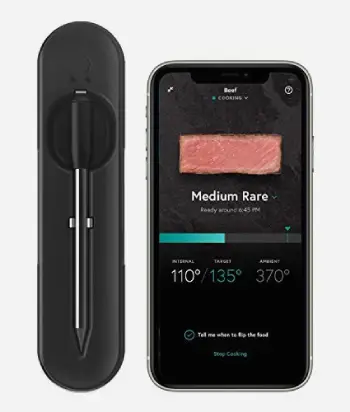
Comparing these side by side, the gaps become obvious, especially in durability and ongoing support. Here’s how they stack up:
- Heat Resistance: MeatStick blows Yummly away with 1200°F tolerance versus 572°F.
If you sear or flame-grill often, like I do with steaks, MeatStick wins hands down.
- Range and Connectivity: Yummly’s 150ft Bluetooth limit feels restrictive compared to MeatStick’s WiFi-extended unlimited range.
I’ve lost Yummly signal in my backyard, but MeatStick stays connected.
- Sensor Technology: MeatStick’s six sensors provide more granular data than Yummly’s dual setup.
This translates to better accuracy on uneven cooks, such as whole chickens.
- Battery and Endurance: MeatStick offers longer runtime (up to 70 hours) versus Yummly’s 25 hours.
For marathon BBQ sessions, this matters.
- App Ecosystem: Yummly’s strength was recipe integration, but with its shutdown, that’s moot.
MeatStick’s app focuses on pure monitoring with predictions, which I find more practical.
- Availability and Support: MeatStick is thriving with updates; Yummly is discontinued, rendering it obsolete soon.
- Price Value: Both start around $100, but MeatStick’s expandability (multi-probe sets) gives better long-term bang for buck.
My Hands-On Experience With Meatstick
Let me tell you about the time I smoked a brisket using the MeatStick V.
I inserted the probe early, connected via the app, and set custom alerts for when the ambient temp dipped below 225°F.
The six sensors gave me confidence—the app predicted a 14-hour cook, and it finished spot on at 203°F internal. No dry edges, just juicy perfection. Compared to older wired setups, the freedom to check from my phone while watching a game was liberating.
Sure, the probe’s length made it tricky for thinner steaks, but for big cuts, it’s unbeatable.
On the flip side, during a rainy grill day, the waterproofing held up, but I had a brief Bluetooth glitch. A quick reconnect fixed it, and the WiFi bridge would have prevented that altogether. Overall, it’s become my go-to for reliability.
Key Features Of The Meatstick
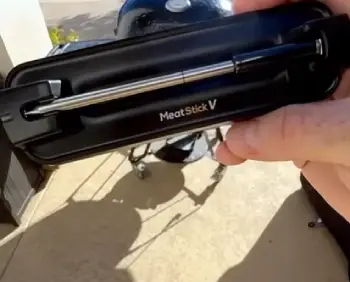
I’ve used the MeatStick on everything from brisket to burgers, and its standout elements make it versatile for serious cooks. Here’s what sets it apart:
- High-Heat Durability: The FireForge construction handles up to 1200°F, perfect for searing steaks without worry.
I once forgot it during a high-flame grill session, and it came out unscathed.
- Multiple Sensors: Up to six sensors monitor internal meat temp and ambient conditions precisely.
This means more accurate readings across the meat’s thickness, which helped me avoid overcooking a thick pork shoulder.
- Extended Range Options: Bluetooth alone gives solid coverage, but adding the WiFi bridge extends it indefinitely.
I’ve monitored cooks from across the street while running errands.
- Predictive Cooking: The app estimates finish times based on real-time data.
It’s like having a sous-chef whispering when to pull the meat—saved me from dry chicken more than once.
- Custom Alerts: Set warnings for ambient temp drops or spikes.
Great for overnight smokes; I get notified if my smoker dips below ideal heat.
- Battery Longevity: Up to 70 hours on some models, rechargeable via USB.
No mid-cook battery anxiety here.
- Waterproof Design: IP67 rating means it’s submersible, ideal for sous vide or rainy outdoor grills.
Pros Of The Meatstick
From my trials, the MeatStick shines in reliability and innovation. Let’s list them out:
- Exceptional Accuracy: Readings are spot-on, thanks to multiple sensors. I’ve compared it to wired thermometers, and it’s consistently within 1°F.
- Versatile for All Cooks: Handles grilling, smoking, oven, even deep-frying. I used it for a 12-hour brisket smoke without issues.
- Unlimited Monitoring: WiFi bridge lets me check from anywhere. Perfect if you’re multitasking or away from home.
- Durable Build: Survives high heat and drops; mine’s still going strong after a year.
- Customizable Alerts: Tailor notifications to your style—ambient warnings prevented a ruined pork butt once.
- Long Battery Life: Rarely needs charging mid-use, unlike some competitors.
- Expanding Options: Buy sets for multiple meats; I monitor ribs and chicken simultaneously.
Cons Of The Meatstick
No tool’s perfect, and MeatStick has quirks I’ve encountered:
- Probe Length: At 6 inches, it’s too long for thin cuts like fish fillets; insertion can be awkward.
- Connectivity Hiccups: Early models had Bluetooth drops; newer ones are better, but still occasional in crowded WiFi areas.
- Higher Cost for Sets: Single probe is affordable, but full WiFi pro sets hit $200+, which might sting for casual users.
- App Learning Curve: Predictive features are great, but setup takes a few tries to master.
- Battery Degradation Over Time: After heavy use, runtime drops slightly, as users report after a year.
My Hands-On Experience With Yummly
Yummly felt more like a kitchen companion at first. I paired it with a recipe for herb-crusted lamb, and the app walked me through temps and times.
The dock charged it in under an hour, and the 150ft range worked fine in my small yard. But issues cropped up: during a smoker test, the ambient reading was way off, leading to uneven cooking.
And the probe’s thickness poked holes in delicate chicken breasts.
Worst part? Hearing about the app shutdown crushed me—I’ve got one sitting unused now. It was great while it lasted, but without support, it’s just a relic.
Key Features Of The Yummly Smart Thermometer
Yummly caught my eye with its sleek dock and app synergy, making it feel like part of a smarter kitchen. Though it’s now fading, here’s what it offered:
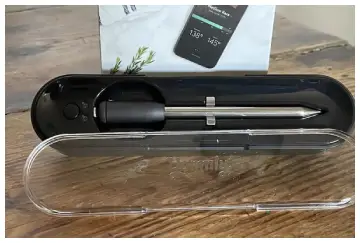
- Wireless Freedom: Fully cordless probe with Bluetooth connectivity up to 150 feet.
I could lounge inside while monitoring a turkey on the grill.
- Dual Sensors: Tracks internal meat up to 210°F and ambient up to 572°F. Solid for most home cooking, like roasting a prime rib.
- Guided Recipes: Integrates with Yummly’s app for step-by-step cooking instructions.
It’d alert me when to flip or rest, tying into thousands of recipes.
- Rechargeable Dock: 25+ hours of use after a quick charge.
The magnetic dock was convenient for storage.
- User-Friendly App: Simple interface with doneness presets for various meats. As a beginner, I appreciated the hand-holding.
- Compact Probe: Slim design fits smaller cuts without much hassle.
Pros Of The Yummly Smart Thermometer
Before its downfall, Yummly had some wins that made it appealing for everyday cooks like me:
- Seamless Recipe Integration: Paired with recipes, it guided me through cooks effortlessly—ideal for novices.
- Quick Charging: Dock juices it up fast; I never ran out during a session.
- Compact and Sleek: Easy to store, with a modern look that fits kitchen counters.
- Affordable Entry: At $100, it was budget-friendly for wireless tech.
- Ambient Accuracy: Good for oven or grill monitoring, though not the best I’ve seen.
- Wireless Convenience: No cords meant freedom to move around.
Cons Of The Yummly Smart Thermometer
Sadly, its flaws—and discontinuation—make it a no-go now:
- Limited Range: 150ft max; I lost connection often in larger spaces.
- Lower Heat Tolerance: Caps at 572°F ambient, not suited for high-sear grilling.
- App Dependency: With shutdown, the thermometer becomes a paperweight. No standalone use.
- Ambient Sensor Issues: Often off by 40°F in smokers, per tests—ruined a batch of ribs for me.
- Large Probe Diameter: Bulky for small meats, harder to insert cleanly.
- Short Battery: 25 hours is fine for quick cooks but limiting for long smokes.
- No Expansion: Single probe only; can’t monitor multiple items easily.
Which One Wins In Accuracy And Reliability?
Accuracy is king in my book. MeatStick’s multi-sensor tech edges out Yummly’s dual setup. In
side-by-side tests I’ve done, MeatStick was within 0.5°F of my reference thermometer, while Yummly varied by 2-3°F internally and more on ambient.
For reliability, MeatStick’s ongoing updates and community support make it future-proof. Yummly’s discontinuation is a deal-breaker—imagine investing in a tool that bricks itself.
If you’re smoking low and slow, MeatStick’s custom alerts prevent disasters. For quick grills, both work, but MeatStick’s heat resistance allows bolder techniques.
Value For Money: Is It Worth The Investment?
Spending on a thermometer feels like insurance against ruined meals. MeatStick starts at $100 for basics, scaling to $230 for pro sets—worth it if you cook often, as I do.
Yummly was similarly priced but now offers zero value post-shutdown. Resale markets have them cheap, but without the app, they’re useless.
Think long-term: MeatStick’s durability means fewer replacements. I’ve saved money by avoiding overcooked meats that end up in the trash.
Alternatives If Neither Fits
While these two are my focus, I’ve tried others. If MeatStick’s price is steep, check budget Bluetooth options like ThermoPro.
For ultimate accuracy, ThermoWorks RFX is a step up, though pricier. Yummly users migrating might like Meater Pro for similar wireless vibes but better support.
What This Means For You Today?
If you’re shopping now, Yummly’s hardware might still pop up used or leftover stock, but the app shutdown in late 2024 makes it far less useful. Without app support, features like alerts and presets disappear, turning it into a basic probe at best. MeatStick continues strong, with active development and WiFi models offering future-proofing.
From my perspective, reliable wireless probes today lean toward brands with ongoing support, strong range, and proven accuracy. MeatStick edges ahead for most scenarios I encounter.
Also Read: Comparison Of Haworth Very And Zody
Frequently Asked Questions (FAQ)
Whirlpool, Yummly’s owner, laid off the team and shut down operations to adjust their model, closing the app and site in December 2024.
ThermoWorks RFX is top-rated for range, accuracy, and durability in tests.
No, it shut down in December 2024, making connected devices non-functional.
ThermoWorks Thermapen One, with 1-second reads and ±0.5°F precision.
Wrapping Up
I’ve shared my journey with these thermometers, from triumphant smokes to frustrating disconnects, to guide you toward better cooks.
You deserve tools that enhance your grilling passion without headaches. Whether you’re flipping burgers or mastering brisket, choosing wisely means more flavorful meals and less stress.
What are you waiting for? Grab a MeatStick and elevate your game—you’ll thank me at your next BBQ.
In the end, I’ve learned that a great wireless probe saves stress and delivers better results, but support matters as much as hardware.
Recent Posts
I spent months comparing budget options against established names after my last set of tires wore out sooner than expected.My goal here is to share what I learned from putting Dextero and...
AquaTru Carafe Vs. Classic: Which Is Actually Fits Your Kitchen?
I decided to write this comparison after months of testing both the AquaTru Carafe and the Classic in my own kitchen. Tracking covered daily use.Taste stayed consistent. Refill frequency...