
I set out to compare Needed prenatal vitamins against Thorne’s Basic Prenatal so you can decide which formula better matches your nutrient needs, tolerance, and lifestyle during the perinatal window.
After reviewing ingredient forms, dosages, convenience factors, and real-user patterns, I want to give you a clear, practical breakdown that helps you choose with confidence.
| Feature | Needed Prenatal Multi | Thorne Basic Prenatal |
| Daily dose | Typically 3–8 capsules or powder option | 3 capsules |
| Key folate form | Methylated (L-5-MTHF / Optifolin+) ~918 mcg DFE | L-5-MTHF ~1 mg / 1.7 mg DFE |
| Choline | 200–400 mg | 110 mg |
| Vitamin D | Often 4,000 IU | 1,000 IU |
| Iron | Intentionally separate / optional | Included (bisglycinate, ~45 mg) |
| Omega-3 / DHA | Separate add-on | Separate add-on |
| Format options | Capsules + vanilla powder | Capsules only |
| Testing & credentials | Third-party tested, B Corp, Climate Neutral | Rigorous in-house + NSF Certified for Sport options |
| Approximate positioning | Higher nutrient density, more customizable | Practitioner-trusted, simpler daily routine |
| Price range | Premium | Mid-to-premium |
Why This Comparison Matters For Real Pregnancy Nutrition?
When I looked at prenatal options, I noticed most people start with the same two questions.
Will this actually cover the nutrients my body and baby need at higher levels. Will I be able to keep taking it every day without side effects or pill fatigue.
Needed and Thorne both sit in the quality tier rather than the drugstore aisle, yet they take different paths to get there.
Needed builds a denser formula and lets you modularize iron and omega-3s. Thorne packs a solid core of active forms into three capsules and includes a gentle iron dose up front.
Understanding those design choices helps you match the product to your bloodwork, nausea level, and willingness to take extra capsules or powder.
Key Differences Between Needed And Thorne Prenatal

- Nutrient density and dosing philosophy: Needed aims for levels that go well beyond basic RDAs for choline, vitamin D, and several B vitamins.
This approach prioritizes optimal rather than minimal coverage. Thorne stays closer to a balanced, conservative multi that still uses active forms but keeps choline lower and includes iron by default.
The result is a clear split between maximal support and streamlined essentials.
- Iron strategy: Needed leaves iron out so you can add it only if labs show you need it.
This reduces the chance of unnecessary stomach upset for many people.
Thorne builds a chelated iron dose into the three capsules, which simplifies the routine for those who are already low or likely to become low during pregnancy.
- Format flexibility: Needed offers both capsules and a mixable powder.
The powder option becomes especially useful when nausea makes pills hard to swallow.
Thorne sticks to capsules only, which keeps the routine simple for people who prefer a consistent capsule format every day.
- Choline and vitamin D emphasis: Needed routinely supplies several times more choline and vitamin D than Thorne’s Basic Prenatal.
That difference matters for brain development support and maternal vitamin D status.
Thorne provides solid baseline amounts but expects many users to supplement further if higher targets are desired.
- Overall system versus single bottle: Needed encourages pairing the multi with separate omega-3, extra choline if desired, and other targeted products.
This creates a modular system that can grow with your needs.
Thorne’s Basic Prenatal functions more as a self-contained daily multi that you can still augment with their DHA product if needed.
Key Features Of Needed Prenatal

- Methylated folate and active B vitamins: The formula uses a bioactive methylfolate form along with active B12 and B6.
These forms require less conversion work from the body.
This design supports people with MTHFR variants and anyone who prefers nutrients that are ready for immediate use.
- Elevated choline content: At 200 to 400 mg depending on the exact version, Needed addresses a nutrient that most prenatals undersupply.
Choline plays a key role in neural tube closure and later brain development.
Higher inclusion reflects a deliberate focus on this often-overlooked nutrient.
- High vitamin D: Four thousand IU appears regularly in their multi. Many pregnant people start with low vitamin D levels.
This dose aims to close that gap more aggressively than standard formulas and supports both maternal and fetal needs.
- Iron-free base formula: By keeping iron separate, Needed reduces the chance of constipation or nausea for people who do not currently need extra iron.
You can add their iron product later if bloodwork calls for it.
This flexibility is one of the most practical design choices in the formula.
- Powder option alongside capsules: The vanilla powder can be mixed into smoothies or nut butter.
For anyone dealing with pill aversion or morning sickness, this format often improves daily consistency.
It turns the multi into something closer to a food addition rather than another set of capsules.
- Clean-label and third-party testing posture: The brand emphasizes absence of unnecessary fillers, sustainable sourcing, and batch testing.
Subscriptions also include access to nutrition support for some users.
These elements build trust for people who want transparency around purity and ethics.
- Modular ecosystem: Needed sells complementary products such as omega-3, choline, and probiotics designed to work with the multi.
This lets you build a more complete regimen without guessing at compatibility.
The system grows with your specific needs across pregnancy stages.
Pros Of Needed Prenatal
- Higher doses of hard-to-get nutrients: Choline and vitamin D stand out clearly. If your diet is light on eggs or you live in a low-sun area, these amounts can make a measurable difference in nutrient status. The higher dosing reflects a focus on optimal rather than minimal support.
- Flexibility around iron: Skipping iron until you know you need it prevents unnecessary GI stress. That design choice is thoughtful for the many people who experience nausea early on. It also avoids potential microbiome disruption from unneeded iron.
- Format choice that accommodates nausea: Powder can be easier to keep down than capsules when everything else is hard to swallow. This single feature has kept more than a few people consistent with their prenatal. It turns a potential barrier into a workable daily habit.
- Transparent research-oriented positioning: Needed talks openly about why it chose certain forms and doses. That transparency helps you understand the reasoning behind the label. It also makes it easier to discuss the product with your provider.
- Customizable support system: Being able to add or subtract products based on labs or trimester feels more personalized than a one-size multi. The modular approach supports changing needs across fertility, pregnancy, and postpartum stages.
- Strong user reports on energy and gentleness: Many people note they feel less depleted and experience fewer stomach issues once they settle into the routine. These real-world experiences often reinforce the decision to stay with the formula long term.
Cons Of Needed Prenatal
- Higher daily pill count or powder mixing step: Eight capsules or the equivalent powder can feel burdensome, especially if you already take other supplements. The volume becomes a practical hurdle for some during the busiest or most nauseous weeks.
- Premium cost that rises with add-ons: The base multi is already higher-priced. Adding omega-3 and iron pushes the monthly total further up. Budget-conscious users often need to weigh the denser nutrition against the ongoing expense.
- Requires more decision-making: The modular approach is powerful, but it also means you have to decide what else to include rather than relying on a single bottle. Some people prefer a simpler set-it-and-forget-it option.
- Less convenient for travel or on-the-go days: Powder needs mixing, and multiple capsules take more packing space than a simple three-capsule bottle. This can complicate short trips or days when routine is already disrupted.
Key Features Of Thorne Basic Prenatal
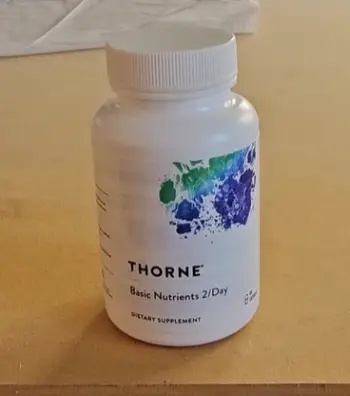
- Three-capsule daily serving: The lower pill count is one of the most practical advantages.
Many people find three capsules easier to remember and tolerate than higher counts.
This simplicity supports long-term consistency when energy and motivation fluctuate.
- Active folate and methylcobalamin: Thorne uses L-5-MTHF and methylcobalamin.
These are the same bioactive forms preferred in higher-end formulas.
The choice supports efficient utilization without relying on synthetic folic acid conversion.
- Chelated iron (bisglycinate): The iron form is chosen for better tolerance.
Users frequently report less constipation and nausea compared with older iron salts.
Including it in the core formula removes one extra decision for many people.
- Practitioner channel heritage: Thorne has long been recommended by clinicians.
That history brings a sense of reliability for people who prefer brands with professional track records.
The formula has been used and trusted in clinical settings for years.
- Broad mineral coverage with chelates: Zinc, magnesium, and other minerals appear in forms intended for better absorption.
The formula covers the core prenatal spectrum in a compact package.
This keeps the daily routine efficient while still addressing multiple nutrient needs.
- Rigorous quality controls: Testing for contaminants and, in some cases, NSF Certified for Sport status give additional assurance for purity-conscious buyers.
The brand’s quality processes are a frequent reason people choose it over less transparent options.
- Separate DHA product available: Like Needed, Thorne keeps omega-3s out of the multi for stability reasons.
They offer a dedicated Prenatal DHA softgel that many pair with the Basic Prenatal.
This approach maintains formula integrity while still allowing complete coverage.
Pros Of Thorne Basic Prenatal
- Simple three-capsule routine: Consistency is easier when the daily dose is modest. Many users stick with it precisely because it does not feel like a chore. The lower count supports reliable intake even on difficult days.
- Gentle iron already included: For people whose ferritin is already low or who prefer not to manage a second bottle, the built-in bisglycinate iron is convenient and usually well tolerated. It removes one extra step from the daily routine.
- Trusted practitioner reputation: The brand’s long history with clinicians gives many people confidence that the formula has been vetted in real clinical settings. This professional endorsement often influences the initial choice.
- Active nutrient forms without excess complexity: You get methylfolate, methyl B12, and chelated minerals without needing to piece together a larger system. The formula delivers quality forms in a straightforward package.
- Compact bottle and straightforward labeling: The product is easy to find, easy to dose, and easy to explain to a partner or caregiver helping with the routine. Simplicity in packaging and instructions reduces friction.
- Good tolerance reports from sensitive stomachs: Many users specifically mention fewer nausea or constipation issues compared with previous prenatals. The gentle iron form is frequently cited as a key reason for better tolerance.
Cons Of Thorne Basic Prenatal
- Lower choline and vitamin D relative to denser formulas: If you are aiming for the higher end of current research recommendations on choline or vitamin D, you will likely need to add those nutrients separately. The base formula stays closer to conservative levels.
- No DHA in the multi: Like most quality prenatals, omega-3s are sold separately. That means an extra product and extra cost for complete coverage. Users must remember to include the additional softgel.
- Fixed iron dose: The included iron is helpful for many, but people who do not need it or who are sensitive even to chelated forms may prefer an iron-free base. There is less flexibility once the bottle is chosen.
- Capsule-only format: There is no powder alternative for days when pills feel impossible. People with significant nausea may find this limiting during the first trimester.
Analytical Look At Who Each Formula Serves Best

From an analytical standpoint, Needed leans toward people who want maximal nutrient coverage and are willing to invest time and money in a more complete system.
If your bloodwork shows low vitamin D, if you know choline is hard to get from food, or if you prefer to control iron separately, Needed’s approach lines up well.
The powder option further expands its usefulness for those with significant nausea.
Thorne serves people who value simplicity and a proven, clinician-familiar formula.
The three-capsule dose plus included gentle iron covers the essentials for many without requiring extra bottles from day one.
If your priority is a reliable daily multi that is easy to take and has a strong professional track record, Thorne delivers that efficiently.
Neither formula includes meaningful DHA in the multi itself, so both expect you to handle omega-3s separately if you want that support.
Both use methylated folate, which is a meaningful upgrade over synthetic folic acid for a large share of the population.
Both undergo serious quality testing. The real decision often comes down to how many capsules you can realistically take, whether you want iron built in or optional, and how high you want choline and vitamin D to sit.
Practical Considerations For Daily Use
I paid attention to the small friction points that decide whether someone actually finishes the bottle.
Pill count, aftertaste, stomach feel, and cost all matter more than marketing claims once pregnancy symptoms hit.
Needed’s powder can turn a multi into something closer to a smoothie addition, which some people find more sustainable.
Thorne’s three capsules fit easily into a morning or evening habit with minimal disruption. Cost-wise, Needed’s full system of multi plus omega-3 plus iron if needed tends to run higher. Thorne plus a separate DHA is often more moderate while still remaining premium.
Both brands accept that one product cannot do everything. The difference is that Needed designs around that reality with multiple products, while Thorne keeps the core multi lean and lets you add what you need. Either path works if you stay consistent and check labs with your provider.
Also Read: Comparison Of Thorne And Ritual Prenatal
Frequently Asked Questions (FAQ)
Ratings vary by platform and year, but both Needed and Thorne frequently appear among top-rated quality prenatals based on ingredient forms, testing, and user feedback for tolerance and completeness.
Yes. Needed is widely regarded as a strong option for people seeking higher nutrient density, methylated forms, and format flexibility, particularly the powder for those with nausea.
Yes. Thorne Basic Prenatal is a solid, practitioner-trusted formula known for active nutrient forms, gentle iron, and a manageable three-capsule dose.
There is no universal number-one. The best choice depends on your specific needs around iron, choline, vitamin D, pill tolerance, and budget. Needed and Thorne both rank highly in their respective strengths.
Final Thought
I wrote this comparison so you could see the real trade-offs without the noise. Needed gives you denser nutrition and more ways to personalize.
Thorne gives you a clean, simple, clinician-backed daily multi with gentle iron already inside. Both respect the science of active nutrient forms and rigorous testing.
Your decision should rest on how many capsules you can manage, whether you want iron optional or included, and how aggressively you want to cover choline and vitamin D.
Talk with your provider, look at your labs, and pick the formula you can actually take consistently.
That consistency, more than any single feature, is what supports you and your baby through the perinatal months.
Recent Posts
● Interactive 5-Zone Interior & Exterior Paint Blueprint Paint Coverage Calculator: Gallons, Primer, Square Footage & Cost Tap any architectural surface zone on the blueprint...
If you want smooth, shiny hair without spending a fortune on a premium styling tool, the Ella Bella hair dryer may be worth considering.In these Ella Bella hair dryer reviews, I’ll look...