
If you want a greener, thicker lawn without wasting money on the wrong lawn treatment, Neighbor’s Envy fertilizer may be worth considering.
In this review, I’ll look at its potential benefits, drawbacks, application tips, and how it compares with other lawn fertilizer brands.
Before buying, I recommend checking the product’s exact formulation, NPK ratio, and directions for your grass type. The right fertilizer can make lawn care easier, but choosing the right formula and applying it correctly matter just as much as the brand.
My Personal Experience With Neighbor’s Envy Fertilizer
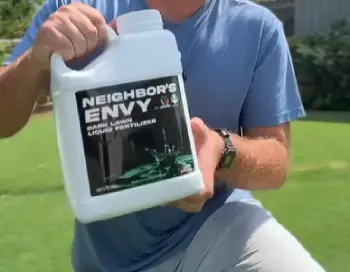
When I evaluate a lawn fertilizer like Neighbor’s Envy, I focus on the things that matter most to homeowners: how easily it can be applied, whether its nutrient formula suits the lawn, how much effort it takes to maintain healthy grass, and whether the expected results justify the price.
I also want to be clear about one thing: I cannot verify firsthand use or controlled test results for this particular product.
Rather than inventing personal results, I’ll assess the product from a practical lawn-care perspective and explain what you should check before purchasing it.
The name Neighbor’s Envy creates a clear expectation: a lawn that looks healthy, rich in color, and well maintained.
However, attractive branding alone doesn’t tell me whether a fertilizer will work well for my yard.
I would first inspect the packaging to identify the guaranteed nutrient analysis, recommended application rate, coverage area, and whether the product is granular, liquid, or another formulation. These details help me decide whether it fits my lawn-care routine.
A fertilizer that supplies suitable nutrients and is easy to apply can simplify regular lawn maintenance. On the other hand, a product with unclear directions or an unsuitable nutrient balance would make me hesitate, especially if I’m trying to correct a specific lawn problem.
After applying any lawn fertilizer, I look for gradual improvements rather than expecting an overnight transformation. Depending on the formulation, grass type, temperature, watering, and existing soil conditions, visible changes may take several days or longer.
Greener leaves can indicate improved nitrogen availability, while stronger overall growth also depends on phosphorus, potassium, sunlight, soil structure, and adequate moisture. A fertilizer cannot compensate for every underlying problem.
I would also watch for uneven color, yellowing, excessive growth, or brown patches. These signs may indicate uneven application, nutrient issues, watering problems, disease, or other stresses. I wouldn’t automatically blame the fertilizer without examining the conditions.
Pros Of Neighbor’s Envy Fertilizer
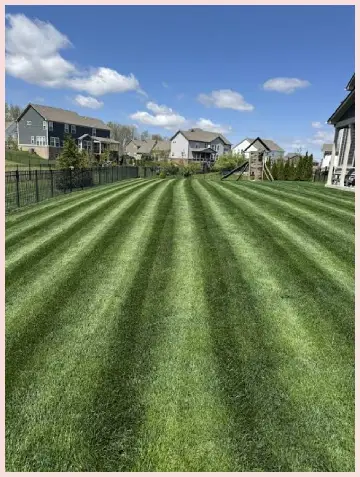
- Supports a Richer Green Lawn
One of the biggest attractions of Neighbor’s Envy is its emphasis on lawn color.
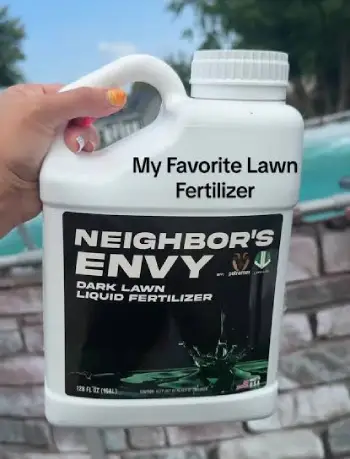
The PetraMax version is marketed as a liquid fertilizer containing 19% nitrogen and 2.5% iron, along with other ingredients intended to support turf health.
Nitrogen plays a major role in leaf growth and chlorophyll production, while iron can help improve green coloration.
When a lawn lacks sufficient available nutrients, the right fertilizer may help restore a healthier appearance.
I particularly value this combination because pale grass can make an otherwise well-maintained yard look tired.
However, yellowing isn’t always caused by a lack of nitrogen or iron. Poor drainage, unsuitable soil pH, disease, and other problems can produce similar symptoms.
- Convenient Liquid Application
Liquid fertilizer can be convenient when you want to cover a lawn without handling heavy bags of granular material. Depending on the package, Neighbor’s Envy can be applied with an appropriate lawn sprayer.
I like the flexibility this format offers. You can measure the concentrate, prepare the mixture according to the label, and walk across the lawn using a consistent spraying pattern.
The main advantage is convenience, not a guarantee of superior results. Liquid fertilizers can provide a relatively quick response, but granular products may offer controlled or gradual nutrient release, depending on their formulation.
- Combines Several Lawn-Care Ingredients
The marketed seven-in-one formula includes nitrogen, potassium, iron, sulfur, sea kelp, humic acid, and fulvic acid.
Each ingredient serves a different purpose. Nitrogen supports foliage growth, potassium contributes to normal plant functions and stress tolerance, and iron supports chlorophyll formation. Humic and fulvic substances are commonly used in lawn products to support nutrient availability and soil-related processes.
Sea kelp is also included as part of the formulation. However, I would not assume that every ingredient will produce a dramatic improvement in every yard. Results depend on soil conditions, application rates, weather, and the lawn’s existing nutrient supply.
- May Suit Different Grass Types
Neighbor’s Envy is marketed for a range of warm-season and cool-season grasses. That can make it appealing if you want one fertilizer for different sections of your property.
For example, Bermuda and Zoysia lawns have different seasonal growth patterns from Fescue and Kentucky Bluegrass. A suitable fertilizer may be useful for either group, but the timing and quantity still need to match the grass’s active growth period.
I would always check the label before applying the product to an unfamiliar grass variety. A broad compatibility claim doesn’t eliminate the need to consider local climate, drought stress, soil conditions, and individual turf requirements.
- Offers a Practical Alternative to Multiple Products
Some lawn-care routines involve separate products for nitrogen, iron, and soil amendments. A combined formula may simplify shopping and reduce the number of bottles you need to store.
I see this as a potential advantage for homeowners who want a straightforward routine. Instead of purchasing several products without knowing whether each one is necessary, you can start by evaluating a combined formulation.
Still, convenience does not automatically mean savings. Compare the price per treatment and the amount of each nutrient supplied. If your lawn needs a particular nutrient that Neighbor’s Envy doesn’t supply in sufficient quantities, you may need a different product.
Cons Of Neighbor’s Envy Fertilizer
- The Cost May Be Higher Than Basic Alternatives
Liquid concentrates can seem expensive when you compare the price of one bottle with a bag of conventional fertilizer.
The fairer comparison is cost per 1,000 square feet at the recommended application rate.
A combined formula may be worthwhile if you value convenience and need its ingredients. If your lawn simply needs nitrogen, however, a basic fertilizer could offer better value.
I would calculate the amount required for my entire lawn before choosing a package size.
- Application Requires Careful Measuring
Liquid concentrates must be mixed and applied according to their directions. Using too much can damage grass, waste money, or increase nutrient runoff. Using too little may produce disappointing results.
The same issue applies to spraying speed and coverage. Moving too quickly in one area and too slowly in another can create uneven color.
If you prefer products that can be spread with a calibrated granular spreader, liquid application may require a little more preparation.
- Green Grass Doesn’t Always Mean Healthier Grass
A lawn can become greener without necessarily developing deeper roots or better long-term resilience. Color is only one measure of turf quality.
I would avoid treating dark green color as proof that every nutrient requirement has been met. Root development, soil structure, water availability, mowing practices, and resistance to stress all contribute to overall lawn health.
Overfeeding to maintain an unusually dark appearance can create excessive growth and additional mowing.
- Results Depend on Existing Lawn Conditions
Neighbor’s Envy cannot guarantee the same outcome in every yard. A lawn suffering from severe drought, waterlogged soil, pest damage, or extensive bare patches may need a different solution first.
For example, fertilizer won’t solve a drainage problem, and it won’t replace grass seed where turf has completely disappeared. Identifying the actual problem is often more valuable than applying another treatment.
Maintenance Tips For Neighbor’s Envy Fertilizer
- Identify Your Grass Type Before Applying
My first step would be to identify the grass growing in my yard. Different grasses have different growth cycles, nutrient requirements, and responses to temperature.
Warm-season grasses such as Bermuda and Zoysia generally grow most actively during warm weather. Cool-season grasses such as Fescue and Kentucky Bluegrass usually perform best during cooler growing periods.
This distinction matters because fertilizing at the wrong time can waste nutrients or stress the grass. A product suitable for your grass may still be poorly timed if the lawn is dormant or struggling with extreme heat.
I would also consider the climate where I live. Seasonal recommendations developed for American lawns may not translate directly to regions with tropical or subtropical weather. Local growing conditions should guide the schedule.
- Check the Label and Calculate the Correct Amount
Before opening the bottle, I would measure the lawn area and read the recommended application rate. Guessing is an easy way to overapply fertilizer.
For example, if a label recommends a particular quantity per 1,000 square feet, I would calculate how many units of that area my lawn contains and measure the product accordingly. I would then use the specified water volume and application method.
The concentration matters, too. A concentrated liquid is not necessarily ready to spray directly onto grass.
I would never increase the dosage simply because I wanted faster green-up. More fertilizer does not always mean better results, and excess nutrients can damage turf or contribute to runoff.
- Apply During Suitable Weather
Weather can affect how efficiently a lawn absorbs nutrients and how evenly the product stays on the grass.
I would generally choose a mild, relatively calm period and avoid spraying during strong winds, extreme heat, or conditions that could cause the product to dry too quickly. I would also check the forecast for rain.
Heavy rainfall soon after an application can wash nutrients away before they are used effectively. For the PetraMax Neighbor’s Envy formulation, product directions indicate allowing approximately four hours before watering the lawn in, so I would verify and follow the instructions on my specific container.
I would avoid applying fertilizer to drought-stressed or dormant grass unless the product directions and grass-care guidance specifically support doing so.
- Water the Lawn Correctly
Watering helps maintain the conditions grass needs to use nutrients. However, the right approach depends on the fertilizer formulation and its instructions.
For a product that needs to remain on the grass for a specified period, I would respect that interval before watering. Afterward, I would follow the recommended watering instructions rather than automatically flooding the lawn.
For routine lawn care, deep watering when needed is generally preferable to frequent, shallow watering. The aim is to encourage a healthy root system while avoiding saturated soil.
I would also adjust watering to rainfall, soil type, temperature, and grass variety. Sandy soil may drain quickly, whereas clay-heavy soil can hold water for longer.
- Mow at an Appropriate Height
Mowing correctly is one of the easiest ways to support a healthy lawn after fertilization.
I would avoid cutting the grass excessively short just to make the yard look neat. Removing too much leaf material can stress the plants and reduce their ability to recover.
Instead, I would follow the recommended mowing height for my grass variety and use sharp mower blades. Sharp blades produce cleaner cuts, while dull blades can tear grass and leave the lawn looking ragged.
I would also avoid removing too much growth in a single mowing session. Maintaining a suitable height helps preserve a fuller appearance and can support healthier turf over time.
Comparison Of Neighbor’s Envy Fertilizer With Other Brands

- Neighbor’s Envy vs. Scotts Lawn Fertilizer
A liquid nutrient blend compared with conventional lawn-feeding options.
Neighbor’s Envy is marketed as a liquid formula that combines nitrogen, iron, potassium, and additional ingredients.
This may appeal to homeowners who prefer spraying a concentrated product and want to combine several lawn-care ingredients in one application.
Scotts offers multiple lawn fertilizer formulas, including products designed for general feeding, seasonal use, and particular lawn-care needs. The precise nutrient-release characteristics depend on the specific product.
I would lean toward Neighbor’s Envy if its combination of ingredients suits my lawn and I prefer liquid application. I would consider Scotts if I wanted a granular option, a different nutrient balance, or a product specifically designed for my lawn’s current needs.
- Neighbor’s Envy vs. Milorganite
Milorganite is known for its granular organic nitrogen fertilizer. Its application experience differs from that of a liquid concentrate.
Neighbor’s Envy may be more convenient for someone who prefers a sprayer and wants a product marketed for relatively quick green-up. Milorganite may appeal to homeowners who prefer granular application and an organic nitrogen source.
I wouldn’t assume that either product is automatically superior. I would compare their guaranteed analyses, application rates, cost, and suitability for the lawn.
- Neighbor’s Envy vs. Simple Lawn Solutions
Simple Lawn Solutions offers liquid lawn-care products, making it a relevant alternative for people who prefer spraying rather than spreading granules.
The main distinction depends on which formula you choose. Some liquid products emphasize nitrogen, while others target particular nutrient requirements or lawn conditions.
If I were comparing these options, I would look at the nutrient concentration, coverage, recommended application frequency, and total seasonal cost. Similar application methods don’t mean two products provide the same benefits.
- Neighbor’s Envy vs. Andersons Fertilizer
The Andersons offers various granular lawn fertilizers and specialty turf products. Depending on the formula, these products may focus on nitrogen delivery, nutrient balance, or other specific lawn-care goals.
Neighbor’s Envy may be more attractive if I want a liquid concentrate with iron and additional ingredients in one formula. An Andersons product may be more appropriate if I want a particular granular formulation or a specialized nutrient program.
My decision would depend on the exact products being compared, not just their brand names.
Which Brand Offers The Best Value?
For me, value comes down to what my lawn actually needs. A low-cost fertilizer can be excellent if it supplies the required nutrients at an appropriate rate. A more expensive combined product can also be worthwhile if its ingredients address several genuine needs.
I would compare the cost per 1,000 square feet, the amount of nitrogen delivered, the recommended application schedule, and any additional nutrients that matter for my soil.
I would also account for equipment costs. If I already own a suitable sprayer, liquid fertilizer may be convenient. If I have a calibrated spreader and prefer granular products, switching formats may not offer enough benefit.
My recommendation is to compare actual formulas and guaranteed analyses before deciding. No single brand is best for every lawn, and no fertilizer can replace proper mowing, watering, and soil management.
Also Read: Is GreenView Fertilizer Worth It?
Frequently Asked Questions (FAQ)
Apply it when your grass is actively growing and weather conditions are suitable. Follow the product label for timing and watering instructions.
There is no single best fertilizer for every lawn. Choose one that matches your grass type, soil conditions, and nutrient requirements.
Look for it through PetraMax’s official store or authorized retailers. Check the product details and package size before purchasing.
The listed formula contains 19% nitrogen and 1.5% potassium (as K₂O), plus 2.5% iron. Check your bottle’s guaranteed analysis for the complete nutrient declaration.
Final Verdict
I would consider Neighbor’s Envy if I wanted a convenient liquid lawn fertilizer that combines nitrogen, iron, and additional ingredients.
Its potential appeal is straightforward application and support for a greener-looking lawn.
Before buying, I would verify the label, calculate the cost per treatment, and make sure the formula suits my grass. If those factors align, it could be a useful part of a regular lawn-care routine.
Recent Posts
● Interactive 5-Zone Interior & Exterior Paint Blueprint Paint Coverage Calculator: Gallons, Primer, Square Footage & Cost Tap any architectural surface zone on the blueprint...
If you want smooth, shiny hair without spending a fortune on a premium styling tool, the Ella Bella hair dryer may be worth considering.In these Ella Bella hair dryer reviews, I’ll look...