
I have spent years looking at building materials for my own projects and helping friends decide what goes on their walls.
My main goal here is to give you a clear, side-by-side look at Norandex house wrap and Tyvek so you can pick the one that fits your climate, budget, and installation style without second-guessing the choice later.
| Feature | Norandex House Wrap | Tyvek HomeWrap |
| Material | Woven polypropylene, micro-perforated | Non-woven high-density polyethylene (HDPE) |
| Thickness | 5.5 mils (standard); 6.5 mils (Plus) | Approximately 1.8 oz/yd² basis weight |
| Vapor Permeability | Around 8–9 perms (residential); higher options available in commercial lines | Approximately 54–56 perms |
| Water Resistance | Passes standard tests; surfactant resistant | High hydrostatic head (around 210–250 cm) |
| UV Exposure Rating | Up to 9 months | Up to 120 days (4 months) |
| Tear/Tensile Strength | Higher tensile (around 45–50 lbs) and tear resistance | Tensile about 30/30 lbs/in; tear 6–8 lbs |
| Installation Notes | Staples or seam tape; translucent for visibility | Cap nails or staples recommended; opaque |
| Surfactant Resistance | Strong | Limited |
| Typical Use | Residential and commercial under various claddings | Broad residential and light commercial |
Understanding The Core Purpose Of House Wrap
House wrap sits between the sheathing and the exterior cladding. It stops bulk water from rain or wind-driven moisture while letting water vapor escape so the wall assembly can dry.
It also cuts air leakage, which helps insulation perform closer to its rated value.
Both Norandex and Tyvek aim to deliver that balance, yet they reach it through different material designs.
I have seen jobs where the wrong wrap led to damp sheathing months later. The right one keeps the structure dry and the indoor space more comfortable. That is why the differences matter more than brand loyalty alone.
Key Differences Between Norandex And Tyvek
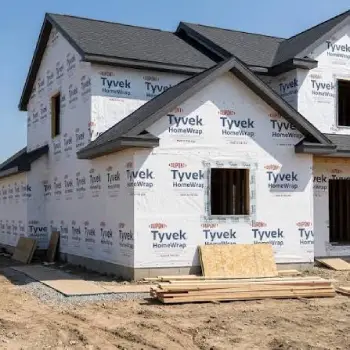
- Material structure sets the performance baseline: Norandex uses a woven polypropylene sheet with tiny perforations that create a tough fabric surface.
Tyvek relies on a continuous web of flash-spun HDPE fibers that form microscopic pores without any mechanical holes.
The woven approach gives Norandex strong tear resistance and better surfactant tolerance while the non-woven web in Tyvek delivers consistent water holdout across the entire sheet.
- Breathability levels vary noticeably: Tyvek’s higher perm rating in the mid-50s lets vapor move more freely through the wall cavity and can speed drying in humid conditions.
Norandex residential grades sit lower around 8 to 9 perms which remains adequate for most climate zones yet allows slower moisture escape in high-moisture settings.
Commercial Norandex lines offer higher-perm versions when faster drying becomes a priority.
- UV durability favors longer open-wall periods with Norandex: Nine months of protection means crews can leave the wrap exposed through weather delays or supply issues without rapid material breakdown.
Tyvek’s four-month rating requires tighter scheduling so the exterior cladding goes on before ultraviolet degradation begins to affect performance.
- Installation feel differs on the job: Norandex is translucent so installers can clearly see studs and sheathing edges for accurate fastening placement.
It accepts ordinary staples without special caps in many cases. Tyvek is opaque and often benefits from cap fasteners to reduce the chance of pull-through under wind or handling stress.
- Surfactant performance is a clear separator: Soaps, cleaners, and certain wood extractives can reduce water resistance in some wraps over time.
Norandex holds up better in those conditions and maintains its water holdout longer.
Tyvek can lose some holdout after surfactant exposure according to independent testing results.
These differences show up in real weather and real job sites more than in marketing claims.
Key Features Of Norandex House Wrap
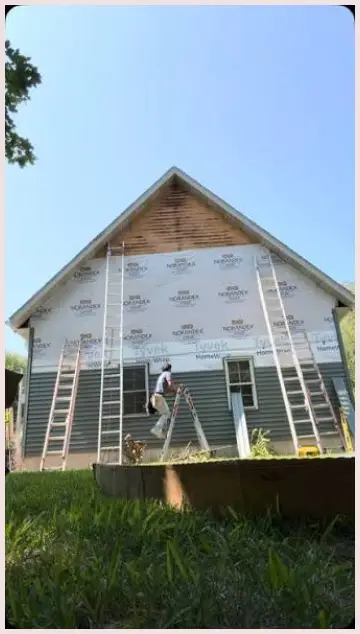
- Woven polypropylene construction delivers toughness: The fabric resists tearing when crews walk across it or when wind pulls at the edges during construction.
Thickness options of 5.5 or 6.5 mils give extra durability without adding noticeable weight to the rolls.
- Micro-perforations manage vapor movement: Tiny holes allow interior moisture to escape while the tight weave blocks liquid water from entering the wall.
The resulting perm rating stays suitable for most climate zones across the country.
- Nine-month UV rating provides scheduling flexibility: Projects delayed by weather or material shortages stay protected longer than wraps with shorter exposure limits.
This extra time reduces the risk of having to replace degraded material before cladding starts.
- Surfactant resistance protects long-term performance: Exposure to detergents or cedar extractives does not quickly compromise the water holdout ability of the sheet.
That quality becomes valuable under certain claddings or during cleaning of the exterior.
- Translucency aids accurate fastening: Installers can see framing members through the material and avoid missing the studs with fasteners.
Staples or seam tape work effectively and can lower the overall fastening cost on larger projects.
- Code compliance and broad cladding compatibility: The product meets current water-resistive barrier and air-barrier standards.
It works reliably under vinyl, fiber cement, stucco, brick, and stone finishes without special modifications.
I have watched installers appreciate the staple-friendly surface and the ability to see through the material when aligning seams on complex walls.
Pros Of Norandex House Wrap
- Higher tear and tensile strength reduces job-site damage: Wind, scaffolding contact, and foot traffic cause fewer rips during the open-wall phase. That durability cuts waste and the time spent on repairs before cladding begins.
- Extended UV protection buys valuable time: Nine months of exposure tolerance is practical for multi-phase builds or unexpected weather delays. Crews gain flexibility without worrying about rapid material breakdown.
- Surfactant resistance maintains water holdout: Cleaning agents or certain cladding materials do not quickly degrade the protective qualities of the sheet. Performance stays more consistent under real-world conditions.
- Easier visual alignment during install: Translucency lets crews place fasteners accurately without guessing the location of studs. The result is fewer missed nails and a more secure attachment.
- Staple-friendly fastening lowers material cost: Cap nails are not always required which can trim expenses on large residential or multi-family projects. Standard staples often provide adequate holding power.
- Competitive pricing for comparable coverage: Many builders find the cost per square foot lower than premium non-woven options while still meeting all required codes. The savings can add up on bigger square-footage jobs.
These advantages make Norandex attractive when budget control, schedule flexibility, and resistance to rough handling rank high on the priority list.
Cons Of Norandex House Wrap
- Lower vapor permeability than Tyvek can slow drying: In very wet climates or wall assemblies with limited drying potential the lower perm rating may allow moisture to linger longer inside the cavity. Designers sometimes prefer higher permeability for those conditions.
- Micro-perforations introduce a theoretical water path: While the product passes standard water-resistance tests the mechanical holes differ from the continuous pore structure found in non-woven wraps. Some building scientists view that difference as a minor trade-off.
- Brand recognition is lower in some markets: Certain inspectors or lenders prefer the more widely known name and may request extra documentation. That preference can add administrative steps on some projects.
- Residential grades sit at modest thickness: The 5.5-mil version works well for most homes yet commercial or high-wind sites may need the thicker Plus or commercial X-Wrap lines. Selecting the right grade requires matching the product to the exposure level.
- Availability can vary by region: Distribution through specific channels means checking local supply before locking in a construction schedule. Delays in delivery can affect overall project timing.
None of these issues disqualify the product but they deserve attention when matching the wrap to climate and project scale.
Key Features Of Tyvek HomeWrap
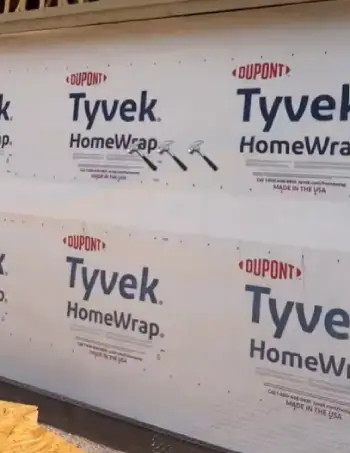
- Non-woven HDPE fiber web creates uniform protection: Continuous fine fibers form millions of tiny pores that block liquid water and air while still allowing vapor to pass.
The absence of mechanical perforations means fewer potential weak points across the sheet.
- High vapor permeability supports rapid drying: Ratings in the mid-50s perms help wall cavities shed moisture quickly and lower the long-term risk of mold growth.
This quality proves especially useful in humid or mixed climate zones.
- Strong water holdout under pressure: Hydrostatic testing shows high resistance to water columns which helps against wind-driven rain on exposed walls.
The continuous fiber structure maintains that resistance across the full surface.
- Proven long-term field record: Decades of use across North America give builders confidence in how the material behaves over many years.
That history reduces uncertainty for both residential and light commercial projects.
- Air-barrier capability when seams are taped: Proper installation with compatible tape turns the wrap into an effective air seal that improves energy performance.
The reduction in air leakage helps insulation reach closer to its rated value.
- Compatibility with standard tapes and sealants: DuPont-compatible products create reliable seams and sealed penetrations around windows and pipes.
This compatibility simplifies detailing for experienced crews.
On sites I have visited, Tyvek’s reputation often makes it the default choice when the schedule is tight and a long performance history matters most.
Pros Of Tyvek HomeWrap
- Superior vapor transmission supports healthier walls: High perms help cavities dry faster and reduce the long-term risk of moisture-related problems. That drying capacity benefits many mixed and humid climate assemblies.
- Excellent bulk-water resistance under pressure: The continuous fiber structure holds out wind-driven rain effectively across the full surface of the sheet. Independent hydrostatic tests confirm strong performance in this area.
- Decades of documented performance: Builders and building scientists have extensive real-world data on how the material behaves over time. That track record lowers uncertainty for both new construction and renovation work.
- Effective air barrier when properly sealed: Taped seams and sealed penetrations deliver measurable reductions in air leakage and related energy loss. The improvement helps the overall wall system perform closer to design expectations.
- Lightweight and easy to handle: Rolls go up quickly and conform well around corners, openings, and irregular framing. Crews familiar with the product often complete the installation with fewer adjustments.
- Broad industry acceptance: Most building departments recognize the product without extra justification or special submittals. That familiarity can streamline the inspection process.
These strengths explain why Tyvek remains a benchmark product for many professionals across different regions.
Cons Of Tyvek HomeWrap
- Shorter UV exposure window creates scheduling pressure: Four months of unprotected sun can begin to degrade the material and force tighter cladding schedules. Delays beyond that window may require replacement of exposed sections.
- Limited surfactant resistance affects certain conditions: Exposure to soaps or wood extractives can reduce water holdout in laboratory testing. Projects involving those materials need extra attention to detailing.
- Opaque surface hides framing members: Installers cannot see studs as easily which increases the chance of missed fasteners. Careful layout and marking become more important during application.
- Higher material cost on many projects: The premium brand carries a price that may not fit every budget especially on large production homes. Total installed cost should include both material and labor factors.
- Tear strength is adequate but not the highest: Rough handling or high winds can create more repair needs than tougher woven wraps. Careful job-site practices help minimize damage.
- High perm rating is not ideal for every climate: In some cold or mixed zones designers prefer more moderate permeability to better control vapor drive. The choice depends on the full wall assembly design.
These drawbacks are manageable with good planning yet they influence the final selection for specific projects.
Real-World Performance Considerations
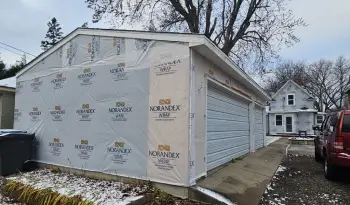
Climate drives much of the decision. In rainy coastal or humid southern regions Tyvek’s higher drying capacity often feels safer.
In drier or more moderate zones Norandex’s toughness and UV tolerance provide practical advantages. High-wind sites benefit from the higher tear strength of the woven product. Projects with long open-wall periods favor the nine-month UV rating.
Installation quality matters more than brand. Both wraps fail if seams are left open, fasteners miss the framing, or penetrations stay unsealed.
I always recommend the manufacturer’s tape and flashing details. Proper laps, sealed windows, and careful handling of the bottom edge determine whether the wrap actually protects the structure.
Cost analysis should include labor and waste. Norandex can reduce fastener and repair expenses. Tyvek may save time through familiarity for crews who install it daily. Total installed cost often narrows the gap between the two.
Warranty terms differ. Review the fine print for exposure limits, approved tapes, and installation requirements. A longer paper warranty means little if the product degrades from UV before cladding goes on.
Installation Tips That Apply To Both
Start with clean, dry sheathing. Roll the wrap horizontally, overlapping seams by the manufacturer’s minimum which is usually six inches.
Secure according to the product’s fastening schedule using staples or cap nails as specified. Tape all vertical and horizontal seams with compatible tape.
Flash windows and doors with compatible membranes before the wrap goes up or integrate the wrap carefully with the flashing sequence. Protect the bottom edge from ground splash and seal any penetrations for pipes, wires, or vents.
Leave the wrap exposed only within the UV limit. Cover damaged areas promptly. When the cladding goes on maintain a drainage gap if the system design calls for one. These steps turn either product into a reliable weather-resistive barrier.
Making The Choice For Your Project
I weigh climate first, then schedule, then budget. For a coastal renovation with potential delays Norandex’s UV rating and surfactant resistance often win.
For a high-performance new build in a mixed-humid climate where rapid drying is priority Tyvek’s permeability and track record feel right.
On a tight-budget production home the cost and tear strength of Norandex can keep the project moving. On a custom home where the inspector expects a familiar name Tyvek simplifies approvals.
Neither product is universally better. The better choice is the one that matches the wall assembly, the local weather, the crew’s habits, and the project timeline.
Also Read: Comparison Of Tyvek And Everbilt House Wrap
Frequently Asked Questions (FAQ)
It depends on the project. Some woven wraps offer higher tear strength, longer UV tolerance, or better surfactant resistance. Performance needs and climate decide what ranks higher.
Norandex is one solid option, especially when UV exposure or surfactant resistance matters. Other woven polypropylene wraps also serve as practical substitutes.
Tyvek is a brand of house wrap. House wrap is the general category of weather-resistive barriers. Tyvek is one well-known product within that category.
Shorter UV rating, limited surfactant resistance, opaque surface that hides framing, and higher cost relative to some alternatives.
Final Thoughts
I wrote this comparison so you can evaluate Norandex house wrap and Tyvek on the factors that actually affect a finished wall.
You now have the side-by-side data, the practical pros and cons, and the installation realities that matter on site. Use the table and the detailed lists to match the product to your climate, schedule, and budget.
When you choose based on performance needs rather than brand alone the wall assembly stays dry, the insulation works better, and the home stays more comfortable for years. That is the outcome worth aiming for.
Recent Posts
● Interactive 5-Zone Interior & Exterior Paint Blueprint Paint Coverage Calculator: Gallons, Primer, Square Footage & Cost Tap any architectural surface zone on the blueprint...
If you want smooth, shiny hair without spending a fortune on a premium styling tool, the Ella Bella hair dryer may be worth considering.In these Ella Bella hair dryer reviews, I’ll look...